












The term "single feed length" is easily confused with mast height. In the WR300SEL data on this site, the corresponding values are: 6.6 m single feed, compatible with 1.5 m, 2 m, 3 m, and 6 m drill pipes, maximum drilling depth 300 m, and lifting force 18 T. These values appear in the same document but apply to different stages. Reading single feed length as "a longer mast means stronger equipment" misses the process it actually constrains.
This parameter describes stroke, not depth
Single feed length corresponds to the distance the power head can continuously move along the mast guide. For the WR300SEL, this distance is 6.6 m, expressed in the data as "6.6 m single feed." It indicates how far the power head can move forward with the drilling tools before it needs to re-grip the drill pipe.
This is not the same concept as maximum drilling depth. The 300 m maximum drilling depth refers to the hole depth level this equipment can cover; the 6.6 m single feed refers to the length of the segments in which this 300 m is advanced and whether a pipe connection is needed between segments. The former is a capability limit, the latter is a process rhythm.
Drill pipe length and stroke are two independently selectable quantities
The WR300SEL data states compatibility with 1.5 m, 2 m, 3 m, and 6 m drill pipes, with optional diameters of 76 / 89 / 102 mm. This shows that pipe length is not a single fixed option set at the factory, but can be selected among several lengths. Drill pipe length determines how much hole depth a single pipe can cover, while stroke determines how far the power head can travel in one go. The two quantities are independent.
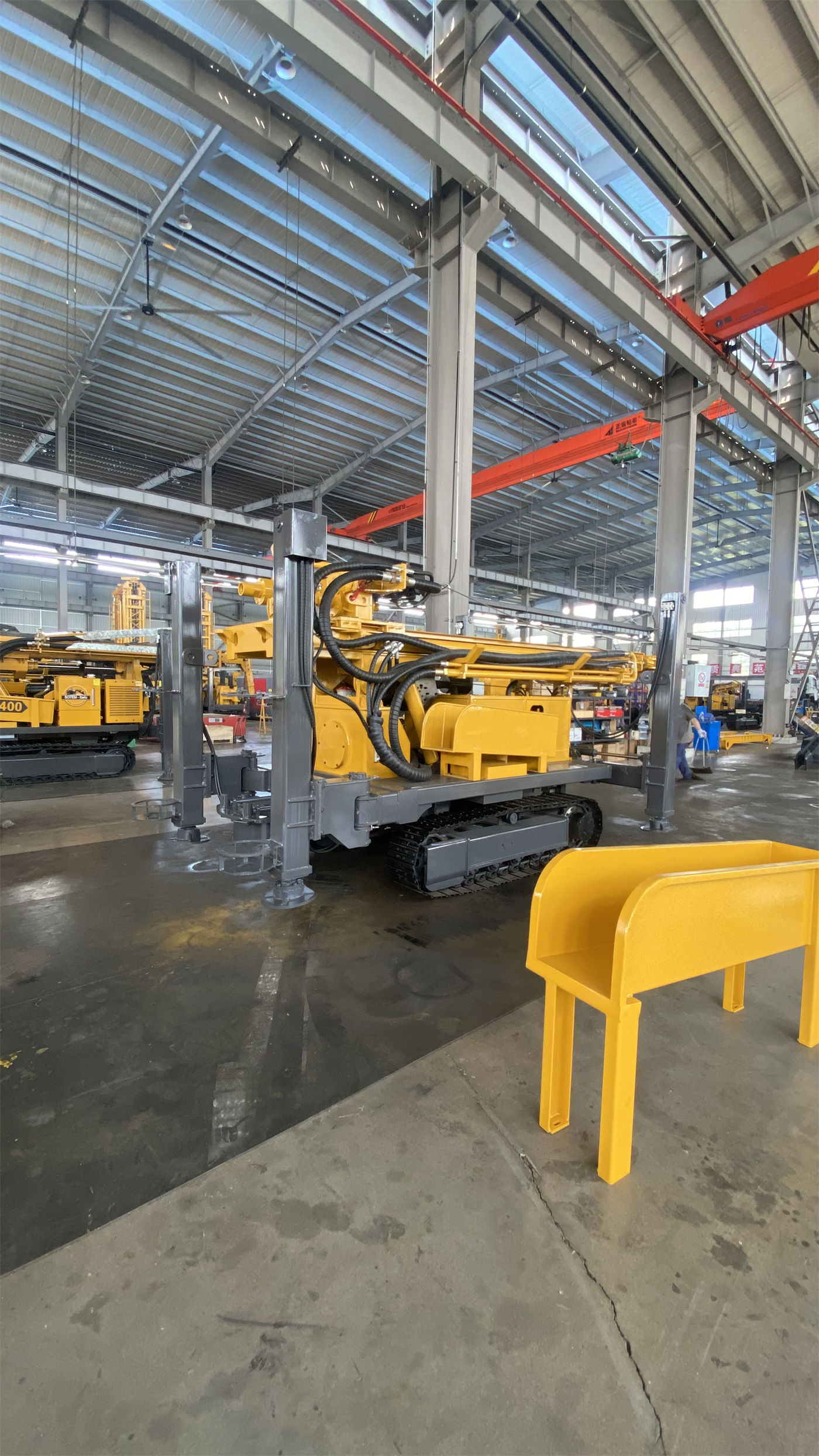
- Stroke determines when to connect a pipe: after the power head travels 6.6 m, it must stop to connect the next drill pipe.
- Pipe length determines how long one connection lasts: with a 6 m drill pipe, one connection can support most of the footage within a 6.6 m stroke; with a 1.5 m drill pipe, more connections are needed within the same stroke.
The reason the data lists "6.6 m single feed" together with "can directly use up to 6 m drill pipes" is that the value of a long stroke is only realized with long drill pipes. A short stroke with long pipes wastes the extra pipe length; a long stroke with short pipes cancels out the stroke advantage. They must be considered together.
Stroke affects the number of pipe connections, not penetration efficiency
The data is fairly direct on this point: the real value of a long-stroke mast is not "a longer mast," but reducing the number of drill pipe connections. To complete a 300 m class borehole, a 6 m drill pipe with a 6.6 m stroke will require significantly fewer pipe connections than a short-pipe configuration.
However, note that reducing pipe connections lowers auxiliary time, not the drilling speed in rock. The data provides another set of values for efficiency: reference drilling efficiency 15–35 m/h, and states that actual efficiency is affected by formation, bit, DTH hammer, and air compressor. The fast lift 22 m/min and fast feed 40 m/min are also described as mainly serving non-drilling actions, such as pipe handling, power head return, and tool adjustment, and are not equivalent to actual rock penetration rate.
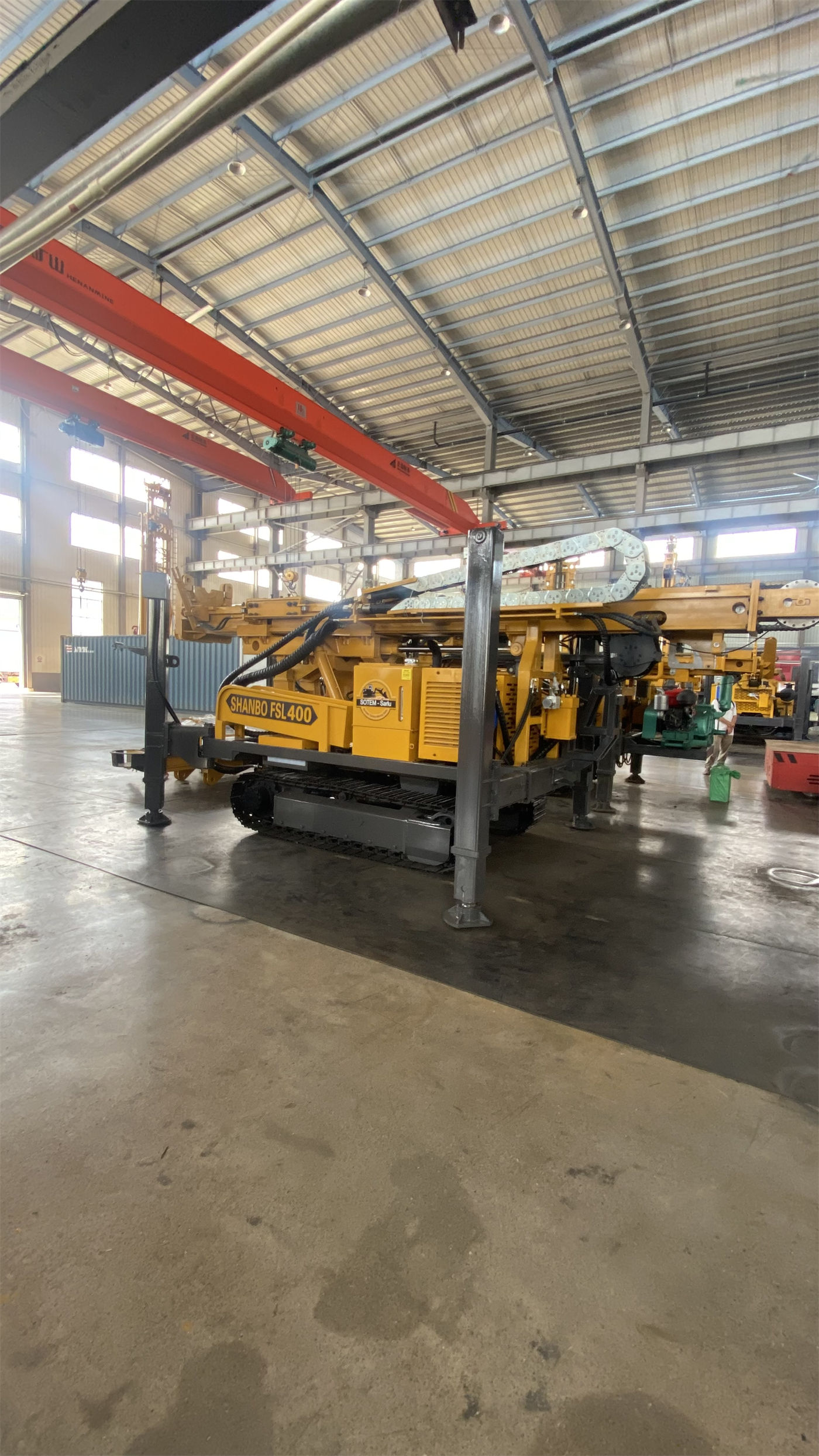
Therefore, single feed length saves time on connecting pipes, disconnecting pipes, and tool adjustment on a project, but does not change how many minutes are needed per meter in hard rock.
Another set of requirements brought by a long stroke
Lengthening the stroke is not just a change in mast dimensions. Several values given together in the WR300SEL data can be viewed together to see this relationship.
| Item | WR300SEL Data Value |
|---|---|
| Single feed | 6.6 m |
| Compatible drill pipes | 1.5 / 2 / 3 / 6 m |
| Drill pipe diameter | 76 / 89 / 102 mm |
| Maximum drilling depth | 300 m |
| Hole diameter | 140–325 mm |
| Lifting force | 18 T |
| Overall weight | Approx. 8 T |
| Dimensions | Approx. 5900 × 1850 × 2200 mm |
In the "Usage Notes" section, the data points out the other side of the long-stroke version: a long-stroke mast and 6 m drill pipes can reduce the number of pipe connections, but place higher demands on site clearance, drill pipe handling, and equipment stability. Before drilling, confirm mast extension space, ground bearing capacity, and outrigger loading; when using long drill pipes, avoid improper operations such as lateral forces. For transport, the long-stroke configuration requires confirming vehicle length, loading tie-down points, and site turning space in advance.
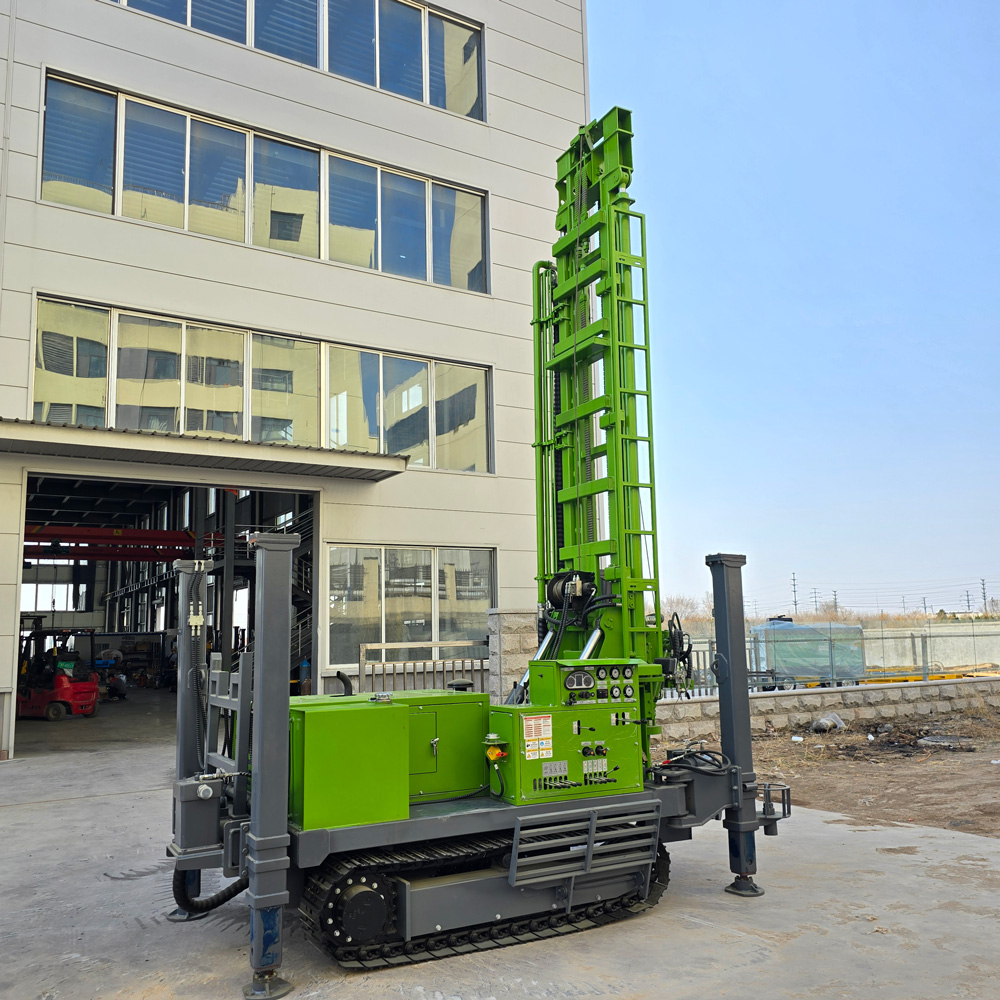
These items are not part of the meaning of single feed length itself, but are conditions that must be addressed when selecting this configuration.
Conclusions that cannot be drawn from this parameter
- A long single feed length does not mean it can drill deeper. The WR300SEL's maximum drilling depth is 300 m, which is the depth level given for the equipment and is not determined by stroke length.
- A long single feed length does not mean faster drilling. The reference efficiency of 15–35 m/h given in the data is affected by formation, bit, DTH hammer, and air compressor.
- The relationship between stroke and drill pipe shows that the number of pipe connections will change, but the data does not provide a quantitative conclusion on exactly how many connections or how much time can be saved. This part needs to be calculated based on actual hole depth and construction organization.
When reading this parameter, follow this order
First determine the single feed length stated in the equipment data (6.6 m for the WR300SEL); then look at the available drill pipe lengths (1.5–6 m); then apply both to the target well depth to estimate how many pipe connections and disconnections will occur in one complete borehole. Finally, consider the usage and transport conditions that accompany the long-stroke configuration, including site clearance, ground bearing capacity, outrigger loading, and transport dimensions.
After separating mast stroke and drill pipe connection, single feed length answers only one thing: how far the power head can travel in one go, and therefore how often it must stop to connect a pipe.