












"Can a 28 HP machine do the job?" and "It's rated for 180 meters, so if you drill down there will be water, right?" These two questions often come up in the same selection conversation. They point to two different objects: the former is about whether the power configuration is sufficient to support the drilling action, while the latter is about the relationship between the equipment's drilling depth capability and actual water strike. This article separates these two types of judgments and uses the published parameters of the WR180E on this site as a reference.
The judgment that low power is insufficient confuses the relationship between power and process stages
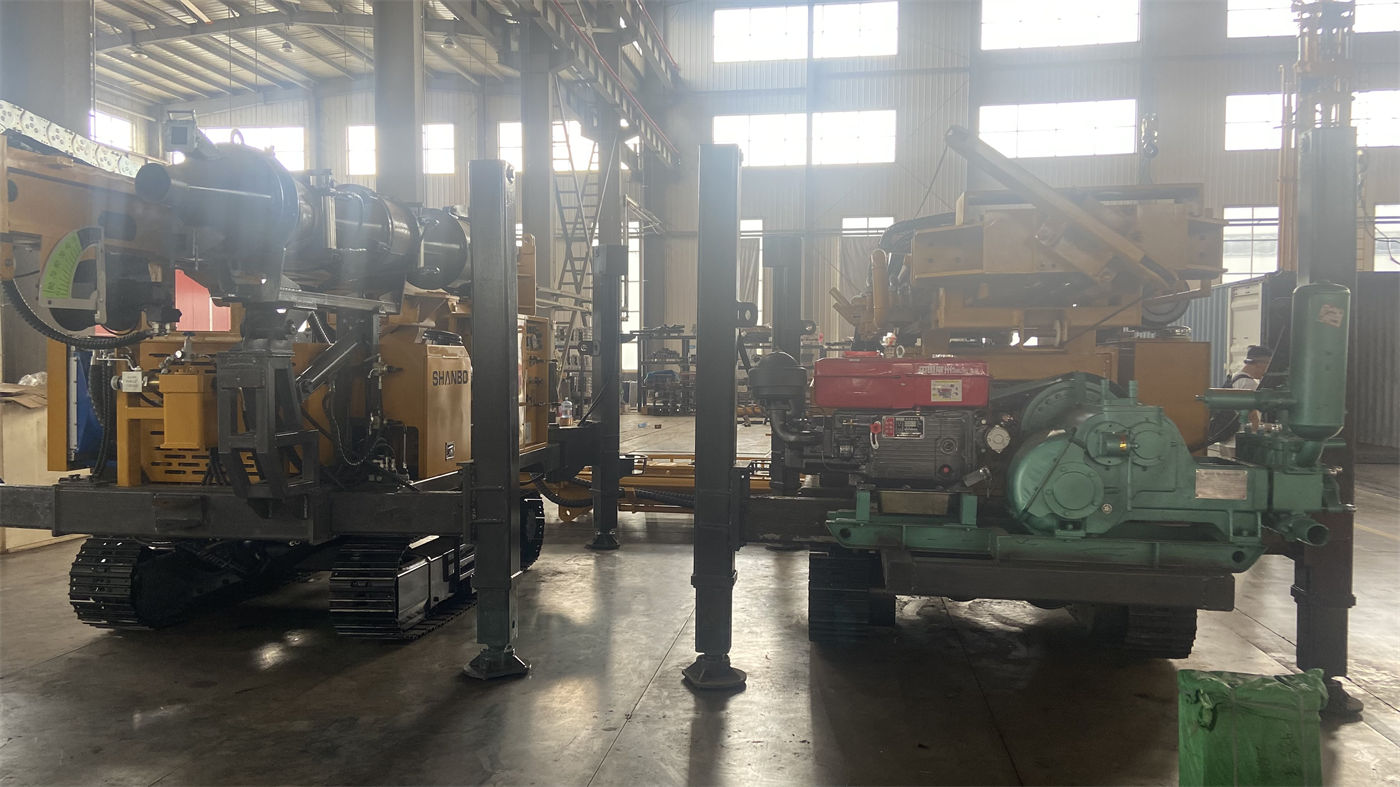
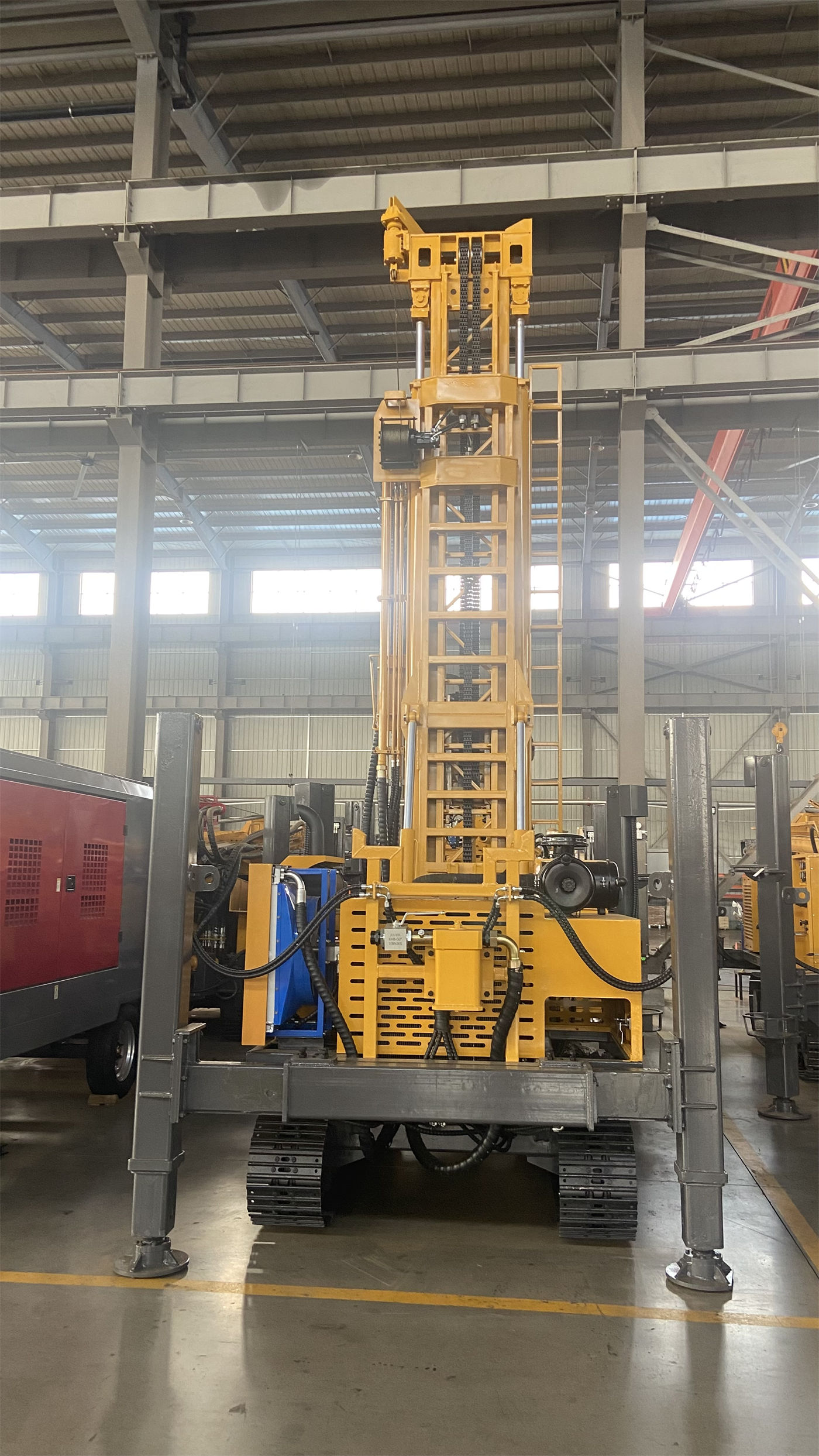
In the WR180E materials, the power item is listed as a 28 HP Changchai diesel engine, used to provide power for the hydraulic system, rotation, and crawler travel. This description itself shows that power does not correspond only to "drilling"; on the same machine it must be distributed among several stages.
The same materials also list a rotation speed of 40–70 rpm, lifting force of 16 T, travel speed of 2.5 km/h, and working pressure of 1.7–3.0 MPa. Together, these parameters determine the conditions under which this equipment can complete the drilling action; power is only one input among them.
What positioning does 28 HP correspond to on this equipment
The materials describe this equipment as "a compact crawler water well drilling rig designed for rural water supply, farmland irrigation, orchards, aquaculture, and small engineering water well construction," and explicitly state that it "does not pursue the high power and extra-large hole diameters of large deep well equipment, but configures power, lifting, and travel systems around the common 180-meter-class water well requirements."
In other words, 28 HP is not an isolated number; it appears together with 16 T lifting force, 40–70 rpm rotation speed, and 1.8 T overall weight. Singling out power to judge whether it is "enough" is equivalent to removing the reference points.
Where insufficient power would actually show up first
In the rock section, the materials give an order of judgment: if the project is mainly composed of intact high-hardness rock layers, or involves long-term operation close to the maximum drilling depth, the drill tools, power, and equipment level should be re-evaluated for compatibility. This sentence limits the scenario of insufficient power to two conditions—high rock hardness and long-term operation at the equipment's limit.
It is not that "as long as the power number is small, it won't work." For formations such as soil, clay, sand, and gravel layers, the constraints of concern in the materials fall on hole wall stability and cuttings removal, not on the power end.
The judgment that deep drilling is sufficient confuses equipment capability with water strike conditions
180 m is the maximum drilling depth of the WR180E. In the same section of materials, there is another limitation: the actual completed well depth should still be determined based on the local groundwater level, aquifer location, hole diameter, and construction technique.
This sentence means that 180 m describes the upper limit of the depth to which the equipment can advance underground, not a judgment that groundwater will appear at this depth. Whether a well can produce water depends on whether an aquifer is encountered at the drilled location.
Separating the two sets of parameters by purpose
| Parameter | Published value | What it constrains |
|---|---|---|
| Engine power | 28 HP Changchai diesel engine | Power distribution for the hydraulic system, rotation, and travel |
| Maximum drilling depth | 180 m | Upper limit of depth advancement underground |
| Drilling diameter | 90–230 mm | Selection range for well casing size and submersible pump specifications |
| Lifting force | 16 T | Drill pipe tripping and drill tool recovery |
| Rotation speed | 40–70 rpm | Adjusted according to drill pipe, drill bit, and formation |
Reading this table by column, one can see that the power row constrains more than just "whether it can drill that deep," and the drilling depth row does not promise water strike either.
The hole diameter row is often overlooked
The materials state that the 90–230 mm hole diameter range can be selected according to well casing size, submersible pump specifications, and expected water yield. That is, the load structure of the same equipment differs under different hole diameters, and the choice of hole diameter in turn affects whether the drilling depth can reach 180 m.
The materials also give construction advice: if the project is mainly composed of intact high-hardness rock layers, or involves long-term operation close to the maximum drilling depth, the drill tools, power, and equipment level should be re-evaluated for compatibility. In this limitation, "maximum drilling depth" and "hole diameter" are considered together.
Where the boundaries of the two types of misreading lie
On the power side
- The power configuration should be viewed together with lifting force, rotation speed, and travel speed on the same machine, not by the power value alone.
- The materials already position this model for economical and practical shallow-to-medium water well construction, not as large deep well equipment.
- Drilling resistance, cuttings removal, and hole wall stability require construction personnel to adjust parameters in a timely manner according to the formation.
On the drilling depth side
- 180 m is the maximum value in the promotional description of this equipment, and it holds together with the hole diameter range and drill pipe configuration.
- The actual completed well depth is determined jointly by the local groundwater level, aquifer location, hole diameter, and construction technique.
- The materials do not provide measured water yield data for this model in various regions, and the maximum drilling depth should not be directly converted into a water yield expectation.
How to use these two judgments when it comes to selection
In the WR180E materials, there is a passage closer to the order of judgment: compared with 120-meter-class small machines, the 180 m maximum drilling depth has a larger margin for water exploration depth, and can cover more shallow-to-medium groundwater projects in rural, hilly, and agricultural areas.
This passage places the value on "margin," not on "definitely able to drill to." Margin means that most projects shallower than the maximum drilling depth can be covered, not that all projects must drill to 180 m.
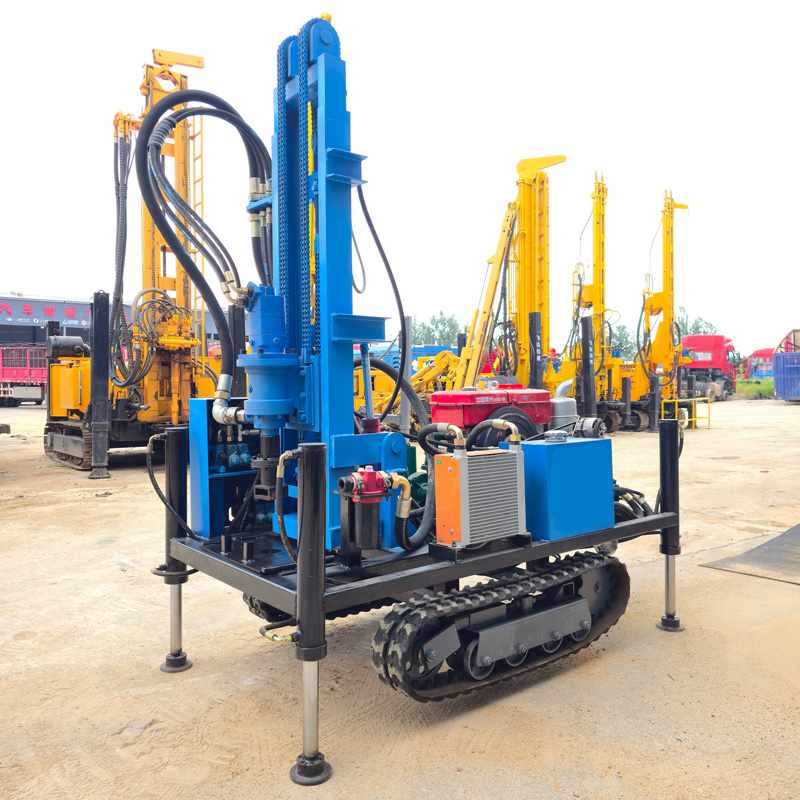
Similarly, the value of 28 HP lies in "not relying on a fixed power grid" and "being more suitable for conventional well drilling projects with limited budgets, scattered hole locations, and frequent site transfers." What it trades away is initial investment and transfer difficulty, not penetration rate per unit time.
The materials do not provide penetration efficiency data for this model under different formations, nor do they provide measured customer cases, so this article does not draw a conclusion on whether "low power is fast enough."
Several items that need separate confirmation
To replace these two types of misunderstanding with verifiable materials, at least the following need to be supplemented:
- The groundwater level and approximate aquifer location at the project site.
- The planned completed well hole diameter, well casing, and filter pipe structure.
- The main formation types to be penetrated, especially whether they are intact high-hardness rock layers.
- Whether a single hole will involve long-term construction close to 180 m depth.
These four items are project-side conditions and are not within the parameter table of the WR180E on this site. Without them, it is difficult to make a judgment on power size and drilling depth numbers alone.