












'This machine can drill 1000 meters'—in water well drilling rig documentation, drilling depth is the number most easily singled out and remembered. The WR1000S documentation on this site begins with: 1000-meter class, 52 T lifting force, 26000 / 13000 N·m rotary torque, 194 kW diesel power, drilling diameter 105–800 mm. These values all belong to the equipment side, describing how deep it can go under what conditions.
Whether a specific project needs to drill to 1000 meters depends on another matter: which layer the target aquifer is buried in. The question in the title asks exactly about the intersection of these two things.
The equipment-side 1000 meters: what conditions it is written into
The WR1000S's 'maximum drilling depth 1000 m' is not a line that appears in isolation. In the same section of documentation, there are also hole diameter range, drill pipe specifications, lifting force, torque, and air pressure. These parameters constrain each other rather than being independent upper limits.
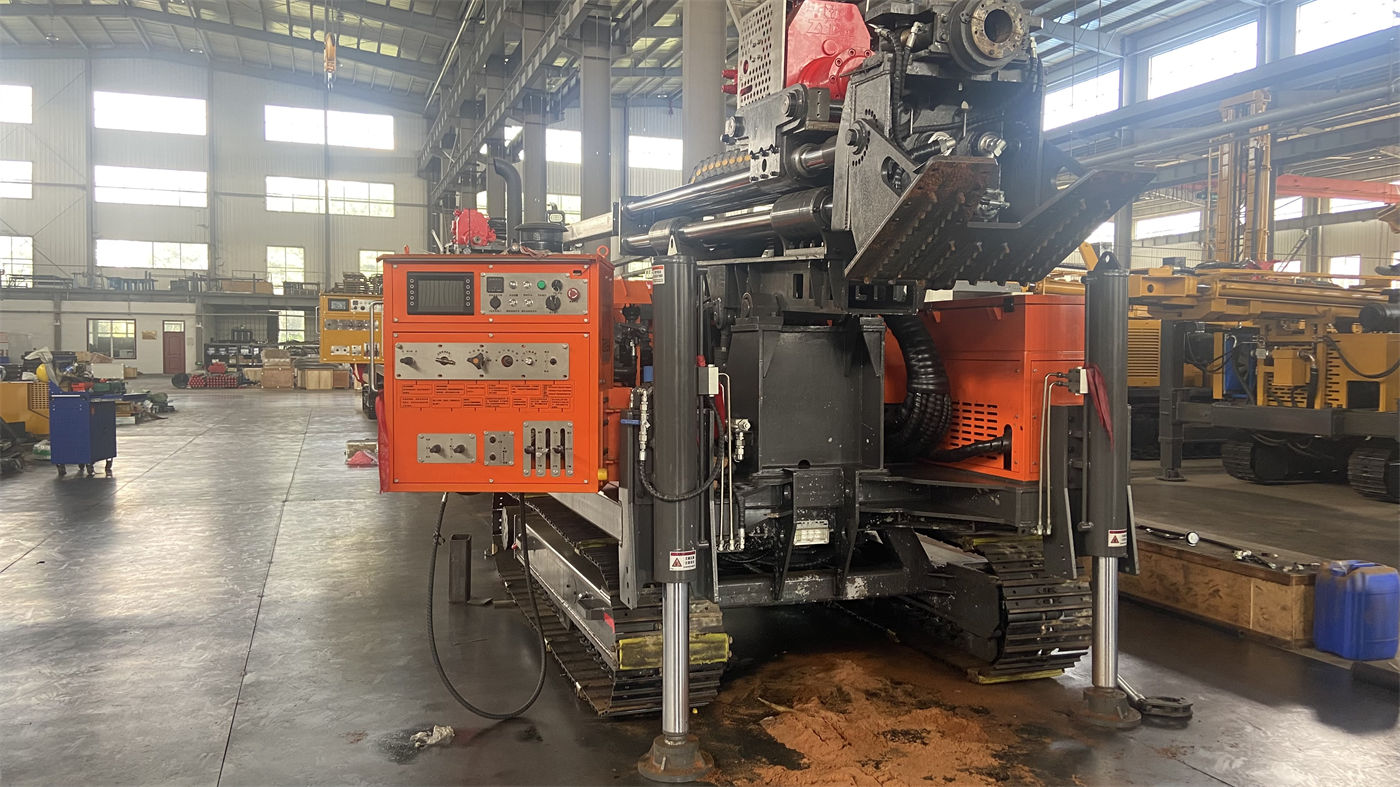
| Item | WR1000S published values |
|---|---|
| Maximum drilling depth | 1000 m |
| Drilling diameter | 105–800 mm |
| Lifting force | 52 T |
| Axial pressure | 8 T |
| Rotary torque / speed | 26000 / 13000 N·m, corresponding to 70 / 140 r/min |
| Working air pressure / air consumption | 1.6–8 MPa, 16–96 m³/min |
| Diesel power | 194 kW |
| Overall weight / dimensions | Approx. 17.8 T, approx. 7.3 × 2.25 × 2.75 m |
Reading through this table makes it clear: 1000 m is the depth when this set of conditions holds together. As the hole diameter approaches 800 mm, the formation changes from loose layers to intact hard rock, and friction inside the hole increases, the conditions this number depends on are all changing.
The project-side 'how deep to drill' is not determined by the rig
The depth target of a well comes from hydrogeological data: whether shallow and middle groundwater meets water supply needs, how deep the deep aquifer is buried, and which section the target layer is in. The documentation states that the WR1000S is suitable for areas where 'shallow and middle groundwater is difficult to meet water supply needs, deep aquifers are buried relatively deep, or the project requires large-depth investigation.' This sentence gives applicable situations, not a judgment about a specific well depth.
So the same '1000 meters' means different things in two documents: in equipment documentation it is a capability upper limit; in a hydrogeological report it may be the target hole depth, or this depth reserve may not be needed at all. The equipment provides deep-hole construction capability and cannot replace aquifer evaluation and water supply design—this point is stated very directly in the documentation.
Where problems first appear when the two numbers are confused
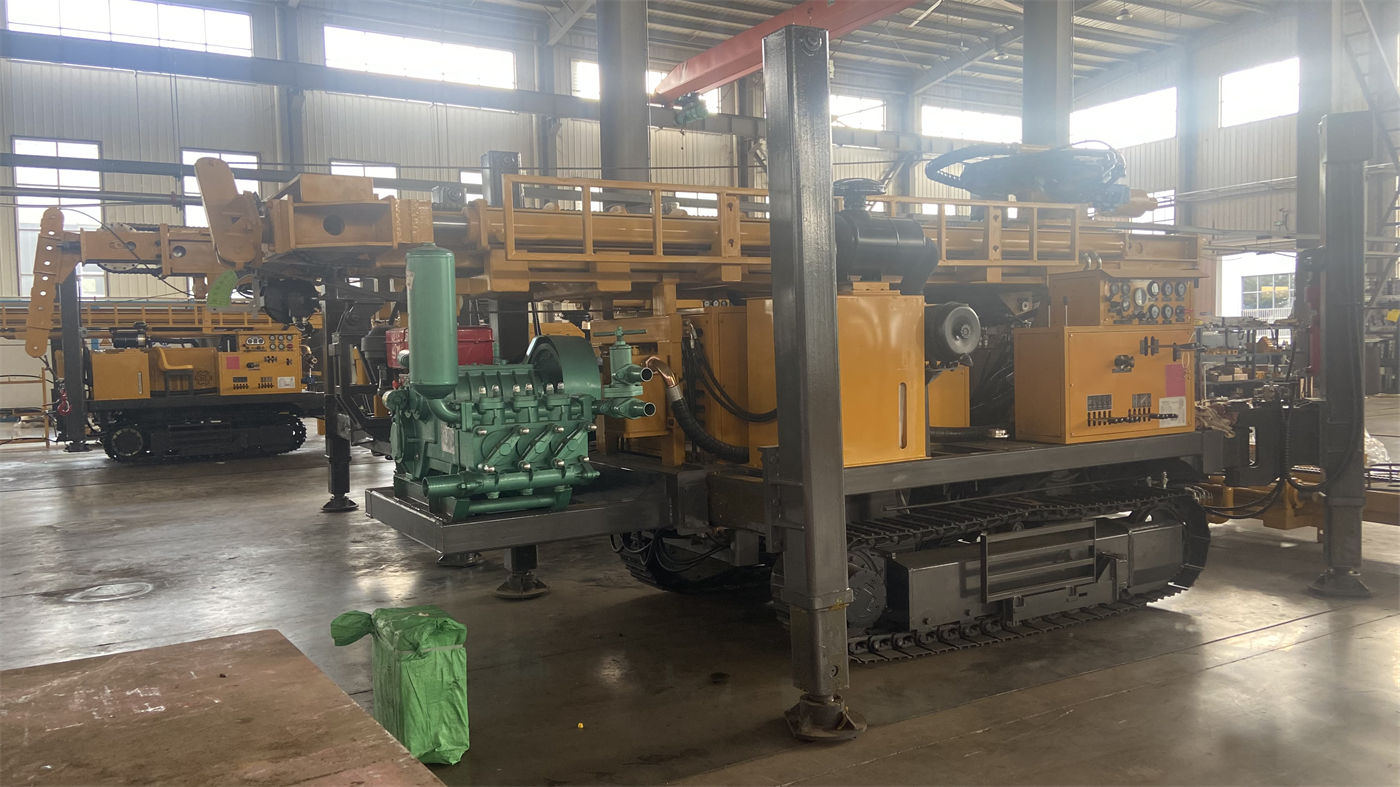
Treating the upper limit as the target, or treating the target as unusable margin, usually does not show up at the contract signing stage but in the supporting links. To reach 1000 m, more than one condition must hold simultaneously in the project.
- 6 m drill pipes reduce the number of connections, and the number of connections continuously accumulates at 1000-meter-class hole depths;
- 52 T lifting force corresponds to the load after drill pipe self-weight, hole wall friction, casing weight, and local sticking are superimposed;
- 1.6–8 MPa air pressure and 16–96 m³/min air consumption must be determined together based on the DTH hammer, hole diameter, hole depth, altitude, and rock hardness;
- 194 kW power, under long-period high load, still depends on engine cooling, air filtration, and hydraulic oil temperature maintenance.
Hole diameter is especially easy to skip. The 105–800 mm range is very wide, but the larger the hole diameter, the higher the requirements for the air compressor, drilling tools, casing, and overall load. The documentation clearly states that conventional construction cannot be carried out based only on the maximum hole diameter.
What still cannot be answered
The question 'should equipment be configured for 1000-meter class' can only be broken down in this article to the level of capability and conditions. A specific water well still has several items that need separate confirmation:
- The actual burial depth and water yield of the target aquifer must be provided by hydrogeological work;
- Well completion structure, including well diameter, screen pipe, sealing section, and filter material gradation;
- How to handle the upper loose layers, fractured zones, and air leakage layers;
- Air supply, hole cleaning, and casing plans for strongly water-inflowing sections.
These contents are outside the scope of the equipment parameter table and should not be inferred backward from drilling depth or torque values. What the documentation can answer is 'under what conditions the equipment has how deep a capability'; what the project must answer is 'to which layer this well needs to be drilled to produce water.' Only when the answers to the two questions align can equipment selection be considered settled.