












The first line of the CR1000I documentation states 1000 m fully hydraulic integrated core drilling rig, and the same parameter table contains another line: B-size reference drilling depth 1200 m, N-size reference drilling depth 1000 m, H-size reference drilling depth 500 m. If one also sees a similar rig labeled as 1200 m class, it is easy to interpret the two tiers as being 200 m apart on the same line. Compared with the values already published for the CR1000I on this site, this interpretation misses at least three things.
Reference drilling depth itself is not a single number
The CR1000I drilling capacity is written in three lines: B-size 1200 m, N-size 1000 m, H-size 500 m. B-size uses the BTW series thin-wall drilling tools, N-size corresponds to NQ, and H-size corresponds to HQ. For the same rig, changing the coring size changes the reference drilling depth. The figure of 1200 m appears on the CR1000I for the B-size tier, not the N-size.
So when two rigs are labeled 1000 m and 1200 m respectively, the first question to ask is which size tier each set of values is marked against. If one rig's 1200 m is for B-size and the other's 1000 m is for N-size, they are not two marks under the same conditions, but two lines under different coring diameters.
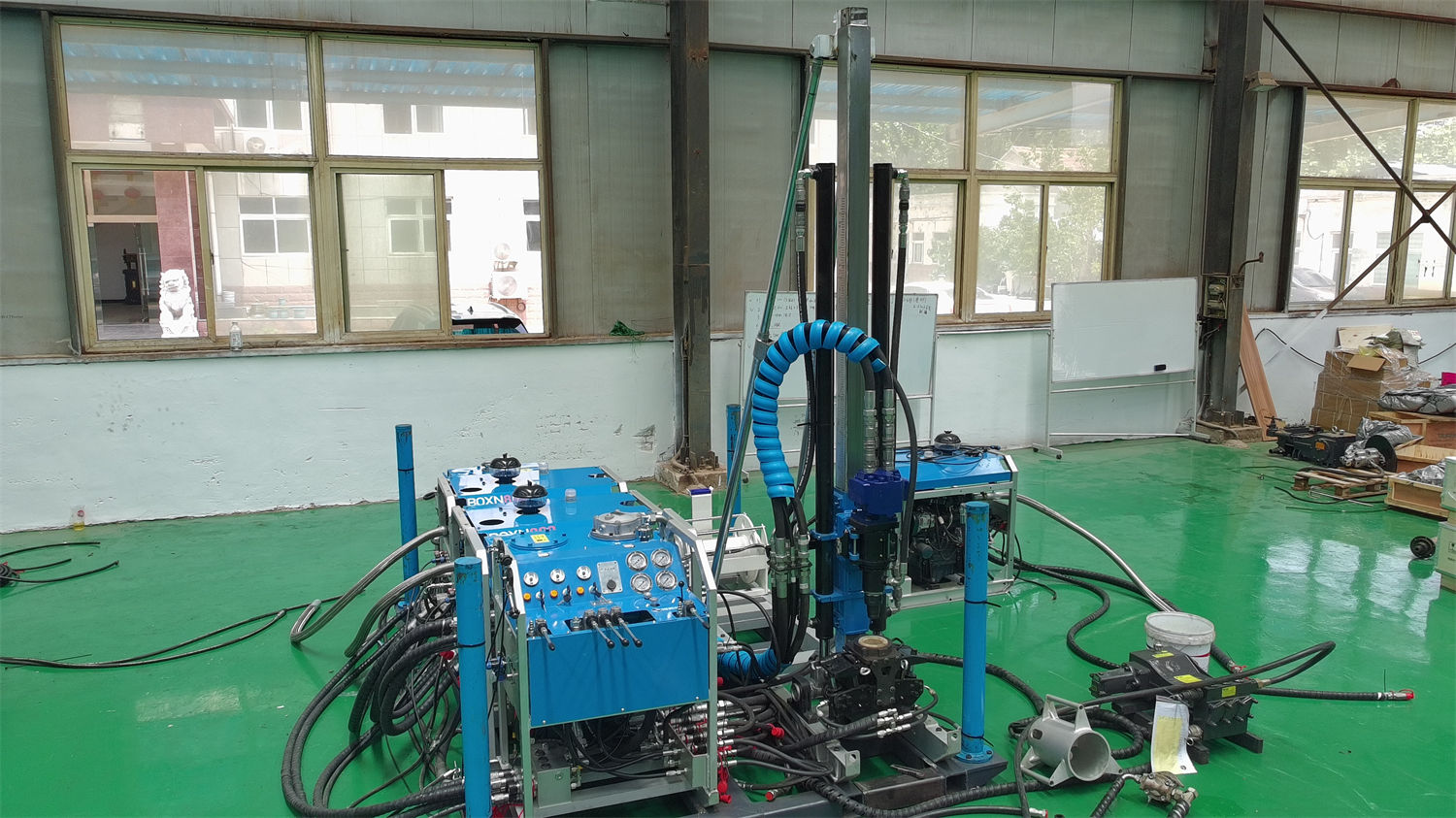
Changes in size drive more than just the drilling tools
When coring size moves from small diameter to large diameter, the entire downhole tool chain must change accordingly. Drill rods, core barrels, bits, chuck through-hole dimensions, winch rope capacity, power head speed and torque—these elements are interrelated. The CR1000I chuck through-hole diameter is 127 mm, and the applicable drill rods list five types: NQ, HQ, PQ, NTW, HTW, indicating that this rig covers a relatively wide range of sizes. The wider the size range, the more the parameter table needs to specify drilling depth separately by size; otherwise the values will overlap.
| Parameter item | CR1000I value |
|---|---|
| B-size reference drilling depth | 1200 m |
| N-size reference drilling depth | 1000 m |
| H-size reference drilling depth | 500 m |
| Maximum torque | 1200 N·m |
| Maximum speed | 1350 rpm |
| Feed force | 63 kN |
| Pull-up force | 185 kN |
| Winch rope capacity | 1000 m |
| Mud flow rate | 150 L/min |
| Mud pressure | 7 MPa |
The load corresponding to lifting force does not automatically scale with the nominal value
The CR1000I pull-up force is 185 kN. The deeper the hole, the greater the drill string's own weight, and the higher the risk of wall friction and sticking; the pull required to trip out rises accordingly. If the reference drilling depth increases from 1000 m to 1200 m, and if the coring size and drill string system remain unchanged, then a longer drill string of the same type placed on the same hoisting system will have its margin thinned. This is exactly why lifting force, feed force, and winch rope capacity must be checked together with drilling depth, rather than looking only at the top line.
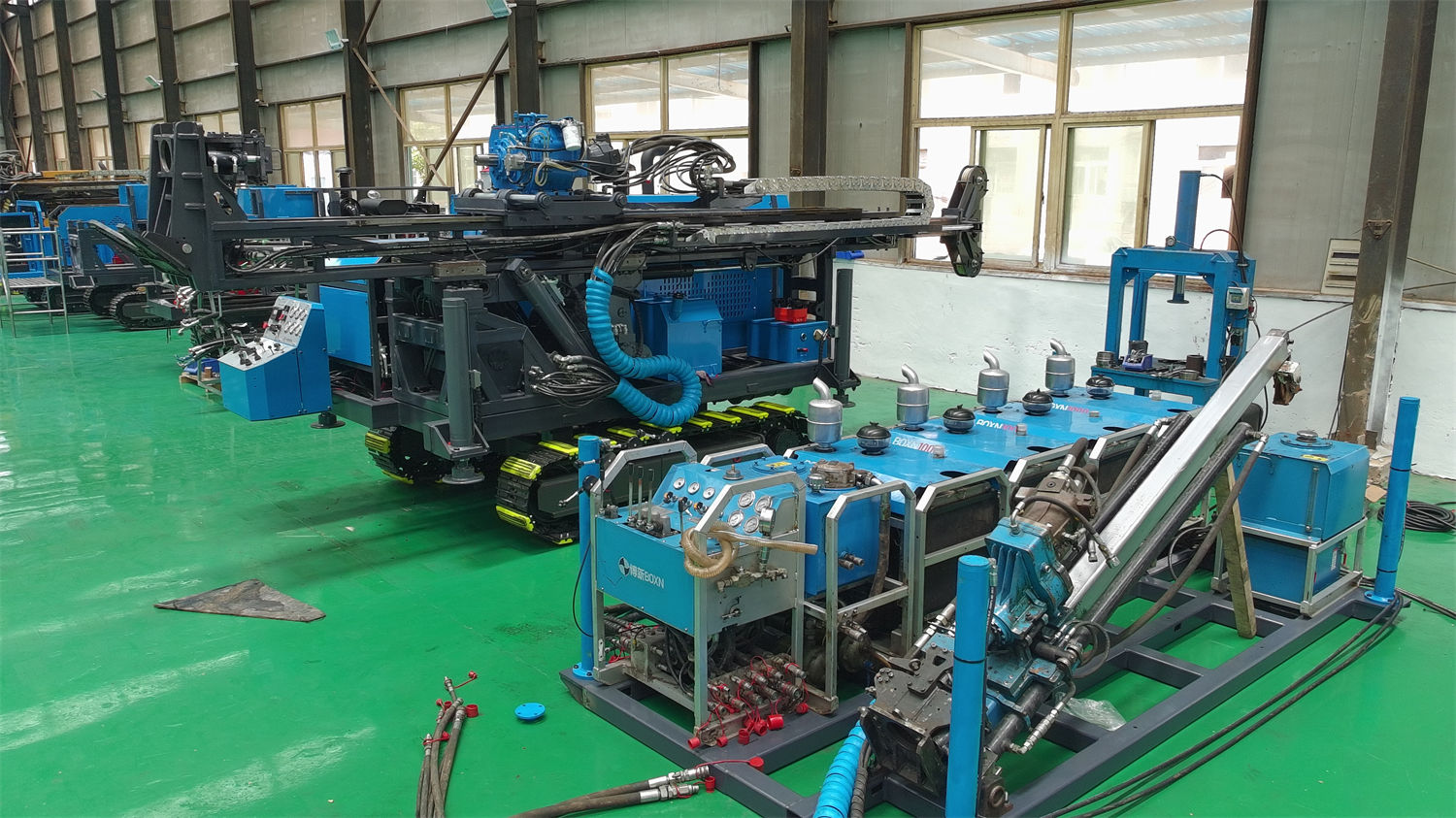
The same applies to the winch section. The CR1000I uses 6 mm wire rope, with a rope capacity of 1000 m and a hoisting speed of 98 m/min. The rope capacity is in the same order of magnitude as the reference drilling depth; the wireline coring process requires deploying and recovering the inner tube within the hole depth range, and insufficient rope capacity will directly constrain how operations can be organized.
Several items that need to be aligned between the two tiers
- Which coring size each is marked against: B, N, or H.
- Whether the magnitude of lifting force and feed force matches the drill string load after deepening.
- Whether the winch rope capacity and the target hole depth are within the same coverage range.
- Whether the chuck through-hole diameter corresponds to the drill rod size to be used.
- Whether the power head torque and speed can maintain suitable drilling parameters in the target formation.
- Whether the mud flow rate and pressure meet circulation and wall protection requirements after deepening.
Site conditions cannot be bypassed
The CR1000I supports drilling angles from 45° to 90°, has a hydraulically telescoping mast, a feed stroke of 3.3 m, and lists three drill rod handling lengths: 1.5 m, 2 m, and 3 m. Conditions such as hole layout, site bearing capacity, road width, and platform dimensions must be verified before the rig is mobilized. No matter how high the reference drilling depth, it also depends on whether these prerequisites can be met on site.
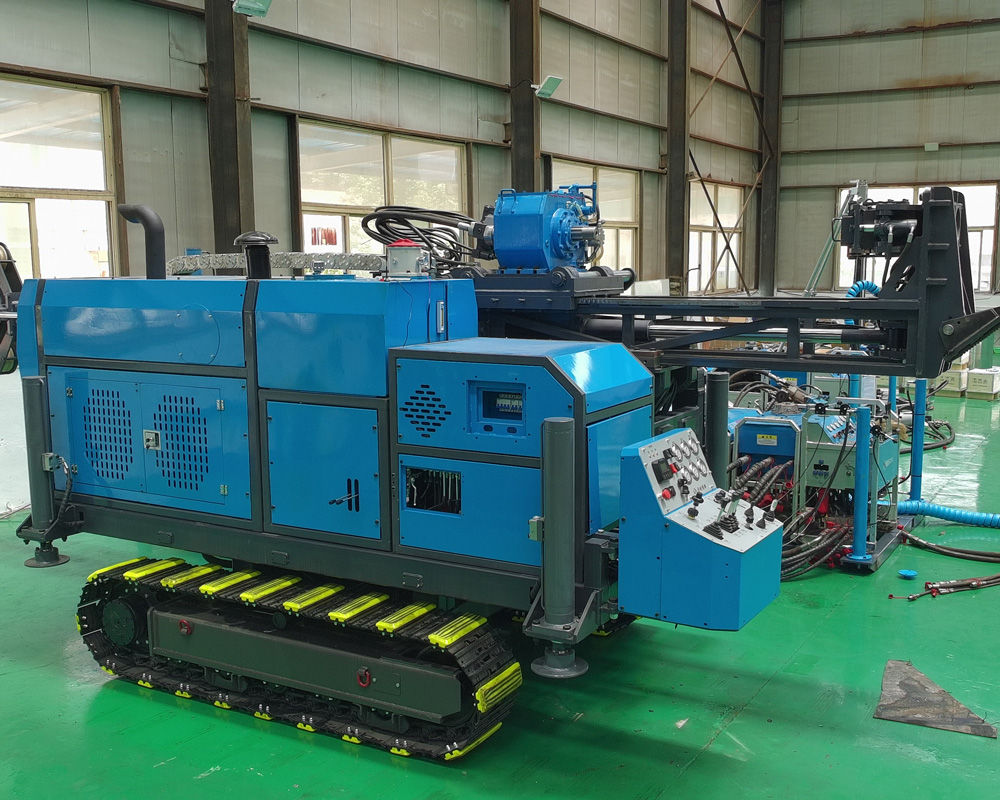
The power package uses a Cummins QSB4.5, displacement 4.5 L, rated power 119 kW, rated speed 2200 rpm, and a 24 V electrical system. The main pump has a flow rate of 250 L/min and pressure of 25 MPa, the auxiliary pump has a flow rate of 80 L/min and pressure of 17 MPa, and the cooling is a combination of air cooling and water cooling. During long drilling sessions, hydraulic oil temperature, filtration status, and oil cleanliness are several areas requiring ongoing maintenance attention.
What this rig's documentation does not answer
The CR1000I documentation gives three reference drilling depths: B-size 1200 m, N-size 1000 m, and H-size 500 m, but it does not explain how the other 1200 m class model's specific size is marked, nor does it provide comparative data for the two rigs under the same hole diameter and same formation. To judge what the 200 m difference means in a specific project, it is still necessary to align the target coring size, hole depth, hole diameter, drilling angle, and formation conditions item by item, and check the corresponding parameters of the two rigs separately.