












"Split-type, can be disassembled and carried, so it can go up any steep mountain." This sentence appears frequently in communication for mountain coring projects. It merges two things: first, after the equipment is split into several modules, the weight and dimensions of individual pieces become smaller; second, whether these modules can actually reach the hole position and, after arrival, whether they can be assembled and drilling started. The CR800P published on this site provides module weights and drilling parameters for a split-portable fully hydraulic core drill, and the two point to different questions.
What Split Design Actually Buys
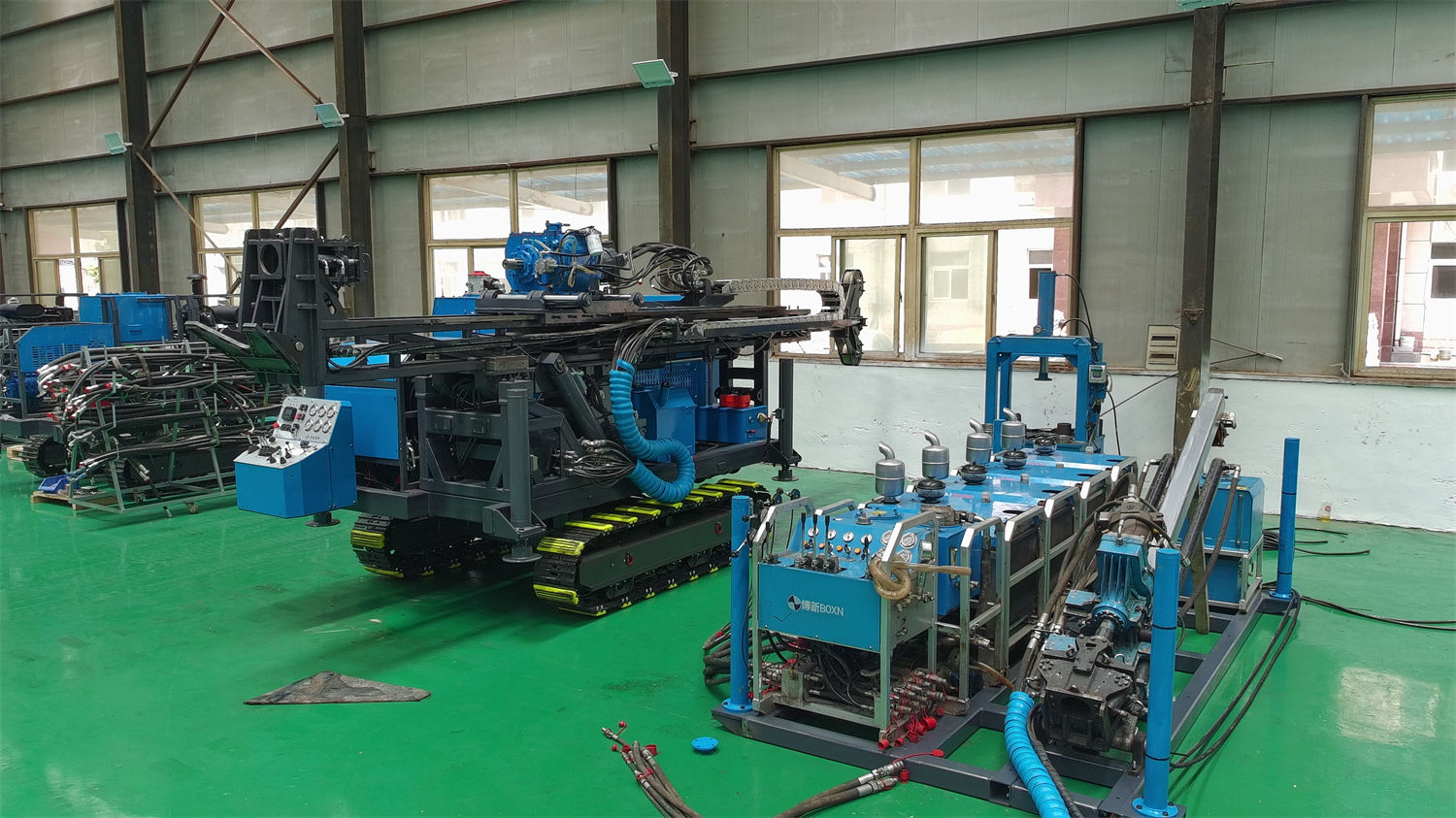
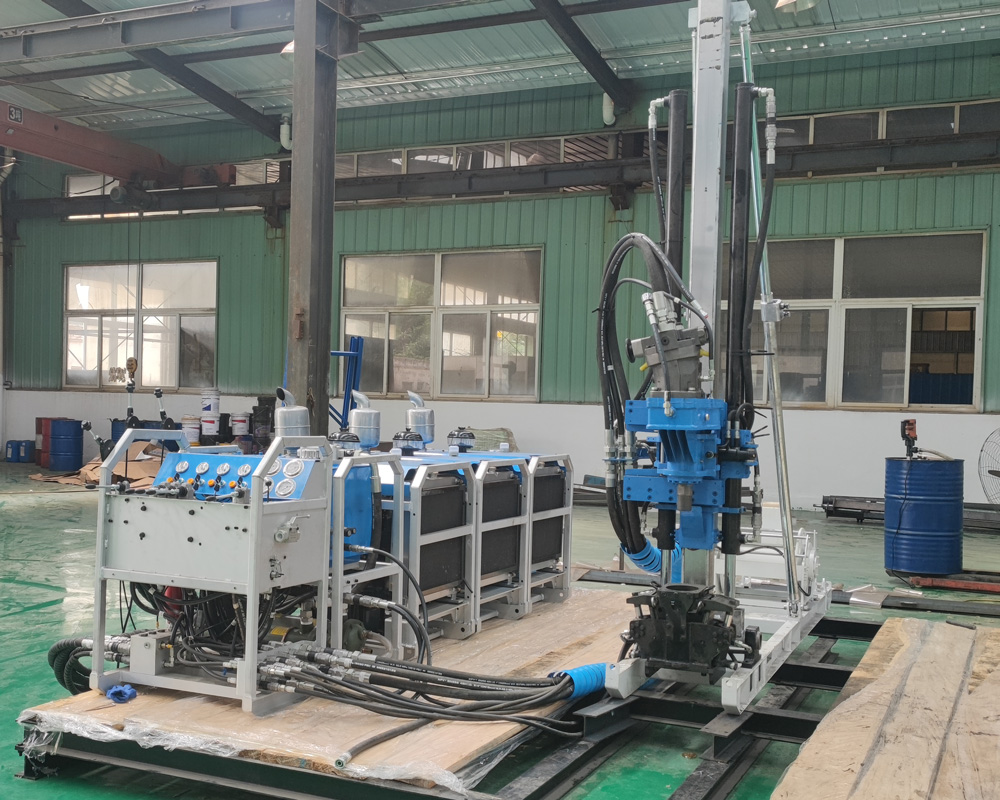
The reference module weights in the CR800P information are: power unit 180–260 kg, operating unit 140 kg, hydraulic oil unit (with oil) 160 kg, mud unit 95 kg, total weight 1380 kg. This set of values indicates the order of magnitude of individual pieces after splitting, not proof that any mountain road is passable.
A complete 1380 kg piece of equipment entering the hole position by road construction and lifting is indeed different in organization from carrying five modules in stages. But "can be split" only lowers the transport problem from the whole-machine scale to the module scale; each subsequent step is still constrained by road width, slope, turning radius, road surface bearing capacity, and personnel or cableway transport capacity. These conditions have no corresponding values in the CR800P information and are parts that must be separately verified before site entry.
Module Weight Cannot Be Inverted into Trafficability
A 180–260 kg power unit corresponds to completely different haulage plans in different projects: forest access roads may use small tracked carriers for piece-by-piece transfer, steep slopes may rely only on winches or cableways, and crossing gullies requires first solving the crossing method. The 160 kg hydraulic oil unit contains oil, so tilt angle and oil sealing must also be considered during transport. Beyond the 95 kg mud unit, mud materials, water source, and mixing site must also be located near the hole position.
- Module weight determines whether a single piece can be lifted or moved by some method, not whether the route is feasible;
- The total weight of 1380 kg is the sum of modules, not an indication that it can be moved as a whole after arrival;
- The assembly surface requires flatness and bearing capacity, and the storage areas for drill rods, core boxes, and mud materials must be calculated separately.
45°–90° Refers to Hole Angle, Not Site Entry Difficulty
The CR800P supports multi-angle drilling from 45°–90°. In ore veins controlled by faults and shear zones, inclined holes can improve ore intersection effectiveness; the adjustable angle range belongs to hole layout capability and is a separate matter from whether the equipment can reach the hole position. When the mountain platform area is limited, angle adjustment also affects mast orientation, drill rod placement, and hole collar operating space, and this part needs to be verified according to specific platform conditions.
Medium-Deep Hole Capability Is Shared by Several Parameter Groups
The CR800P has a BQ reference drilling depth of 920 m, NQ reference drilling depth of 800 m, and HQ reference drilling depth of 380 m. The three specifications cannot be compared horizontally by size; the smaller the specification, the greater the achievable depth, which is the expression of the same drilling capability under different drill tool systems. As depth increases, the division of labor among components is roughly as follows.
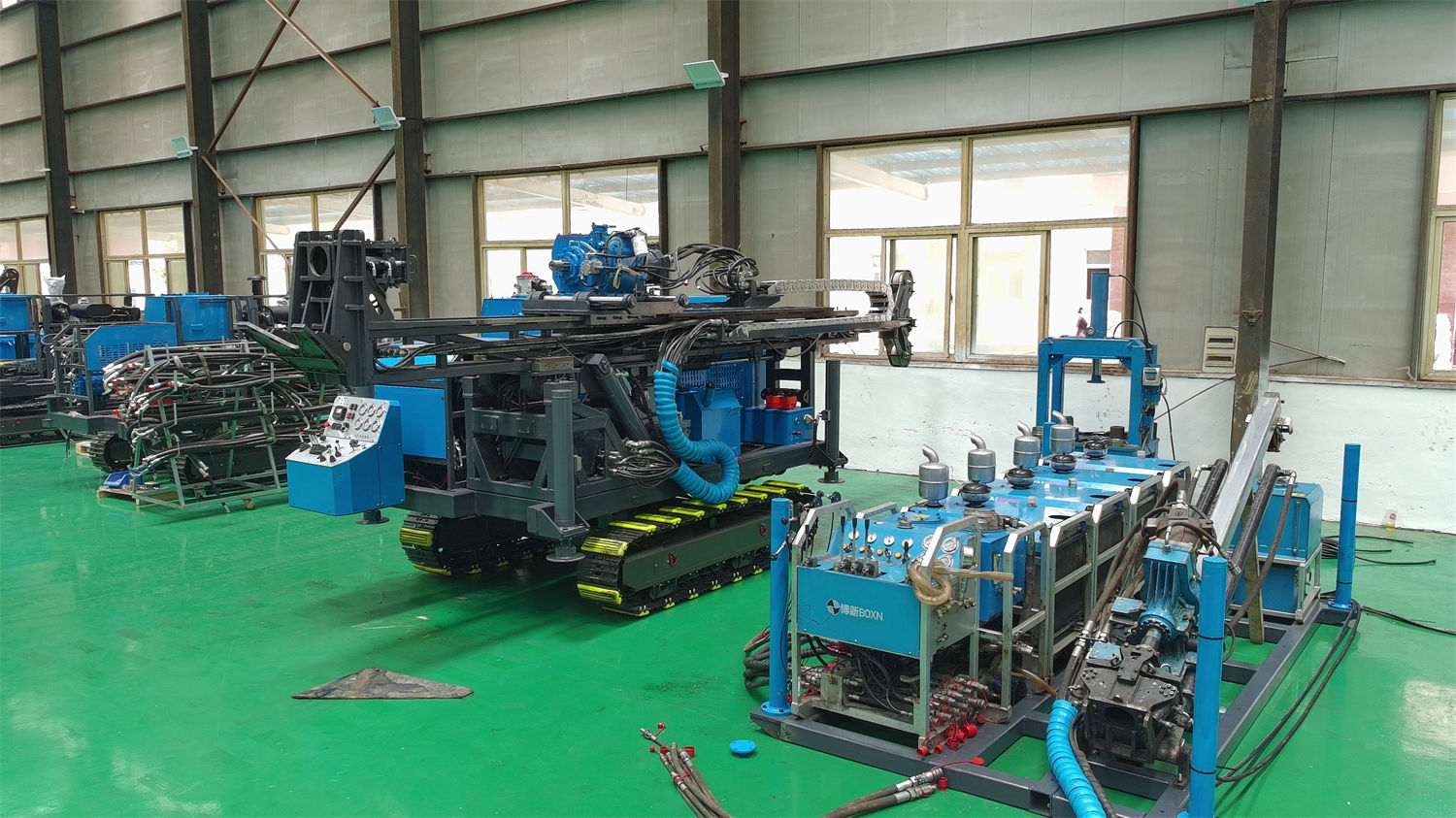
| Parameter | Value | Constrained Link |
|---|---|---|
| Feed force | 67 kN | Feed direction, coordinated with weight-on-bit control |
| Pull force | 130 kN | Margin for pulling out and handling downhole resistance |
| Power head torque | 980 N·m | Rotary cutting, requires adjustment when lithology changes |
| Power head speed | Max 1200 rpm | Coordinated with bit type and rock mass integrity |
| Wireline winch rope capacity | 1000 m (6 mm wire rope) | Inner tube lifting for 800 m-class wireline coring |
| Mud flow and pressure | 100 L/min, 7 MPa | Circulation cuttings removal and return water stability |
As hole depth increases, drill rod self-weight and borehole wall friction gradually rise, and the 130 kN pull force leaves margin for drill tool handling in deeper hole sections. When abnormal resistance is encountered, the borehole wall and circulation status should be checked first rather than continuously pulling hard.
Power Scheme Depends on Mine Site Supply Conditions
The CR800P can be equipped with diesel power, with a diesel engine power requirement of ≥99 kW; a 22 kW×3 electric motor configuration is also available. In remote mountainous areas, fuel transport, power generation conditions, and maintenance resources must be included in the judgment; a fixed platform with stable power supply can consider an electric scheme, reducing engine maintenance and fuel storage and transport pressure. Which one to choose is not an extension of portability but the result of matching supply conditions.
Accessibility and Constructability Are Two Different Things
The split structure lowers the threshold for carrying individual pieces, but the following items still need separate confirmation before work begins: rainy-season trafficability, slope stability, personnel carrying routes, platform drainage and assembly surface bearing capacity, mud water source, storage locations for drill rods and core boxes, and safety passages. When hole positions are scattered and exploration lines cross multiple ridges or gullies, these conditions often determine project pace earlier than the equipment itself.
Therefore, "split-portable" can be read as an improvement in equipment accessibility, but it is not suitable to read as a pass for entering any mountain terrain. Actual drilling efficiency, drilling depth, and core recovery still need to be based on on-site geological conditions, downhole tools, drilling angle, and operating methods; slope and bearing capacity limits not covered in this article should be confirmed with the manufacturer or site survey data.