












In deep exploration projects, when discussing equipment, the question of "how deep can it drill" is often placed first. However, the 1200 m in a drill rig's specifications and the orebody down-dip line required for control in a geological design are not the same quantity. The published specifications of the CR1200P list BQ reference drilling depth 1500 m, NQ reference drilling depth 1200 m, and HQ reference drilling depth 700 m in the same paragraph; these three lines themselves represent the performance of the same drilling capability under three core diameters. From orebody control objectives to hole depth class, two steps of judgment must be completed first before matching to specific values.
Step 1: Convert orebody control objectives into depth and angle requirements
When an orebody transitions from shallow to deep control, the geological task is usually written as several verifiable requirements: the mineralization extension interval to be controlled, whether the second mineralization space must be crossed, the angular relationship between the hole position and the orebody dip, and whether a single hole needs to also cover peripheral extension. These requirements do not directly equal drill rig parameters, but they determine three things—the minimum hole depth, the hole deviation range, and whether continuous coring or segmented verification is used.
The CR1200P specifies a drilling angle of 45°–90°, meaning it can be set up for vertical holes or inclined holes according to the orebody dip. If the control objective is to verify deep structures or deeper anomalous bodies, the proportion of inclined holes tends to increase; if it is merely to extend the down-dip boundary of an existing orebody, vertical holes remain usable. Once the angle is determined, the subsequent hole depth, drill string load, and site layout have a premise.
Step 2: Core diameter determines which drilling depth row to look at
In the specifications on this site, the CR1200P is listed as BQ 1500 m, NQ 1200 m, and HQ 700 m. In many discussions, "1200 m class" is treated as a fixed attribute of the equipment, but in reality this number corresponds to the reference value under NQ diameter. BQ diameter is smaller, so the reference drilling depth can reach 1500 m; HQ diameter is larger, so the same equipment drops to 700 m. The three tiers are not an upgrade relationship, but rather the allocation result of the same power and lifting capacity under different drilling tool systems.
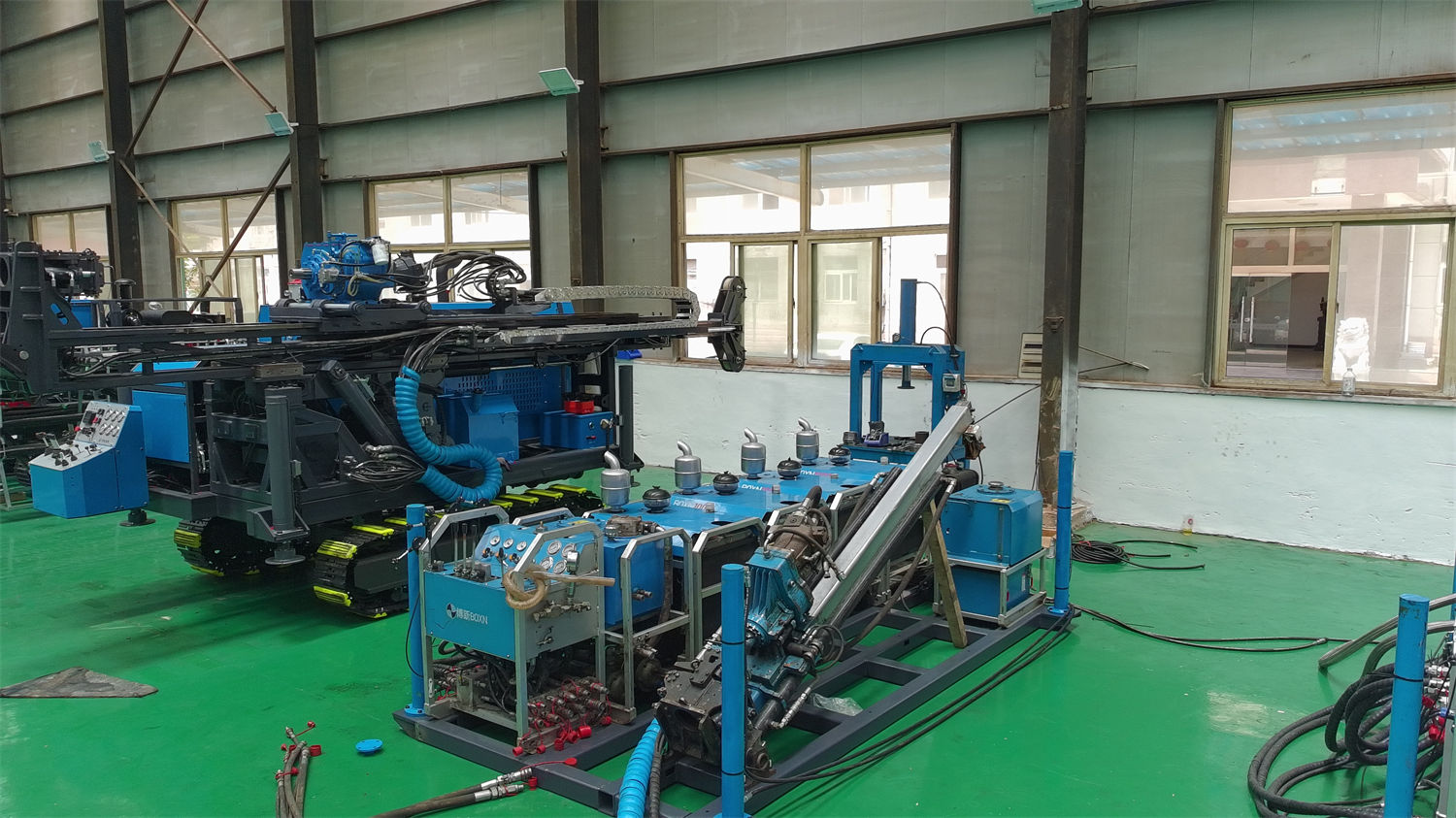
Therefore, the judgment sequence should be reversed: first determine the core diameter based on orebody control precision and sample requirements, then return to the specification table to find the corresponding depth value. If the project requires full-hole HQ coring, the reference depth row gives 700 m, which does not conflict with 1200 m—it is simply under a different diameter tier.
| Core diameter | Reference drilling depth | Required drilling angle |
|---|---|---|
| BQ | 1500 m | 45°–90° |
| NQ | 1200 m | 45°–90° |
| HQ | 700 m | 45°–90° |
Step 3: Several sets of supporting values to verify for the hole depth class to hold
After the diameter and depth are selected, whether the target depth can actually be reached depends on whether several sets of parameters are on the same order of magnitude. The values given in the CR1200P specifications should be viewed in conjunction, not cited individually.
Rotation and axial: 1360 N·m and 130 kN each govern a segment
The power head has a maximum torque of 1360 N·m and a maximum speed of 1500 rpm, using a variable piston motor plus gear transmission; the power head supports swing or side shift. The feed system has a feed stroke of 1.8 m, thrust force of 67 kN, and pull force of 130 kN. Torque constrains how much rotational capability is needed to turn this section of drill string, while pull force constrains how much axial margin is needed to lift the drill string out of the hole and handle friction and sticking. Different stages of deep hole drilling have significantly different demands for speed and torque, and the specifications also indicate that adjustments should be made dynamically according to rock properties, hole diameter, and drill string load.
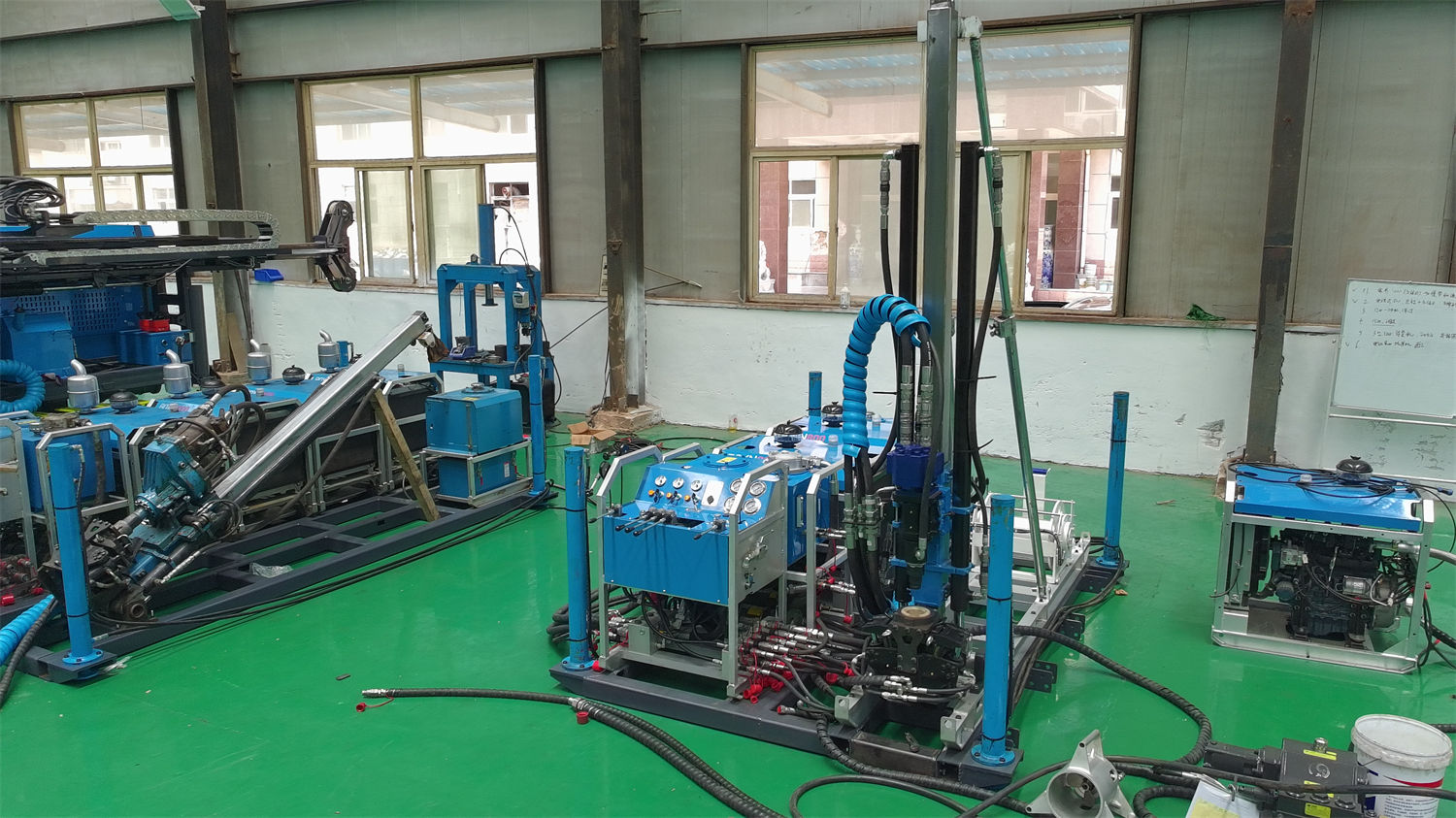
Hoist and rope system: 1400 m rope capacity and 6 mm wire rope
The hoist has a rope capacity of 1400 m, equipped with 6 mm wire rope, a lifting speed of 116 m/min, an empty drum lifting force of 14.5 kN, and a full drum lifting force of 5.6 kN. During continuous coring in deep holes, the inner tube lifting distance is long and the wire rope is used frequently; the specifications explicitly require establishing inspection and replacement records, and conducting periodic checks for broken wires, wear, indentations, and rope end connections. This item is a daily work item in 1200 m class hole depths, not optional.
Circulation and hydraulics: 250 L/min main pump and 150 L/min mud flow
The main pump has a flow of 250 L/min and pressure of 25 MPa, the main oil tank is 250 L, and the control method is manual plus pilot-operated; the mud pump has a flow of 150 L/min and pressure of 7 MPa, and the mud agitator has a mixing capacity of 1.2 m³/min. In deep holes, the distance for cuttings to be carried is long, and the mud simultaneously performs cooling, lubrication, and wall protection. The specifications state that when encountering deep leakage, water-bearing fractures, or broken zones, mud properties should be adjusted promptly according to changes in return water and pump pressure, rather than relying on increasing speed or increasing thrust to get through.
Step 4: Compatibility of hole diameter, drill pipe, and collar operation
The power head has a maximum applicable drill pipe diameter of 114 mm, applicable drill pipe lengths of 1 m and 1.5 m, and the chuck has a through-hole capacity of 54–127 mm and a maximum clamping force of 130 kN. These items determine the range of drill tool combinations available on site. No matter how high the hole depth class, if the chuck through-hole and drill pipe specifications do not match the selected core diameter, the collar operation will still be limited. The specifications do not list content beyond the complete drill tool list matched to each diameter; specific combinations should be confirmed with the manufacturer according to the project's drill tool system.
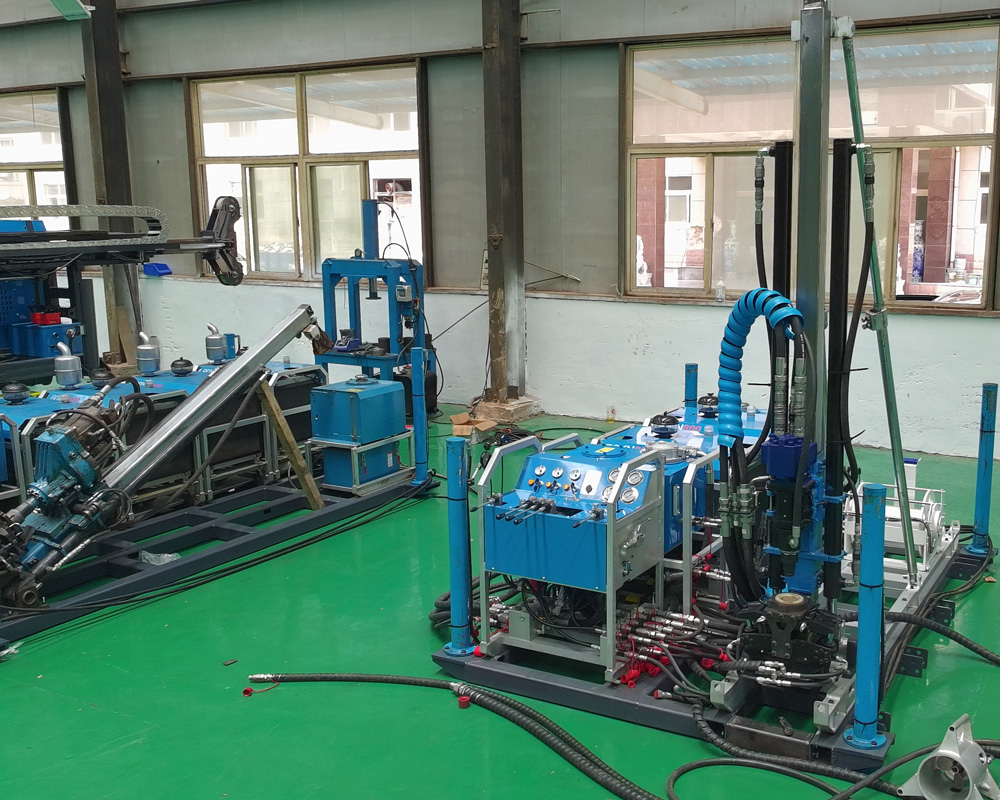
Step 5: Power form and site conditions in remote mining areas
The CR1200P can be optionally diesel-powered or electric: the diesel engine power requirement is ≥147 kW, and the brand can be selected among Kubota, Cummins, Yunnei, and Yuchai; the electric motor configuration is 30 kW × 4, with speeds of 3000 / 1450 rpm. Mines with a stable power supply and fixed platforms can consider the electric option, while remote field projects rely more on independent power and need to plan fuel security in advance. The two power forms correspond to different site layouts; this is an item that needs to be decided only after the hole diameter and depth are confirmed, and should not be locked in prematurely.
Regarding module weights, the specifications give power unit 180–260 kg, operating unit 160 kg, hydraulic oil unit (including oil) 160 kg, mud unit 210 kg, and total weight 1880 kg. These values determine the transportation and lifting arrangements to be implemented during the mobilization stage, and are also the basis for judging hole position accessibility; they belong to a different issue from drilling depth capability.
Matters still decided by the project owner after depth is determined
- Hole position layout and drilling sequence: which holes to drill first and whether a single hole needs to also cover peripheral extension fall within the scope of geological design; the specifications do not provide such conclusions.
- Response to downhole conditions: when entering fault zones, broken zones, or severe loss layers, the specifications indicate that mechanical impact should be reduced, run length shortened, circulation anomalies handled promptly, and if necessary, casing, plugging, or segmented wall protection should be combined, rather than blindly pursuing footage.
- Spare parts and consumables reserve: the time cost of waiting for parts after a shutdown in remote mining areas is high; commonly used seals, filters, quick-change connectors, wire rope wear parts, drill tools, and mud materials need to be prepared in advance, and the specific list should be determined according to the project cycle and transportation conditions.
- Actual drilling depth and efficiency: the specifications state that when actual geological conditions, downhole tools, drilling angle, and operating methods differ, the final drilling efficiency, drilling depth, and core recovery effect should be based on on-site conditions.
Looking at these steps together, the 1200 m class hole depth is not the starting point for selection, but the result obtained by aligning item by item with equipment parameters after confirming the orebody control objectives, core diameter, and angle requirements. The parts not given in the specifications, such as rock drillability in a specific mining area, complete drill tool configuration, and on-site water supply capacity, need to be verified separately at the project level.