

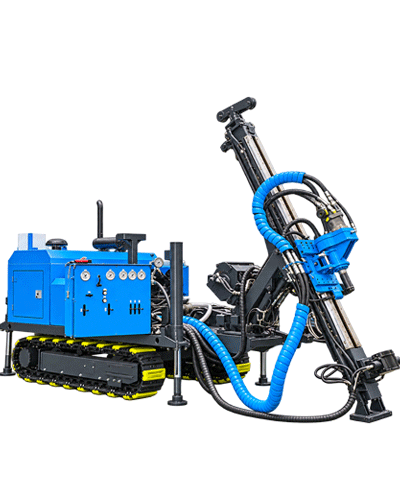
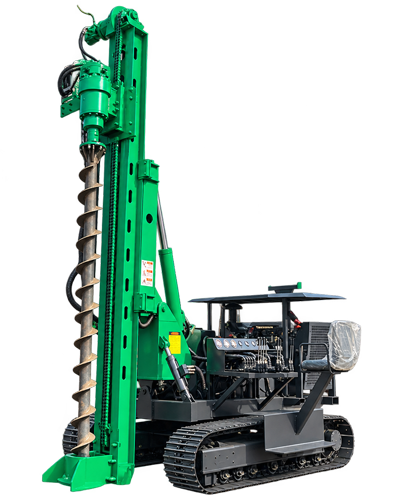
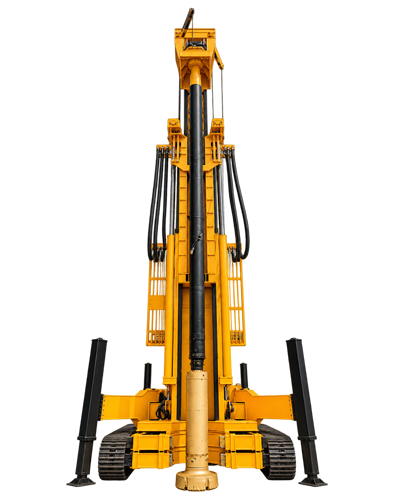
Putting the words "crawler" and "reverse circulation" together easily reads as a general capability: crawler means it can travel on uneven ground, and reverse circulation means it can sample deep holes. But dense-forest hole positions and shallow water-table wells are two task types whose constraints on the same machine actually fall on different sets of values. Based on the parameters published for the RC600 on this site, this article discusses only what each of these two task types needs to verify, and why they cannot be directly applied to each other.
First, put the RC600's public values together
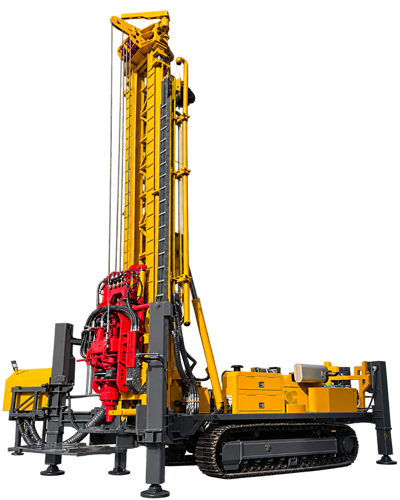
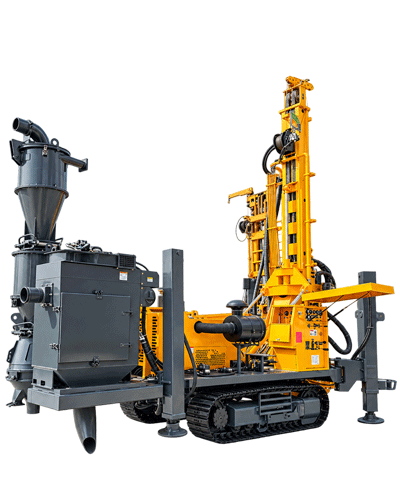
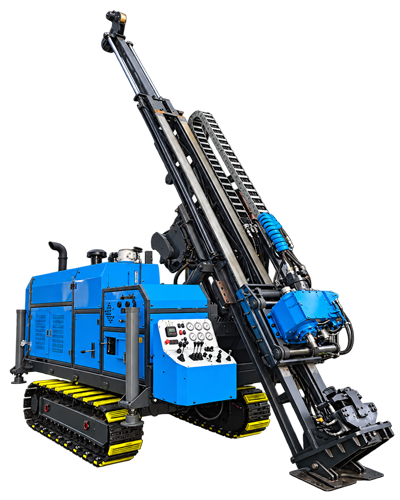
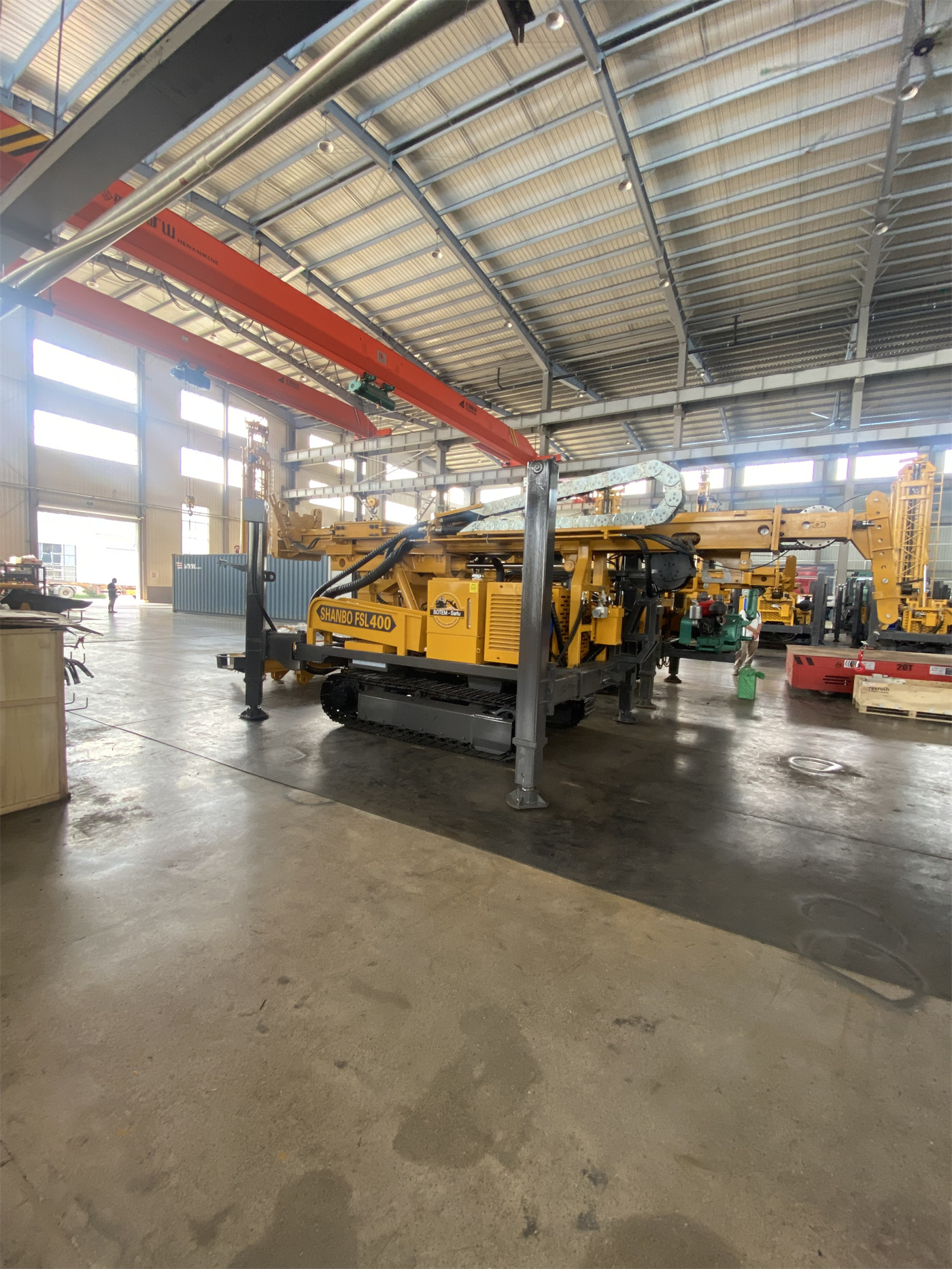
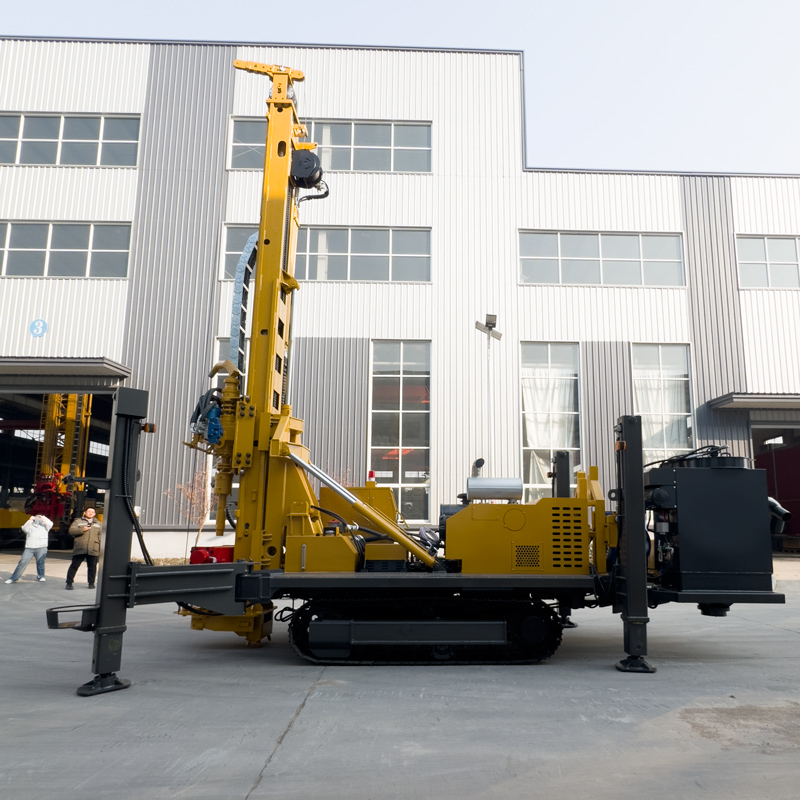
The RC600 product information states: maximum drilling depth 600 m, hole diameter 105–450 mm, 132 kW Cummins engine, lifting force 29 T, rotary torque 12000/6000 N·m, corresponding maximum rotary speed 75/150 r/min, working air pressure 1.6–6 MPa, air consumption 16–75 m³/min, travel speed about 3.5 km/h, maximum climbing angle reference 21°, outrigger stroke 1.7 m, winch lifting force 2.5 T, overall weight about 12.5 T, dimensions about 7 × 2.1 × 2.9 m.
These values themselves are neutral; the problem lies in which task type they are respectively mapped to. Let us look at them separately below.
For dense-forest hole positions, constraints first fall on the access stage
Dense-forest hole positions are characterized by scattered positions, narrow access, and uneven ground. The constraints this task type places on equipment are not on drilling depth, but on whether the equipment can reach the position and whether there is ground to spread out on after arrival.
Overall dimensions are the first hard constraint
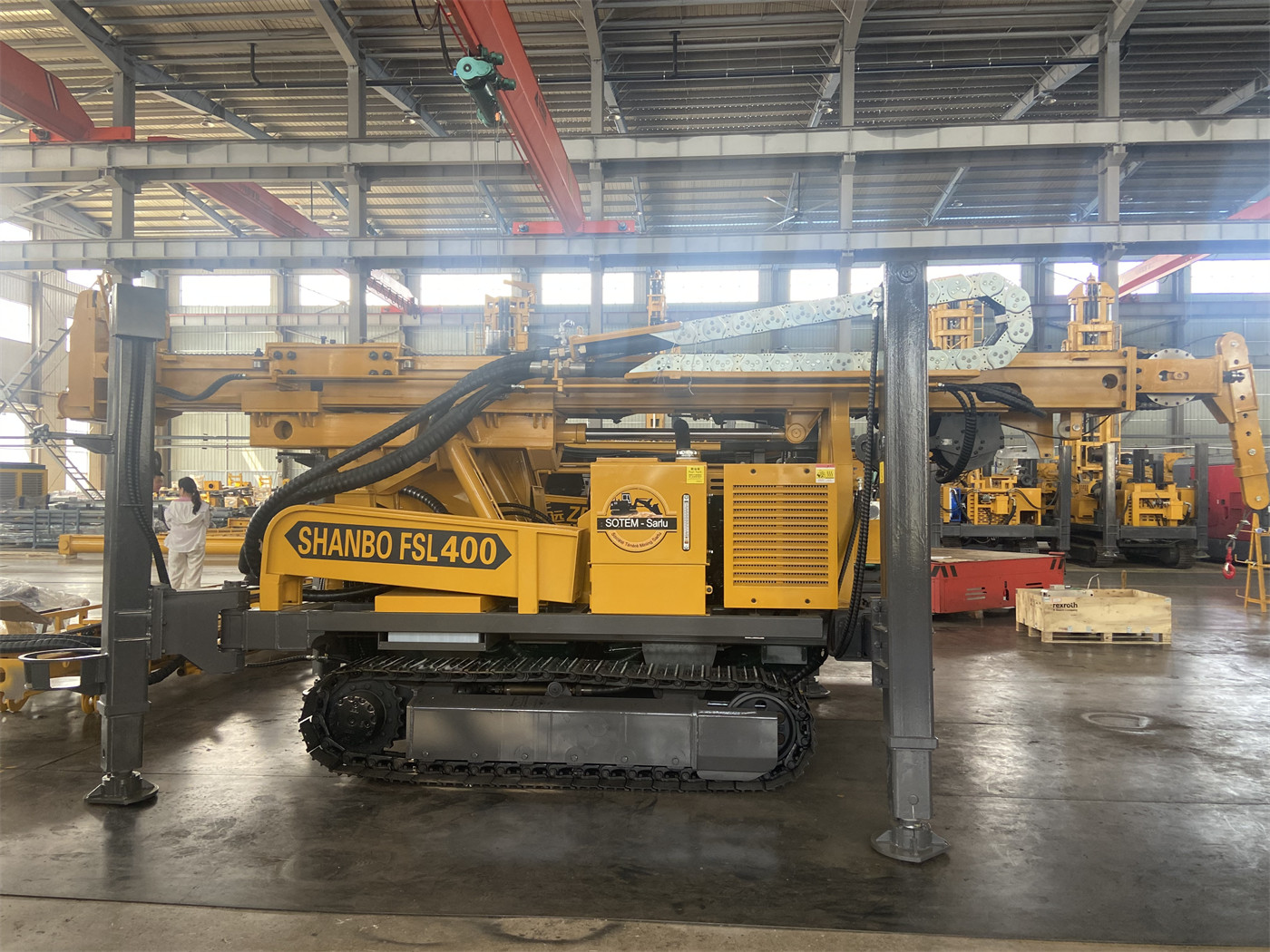
The RC600 dimensions are about 7 × 2.1 × 2.9 m, and overall weight is about 12.5 T. The 2.1 m width determines whether forest passages can be passed, and the 2.9 m height determines whether there are low-hanging branches, temporary crossings, and overhead lines along the route. These two limits are unrelated to drilling depth parameters; no matter how great the drilling depth, a machine 2.1 m wide cannot pass through a narrower passage.
Travel speed and climbing angle only describe the equipment's own capability
The materials give a travel speed of about 3.5 km/h and a maximum climbing angle reference of 21°. These are two reference values, not a promise that holds for any forest terrain. Whether it can actually travel also depends on ground bearing capacity, whether the slope is continuous, and whether there is enough turning space. The crawler chassis is suitable for mining gravel roads, field exploration platforms, and generally uneven ground; these materials do not describe passage performance under dense-forest conditions.
Outriggers and platform determine whether drilling can start after arrival
The outrigger stroke is 1.7 m, used for leveling and stabilizing the equipment. Dense-forest hole positions often lack a ready-made level platform, requiring leveling to be completed within limited space. When drilling 45° inclined holes or high-torque drilling, the force direction on the equipment is more complex, and the outriggers, ground bearing, and overall level state all directly affect hole direction control. This means that in addition to passage, dense-forest hole positions also require extra reserved platform working space.
For shallow water-table wells, constraints fall on the well completion stage
The difficulty of shallow water-table wells is not hole depth, but well diameter, hole wall stability, and aquifer position. For the same reverse circulation equipment, when drilling water wells the focus shifts overall forward to the well completion structure.
Hole diameter range is the first value to verify
The RC600 hole diameter is 105–450 mm. A water well project needs to first determine the design well diameter, then see whether the equipment can cover it. Whether the upper value of 450 mm can actually be used also depends on drill pipe, air compressor, formation conditions, and hole deviation control; the 600 m in the materials should also be treated as reference capability under a typical configuration, and actual drilling depth will be affected by hole diameter, drill pipe, air compressor, rock formation, hole deviation, and drilling tool wear.
Drilling method should be selected by formation in sections
The materials show that the RC600 supports RC drilling and conventional DTH hammer drilling, and also supports mud rotary methods. Loose overburden such as soil layers, sand layers, and gravel layers may not be suitable for direct high-air-pressure RC drilling; mud rotary can first be used to stabilize and complete the hole, and after entering stable rock formations, the process can be switched to RC or DTH. The focus of a water well project is the hole wall, well diameter, aquifer, and well completion structure, which differs from the focus of a mineral RC sampling project.
Water well applications and sampling applications read parameters differently
When the same equipment is used for deep water wells, requirements such as sample return continuity, sample numbering, and depth recording are no longer the focus; for applications such as mine dewatering, well locations, well spacing, hole diameter, and pump rate must be designed according to hydrogeological conditions, and the drill only handles hole completion construction and cannot replace dewatering design. The section in the materials about deep water wells states applicable directions, but does not give well completion configuration conclusions under specific well diameter and formation combinations.
Why the two task types cannot be directly applied to each other
Putting the constraints of the two task types side by side makes the differences clearer.
| Verification item | What dense-forest hole positions focus on | What shallow water-table wells focus on |
|---|---|---|
| Overall dimensions | Passage width and clearance height | Well site layout and equipment spacing |
| Travel capability | Forest ground bearing capacity and slope continuity | Transfer between sites and between well positions |
| Platform conditions | Whether there is enough outrigger leveling space | Wellhead working surface and mud discharge space |
| Hole diameter and drilling depth | Usually designed as exploration holes | Determined by design well diameter and aquifer depth |
| Drilling method | Whether rock cuttings samples are needed | Formation and well completion structure |
This table is meant to illustrate one thing: for the two task types to share one machine, the precondition is that these verification items all hold in the same project. If only one column is satisfied, the conditions in the other column do not automatically follow.
There is still one intersection between these two task types
The RC600's hole diameter of 105–450 mm and drilling depth of 600 m make it appear in both mineral exploration holes and large-diameter deep water wells. The 45° and 90° working angles follow the same logic: 90° is used for conventional vertical exploration and water well construction, while 45° is more suitable for inclined crossing of inclined ore bodies, veins, and fault zones. Sharing is a fact, but sharing does not mean the conditions of the two task types can be interchanged.
More importantly, the supporting equipment beyond the machine is not the same. A mineral RC project also needs a large air compressor, sample return hose, sampling device, and sample area; the drilling platform size should be planned in advance to ensure sufficient safety distance and operating passages between equipment. A water well project must arrange supporting equipment around the well completion structure. The same machine occupies very different on-site resources in the two project types, and the site cannot be planned based only on the main machine.
There are still several points to confirm with the manufacturer or project party
- Actual passage performance under dense-forest conditions is not described in these materials and needs to be verified separately according to specific passage width, slope, and ground conditions.
- The actual reachability of a 450 mm hole diameter at 600 m depth: the materials give a parameter range, not an actual drilling result under any combination.
- The well completion structure, filter pipe layout, and aquifer position in a shallow water-table well project belong to hydrogeological design content and are outside the scope of equipment materials.
- Working air pressure 1.6–6 MPa and air consumption 16–75 m³/min correspond to a drilling capability range; the selection of a matching air compressor needs separate confirmation based on hole depth, hole diameter, altitude, and rock hardness.
Putting these points together, the conclusion is actually simple: whether a crawler reverse circulation drill can simultaneously handle dense-forest hole positions and shallow water-table wells does not depend on how large its drilling depth number is written, but on whether both sets of conditions above are satisfied in the same project. When both sets of conditions hold separately, the equipment can be shared; when one of them does not hold, changing the configuration or changing the equipment are both normal choices.