


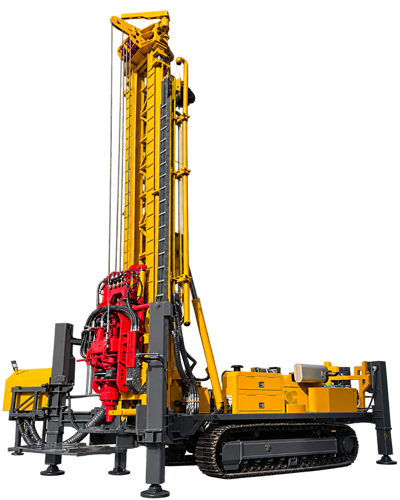
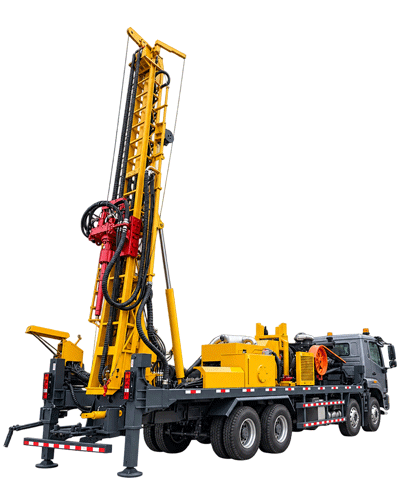
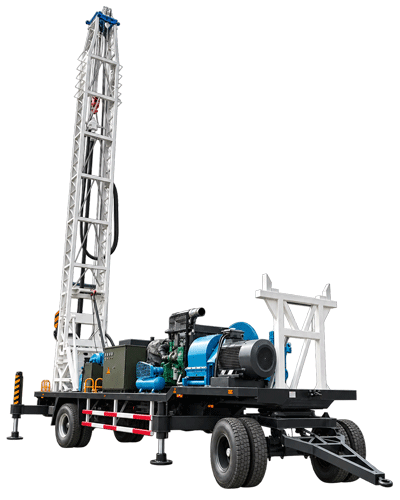
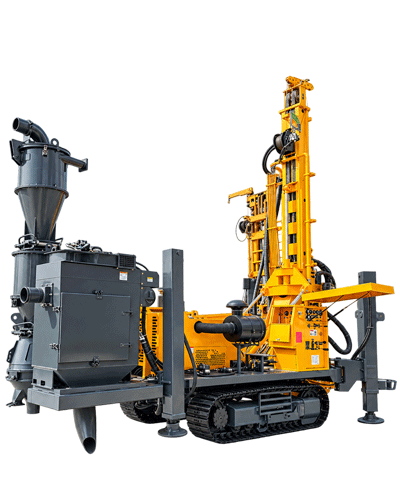
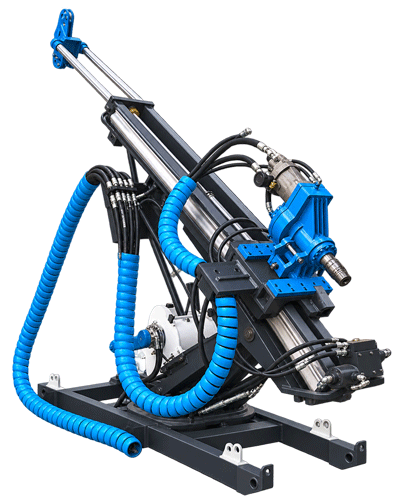
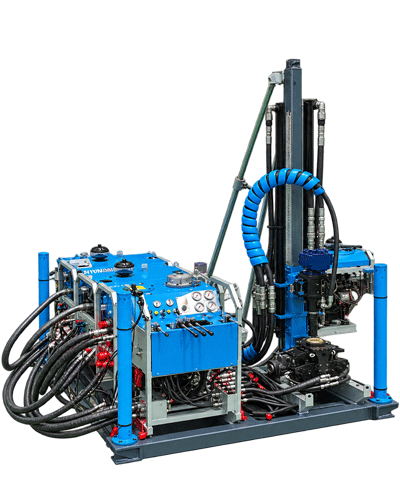
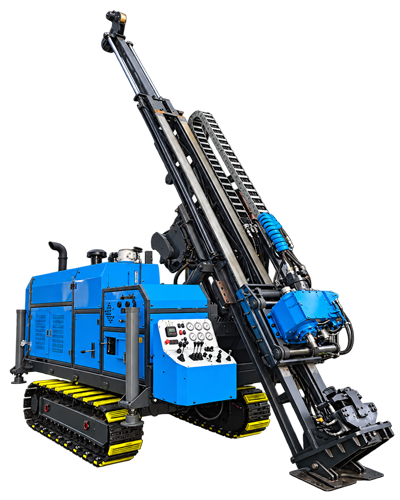
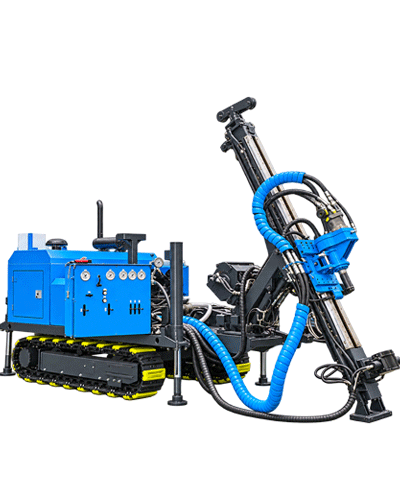
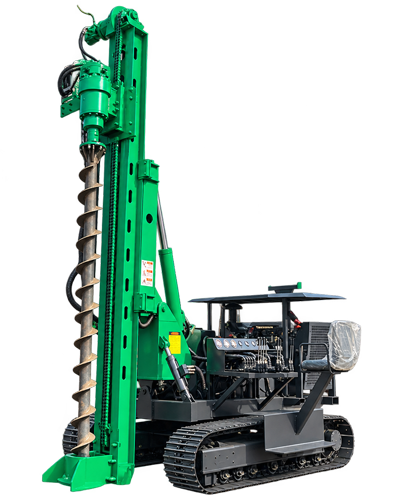
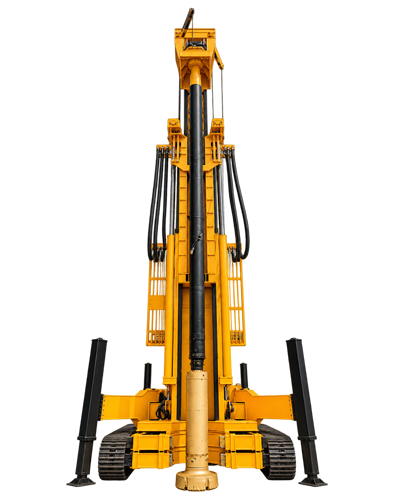
In the same exploration project, reverse circulation cuttings sampling and core drilling are often discussed together, but they provide two different types of information. The RC400 materials on this site state this clearly: compared with core drilling rigs, the RC400 mainly obtains cuttings samples returned by depth, rather than continuous intact cores. This statement is not a judgment of superiority or inferiority, but rather distinguishes the output objects of the two methods. Cuttings samples are fragments, while core samples are columns; the questions the former can answer and the questions the latter can answer do not overlap.
What Each Type of Sample Is
According to the RC400 materials, reverse circulation drilling usually establishes an independent return channel through dual-wall drill pipes. After compressed air drives the downhole drilling tool, cuttings quickly return to the surface through the inner pipe. Compared with ordinary outer annulus discharge, this method helps shorten the mixing path of cuttings in the hole and facilitates collecting samples by depth interval. The materials also mention that the advantage of RC drilling is not obtaining intact cores, but quickly obtaining continuous cuttings samples.
Core drilling produces continuous columnar cores taken from the bottom of the hole. Its value lies not in quantity, but in the fact that the stratigraphic sequence is relatively completely preserved on the same core or the same section. The two types of samples address geological questions at different levels.
Division of Labor in Information Types
| Focus | Cuttings Samples (According to RC400 Materials) | Core Samples |
|---|---|---|
| Sample form | Fragments | Continuous columnar body |
| Depth correspondence | Collected by fixed footage intervals; corresponding depth must be recorded | Recorded by run; sequence is relatively continuous |
| Main use | Record color, lithology, alteration, and mineralization changes, and send to laboratory for grade analysis | Interpret rock formation contact relationships, thickness, structures, and dip angles |
| Efficiency characteristics | Facilitates quickly establishing more drill hole control points | High information density per hole; advance speed is relatively slow |
The differences in the table can be summarized in one sentence: cuttings samples answer "where"; core samples answer "what, how thick, and how it occurs." Exploration projects need different questions at different stages, and the ordering of methods also differs.
Questions Cuttings Sampling Is Good at Answering
Among the application scenarios given in the RC400 materials, for gold mines it can be used for surface anomaly verification, mineralization investigation below cover layers, ore body boundary control, and peripheral extension drilling. Copper, iron, and lithium projects can use reverse circulation samples to identify lithology, alteration, and mineralization trends. The common point of these tasks is that they require determining over a relatively large area whether mineralization appears and whether the trend continues, rather than first accurately describing the internal structure of a specific ore body.
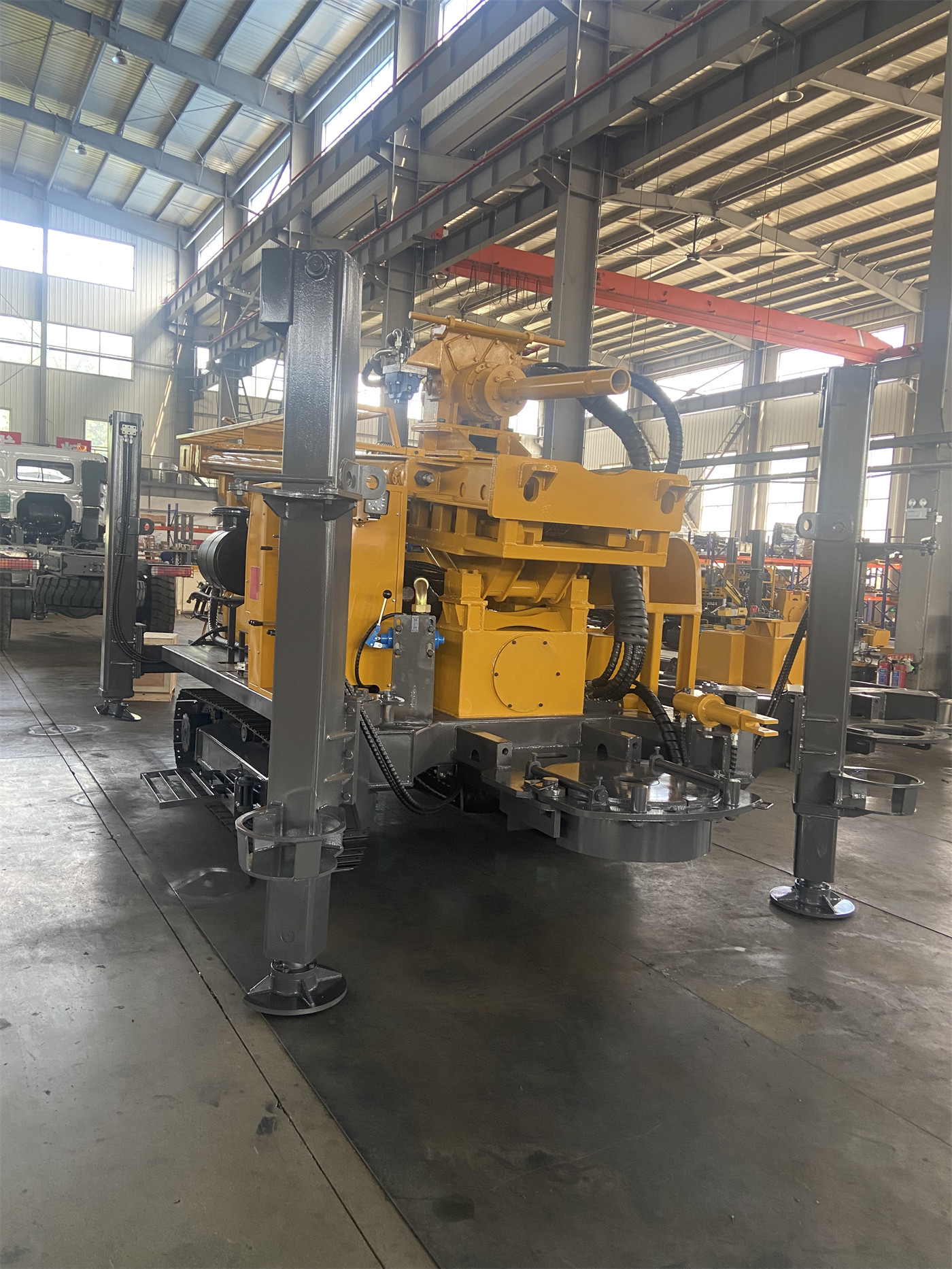
The materials also mention that RC sampling is suitable for quickly establishing more drill hole control points in large exploration areas, and then deciding based on the results which key areas require further core drilling. This statement already points out the sequential relationship between the two methods in the process.
Parts That Cuttings Samples Cannot Replace
After fragment samples leave their original position, information such as rock formation contact interfaces, individual layer thickness, and structural plane dip angles has already been disrupted. When describing fractured zones and formations with developed fissures, the RC400 materials point out that fault fracture zones are prone to block falling and local hole enlargement; cuttings may remain in the hole and then return concentratedly, causing poorer depth correspondence of samples. This explanation points to sample representativeness: even if sample return is continuous, the depth attribution of cuttings is still affected by downhole conditions.
Therefore, when a project needs to confirm the specific position of an ore body boundary, interlayer thickness, or structural attitude, cuttings samples can provide clues, but it is difficult for them to directly provide conclusive information.
Judging Which Type of Information Is Needed First Based on Exploration Stage
According to the sequential logic given in the RC400 materials, a judgment path can be organized:
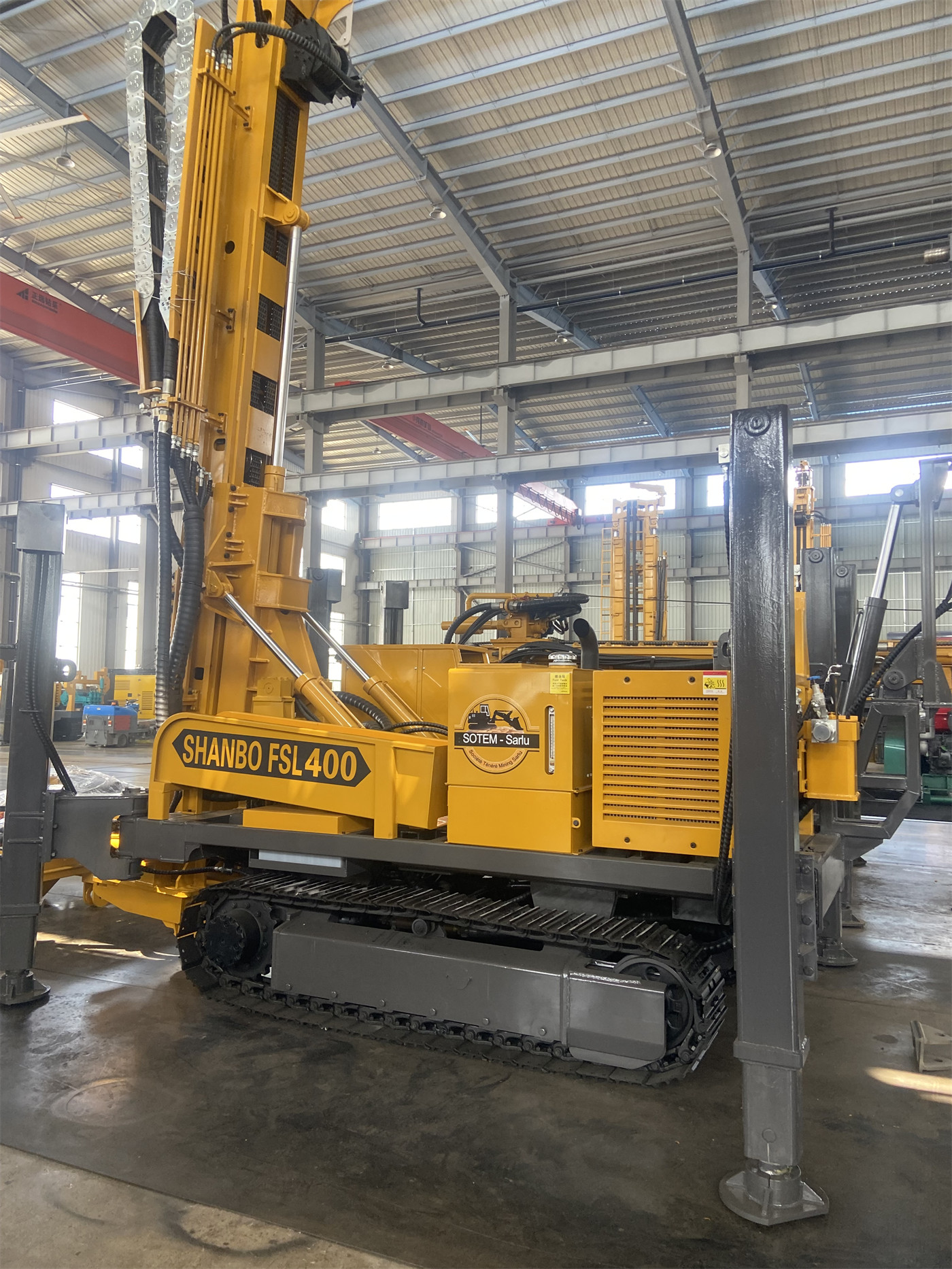
- When the stage goal is "whether mineralization exists in the anomaly area and in which direction it continues," prioritize the cuttings sampling method that can quickly arrange holes, using more drill hole control points to delineate the range.
- When the stage goal shifts to "where the ore body boundary is, and what the thickness and attitude are," continuous cores are needed to interpret the sequence and structures; the correspondence of cuttings samples is insufficient to support such judgments.
- In areas with thick cover layers or indistinct surface outcrops, the RC400 materials recommend obtaining cuttings at different depths through 400-meter-class drilling to help understand stratigraphic changes and potential mineralization positions, and to provide a basis for drill hole layout in the next stage. The output here is "how to arrange holes next," not "the ore body shape has been determined."
The key to this path is that the two methods are not different precision versions of the same information, but each lacks the part of the content that the other can provide.
Capability Conditions Related to Sampling in the RC400 Materials
The conditions the RC400 provides for reverse circulation sampling include: maximum drilling depth 400 m, hole diameter 105–305 mm, recommended RC drill pipe diameter 89 / 102 mm, drill pipe length 3 m, working air pressure 1.2–3.5 MPa, air consumption 16–55 m³/min, maximum torque 8000 / 4000 N·m, corresponding maximum rotation speed 75 / 150 r/min, lifting force 22 T, axial pressure 6 T, walking speed about 2.5 km/h, maximum climbing angle reference 21°, overall weight about 11 T, dimensions about 7 × 1.85 × 2.86 m, hydraulic outrigger stroke 1.6 m, auxiliary winch lifting force 1.5 T, engine 92 kW Yuchai. The materials state that the working angle supports 45°/90°.
The materials also point out that actual drilling depth will be affected by hole diameter, drill pipe, air compressor capacity, formation conditions, hole deviation, and drilling tool wear, so 400 m should be understood as the reference capability under typical configuration. Air consumption 16–55 m³/min and working air pressure 1.2–3.5 MPa are directly related to cuttings return speed: when hole depth increases, hole diameter increases, or the rock formation is harder, insufficient air volume may affect sampling continuity and hole bottom cleanliness.
Sample Management Is Not an Extension of Equipment Capability
In the sample management section, the RC400 materials state: when used for mineral exploration, samples should be numbered, weighed, and sealed according to fixed depth intervals, and the drill hole number, depth, time, and abnormal conditions should be recorded; the sampling system, cyclone, or splitting equipment also needs regular cleaning; the RC400 provides a drilling platform, and final sample quality also depends on on-site sampling procedures and personnel operations. The materials also mention that each time sampling restarts after adding a rod, cleaning the hole, or stopping drilling, the transition section should be handled according to on-site sampling rules to avoid mixing samples from different depths.
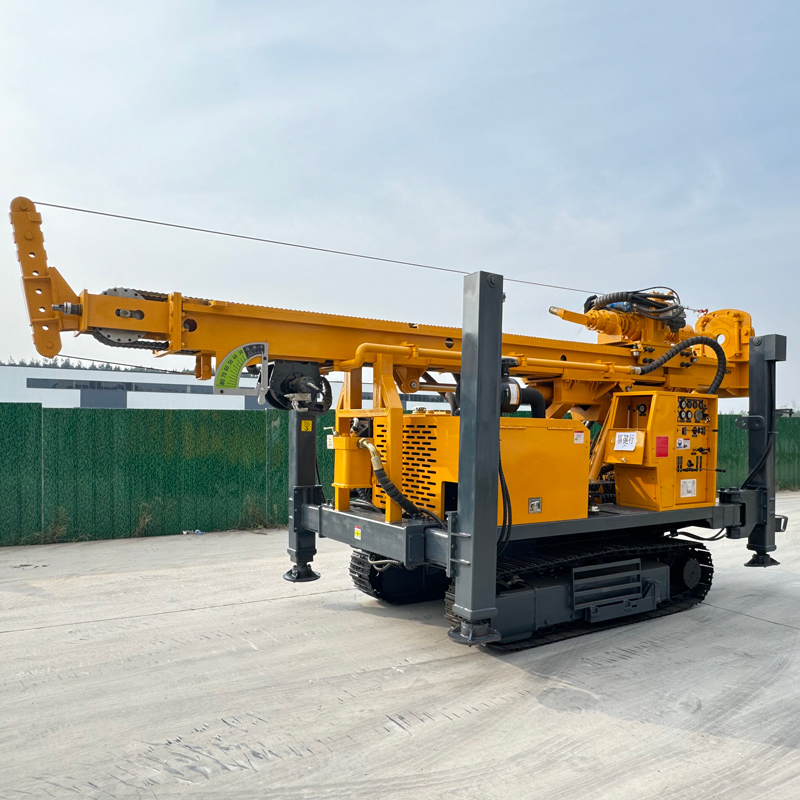
This passage explains that from cuttings return to assayable samples, there are still several management steps not controlled by drilling rig parameters. The equipment is responsible for bringing samples to the surface; whether the samples can represent a certain depth depends on whether recording and cleaning are synchronized.
Matters That Need to Be Confirmed Separately at the Project Level
The RC400 materials also mention that the model can be used for deep water well construction and also supports mud drilling. In loose cover layers, mud circulation and casing can be selected according to hole wall conditions, and the process can be switched after entering stable rock formations. These contents belong to the equipment's scope of application, not the issue of sampling information content.
As for how many RC holes should be arranged first in a specific mining area and then how many core holes should be used for infill drilling, the materials do not give quantitative relationships or judgment thresholds; this needs to be determined in combination with mineral type, exploration stage specifications, and geological design. This article can only distinguish at the level of "what questions each type of sample can answer"; more specific layout plans are outside the coverage of the existing materials.