

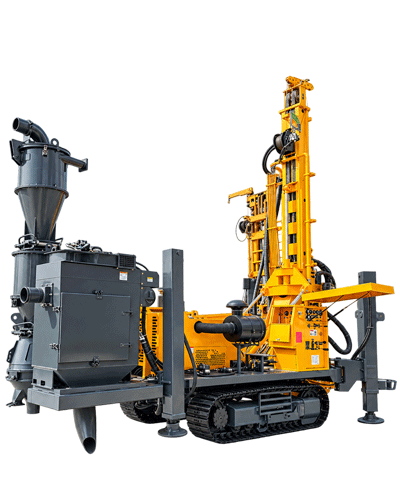
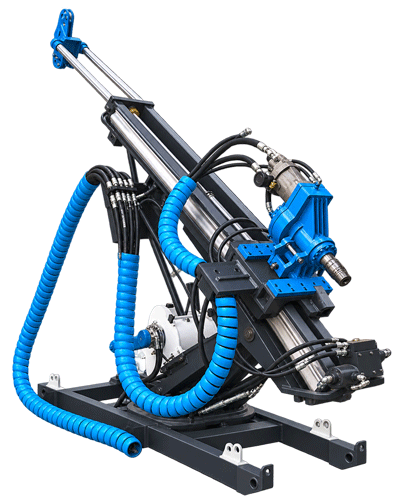
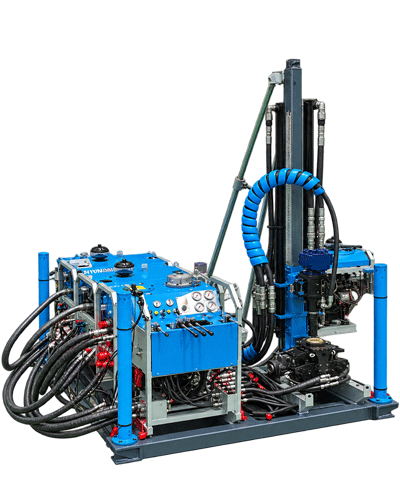
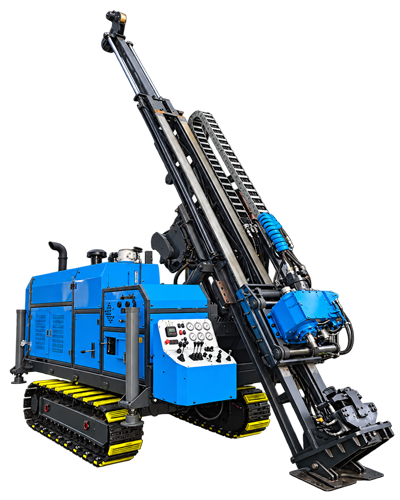
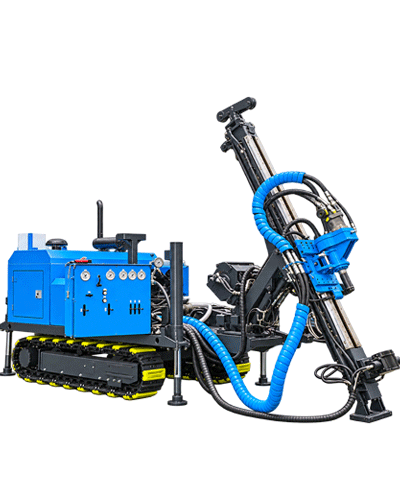
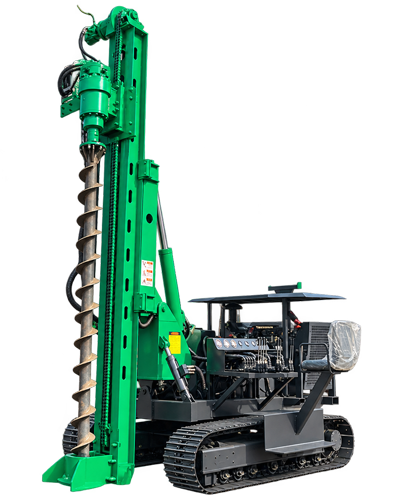
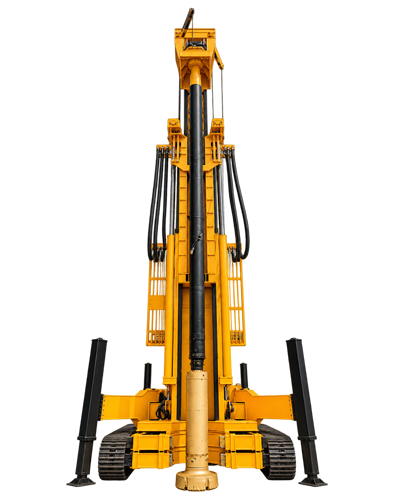
The core difference between these four types of equipment lies not in their names, but in "what to extract" and "what to leave behind": core drills extract continuous intact cores, reverse circulation drills recover cuttings samples by depth, water well drills form stable well walls and extract groundwater, and exploration drill is a broader term that may refer to core drills or reverse circulation drills. When purchasing, first clarify the drilling purpose, then compare drilling depth, hole diameter, sampling system, and supporting capabilities.
1. Look at the Sampling Method First, Then the Equipment Name
Many procurement disputes arise from treating "exploration" as a unified process. In reality, mineral exploration holes and geological sampling holes have different requirements for sample form, and the corresponding equipment structures also differ.
| Equipment Type | Main Output | Sample Characteristics | Typical Target |
|---|---|---|---|
| Core drill | Continuous core | Preserves formation integrity, allows observation of structure and attitude | Fine verification of ore bodies, geological logging |
| Reverse circulation drill | Cuttings returned by depth | Large sample volume, fast, segmented by footage | Mineral reconnaissance, anomaly verification, infill control |
| Water well drill | Completed well | Not aimed at sampling, focuses on well wall, diameter, and aquifer | Water supply, irrigation, dewatering, geothermal |
| Exploration drill | Depends on configuration | May be core or cuttings | Minerals, hydrology, geological survey |
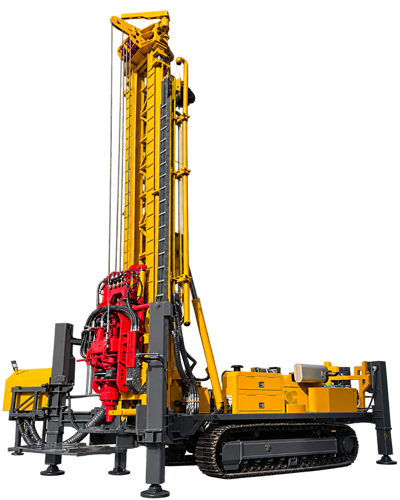
In this material, WR400RC, WR500RC-CS3, WR600RC, and WR600RC-CS3 are crawler-mounted drills in the reverse circulation direction; WRTR1000 and WRTR600 are trailer-mounted rotary table water well drills; WRT600, WRT1000, and WRT1200 are truck-mounted direct mast water well drills. The available information does not provide BQ/NQ/HQ coring capabilities for independent core drill models, so this article does not list specific diameter parameters for core drills; such data should be based on technical confirmation materials from core drill manufacturers.
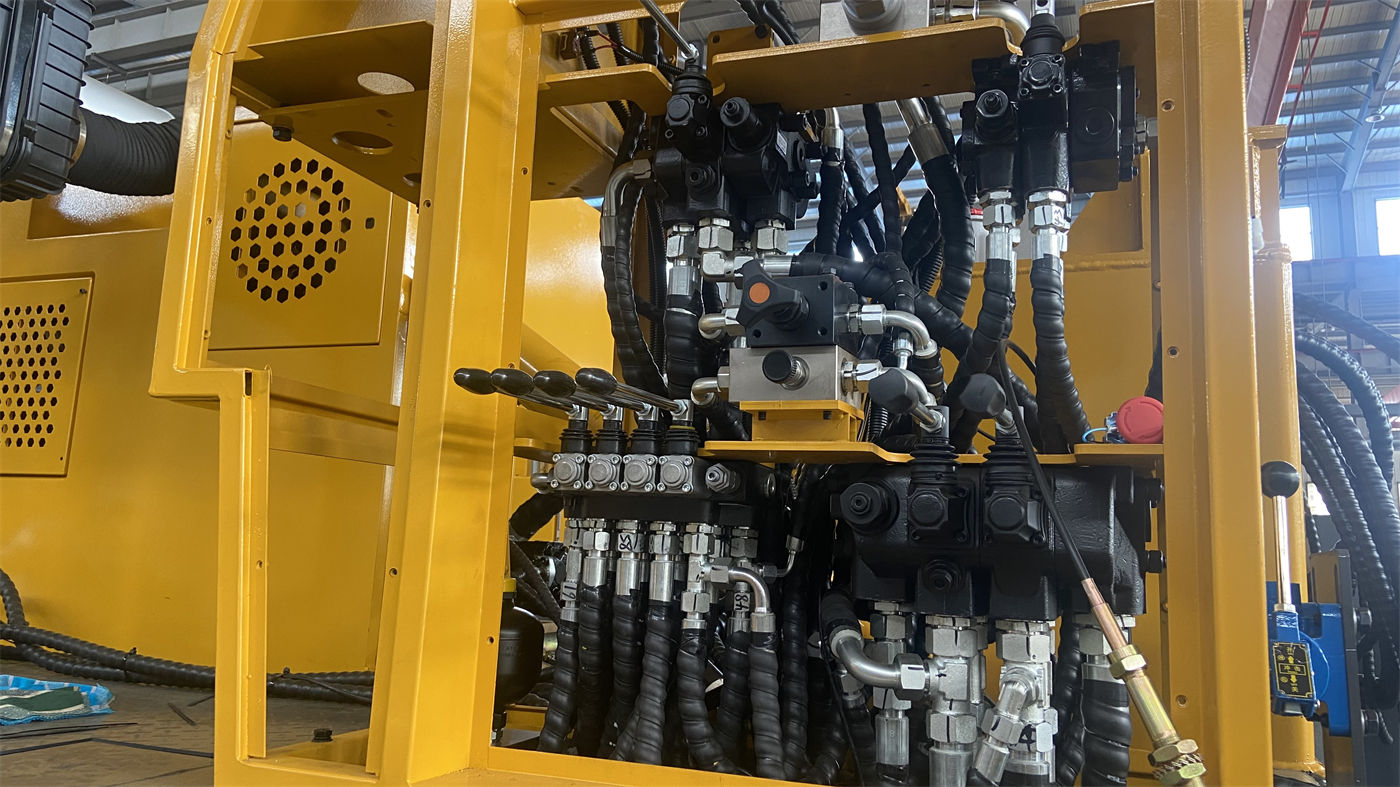
2. Reverse Circulation Drills: Suitable for Rapidly Obtaining Large Cuttings Samples
The Return Path Determines Sample Form
Reverse circulation drilling establishes an independent return channel through dual-wall drill pipes, and cuttings mainly return to the surface from inside the drill pipe rather than up the annulus along the outer wall. This path helps shorten the mixing distance of cuttings in the hole and facilitates collecting samples by depth. It obtains cuttings, not intact cores, so it is suitable for early-stage mineral exploration and infill verification, but not as a replacement for core holes that require observation of formation structures.
Differences Among Reverse Circulation Models on This Site
| Model | Max Drilling Depth | Hole Diameter | Working Angle | Lifting Force | Sampling System |
|---|---|---|---|---|---|
| WR400RC | 400 m | 105–305 mm | 45°/90° | 22 T | Conventional RC return |
| WR500RC-CS3 | 500 m | 105–400 mm | 45°/90° | 25 T | CS3 three-in-one cyclone sampling system |
| WR600RC | 600 m | 105–450 mm | 45°/90° | 29 T | Conventional RC return |
| WR600RC-CS3 | 600 m | 105–450 mm | 45°/90° | 29 T | CS3 three-in-one cyclone sampling system |
As can be seen from the table, CS3 does not increase drilling depth capability, but integrates cyclone separation, representative splitting, and sample collection into the same process. For exploration teams that need to process a large number of samples per day and wish to reduce manual sample handling, this type of integrated sampling system can reduce intermediate transfer. The material does not provide specific test data on sample recovery rates, so sampling accuracy cannot be inferred from this.
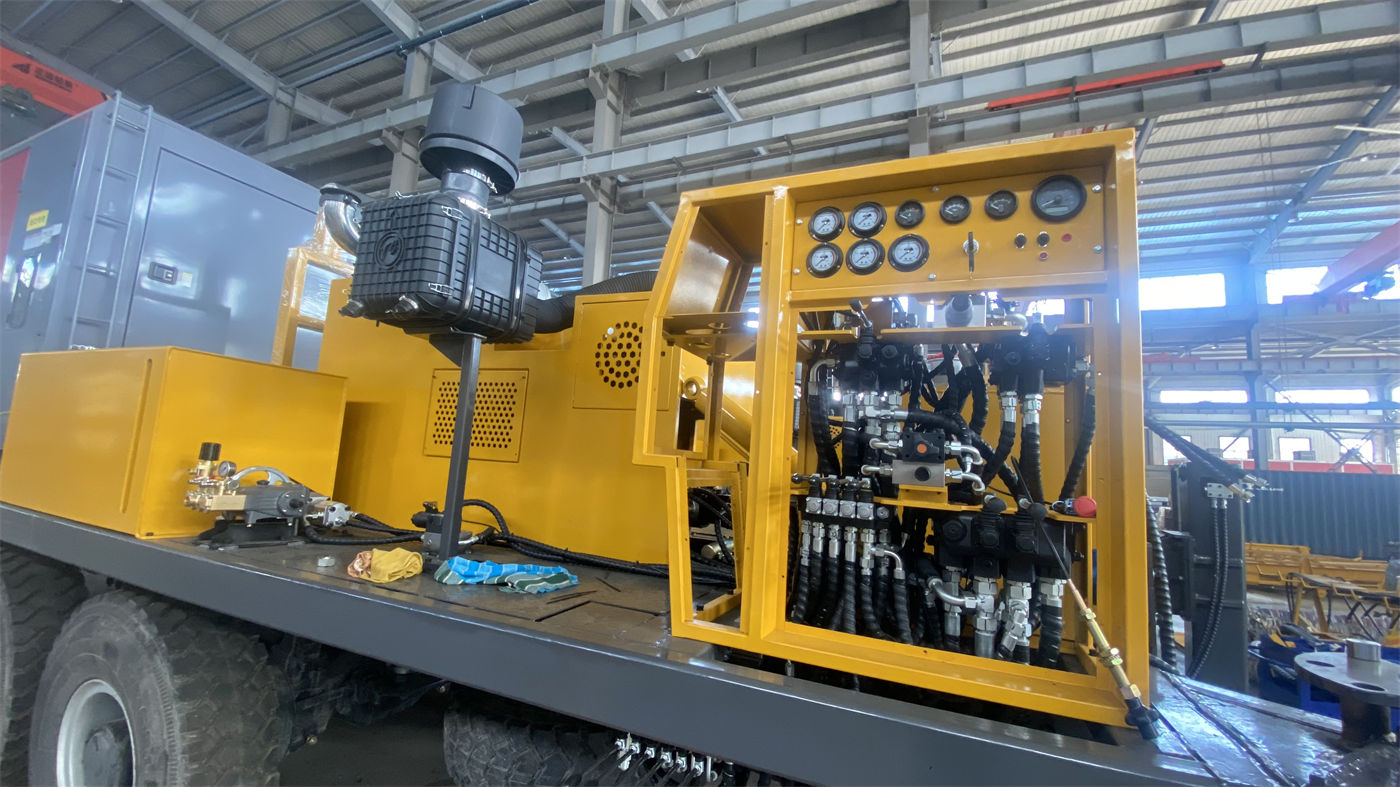
Supporting Equipment to Confirm When Choosing a Reverse Circulation Model
- Air compressor pressure and displacement: WR400RC recommends working pressure 1.2–3.5 MPa and air consumption 16–55 m³/min; WR600RC series recommends 1.6–6 MPa and 16–75 m³/min. When hole depth and diameter increase, merely meeting pressure without sufficient displacement may still lead to reduced sample return and bottom-hole cuttings accumulation.
- Dual-wall drill pipe specifications: WR400RC recommends 89/102 mm RC drill pipes with a length of 3 m. Joint sealing and inner tube wear of dual-wall drill pipes directly affect whether samples are contaminated.
- Sample management: Each sample bag should be labeled with hole number, sample number, start and end depths, and date; field records must correspond one-to-one with sample bags. If the project implements QA/QC procedures, duplicate samples, standard samples, and blank samples should also be set up as required.
- Main unit weight and site: WR400RC weighs about 11 T, and WR500RC-CS3 and WR600RC series weigh about 12–12.5 T. Before moving, confirm road bearing capacity and platform area.
3. Water Well Drills: The Goal Is Hole Completion and Stable Water Yield
Difference Between Rotary Table and Truck-Mounted Direct Mast Types
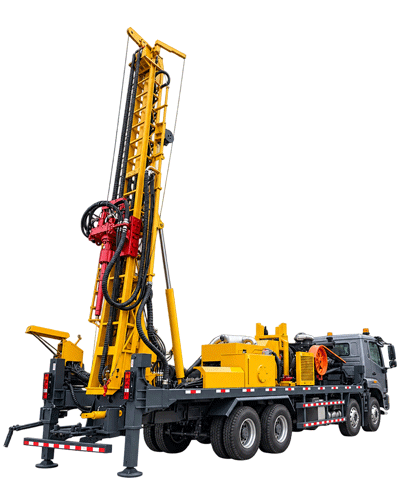
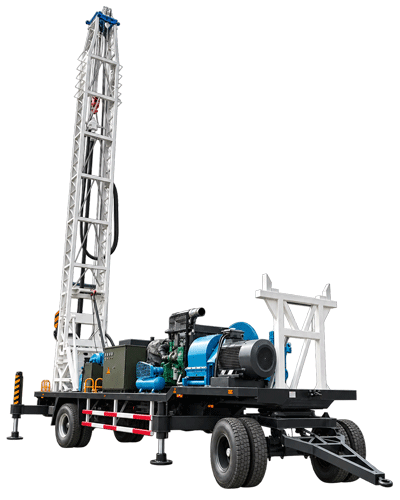
Water well drills on this site are divided into two directions. WRTR1000 and WRTR600 are trailer-mounted rotary table drills, with rotary table rotation and mud circulation as the core, suitable for deep water wells, geothermal, mining water supply, and hydrogeological drilling. WRT600, WRT1000, and WRT1200 are truck-mounted direct mast fully hydraulic water well drills, integrating the mast, power head, hydraulic feed, and operating system on a truck-mounted chassis, more suitable for projects with dispersed drilling points and frequent road transfers.
| Model | Mounting Type | Max Drilling Depth | Hole Diameter | Feed/Rotation Core |
|---|---|---|---|---|
| WRTR600 | Trailer-mounted rotary table | 600 m | Max 500 mm | Rotary table 38/57/85 r/min |
| WRTR1000 | Trailer-mounted rotary table | 1000 m | Rotary table through-hole 660 mm | Rotary table 25 kN·m, four speeds |
| WRT600 | Truck-mounted direct mast | 600 m | 140–450 mm | 37 T lifting force, dual-condition torque |
| WRT1000 | Truck-mounted direct mast | 1000 m | 105–800 mm | 51/52 T lifting force, two-speed rotation |
| WRT1200 | Truck-mounted direct mast | 1200 m | 105–900 mm | 61 T lifting force, 24000/12000 N·m |
It should be noted that the public information for WRTR600 and WRTR1000 gives rotary table through-hole and maximum drilling diameter; WRTR600 maximum drilling diameter is 500 mm, and WRTR1000 rotary table through-hole is 660 mm. The material explicitly reminds that the final well completion diameter should be designed according to aquifer, well casing, pump type, and formation stability, and cannot be directly understood as a fixed drilling diameter based on through-hole size.

Judgment Sequence for Water Well Projects
- First conduct a hydrogeological survey to determine the target aquifer depth and water quality, then discuss drilling depth.
- Derive well diameter from water yield, well casing, and pump type, rather than first selecting the maximum hole diameter.
- For upper loose layers, prioritize mud, casing, or staged casing to establish a stable hole section before entering hard rock.
- After entering hard rock, switch to DTH hammer; WRTR1000 can optionally use air-lift reverse circulation, and WRT1200 supports DTH conditions of 1.65–8 MPa and 16–120 m³/min.
- For strong aquifers and high inflow sections, record the depth of main water-producing layers, and set screens and sealing sections accordingly during well completion.
4. Where Is the Boundary for a Single Machine to Handle Both Exploration Holes and Water Wells?
The material shows that WR400RC, WR500RC-CS3, WR600RC, and WR600RC-CS3 all list deep water wells as one of their main applications, and water well drills such as WRTR1000 and WRT1200 can also be used for hydrogeological and general geological drilling. This indicates that in some projects, the same machine can undertake different tasks at different hole locations, but several situations need to be distinguished.
Situations Where Both Can Be Handled
- Water well drills undertake geological holes that do not require continuous cores: formation changes can be judged through cuttings, return water, mud parameters, and drilling response.
- Reverse circulation drills undertake water well holes that do not emphasize sampling: can switch to ordinary DTH or mud rotary without enabling the full RC sampling system.
- Different drilling targets within the same project: for example, a mine may have both exploration holes and domestic water supply and dust suppression water wells, and drilling tools and construction procedures can be changed according to hole purpose.
Situations Requiring Additional Configuration or Not Suitable for Replacement
- When continuous high-quality cores are required, a dedicated core drill should be selected. The material states for water well drills that "if the project requires continuous high-quality cores, a dedicated core drill should be selected."
- When reverse circulation drills are used for exploration sampling, matching dual-wall drill pipes, air compressor systems, and sampling equipment must be configured. WRTR1000 can optionally use air-lift reverse circulation, but the material explicitly states it "is not a dedicated RC exploration machine," and projects with clear requirements for sample representativeness and splitting quality should also be equipped with a matching sampling system.
- When water well drills are converted to sampling holes, they are usually inferior to dedicated RC platforms in sample management, sample numbering, and depth correspondence.
5. Information Recommended to Confirm Before Purchasing
- Drilling purpose: extract continuous cores, extract cuttings samples, or complete a water-producing well.
- Design hole depth and diameter: both together determine the required lifting force, rotary torque, and air compressor displacement.
- Drilling angle: when inclined holes are needed, confirm the equipment working angle range; reverse circulation model information gives 45°/90°.
- Formation sequence: thickness of upper loose layers, presence of fractured zones and air-loss formations, determining whether mud and casing are needed.
- Sampling management system: if conducting mineral exploration, the cleaning frequency of cyclones, splitters, and return hoses should match the project QA/QC system.
- Transfer conditions: truck-mounted direct mast requires verification of road height limits, bridge load capacity, and turning radius; trailer-mounted requires confirmation of towing vehicle and transport dimensions, for example, WRTR600 short mast transport dimensions are about 15100 × 2480 × 4100 mm.
- Supporting equipment: whether air compressors, mud pumps, generators, foam pumps, and casing tools have been included in the overall budget.
The material does not provide coring diameter, coring capacity, and corresponding drilling parameters for independent core drills, nor does it provide drilling efficiency data for each model in actual mining areas or water well projects. These contents need to be further confirmed based on manufacturer technical data and project hydrogeological conditions after specifying the specific core drill model. The values listed in this article are all from verified product information on this site, and actual drilling depth, hole diameter, and well completion effects should be based on on-site conditions and special design.