












“This machine can drill 1000 meters; your well is 800 meters, so it's enough.” This kind of conversation is not uncommon in water well projects. The maximum drilling depth line in the specifications of a 1000-meter-class water well drill refers to the upper limit of hole depth the equipment can achieve under given working conditions; whether a project can be implemented also depends on whether several sets of conditions—hole diameter, completed well structure, lifting force, torque, air compressor, and access roads—are simultaneously met. Using the publicly available WRT1000 specifications on this site as a reference, this article breaks down one by one the misunderstandings that are easily read as “as long as the drilling depth is enough, it's fine.”
WRT1000 Public Specifications First
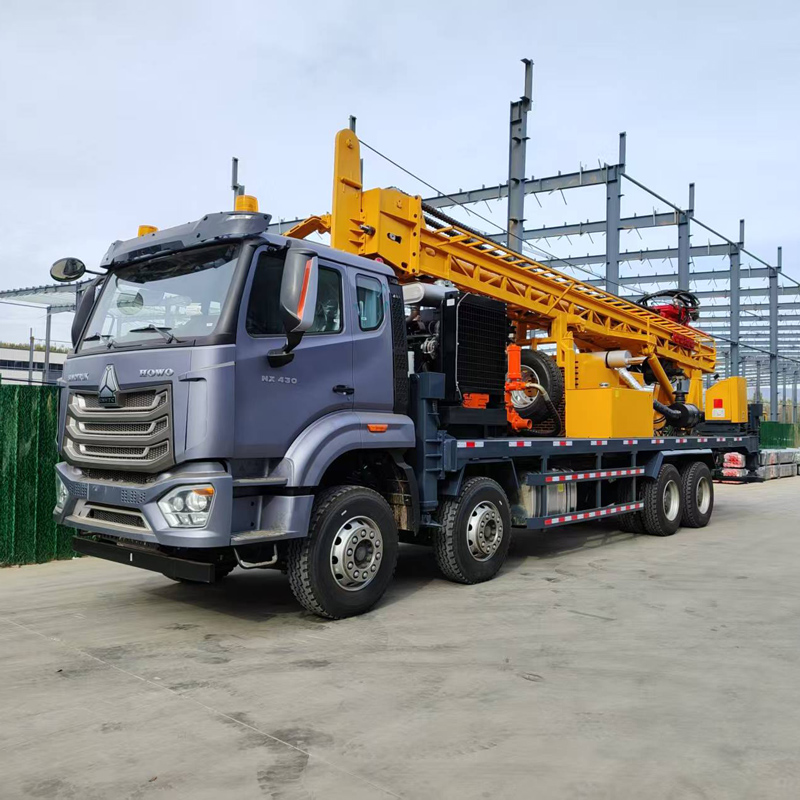
The WRT1000 is a 1000-meter-class truck-mounted direct-mast water well drill. The main values given in the public information include: maximum drilling depth 1000 m, drilling diameter 105–800 mm, lifting force 51/52 T, dual-condition rotary torque 20000/10000 N·m, corresponding to 70/140 r/min, axial pressure 11 T, feed stroke 7 m, recommended drill pipe diameter 114 mm, fast lifting 28 m/min, fast advancing 42 m/min, recommended DTH working air pressure 1.65–8 MPa, air consumption 16–96 m³/min, diesel power 194 kW, overall weight about 26 T, transport dimensions about 10.8×2.5×4.23 m. The two auxiliary winches are 4 T and 3 T respectively.
These values are multiple capability aspects of the same machine, not different statements of the same conclusion. Drilling depth is only one line among them.
Misunderstanding 1: Treating Maximum Drilling Depth as Target Well Depth
The information says “maximum drilling depth 1000 m,” which refers to the upper limit of hole depth capability of this machine under this configuration. How deep a well is drilled in a project depends on aquifer burial depth, target water yield, well casing structure, well completion techniques, and pump type; it is not determined in reverse by the equipment's upper limit.
A common situation in deep groundwater projects is: shallow aquifers are unstable or have insufficient water yield, requiring deeper water sources to be found. In this case, the 1000-meter-class drilling depth provides construction margin, not that every well must be drilled to 1000 m. During the well completion stage, filter pipes, sealing sections, and the final pump type must also be set according to aquifer distribution; the depth requirements of these procedures are not always the same number as the drilling depth.
Misunderstanding 2: Looking Only at Drilling Depth, Not the Load Corresponding to Hole Diameter
The WRT1000's hole diameter range is 105–800 mm. Hole diameter and drilling depth are not two independent lines; as hole diameter increases, drill tool load, air compressor demand, casing weight, and hole formation difficulty all rise simultaneously. The same machine at 105 mm hole diameter and at 800 mm hole diameter can achieve different hole depths, and the public information does not provide a correspondence table between hole diameter and hole depth.
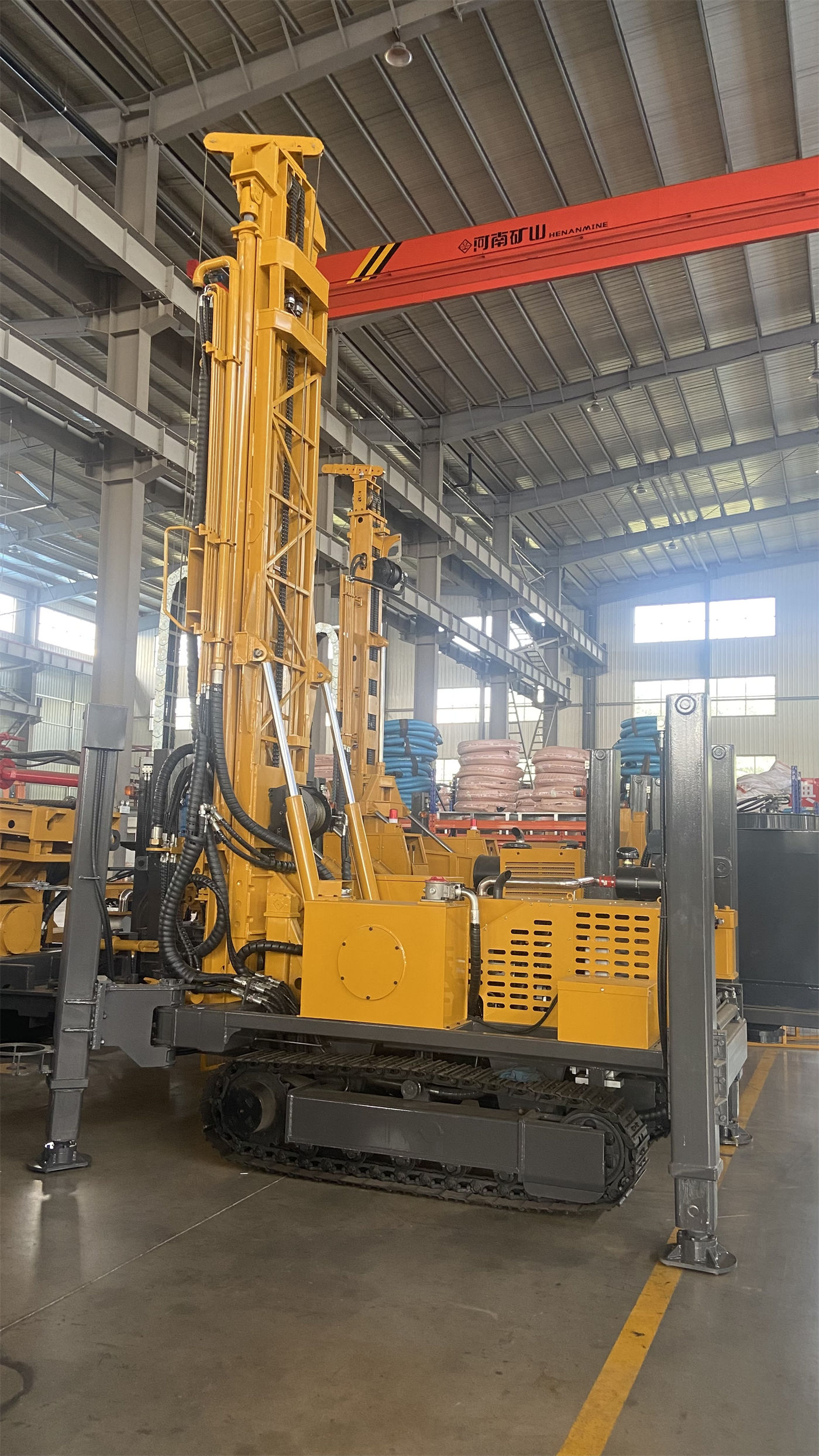
Large hole diameters suit larger well casings and pump types, but the cost on this side must be calculated clearly: increased drill pipe load, increased cuttings return volume, and increased difficulty of casing installation. When selecting hole diameter for a project, it should be inferred from water yield and well completion structure, not taken downward from the equipment's maximum hole diameter.
Misunderstanding 3: Treating Lifting Force and Torque as “Having Them Is Enough”
At 1000-meter-class hole depths, the absolute values of drill pipe self-weight, casing weight, and hole wall friction all rise significantly. The WRT1000 provides 51/52 T lifting force and 11 T axial pressure, used for deep-hole tripping, DTH hammer recovery, some casing operations, and handling tools in abnormal hole sections.
One point here is easily oversimplified: a large lifting force does not mean that when pulling resistance continues to rise, one can simply pull directly. The information states that the hole should first be cleaned and the downhole condition assessed before deciding on action. The lifting force upper limit is more like a boundary, not a routine operating value.
The same applies to the rotation section. 20000/10000 N·m corresponds to a dual-speed configuration of 70/140 r/min; low speed and high torque are more suitable for large hole diameters, hard rock, and high-friction hole sections, while the high-speed gear is suitable for stable formations with lower resistance. The dual conditions are two working condition selections, not two speed gears. During deep-hole construction, dynamic adjustment should be made according to rotary load, cuttings return, and drill tool wear; one cannot drill to the end with a fixed gear.
Misunderstanding 4: Treating the Air Compressor as an Accessory of the Equipment
The WRT1000's recommended working air pressure for DTH drilling is 1.65–8 MPa, with air consumption of 16–96 m³/min. This line of values determines that the matching air compressor is not a small item that can be chosen casually.
1000-meter-class deep holes and large-diameter hard rock place very high demands on air compressor pressure and displacement. Selection must be comprehensively judged according to DTH hammer specifications, hole diameter, hole depth, altitude, and rock hardness, not just rated pressure. The information specifically notes this point. Altitude factors affect both the actual displacement of the air compressor and the working efficiency of the DTH hammer, so the usability of the same air compressor at different altitudes is not the same; this part needs separate calculation based on the project location.
Misunderstanding 5: Treating 1000-Meter-Class as Just “the Whole Vehicle Can Drive In”
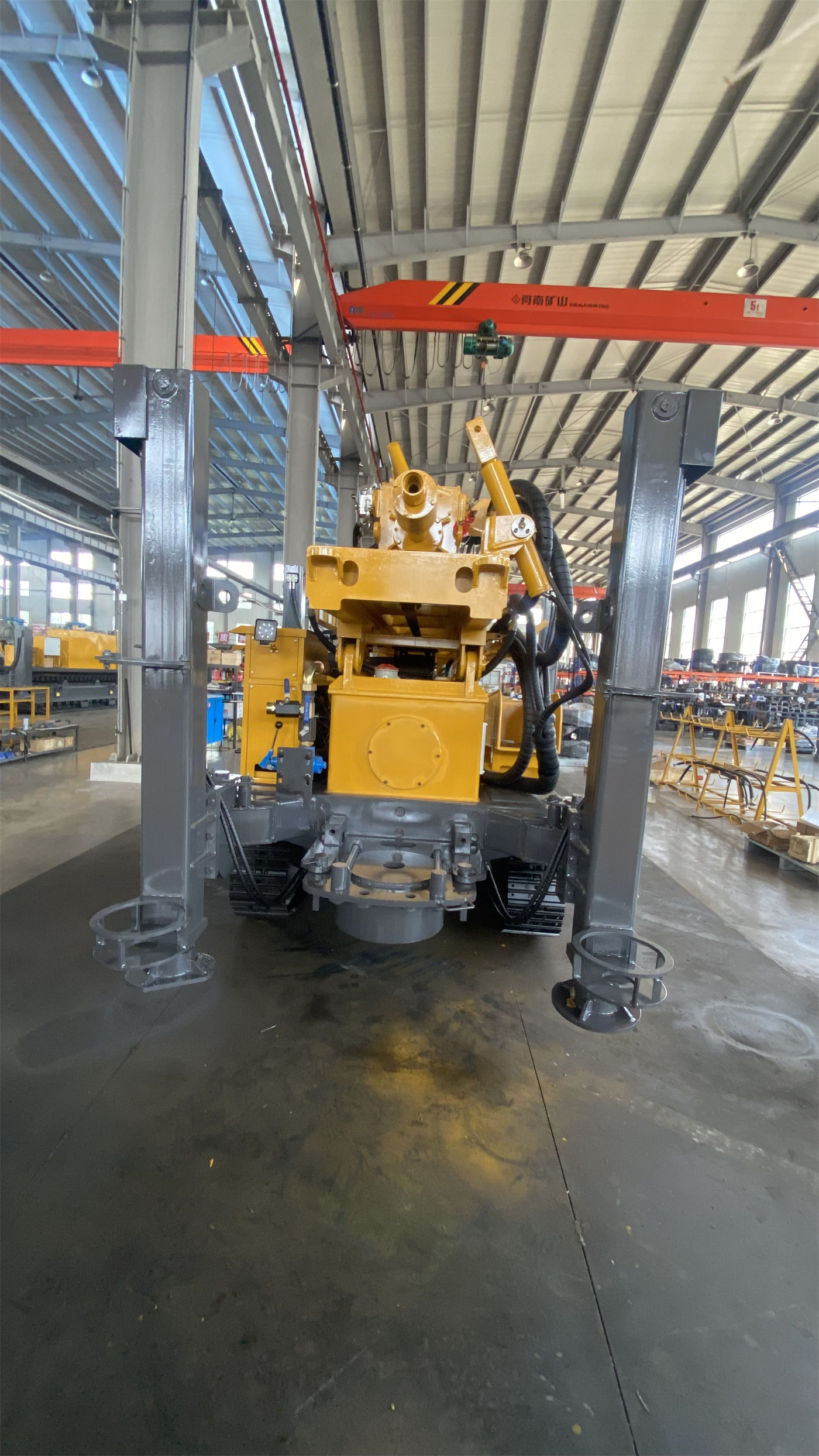
The WRT1000 is truck-mounted, so when relocating it does not require repeated flatbed loading and unloading like a crawler drill; this is its advantage in projects with scattered drilling points. However, the overall weight is about 26 T and transport dimensions are about 10.8×2.5×4.23 m, of which the 4.23 m transport height is a hard constraint that is easily overlooked.
The mast of a truck-mounted direct mast is raised during operation and retracted to transport state during relocation; the direct mast structure has limited space to compress the transport profile. Before entering the site, road height limits, bridges, overhead lines, factory gate openings, and other overhead obstacles must be verified, along with road load-bearing capacity, slope, turning radius, and platform load-bearing conditions, especially where mining area road conditions are complex.
Misunderstanding 6: Describing Formation Applicability as Applicable to the Entire Hole
The WRT1000 information gives a segmented approach according to formation: the upper loose layer, clay, sand layer, and gravel layer can use mud rotary, casing, or other hole stabilization methods; after entering intact hard rock, medium- and high-pressure DTH hammers can be configured for DTH drilling; weathered rock, fractured zones, and mixed formations may change continuously within the same hole.
Understanding “can be equipped with DTH” as “DTH can be used for the entire hole” ignores the stability of the upper hole section. In a 1000-meter deep well, once the upper hole section experiences collapse, diameter reduction, or casing problems, the risk and treatment cost of subsequent deep-hole construction rise significantly; this point is clearly stated in the information. Construction in fractured zones requires reduced advancing, strengthened hole cleaning, and handling of falling blocks and diameter reduction according to hole wall conditions.
After entering the main aquifer, increased water volume in the hole affects DTH hammer cuttings discharge and circulation status. During construction, the depth of the main water-producing layers should be recorded, and air supply, hole cleaning, and casing plans should be adjusted according to water inflow.
Misunderstanding 7: Looking at Drill Pipe and Feed Stroke Separately
The WRT1000 has a feed stroke of 7 m, can use 3 m or 6 m drill pipes, and recommends a drill pipe diameter of 114 mm. The 6 m drill pipe suits long-cycle deep-hole construction and can reduce the number of pipe connections; the 3 m drill pipe is more suitable for sites with limited space, transport, or manual operation conditions.
Feed stroke, drill pipe length, and number of pipe connections are a set of interrelated construction organization conditions. Fast lifting 28 m/min and fast advancing 42 m/min describe the speed of non-drilling actions; they affect auxiliary procedures, not drilling efficiency itself. Treating these two sets of values as the machine's overall capability will lead to overly optimistic judgments.
Conditions to Check Together
Combining the above misunderstandings, before selecting equipment such as the WRT1000 for a 1000-meter-class water well project, the items worth checking one by one can be organized into the following comparison table.
| Check Item | Value Given in Information | Content Needing Separate Confirmation |
|---|---|---|
| Target well depth | Maximum drilling depth 1000 m | Actual depth corresponding to aquifer burial depth, well completion structure, and pump type |
| Hole diameter | 105–800 mm | Water yield target, well casing size, actual combination of hole diameter and hole depth |
| Lifting force | 51/52 T, axial pressure 11 T | Cumulative values of drill pipe and casing weight and hole wall friction at specific hole depths |
| Rotation | 20000/10000 N·m, 70/140 r/min | Method for selecting working conditions according to hole diameter, rock formation, and cuttings return status |
| Air compressor | 1.65–8 MPa, 16–96 m³/min | Actual demand corresponding to DTH hammer specifications, altitude, and rock hardness |
| Relocation | About 26 T, about 10.8×2.5×4.23 m | Road height limits, load-bearing capacity, slope, turning, and platform load-bearing |
| Formation | Segmented use of mud rotary, casing, and DTH | Upper hole stabilization plan, fractured zone treatment, water inflow section response |
| Drill pipe | Feed stroke 7 m, recommended diameter 114 mm | Conditions for using 3 m and 6 m drill pipes at specific sites |
What This Article Does Not Answer
The WRT1000 public information does not provide the correspondence between different hole diameters and maximum hole depths, nor does it provide drilling efficiency values under different rock formations, a DTH hammer brand compatibility list, or specific design methods for filter pipes and sealing sections. These contents are not in the equipment parameter table and need to be determined separately by the project's hydrogeological design and well completion techniques.
A large drilling depth number is a clear equipment capability indicator, but it only answers the question “how deep can this machine theoretically drill.” Only after checking hole diameter, lifting force, torque, air compressor, formation plan, and site access conditions together does this number have a chance to become an executable arrangement on a project.