












In the public materials for the WR500SE, there is a statement that does not appear in materials for other models: "E Series positioning: controlling overall investment at the 500-meter capability level." This sentence does not correspond to any line of parameter values with units. It is neither a mast type nor the name of a rotary torque or power configuration. Therefore, we first need to answer what E Series actually refers to in these materials—whether it is a position description within the product line or a shorthand for a combination of certain parameters.
Which field does the term E Series appear in within the materials
Reading the public text of the WR500SE sentence by sentence, E Series appears only in the positioning description paragraph, and it is written together with "high cost-effectiveness." The materials also use a sentence to explain its relationship with the WR500S: the WR500S more prominently highlights 500-meter heavy-duty water well capability, while the WR500SE, on the basis of 500-meter drilling depth, further emphasizes a 6.6 m long stroke, telescopic mast, and more flexible on-site auxiliary configuration.
In other words, E Series here serves the linguistic function of distinguishing two pieces of equipment at the same drilling depth level; it is not a name for a particular component. The materials do not provide specific definition clauses for E Series, do not state which parameter combinations constitute it, and do not write it into any parameter table. This point needs to be accepted first when reading the materials: E Series is a label in the source text, not a numerical value that can be independently verified.
Which trade-offs does the material describe it as corresponding to
The materials' explanation of E Series focuses on the relationship between investment and capability: 500-meter-class water well projects have high requirements for lifting force, torque, air compressor, and drill pipe system. If unnecessary configurations are excessively added, equipment investment will be significantly increased. The WR500SE retains 26 T lifting force, 7500–10000 N·m rotary torque, 118 kW diesel power, and multiple drill pipe specifications, while through its high cost-effectiveness series positioning, it allows the budget to be more concentrated on the core capabilities truly needed for deep-hole construction.
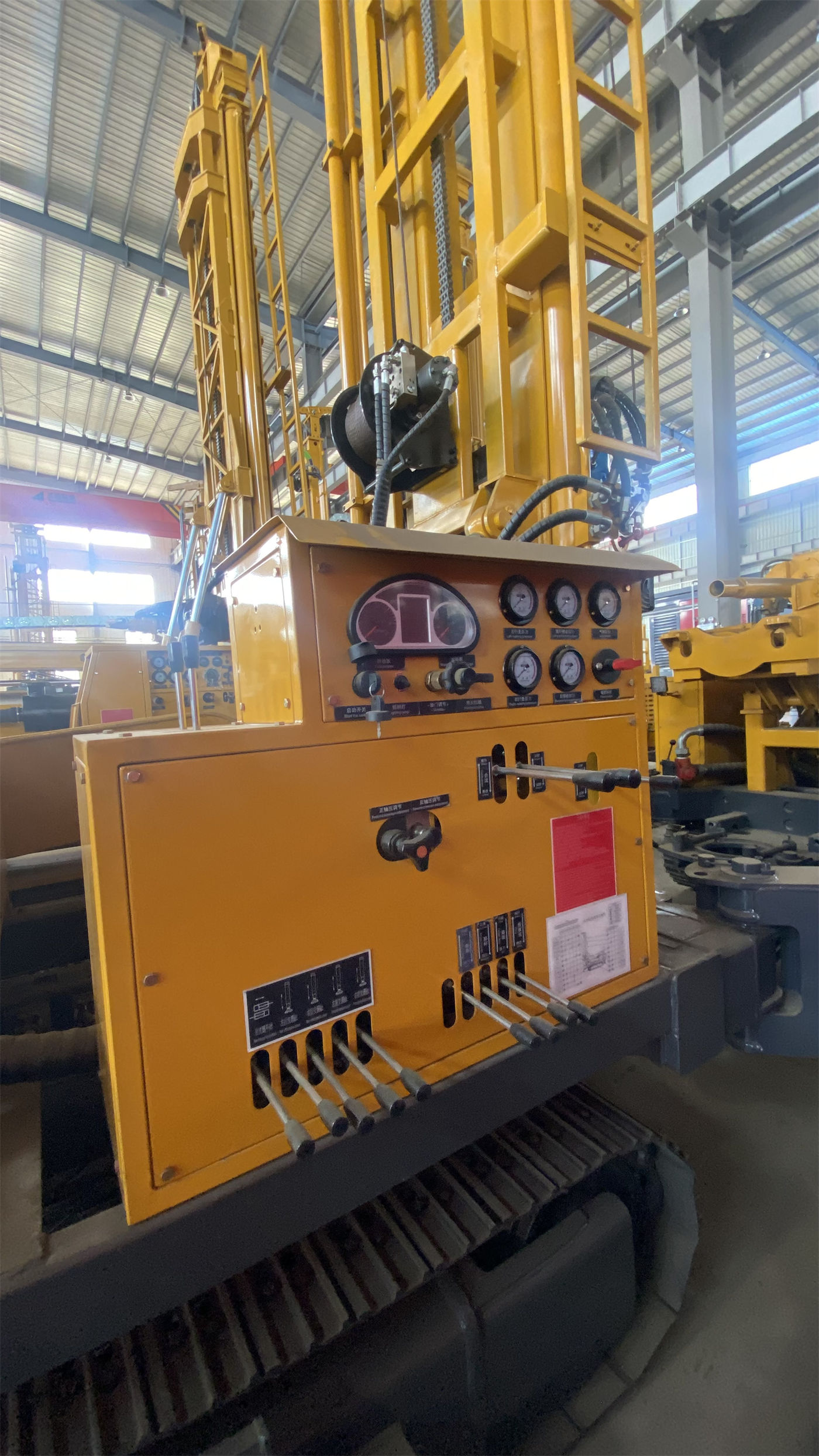
According to this passage, the trade-offs corresponding to E Series can be broken down into two points:
- Retained capability items: 26 T lifting force, 7500–10000 N·m rotary torque, 118 kW power, and support for 102/108/114 mm drill pipes. These are numerical values written in parameter positions.
- Direction of the trade-off: the materials do not say which specific parameter has been reduced, only that configuration investment is controlled at "the core capabilities truly needed for deep-hole construction," and list the 6.6 m long stroke, telescopic mast, and on-site auxiliary configuration as emphasized parts.
What can be determined is that a trade-off exists; what cannot be determined is which component the trade-off falls on. These two points should be recorded separately to avoid directly reading "high cost-effectiveness" as a reduction in some specific parameter.
Which values belong to the equipment and not to E Series
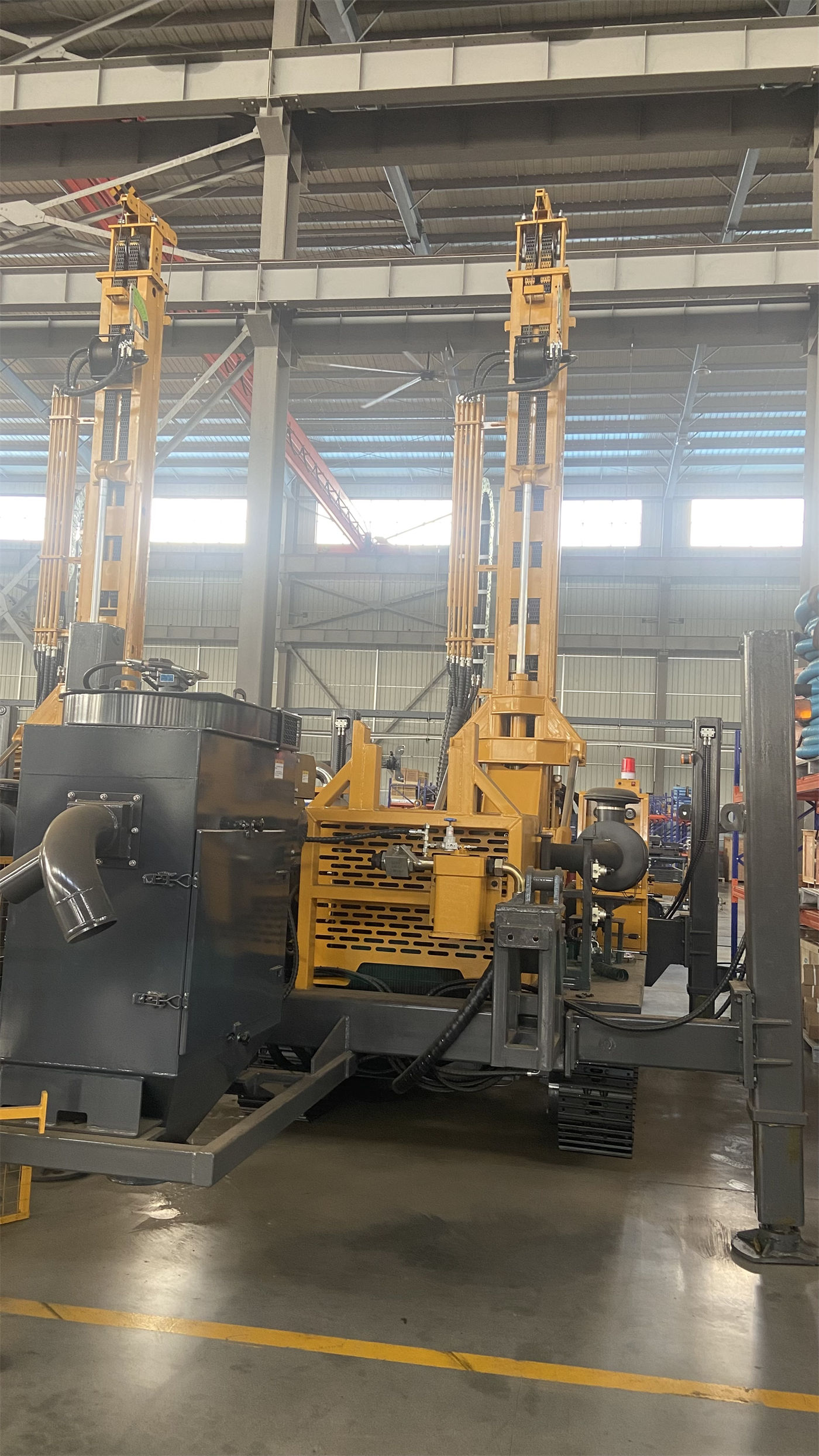
The WR500SE materials contain a set of values that can be verified item by item. When placing them together with the name E Series, it is necessary to know which are equipment parameters and which are merely product line terminology.
| Item in the materials | Value or description | Nature |
|---|---|---|
| Maximum drilling depth | 500 m | Equipment parameter |
| Drilling diameter | 140–350 mm | Equipment parameter |
| Single feed length | 6.6 m | Equipment parameter |
| Lifting force | 26 T | Equipment parameter |
| Rotary torque | 7500–10000 N·m | Equipment parameter |
| Rotary speed | 45–130 r/min | Equipment parameter |
| Power | 118 kW | Equipment parameter |
| Recommended working air pressure | 1.7–3.5 MPa | Construction support condition |
| Recommended air consumption | 17–42 m³/min | Construction support condition |
| Overall weight | Approx. 9.5 T | Equipment parameter |
| E Series | High cost-effectiveness series positioning | Product line terminology |
The last row in the table is not the same type of information as the other rows. The previous rows can be checked one by one during quotation and solution comparison. The E Series row can only tell you the positioning tendency of this equipment among similar products; it cannot be used to calculate any hole depth, hole diameter, or load.
Two readings that easily overstep when seeing a product line name
The first is to read E Series as a configuration tier and believe it represents a fixed bill of materials. The materials do not provide such a list, nor do they state which configurations it includes or excludes, so it is impossible to confirm with the manufacturer "what is standard in E Series."
The second is to bind E Series to drilling depth capability and believe that having E represents a certain level of depth or load. The materials clearly state that it controls overall investment at the 500-meter capability level. Drilling depth itself comes from the parameter line "maximum drilling depth 500 m." The two are not the same thing. To truly confirm whether the capability is applicable, one must still return to the sets of values for drilling depth, hole diameter, lifting force, torque, and air consumption and check them item by item.
What this name means for actual use
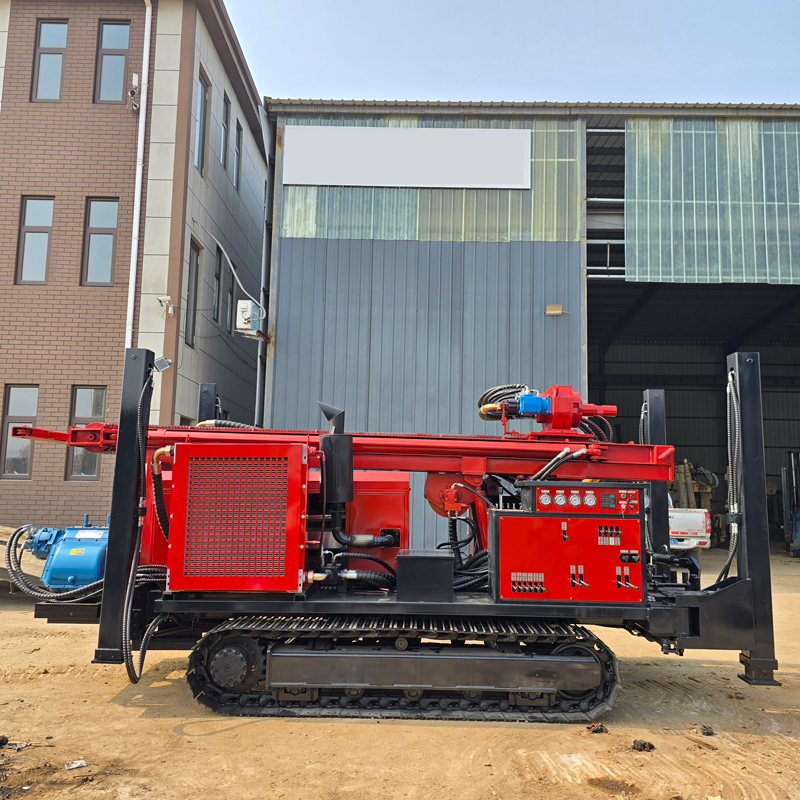
The only practical meaning that can be read from the materials is this: at the same 500-meter level and the same 26 T lifting force tier, the WR500SE is placed in a relatively controlled investment position. The materials mention that it is suitable for water well construction teams that need relatively high continuous construction efficiency while also wishing to control equipment investment, and they link the 6.6 m long stroke to the effect of reducing power head return and drill pipe connection frequency.
As for whether a specific project is suitable, the materials do not provide a conclusion, nor should it be inferred from the product line name. Matters that need separate confirmation include: target well depth and hole diameter, formation composition, whether the air compressor configuration matches the recommended range of 1.7–3.5 MPa and 17–42 m³/min, DTH hammer and drill bit specifications, the use plan for the foam pump in specific formations, and whether transportation conditions can accommodate the overall dimensions of approximately 6150 × 2200 × 2600 mm. These must all be checked separately according to project conditions. The name E Series cannot replace any one of them.