












When the publicly available parameters of 450 m and 400 m class water well drilling rigs are placed side by side, the easiest line to compare directly is drilling depth: 450 m versus 400 m, a difference of 50 m. But treating this 50 m as the only difference easily overlooks the following items—they are also written in the parameter table, yet each constrains a different construction step. This article uses the publicly available information of the WR450SE on this site as a reference and explains the differences between the two by four specific positions.
First, the 450 m class equipment compared in this article
The publicly available information of the WR450SE states: maximum drilling depth 450 m, borehole diameter 105–400 mm, drill pipe length 6 m, recommended drill pipe diameter 89 / 102 mm, lifting force 20 T, maximum rotary torque 9000 / 4500 N·m, corresponding maximum rotary speed 90 / 180 r/min, power 92 kW, overall weight approximately 8.5 T, dimensions approximately 5.85 × 1.8 × 2.4 m, travel speed approximately 2.5 km/h, maximum climbing angle reference 21°, hydraulic outrigger stroke 1.6 m, auxiliary winch lifting force 1.1 T (optional 2.5 T), fast lifting speed 30 m/min, fast feed speed 55 m/min, working air pressure 1.2–3.5 MPa, air consumption 16–55 m³/min, reference drilling efficiency 10–35 m/h.
These values are the only 450 m class basis that can be cited in this article. The specific model parameters of the 400 m class are outside the scope of this material, so the following text does not list 400 m class values item by item; it only explains which step the “extra segment” falls into and what conditions are needed for it to become an actual difference.
Position 1: The 50 m difference targets the depth margin for water exploration
The actual significance of the 50 m drilling depth depends on the groundwater level and the depth of the main aquifer. If the target aquifer stably appears above 300 m, both machines can cover the main borehole section, and the extra 50 m is only a reserve. If the groundwater level is relatively deep, the aquifer distribution is unstable, or the aquifer depth fluctuates considerably between different borehole locations in the same area, then the margin left by the 450 m class becomes apparent.
The applicable directions of the WR450SE in the material are written as farmland irrigation, rural water supply, aquaculture, and medium-to-deep groundwater development; it also mentions use for general groundwater surveys and hydrogeological boreholes. A common point of these project types is that well depth cannot be fixed with 100% certainty before work begins. Therefore, the value of the 50 m difference is not “being able to drill deeper,” but rather not having to change equipment midway when there is room to adjust the borehole depth design.
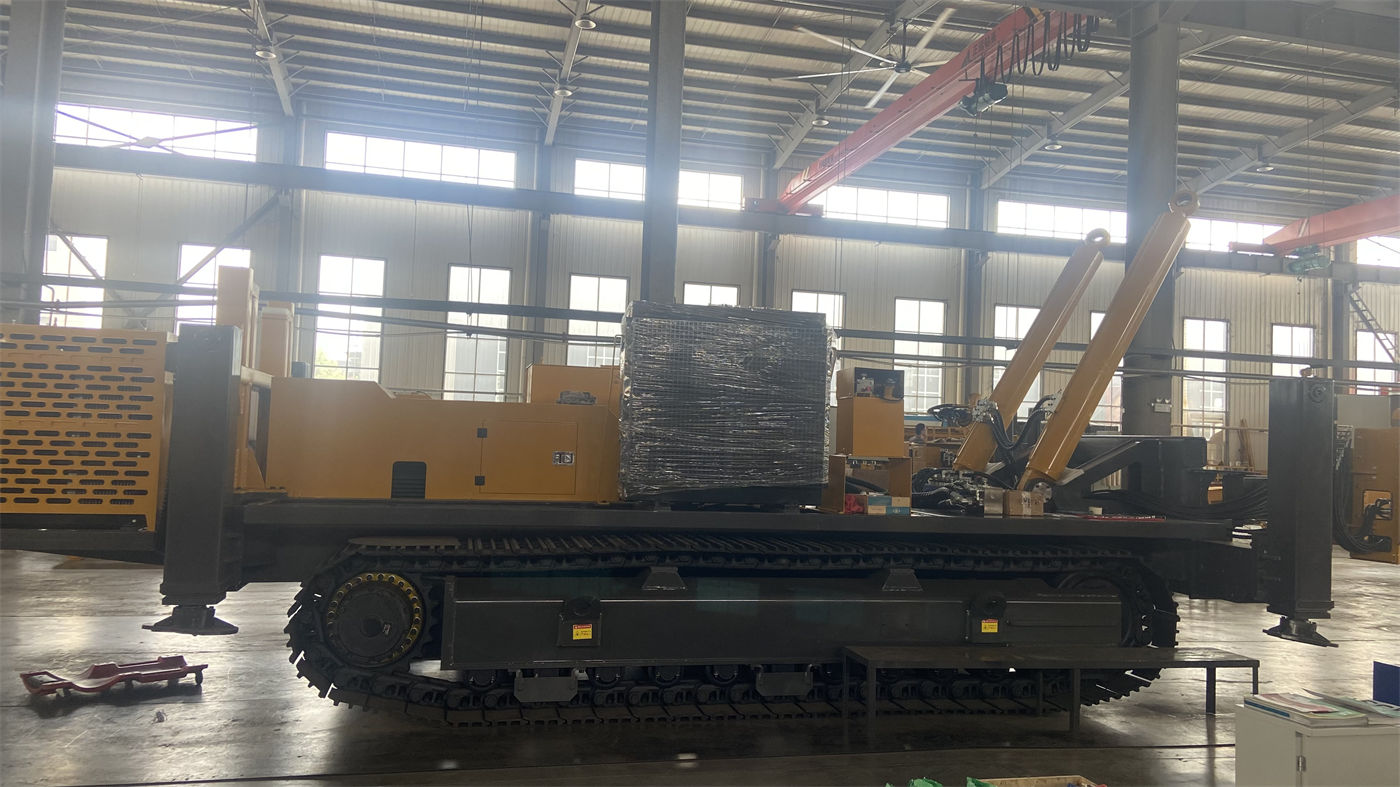
What needs to be confirmed separately in this section is: the relationship between the target well depth and the burial depth of the main local aquifer should be judged according to local hydrogeological data, and the completed well depth cannot be determined solely by the equipment's maximum drilling depth.
Position 2: The 6 m drill pipe changes the number of rod connections
The WR450SE supports 6 m drill pipes, with recommended diameters of 89 / 102 mm. The deeper the borehole, the more times drill pipes must be connected and disconnected, and each connection takes time outside effective drilling. If the 450 m class continues to use a shorter drill pipe configuration, the rod connection frequency will accumulate with borehole depth; when 6 m drill pipes are used, the number of connections required for the same borehole depth is correspondingly reduced.
This point has a more obvious impact on projects that continuously construct multiple medium-to-deep wells: the auxiliary time saved per borehole may seem limited, but when accumulated by the number of wells, it shows up in equipment utilization. Whether 400 m class equipment also supports 6 m drill pipes must be checked against its respective material and cannot be inferred from the configuration of the 450 m class.
Rod connection frequency and drill pipe diameter should be considered together
The recommended drill pipe diameters of 89 / 102 mm appear together with the 6 m length. When the borehole diameter increases or resistance inside the borehole rises, the choice of drill pipe specification should be judged together with borehole diameter, formation, and rotary output, rather than treating the 6 m drill pipe as a universal configuration unrelated to borehole diameter.
Position 3: The lifting force margin changes with borehole depth
The lifting force of the WR450SE is 20 T. As borehole depth increases, both the self-weight of the drill pipe and the friction of the borehole wall rise, so the lifting force margin is not a fixed value but a quantity that changes with borehole depth and downhole conditions. The difference between the 450 m class and the 400 m class in this item depends on their respective lifting force values and the weight of the drilling tools corresponding to the target borehole diameter.
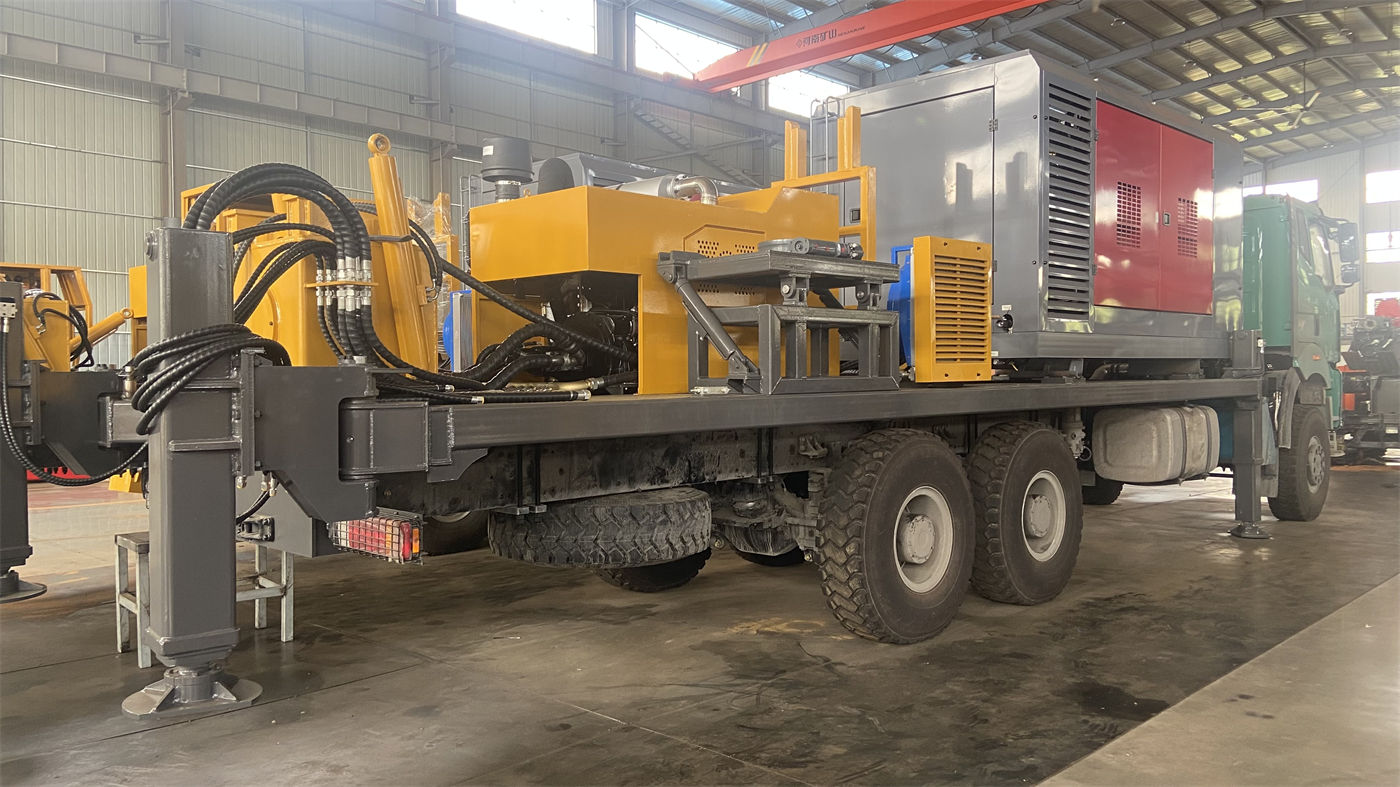
The material's handling direction for abnormal pull-out resistance is to first judge the borehole wall, cuttings removal, and drilling tool condition, then consider measures such as hole cleaning, slow lifting, or casing. This shows that the purpose of the lifting force margin is to leave room for handling, and it cannot be understood as being able to directly pull up any downhole resistance. At 450 m class borehole depths, 20 T needs to be checked in the same group with borehole diameter, drill pipe diameter, and formation conditions.
Position 4: Dual-condition torque constrains different borehole sections
The maximum rotary torque of the WR450SE is 9000 / 4500 N·m, corresponding to maximum rotary speeds of 90 / 180 r/min. The material maps these two sets of values to different borehole section states: the lower-speed, high-torque state is more suitable for large-diameter, hard rock, or higher-resistance borehole sections; the higher-speed state is suitable for drilling stages with relatively lower resistance.
In the same well, the resistance states of the upper overburden and the lower rock formation are not the same, so these two sets of values are not a preference switch between two operating gears, but an output choice when borehole diameter and formation change. If the torque value of 400 m class equipment is lower than this set, its impact will first appear in large-diameter borehole sections and hard rock borehole sections, rather than being evenly spread across the entire borehole.
| Difference position | WR450SE public parameters | Corresponding working conditions |
|---|---|---|
| Drilling depth margin | Maximum drilling depth 450 m | Leaves adjustment room when groundwater level is deep and aquifer distribution is unstable |
| Rod connection frequency | Drill pipe length 6 m, recommended diameter 89 / 102 mm | Continuous construction of multiple medium-to-deep wells, reducing connection times |
| Lifting force margin | Lifting force 20 T | Handling margin when drill string self-weight and borehole wall friction rise with borehole depth |
| Rotary output | 9000 / 4500 N·m, corresponding to 90 / 180 r/min | Corresponds respectively to large-diameter, hard rock borehole sections and lower-resistance borehole sections |
An easily overlooked difference: power and overall weight
The WR450SE uses a 92 kW power system, with an overall weight of approximately 8.5 T. Such values themselves do not constitute a judgment of which machine is better or worse; what they determine is how transport and loading/unloading are organized: an 8.5 T overall machine is relatively easy to arrange when a medium-sized construction team moves between projects, while if 400 m class equipment differs in power or weight, what is affected is the scheduling rhythm of the same batch of sites between different townships and farms.
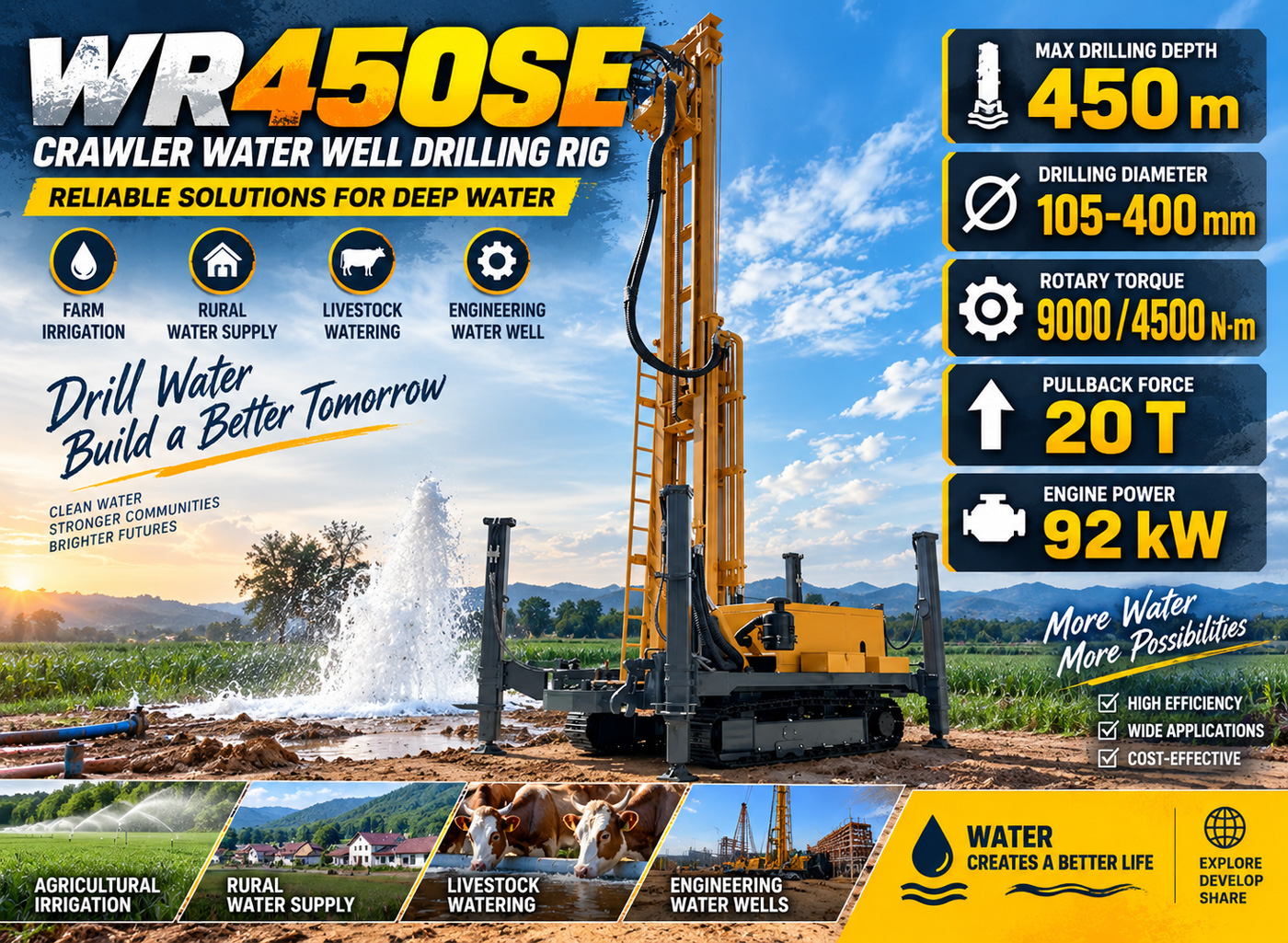
The material only states that the WR450SE is suitable for frequent transfers between different townships, farms, and engineering projects, and does not provide comparison data with 400 m class equipment in the transport step. If this item needs to be judged, it should be based on the respective overall weight and dimensions of the two machines.
Putting the four positions back into the same judgment
The 50 m drilling depth difference itself cannot be directly converted into construction benefit. Only when there is uncertainty in the groundwater level, aquifer depth, or borehole depth design of the target area does this 50 m correspond to actual operating space. The three items of rod connection frequency, lifting force margin, and rotary output fall respectively into construction organization, drilling tool handling, and borehole section adaptation, and do not overlap with drilling depth.
Therefore, when comparing two machines, it is worth proceeding in order: first confirm the target well depth and main aquifer depth, then see whether the 450 m class margin is needed; next check whether the drill pipe length and recommended diameter reduce rod connection times; finally, according to the planned borehole diameter and formation combination, verify whether the lifting force and torque cover the most demanding borehole section. After these three steps, then go back and judge whether the extra 50 m is the difference discussed in this article.
This article does not cover the specific model parameters, customer cases, and on-site test results of 400 m class equipment; these contents need to be based on the corresponding publicly available material and the actual project situation. Actual well depth, borehole diameter, and well completion results should be judged in combination with local hydrogeological conditions.