












The sentence 'I have several job sites—is a 350-meter-class rig enough?' is difficult to answer directly because it mixes two questions together: first, how deep the deepest well needs to be drilled and how large the well diameter is; second, whether this equipment can be moved between several job sites. The former concerns in-hole capability, while the latter concerns relocation and effective working time. Using the publicly available information on this site's WR350SE as a reference, this article breaks the phrase 'number of job sites' into verifiable conditions, then examines which equipment parameters actually correspond to those conditions.
First, break down the phrase 'several job sites'
The number of job sites itself is not an equipment parameter; it only becomes meaningful when reduced to the following items:
- Number of holes at each job site: one well and a dozen wells place completely different demands on the equipment;
- Distribution of hole depths: whether they are all close to 350 meters, or mostly around 200 meters with a few exceeding 300 meters;
- Well diameter and completion structure: the well casing diameter, pump type, and whether casing is installed directly determine the rotary and lifting loads;
- Distance between job sites and road conditions: determining whether the crawler travels on its own or is loaded onto a truck for transport;
- Formation combination: whether it is mainly loose strata, or enters weathered rock or even intact rock formations.
Only after these items are determined does 'whether it is enough' become a question that can be answered against a parameter table. If any one of them is missing, the judgment can only remain a conditional recommendation.
The hole depth item: how to use the number 350 meters
The WR350SE has a maximum drilling depth of 350 meters. This value targets the upper limit of the equipment's in-hole capability, and does not mean every job site must drill to 350 meters. The description of its applicable scope in the information is farmland irrigation, rural water supply, farms, and general water well projects, and it is explicitly stated to be suitable for loose formations and rock formations.
If a construction crew's hole depths generally fall in the 200 to 300 meter range, with only a few holes requiring greater water-finding margin, a 350-meter-class rig has margin in terms of depth. But margin itself does not constitute a reason for selection—what really needs to be checked is: after the target well depth is determined, how much room the total drill string weight and borehole wall friction leave for lifting force and torque.
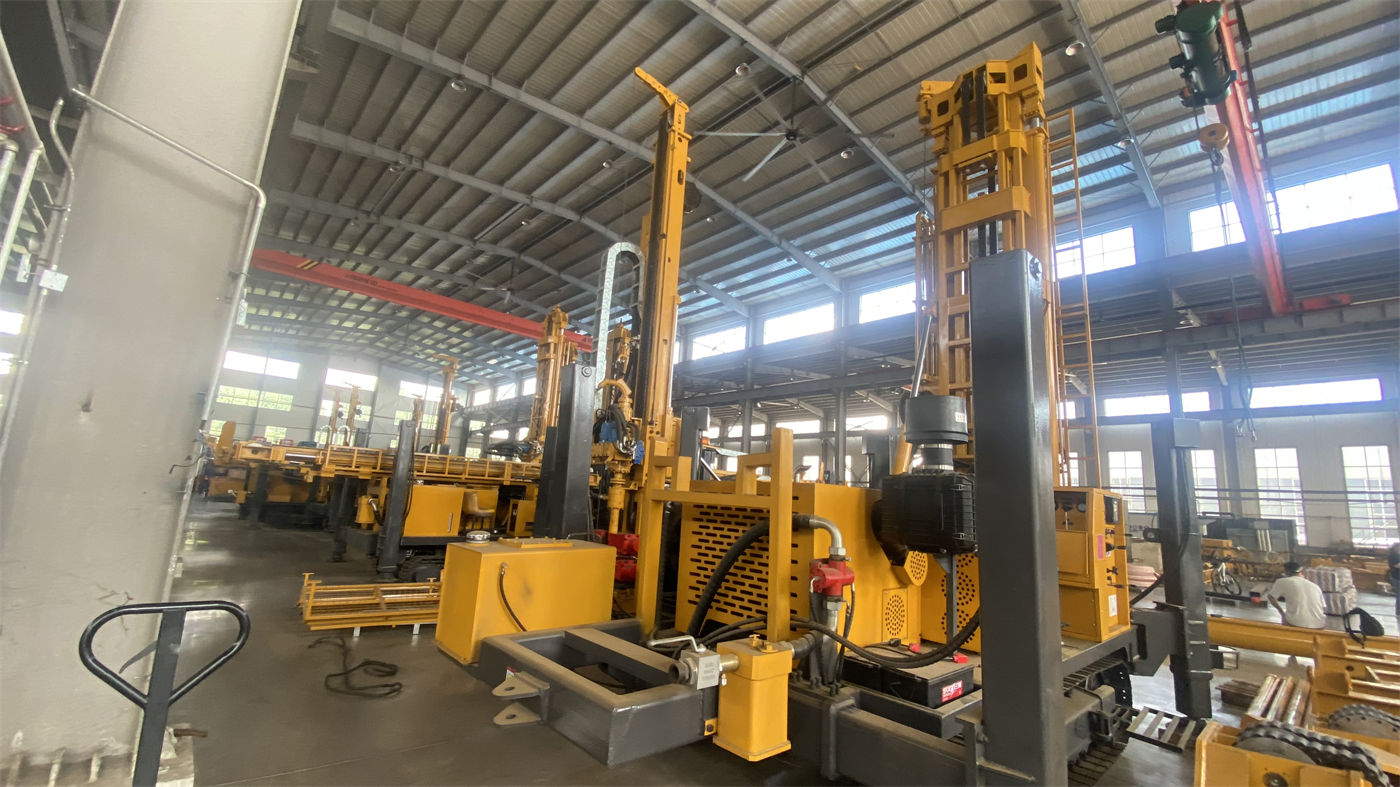
The number of job sites affects relocation, not drilling depth
When there are many job sites, what gets consumed first is relocation and setup time, not in-hole drilling capability. This part corresponds to several chassis parameters:
| Parameter | Published value | Corresponding operation |
|---|---|---|
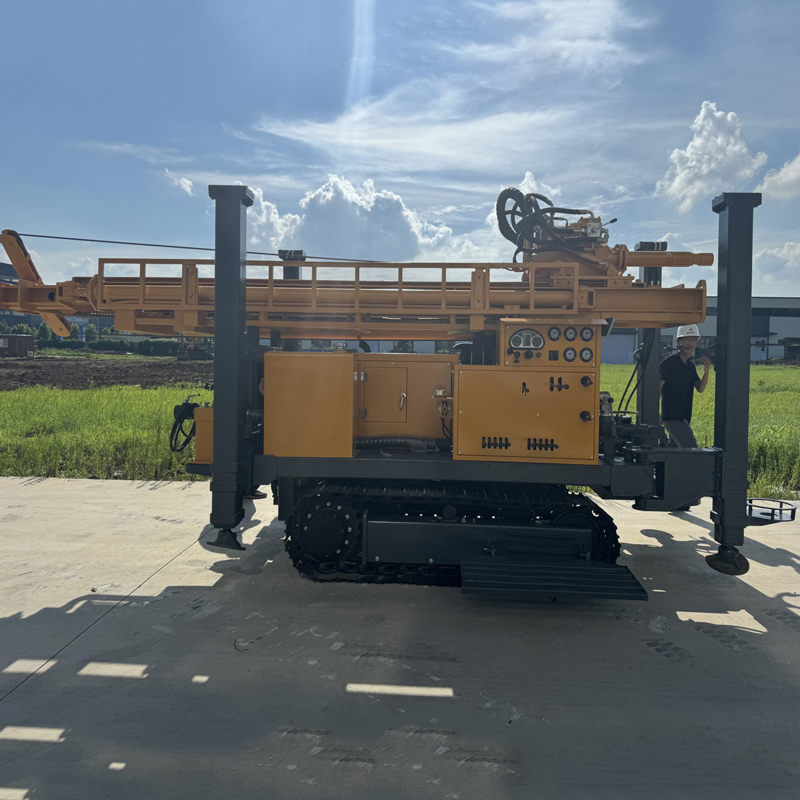
| Overall weight | Approx. 7.5 T | Truck loading, lifting, and medium-scale transport arrangements |
| Dimensions | Approx. 5.78 × 1.7 × 2.25 m | Passage width and transport loading |
| Travel speed | Approx. 2.5 km/h | Moving within the site and short-distance relocation |
| Maximum climbing angle | Reference 21° | Slope passage within the site, to be judged together with ground bearing capacity |
The crawler structure is suitable for rural roads, construction sites, gravel ground, and generally uneven terrain. Long-distance transfers between job sites still require truck loading; the 2.5 km/h travel speed is only suitable for within-site movement and very short-distance position adjustments. Therefore, the item 'many job sites' actually constrains transport organization and equipment recovery status, not drilling depth parameters.
Drill pipe length: what 3-meter and 6-meter pipes each correspond to
The WR350SE supports 3-meter and 6-meter drill pipes, with recommended drill pipe diameters of 89 / 102 mm. This compatibility affects a specific process—the number of times drill pipes are connected and disconnected.
- 6-meter drill pipes: fewer connections at the same hole depth, suitable for multiple hole positions requiring continuous footage, such as contiguous farmland and large-scale planting areas;
- 3-meter drill pipes: more suitable for projects with ordinary transport conditions and limited construction sites; a single drill pipe is shorter and easier to handle in narrow sites.
If a job site requires drilling multiple wells in succession, reducing the number of drill pipe connections can improve effective equipment utilization. However, the information does not provide specific time-saving values; the actual difference depends on hole depth, formation, and operational organization, and cannot be directly calculated from the parameters.
Lifting force and torque: they correspond to processes, not totals
The WR350SE has a lifting force of 16 T, a rotary system maximum torque of 8500 / 4250 N·m, corresponding to maximum rotary speeds of 80 / 160 r/min.
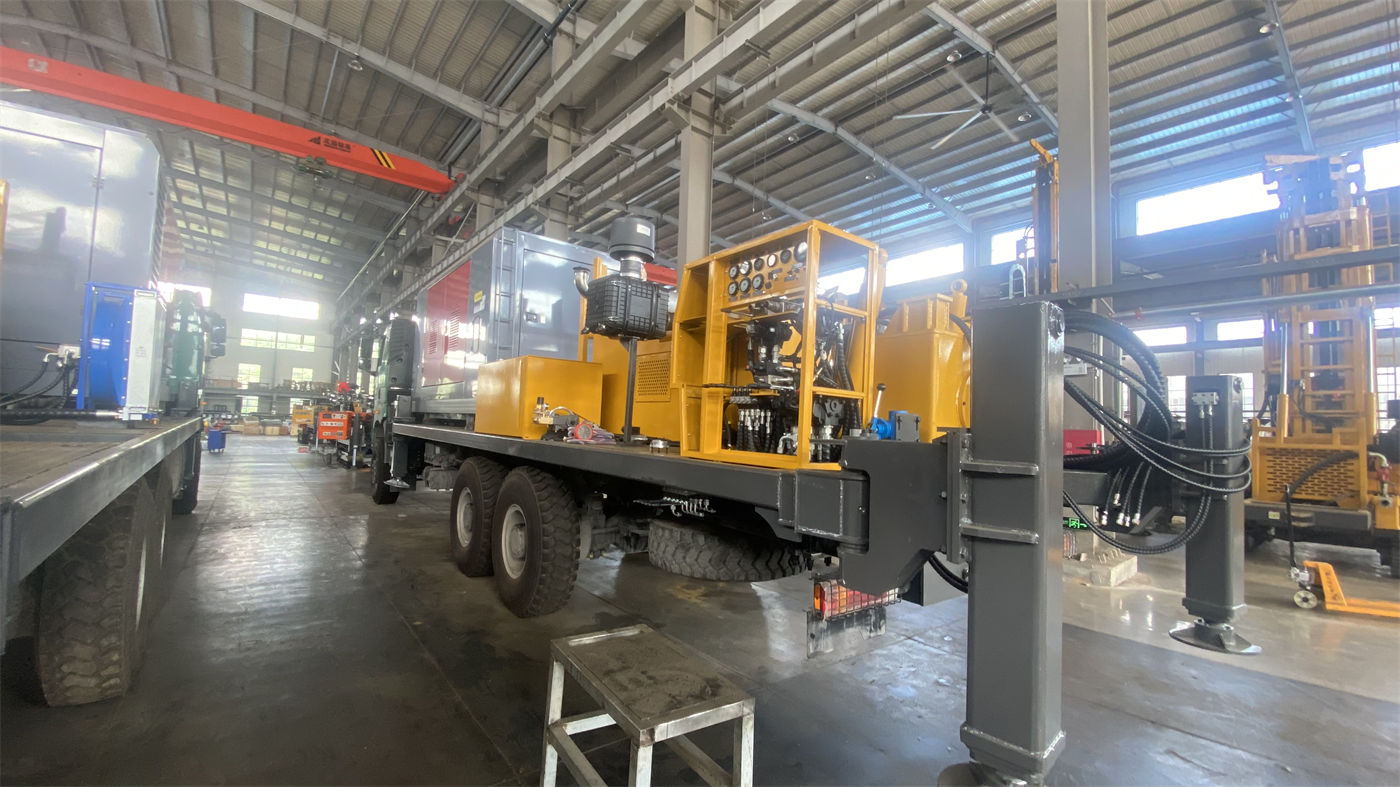
The 16 T lifting force is used for tripping, DTH hammer recovery, and some casing operations. As hole depth increases, drill pipe weight and borehole wall friction rise together. Therefore, the information notes that when abnormal pull-out resistance is encountered, the hole should first be cleaned, the drill pipes inspected, and the borehole wall condition assessed, rather than directly relying on maximum lifting force to pull forcefully. This is especially important for crews constructing continuously across multiple job sites: differences in borehole wall conditions at different job sites directly affect the actual resistance during pull-out.
Dual-condition torque corresponds to two types of in-hole resistance states: lower rotation speed and higher torque are suitable for larger hole diameters, higher resistance, or hard rock drilling; higher rotation speed conditions are suitable for drilling stages with lower resistance. On site, adjustments must be made based on cuttings return, torque changes, and bit condition; it is not 'shifting gears' in the sense of driving habits.
Formation combination determines process switching, not drilling depth
The information clearly states that the WR350SE is suitable for loose formations and rock formations. The upper soil layer, clay, sand layer, and gravel layer can use mud rotary, casing, or other hole-stabilizing methods; after entering weathered rock and intact rock formations, it can switch to DTH hammer drilling. When using DTH hammer drilling, the recommended working air pressure is 1.2–3.5 MPa, air consumption is 16–55 m³/min, and medium- and high-pressure DTH hammers can be used.
What needs separate explanation here are the supporting conditions: the actual air compressor selection must take into account hole diameter, drill pipe, DTH hammer specifications, rock hardness, and construction altitude. Insufficient air volume will cause poor cuttings removal, while excessive configuration will increase equipment and fuel costs. The information does not specify which air compressor model to match; this part needs to be confirmed separately at the project level based on the in-hole tools.
Which configurations must be calculated separately according to job site conditions
The WR350SE's optional items include mud pumps, centrifugal pumps, generators, and foam pumps. The standard auxiliary winch lifting force is 1.1 T, with an optional 2.5 T configuration. The information gives directional explanations of the correspondence to different job sites: projects with more loose strata pay more attention to the mud system, hard rock projects pay more attention to air compressors and DTH hammers, and projects lacking a stable power supply may need a generator.
The choice of auxiliary winch follows the same logic: the standard 1.1 T is sufficient for conventional drilling tool handling; if the project has many casing, DTH hammer, or on-site lifting needs, then consider the optional 2.5 T configuration. Multiple job sites mean that formations and supporting requirements may differ, but this does not constitute a reason to select all options; it is more reasonable to choose according to actual working conditions.
Matters still to be confirmed under multi-job-site conditions
Even if the parameters match at the specification level, the following items lack complete basis in the information and need to be separately implemented in actual projects:
- Specific hydrogeological data and aquifer burial depth for each job site—the information explicitly recommends referring to local hydrogeological data before formal construction;
- How to determine the well completion structure (well casing, filter pipe, sealing section, pump type)—the information mentions that during the completion stage, filter pipes and sealing sections need to be arranged according to aquifer position, but does not give a specific design method;
- Specific matching of in-hole tools such as air compressors and DTH hammers;
- Road access and transport plans between job sites;
- On-site handling methods for hard rock, fractures, broken zones, and strong water inflow sections.
In addition, the reference drilling efficiency given in the information is 10–35 m/h, and it is clearly stated that actual results are related to lithology, drilling tools, air compressor, and operator experience; the fast lifting speed of 30 m/min and fast advancing speed of 55 m/min are mainly used for non-drilling actions and do not represent actual footage speed in rock formations. Values such as the overall weight of 7.5 T, 91 kW power, and 16 T lifting force can only support the judgment of 'a 350-meter-class rig for medium-depth conventional water well projects,' and are not sufficient to infer that a certain well completion result will definitely be achieved at a specific job site.
So returning to the original question: if this crew's hole depths are mostly in the 200 to 300 meter range, the formations include loose strata and general rock formations, job sites require truck transport between them, and the crew is willing to determine supporting equipment separately according to each job site, then a 350-meter-class rig is an option that needs to be checked item by item, not a conclusion that can be decided solely by the drilling depth number.