












In the publicly available documentation for the WR300SEL, 6.6 m single feed and 6 m drill pipe appear as two consecutive values. The parameter table also lists 300 m drilling depth, 140–325 mm hole diameter, 18 T lifting force, and 5700–7500 N·m torque. When these numbers are placed together, the 6.6 m item is most easily misread as "this machine drills faster." What it actually constrains is not the rate of penetration in rock, but the stroke length of the power head in one reciprocation and how long a drill pipe can be fed in one stroke.
First, look at which row the 6.6 m value occupies in the parameter table
The original documentation states "6.6 m single feed, compatible with 6 m drill pipe." These two values are not the same thing: 6.6 m is the stroke length the power head can feed in a single pass, while 6 m is one of the optional drill pipe lengths for this equipment. The stroke exceeds the drill pipe by 0.6 m, meaning that when using 6 m drill pipes, one pipe can be essentially fed completely in a single stroke, without needing to feed the same pipe in segments due to insufficient stroke.
Therefore, this value corresponds to the organization of drill pipe connection and disconnection actions, not the speed at which rock in the hole is broken. The documentation separately provides a reference drilling efficiency of 15–35 m/h and clearly states that actual efficiency is affected by formation, bit, DTH hammer, and air compressor. The two values govern different things; only by considering them together can misreading be avoided.
Why the number of pipe connections is determined by drill pipe length, while the stroke determines whether one pipe can be fed in a single pass
At a hole depth of 300 m and using 6 m drill pipes, the number of drill pipes required to complete the entire hole is mainly determined by hole depth divided by the length of a single pipe. From this perspective, the length of a single feed stroke does not change how many pipes need to be connected.
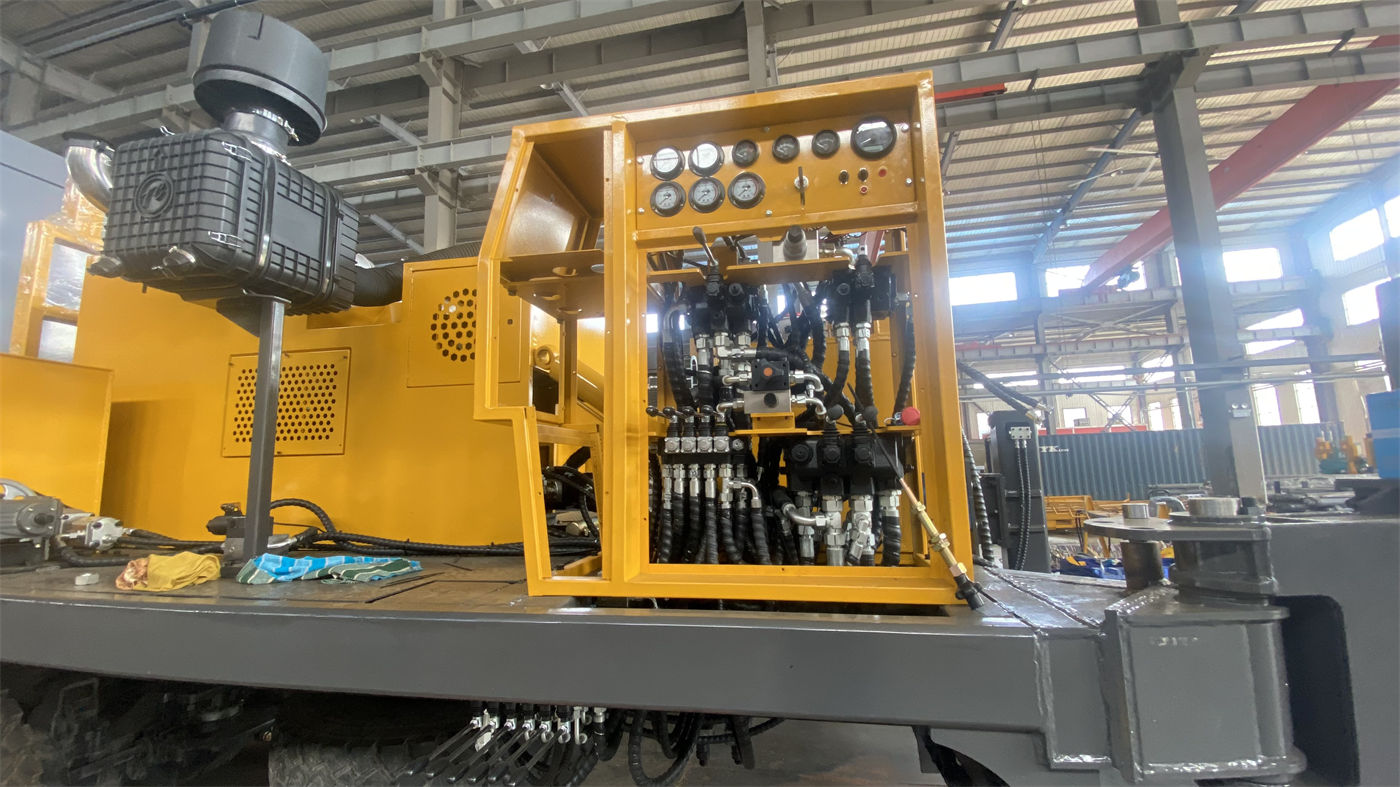
What the stroke changes is how each pipe is handled near the collar: if the stroke is long enough, one 6 m pipe is fed into place in one pass; if the stroke is insufficient, the same pipe must be fed in two segments, adding an extra handling action at the collar. Therefore, what 6.6 m single feed actually constrains is the number of actions per pipe at the collar and how non-drilling time such as power head return and ladder alignment accumulates. It governs the auxiliary action segment, not the rock-breaking segment.
Mast clearance, drill pipe handling, and outrigger loading are its supporting conditions
A long-stroke structure does not merely add an extra section of mast. The documentation notes in the precautions: long-stroke mast and 6 m drill pipes place higher demands on site clearance, drill pipe handling, and equipment stability; before drilling, confirm mast extension space, ground bearing capacity, and outrigger loading. These are not additional reminders but prerequisites for the 6.6 m value to be properly realized.
When site clearance is insufficient, long mast extension is limited, and the advantage of single feed cannot be fully utilized; when ground bearing capacity is inadequate, the difficulty of moving drill pipes from the collar to the hole position also increases. The same documentation also notes that the 2 T auxiliary winch can be used to handle DTH hammers, drill pipes, casing tools, and some accessories, but load must be controlled during lifting and personnel must be kept away from the suspended area. These two points can be read together: the 6.6 m stroke reduces the number of connection and disconnection actions, not the disappearance of handling weight.
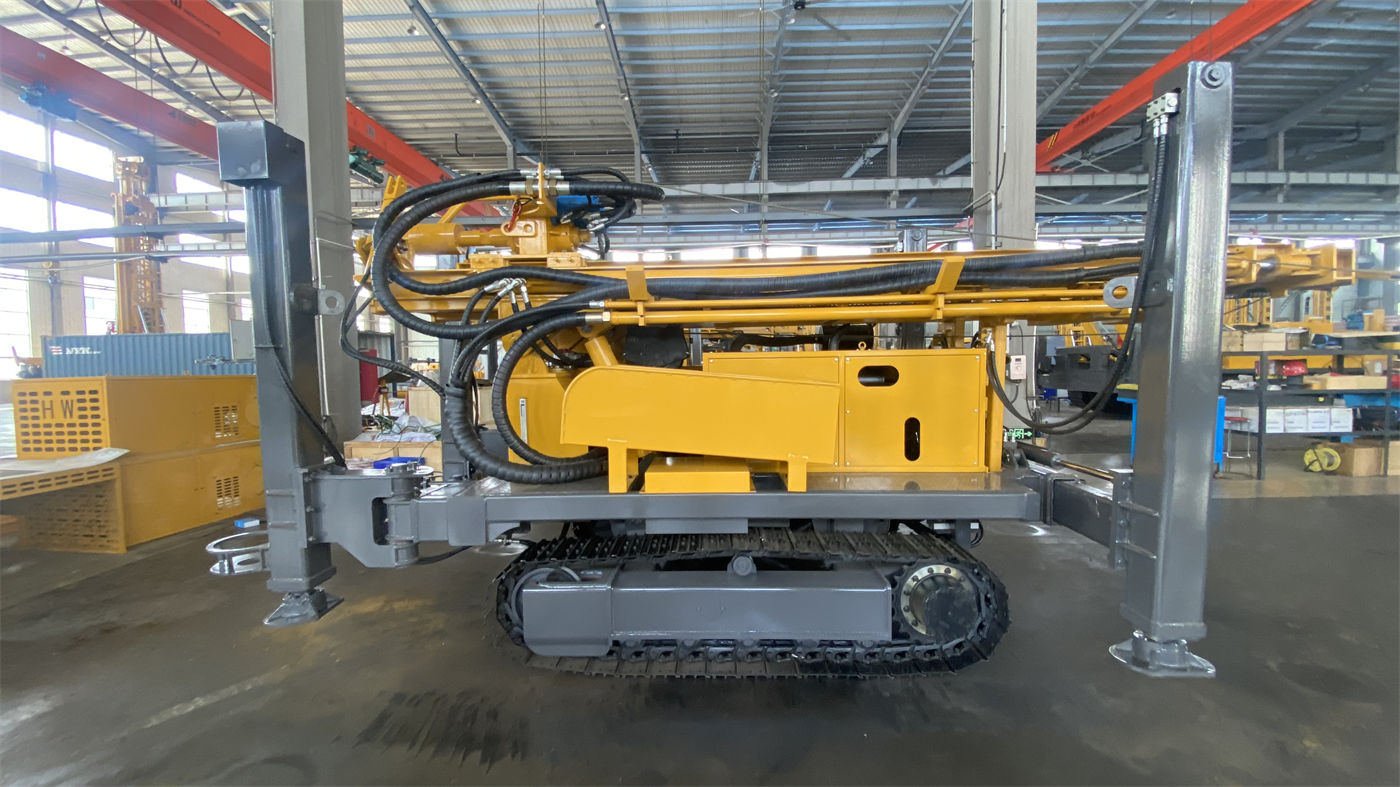
Working back from 6 m pipes: several things in construction organization that must change accordingly
- Turnaround space for collar tools. A 6 m drill pipe requires longer lateral space during connection and disconnection; collar layout cannot be considered only on the scale of short pipes.
- Transport state. The documentation gives a reference overall weight of approximately 8 T and dimensions of approximately 5900 × 1850 × 2200 mm, and notes that before transport, vehicle length, loading fixation points, and site turning space should be confirmed. The fixation method for long-stroke configurations during loading needs separate arrangement.
- Relationship between outriggers and hole position. Before drilling, confirm the ground conditions for outrigger loading; this is more worth checking first on uneven ground than on hardened pads.
What this value does not govern
First, it does not define how deep a hole can be drilled. The 300 m upper limit is jointly determined by the overall machine configuration and process, and the documentation clearly states that the final well depth should still be determined based on local hydrogeological conditions.
Second, it does not define formation adaptability. The handling methods for weathered rock, intact hard rock, and loose overburden correspond to process conditions such as DTH hammer, mud, and casing, which are not the same type of parameter as single feed length.
Third, it does not independently determine efficiency. The documentation gives a reference range for drilling efficiency of 15–35 m/h and points to formation, bit, DTH hammer, and air compressor as influencing factors. The 6.6 m single feed affects the pipe connection segment of non-drilling time; directly converting it into daily footage would exceed what this documentation can support.
Which model parameters need to be read together with it
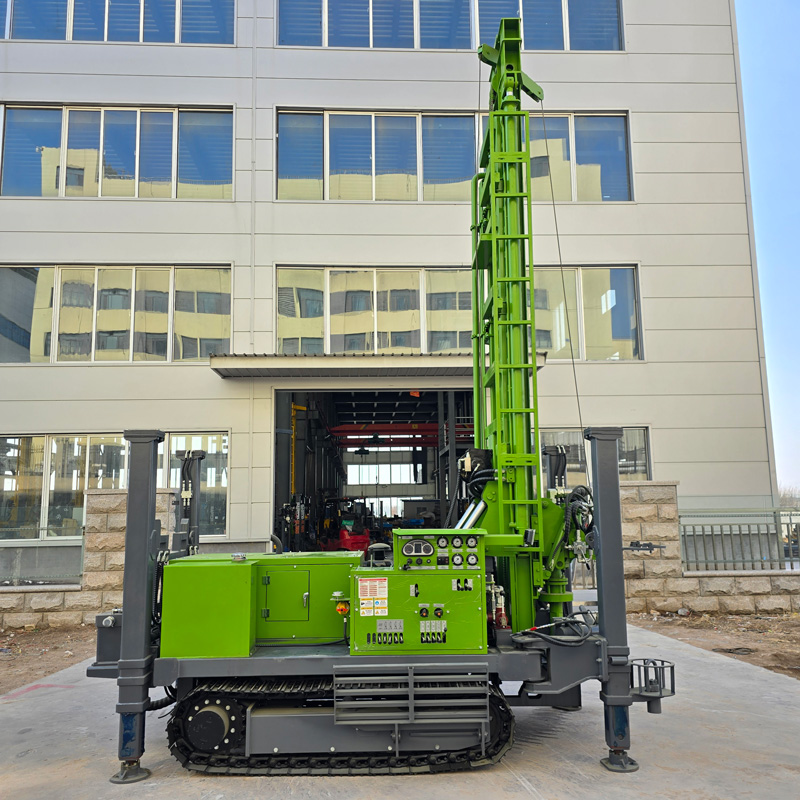
The documentation gives a lifting force of 18 T and states that as hole depth increases, drill pipe self-weight and borehole wall friction increase simultaneously; higher lifting capacity facilitates normal tripping and some casing operations. Using 6 m drill pipes means a heavier single drill string, and the matching relationship between lifting force and drill string assembly must be checked together.
Rotary torque 5700–7500 N·m, rotary speed 40–70 r/min, working air pressure 1.7–3.0 MPa, and air consumption 17–36 m³/min jointly constrain in-hole drilling conditions. Single feed length has no conversion relationship with them, but they appear together in the same equipment parameter table. When reading, they can first be divided into two groups: "governing auxiliary actions" and "governing in-hole drilling."
| Value | Main segment constrained |
|---|---|
| 6.6 m single feed | Drill pipe feed length per stroke, number of connection/disconnection actions |
| 1.5–6 m drill pipe compatibility | Pipe length selection under construction organization and transport constraints |
| 300 m maximum drilling depth | Equipment depth capability class |
| 140–325 mm hole diameter, 5700–7500 N·m torque | In-hole rotary load conditions |
| 18 T lifting force | Tripping and some casing operations |
Parts still requiring separate confirmation when reading WR300SEL documentation
This documentation does not provide the specific auxiliary time savings of the long-stroke structure relative to standard-stroke models, nor does it provide any measured comparison data. Therefore, one cannot directly infer from the 6.6 m value "how many more meters per day" or "how much shorter the construction period." Items that need to be checked at the project level include: target well depth and actual formation combination, planned drill pipe length and diameter, collar layout space, access road and transport vehicle conditions, whether air compressor pressure and displacement can match hole diameter and rock formation, and the well casing, screen pipe, and water stop structure plan for the completion stage. These determine whether this equipment can be deployed on a specific well, while 6.6 m single feed only answers one part of that.