












Deep-hole water well projects face an unavoidable reality: the deeper the hole, the larger the diameter, and the longer the construction period, the greater the duration and total amount of continuous output required from the power system. At such project sites, energy conditions are often the most inconsistent factor—some are in remote mining areas or deserts with no available power grid nearby; others are at fixed mine drilling sites or industrial parks where the grid is right there. For the same 1200m-class water well drilling rig placed in these two types of sites, how should the energy solution be determined?
Using the public information on the WR1200SL from this site as a reference, this article reads "dual diesel-electric operation" as an energy condition adaptation: it corresponds to two fundamentally different on-site power supply premises, rather than a feature that can unconditionally save fuel.
Where power consumption falls in deep-hole projects
First, clarify where power flows in deep-hole operations to understand why the energy solution is a decision that requires separate consideration. In the public information on the WR1200SL, the diesel power configuration is a 264 kW Cummins engine, providing power for rotation, feed, crawler travel, outriggers, and auxiliary systems. Mapped to operations:
- Rotation system: maximum torque 30000 / 15000 N·m, corresponding to maximum speed 85 / 170 r/min;
- Hoisting system: 60 T lifting force, 10 T axial pressure, used for tripping, DTH hammer recovery, and casing operations;
- Auxiliary systems: 5 T main auxiliary winch and 2.5 T small auxiliary winch, used for on-site handling;
- Fast actions: fast lifting 29 m/min, fast propulsion 51 m/min, corresponding to power head return, drill pipe handling, and other non-drilling actions.
These actions occur continuously during long-cycle construction at hole depths above 1000 m. 1200m-class equipment typically operates continuously for extended periods, and the power system must work continuously under conditions such as high temperature and dust. In other words, power is an input that runs through the entire process of this equipment, and the energy solution should be determined before mobilization, not after work begins.
Which types of sites the diesel solution corresponds to
The public information clearly describes diesel power: the 264 kW Cummins diesel power provides high load reserve, suitable for projects with long construction periods, large hole diameters, high depths, and significant differences in on-site energy conditions. The information also states a usage premise—remote mining areas, deserts, and field projects typically rely more on diesel power.
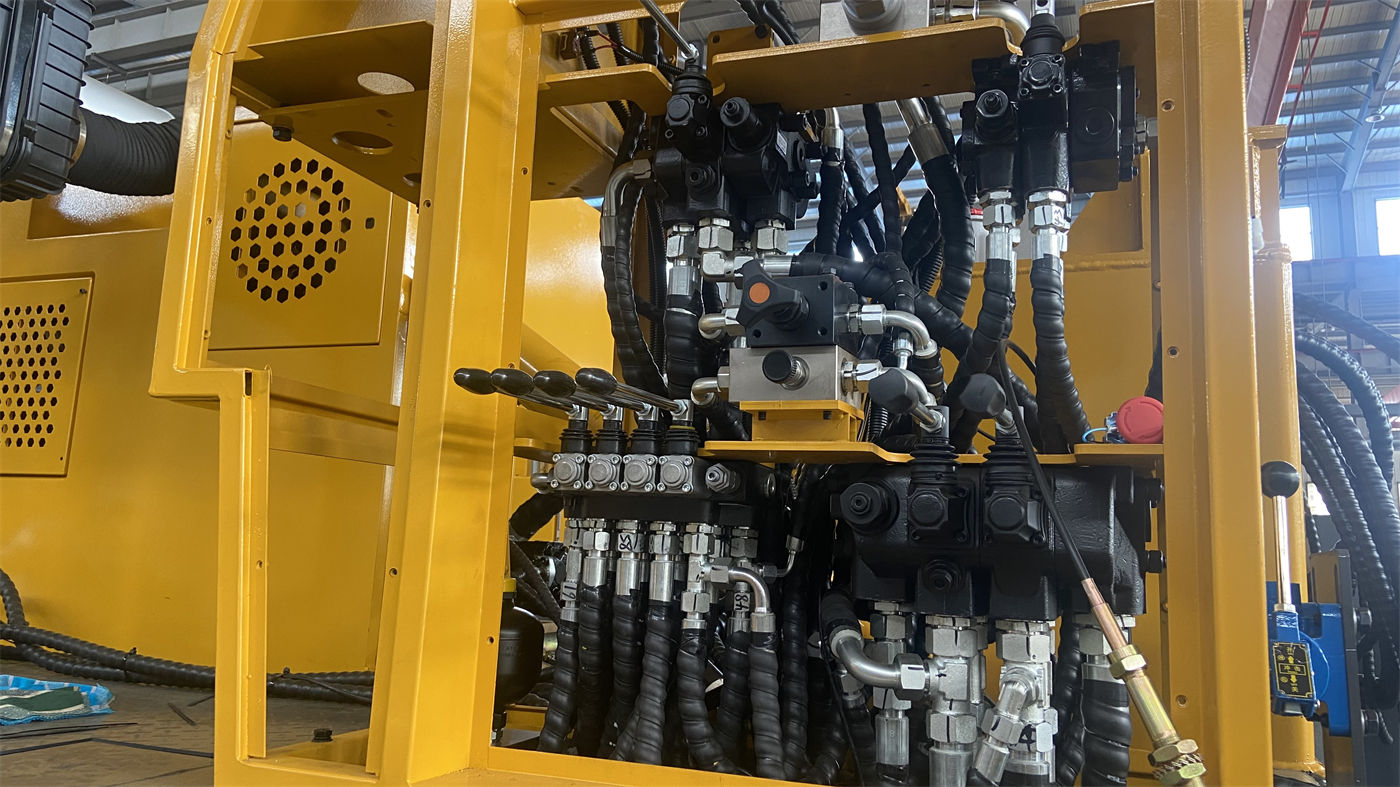
Reading these two statements together, the site characteristics corresponding to the diesel solution are roughly: well locations far from an available power grid, or where a grid exists but the power lead distance, capacity, and stability are uncertain. Using diesel power at such sites means the equipment can operate independently without relying on external power supply. Accordingly, the information also mentions the need to strengthen engine cooling, air filtration, fuel system, and hydraulic oil temperature maintenance to avoid power degradation caused by high temperature and dust—this is part of the supporting maintenance for the diesel solution during long-term field operations, a usage condition rather than an optional item.
The premise for the electric solution is a stable power supply
The description of electric mode in the information points to another type of site: fixed mine drilling sites, industrial parks, or long-term construction projects may have a stable power grid, in which case configuration between diesel and electric solutions can be made according to project conditions. The expectation given in the information is that electric mode helps reduce fuel consumption and on-site exhaust emissions.
Two points need attention here. First, the premise for the electric solution is a "stable power supply," not "the site has electricity." A power supply with insufficient capacity, large voltage fluctuations, or only short-term supply does not constitute a construction premise for the electric solution. Second, the information explicitly states: the final power, voltage, frequency, and starting scheme of the electric portion should be determined according to the project power supply system.
Items to confirm for the electric portion
The information directly points out several items to be confirmed. To avoid treating them as fixed values that can be applied universally, only the conditions are listed here as per the original text, without giving numerical values:
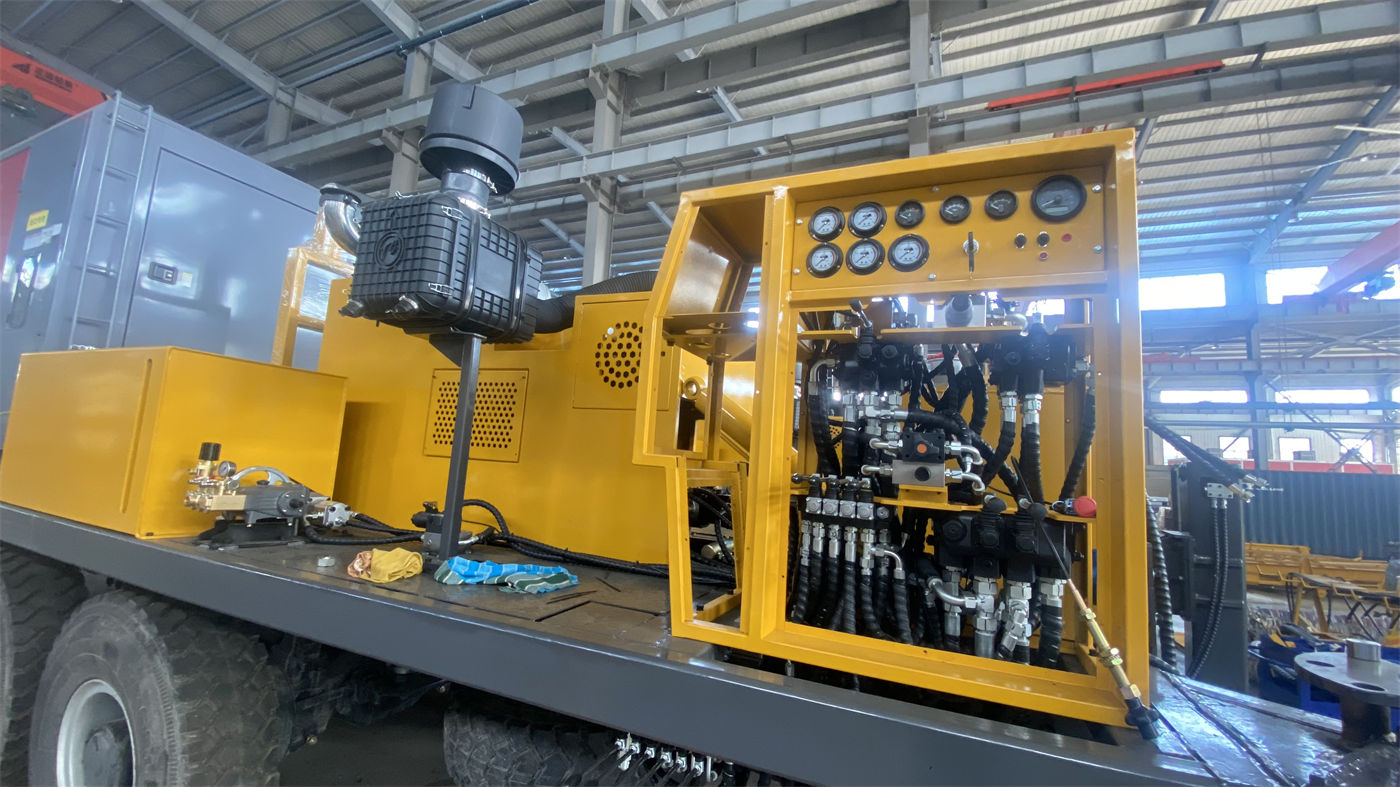
- Voltage and frequency, determined by the project power supply system;
- Transformer capacity, which must match the final power of the electric portion;
- Cable distance, which affects the actual layout of the power supply scheme;
- Starting current, for which the information specifically notes that it cannot be directly converted simply from diesel power.
These four items need to be verified one by one with the project power supplier before mobilization. The information does not provide corresponding specific values, so such issues need separate confirmation and cannot be directly inferred from the 264 kW diesel power.
The adaptation relationship of dual diesel-electric operation on this model
Putting the above content together with the applicable scenarios of the WR1200SL, a comparison can be organized:
| On-site energy conditions | Corresponding solution | Basis in the information |
|---|---|---|
| No power grid, difficult power lead, such as remote mining areas and deserts | Diesel power | The information states that field projects typically rely more on diesel power and retain independent construction capability |
| Stable power grid available, such as fixed drilling sites, industrial parks, and long-term projects | Electric solution | The information states that configuration can be made according to project conditions, providing an option to reduce fuel consumption and exhaust emissions |
What this table illustrates is not "which solution is better," but rather that the problem dual diesel-electric operation solves on this equipment is: allowing the same 1200m-class drilling rig to be deployed at two types of deep-hole sites with different power supply conditions. For the project owner, this means the energy conditions need to be determined before equipment mobilization, and then the configuration parameters of the electric portion need to be verified in turn.
Beyond the energy solution, what other conditions are attached to deep-hole capability
Energy only addresses the power source, not downhole issues. Several parameters directly related to deep holes in the information should also be included in the judgment when selecting an energy solution:
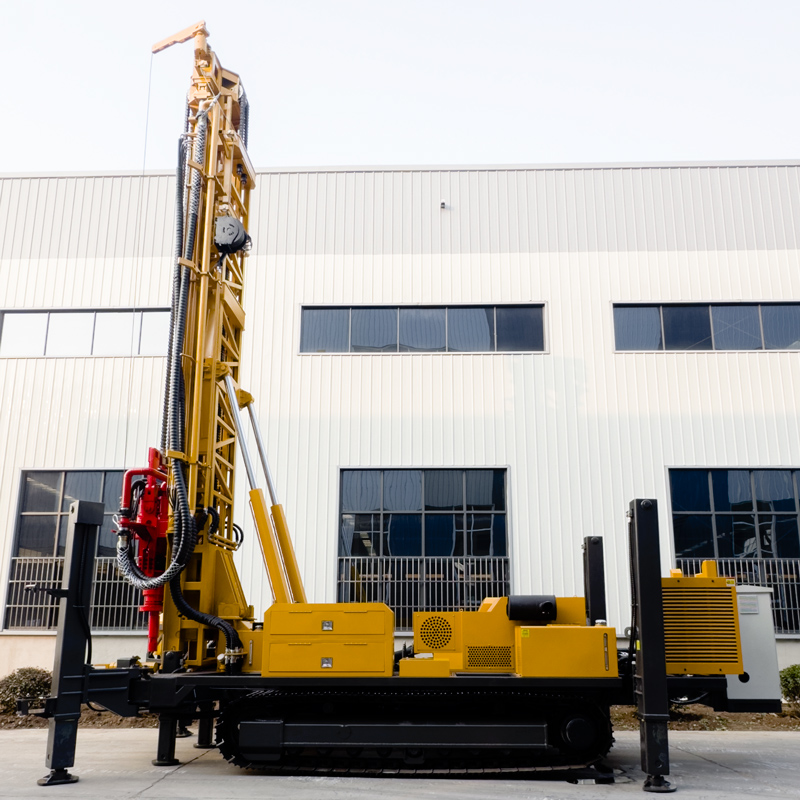
- Maximum drilling depth 1200 m, hole diameter 105–900 mm;
- Supports 9.6 m drill pipes, recommended drill pipe diameter 114 / 127 mm;
- Lifting force 60 T, axial pressure 10 T;
- Rotation torque 30000 / 15000 N·m, corresponding to maximum speed 85 / 170 r/min;
- Recommended working air pressure for pneumatic DTH drilling 1.65–8 MPa, air consumption 16–120 m³/min;
- Telescopic mast structure, used to improve transport envelope.
The information includes a qualification regarding drilling depth applicability: actual drilling depth still needs to be determined based on hole diameter, formation, drill pipe, air compressor, and hydrogeological conditions. This statement also applies to the energy solution—hole diameter, formation, and process determine how much continuous power output is needed, and the air compressor displacement requirement also directly affects supporting selection. The information mentions that air compressor selection must consider both pressure and flow rate; if displacement is insufficient, even if pressure meets requirements, there may be insufficient impact, difficult cuttings removal, and bottom-hole cuttings accumulation. This part belongs to the air circuit supporting system and is an independent link from the dual diesel-electric energy solution.
Which judgments fall outside the information and require separate confirmation
The following points do not have specific data in the public information on the WR1200SL and need to be verified separately according to project conditions:
- Specific values for the final power, voltage, frequency, and starting scheme of the electric portion;
- Whether the transformer capacity and cable laying distance of the project power grid meet requirements;
- The switching method and usage arrangement between diesel and electric solutions in the same project;
- The actual achievable depth at 1200m-class hole depth under specific hole diameter, formation, and air compressor configuration.
If any one of these conditions cannot be confirmed, directly interpreting dual diesel-electric operation as "usable either way" makes it easy to discover only after mobilization that the energy solution does not match the site. A more reliable sequence is: first clarify well depth, hole diameter, formation, and construction period; then verify which category the on-site power supply conditions belong to; and finally determine the parameters of the electric portion accordingly or directly adopt diesel power.