












Coring hole locations in mountainous mining areas often fall on hillsides, gullies, or forest platforms without formed roads. The first test for equipment at such locations is often not how deep it can drill, but how the entire rig can be transported in and disassembled and reassembled on a narrow platform. This article breaks down the operational objective of "accessing roadless sites and coring at designated points" into several requirements, then compares them against the published information for the CR600P to see which features relate to these requirements and which conditions still need on-site verification.
First, break down the operational objective into verifiable conditions
"Coring in roadless mountainous mining areas" involves several layers of constraints that are easily overlooked if discussed together, leading to a focus on drilling depth alone:
- Access method: how far vehicles can reach, and the remaining distance requiring manual or small mechanical transport;
- Individual module weight: heavier modules demand more personnel, wider routes, and gentler slopes;
- Hole orientation: orebody attitude determines the drilling inclination, and the equipment must cover both inclined and near-vertical holes;
- Core size: different hole diameters correspond to different reference drilling depths, and the target depth must fall within this range;
- Borehole wall and cuttings removal: requirements for mud and casing in weathered and fractured sections;
- Hole-to-hole organization: when exploration line holes are scattered, the proportion of time spent on disassembly, assembly, and relocation increases.
Some of these conditions can be directly matched to equipment parameters, while others can only be confirmed on site. The following sections address each requirement in turn.
Which requirement does the modular split structure address?
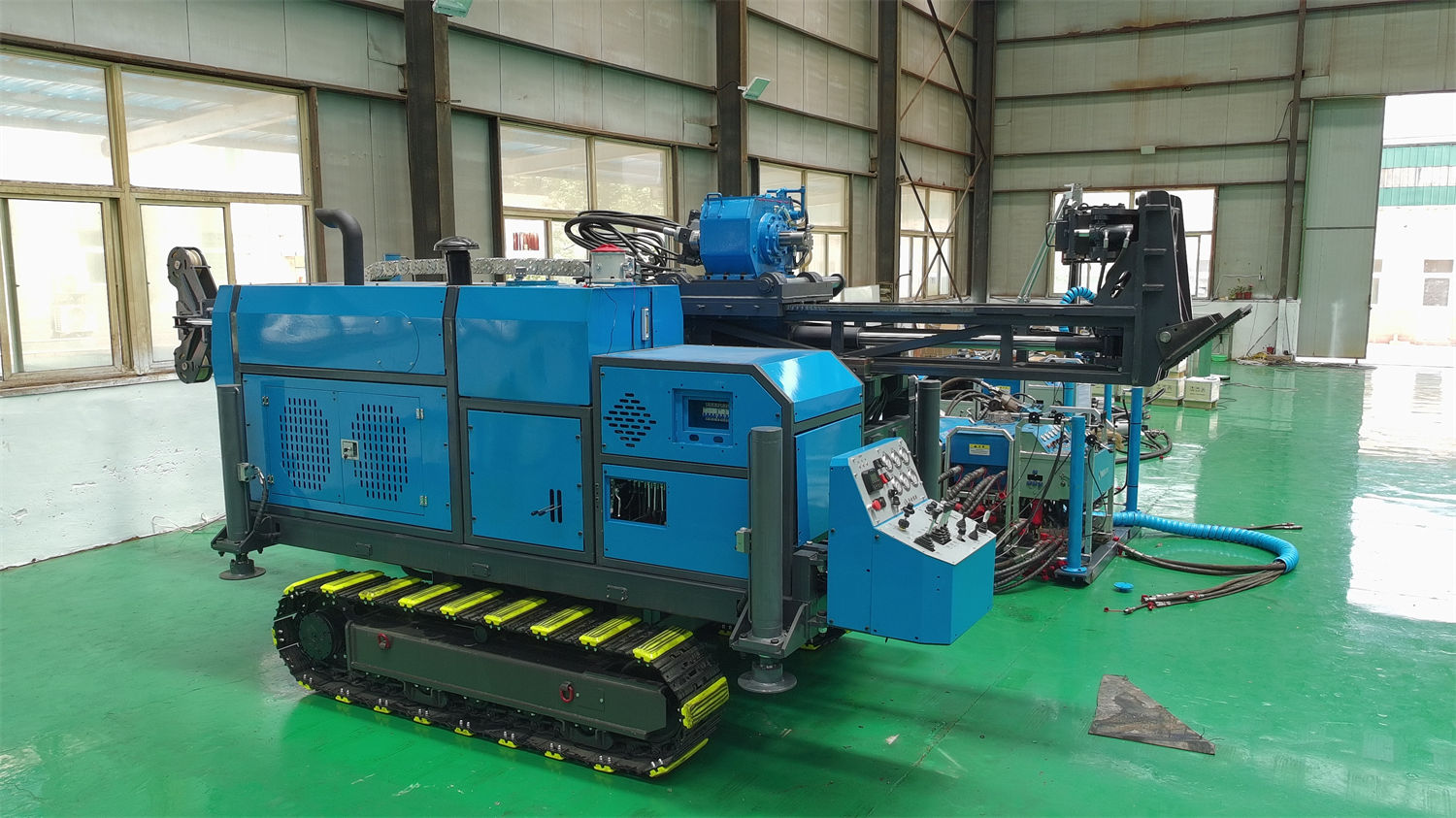
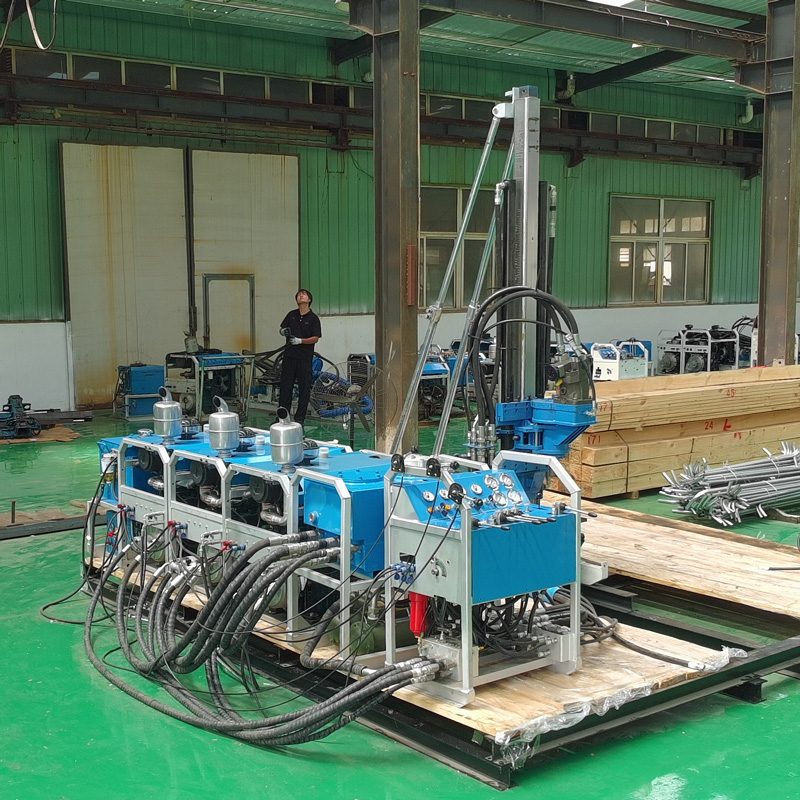
The most common approach at roadless hole locations is to disassemble the equipment into independently transportable units, move them in batches to near the collar, and then reassemble. The CR600P documentation divides the power, hydraulic, control, mud, and drilling mechanisms into multiple functional units, with reference module weights as follows: power unit 180–260 kg, control unit 125 kg, hydraulic oil unit (including oil) 140 kg, mud unit 86 kg, and overall rig weight 1200 kg.
These figures indicate that the split design distributes the overall weight across several modules, rather than reducing individual pieces to a level that can be carried freely by manpower. The power unit at 180–260 kg still requires small transport equipment, cableways, or coordinated effort by multiple people, depending on the slope and distance of the transport route. The documentation does not provide the dimensions of each module; the minimum width, turning radius, and lifting points of the transport route need separate verification.
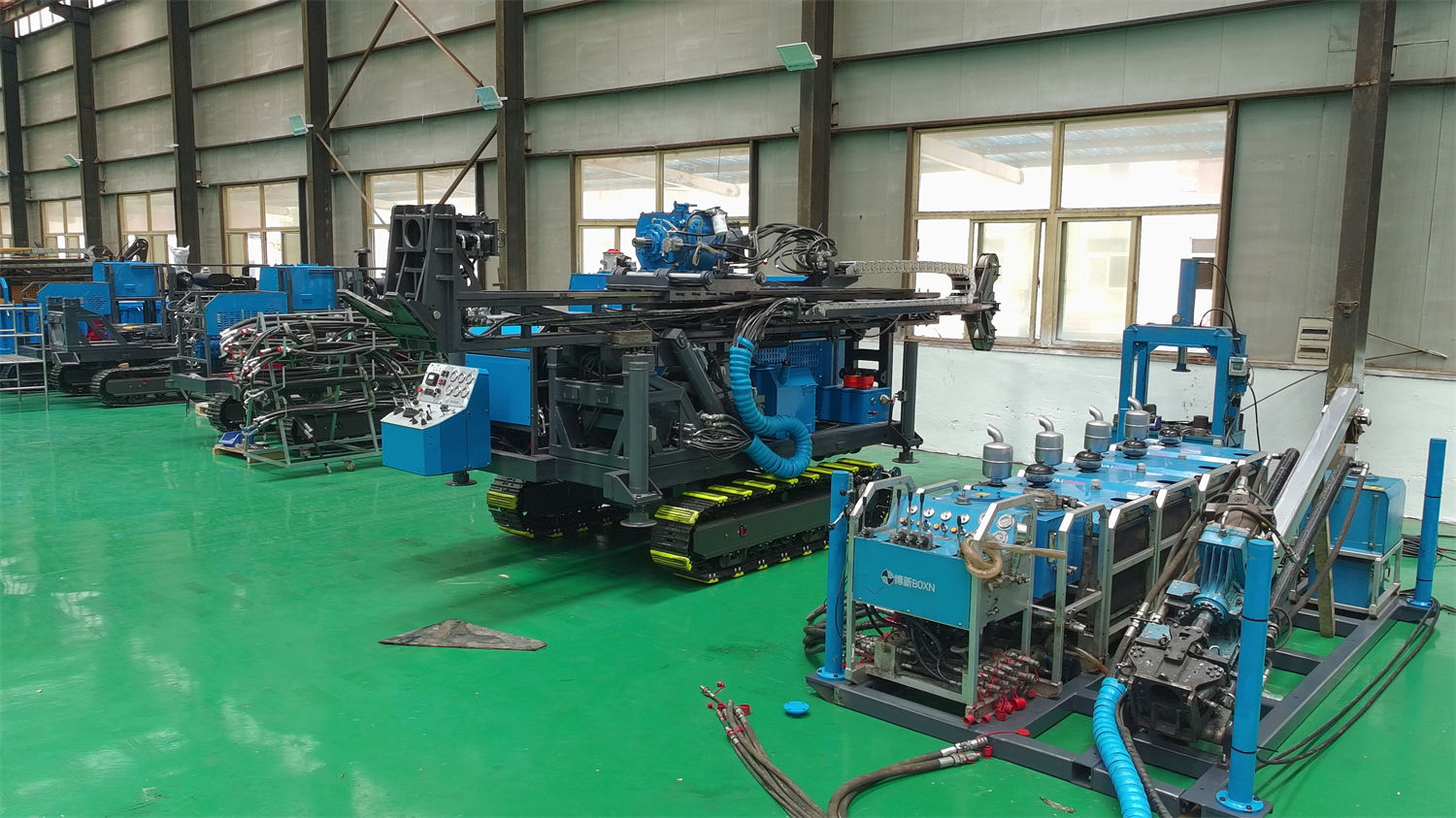
The documentation mentions that assembly can be completed in approximately 30 minutes at the fastest, while noting that actual time is affected by transport distance, site conditions, personnel proficiency, and supporting equipment. This figure can serve as a reference starting point for hole-to-hole organization but should not be used directly as on-site assembly time.
Which requirement does the 45°–90° drilling angle address?
Mountainous orebodies often have a certain dip, and boreholes need to intersect the mineralized zone at a reasonable angle rather than always being drilled vertically. The CR600P documentation gives a drilling angle range of 45°–90°, which directly relates to the layout requirements for inclined and near-vertical holes.
It is important to distinguish: the angle range indicates that the equipment can be positioned at that attitude, but it does not mean that drilling efficiency at that angle is the same as for vertical holes. During inclined hole operations, the stability of the mast and base, the stress state of the drill rods, and the friction inside the hole will all change. The documentation also notes in the precautions that the stability of the mast and base must be ensured before inclined hole construction. The documentation does not provide numerical values for actual drilling performance at a specific inclination; this must be judged based on site conditions.
Core size and reference drilling depth should be considered together
The target hole depth for coring operations is tied to the core diameter; a drilling depth figure cannot be considered in isolation. The CR600P reference drilling depths are: BQ 760 m, NQ 600 m, HQ 280 m. The same equipment shows significant differences in depth capability under different core sizes, so the primary core size for the project must be clarified before selection.
| Core Size | Reference Drilling Depth |
|---|---|
| BQ | 760 m |
| NQ | 600 m |
| HQ | 280 m |
The documentation also states that final drilling efficiency, drilling depth, and core recovery should be based on actual site conditions. The table above provides reference values, not guaranteed values achievable under all formation conditions. If the project primarily uses HQ large-diameter coring and the target depth exceeds 280 m, the applicable range of this model needs to be reassessed.
Impact of wireline coring and drill rod length on hole-to-hole pace
When exploration line holes are scattered, the auxiliary time for each run accumulates. The CR600P is equipped with a wireline winch with 6 mm wire rope, 800 m rope capacity, and 116 m/min lifting speed; wireline coring can reduce the auxiliary actions of pulling the entire drill string on each run. The applicable drill rod length is 1 m or 1.5 m, which is compatible with modular transport—shorter individual rods facilitate manual transport under roadless conditions, but correspondingly, more rod connections are required to reach the same hole depth.
There is a trade-off here: shorter drill rods are easier to transport, but the frequency of rod connections and tripping increases. The documentation does not provide specific time differences for different drill rod lengths; the actual impact needs to be estimated based on hole depth, formation, and personnel configuration.
Supporting conditions for borehole wall stability and cuttings removal
The upper sections of hole locations in mountainous areas often contain weathered layers, fracture zones, or loose overburden. The CR600P mud unit uses a high-pressure plunger pump with a flow rate of 90 L/min and a pressure of 3 MPa. The documentation states that in intact rock formations, the mud primarily serves to cool and carry rock cuttings, while in strongly weathered, fractured, or loose hole sections, mud performance adjustment and casing measures are also needed to maintain borehole wall stability.
This means that the mud pump parameters are only part of the circulation system; borehole wall stability in loose sections also depends on mud formulation, casing plans, and on-site judgment. The documentation does not provide mud mixing ratios or casing setting depths for specific formations. In addition, the mud mixer has a mixing capacity of 1.2 m³/min and a mixer speed of 1500 rpm; the required supply of clean water and materials needs to be estimated separately based on hole depth and section length.
Relationship between power form and site power supply conditions
The CR600P can use diesel or electric power: the diesel engine power requirement is ≥66 kW, with brands including Kubota, Cummins, Yunnei, and Yuchai available; the electric option is a 22 kW × 2 motor combination. Roadless mountainous areas typically do not have a stable power supply, so the diesel option is more straightforward in terms of independence; if the mining area already has power supply conditions, the electric option can reduce fuel transport. The choice between the two options is based on on-site power supply conditions, maintenance methods, and energy organization capabilities; the documentation does not provide energy consumption comparison data for the two.
Items still requiring confirmation beyond the documentation
The following points are not covered in the existing documentation and need to be addressed separately before mobilization:
- Dimensions and lifting point locations of each module, for calculating transport routes and lifting methods;
- Load-bearing capacity of temporary platforms and hillside stability, especially the base forces during inclined hole operations;
- Formation column and expected fracture zone locations at target hole positions, for preparing casing and mud plans;
- Specifications and spare parts quantities for downhole tools such as drill rods, bits, and core barrels;
- Safety assessment of roads, rockfall, and manual transport routes during the rainy season.
Only after comparing these conditions with the equipment features described above can one judge whether a 600-meter-class portable modular drill like the CR600P matches a specific project. Making decisions based solely on drilling depth figures or the word "portable" can easily overlook the actual constraints of transport organization and downhole procedures.