












Bench blasting holes in quarries and tunnel development holes in mines mostly fall in medium-hard to hard rock. Such holes are drilled using a DTH hammer with a drilling rig; the hammer itself is only an executing component: if the hole diameter does not match, the bit cannot be installed; if the air supply is insufficient, the piston cannot achieve its rhythm; if the rig's rotation and feed do not match, the hammer cannot perform either. This article uses publicly available information on the 55A DTH hammer as an example to break down these four supporting conditions item by item, explaining which parameter corresponds to which requirement, and which conditions are not stated in the information and must be confirmed separately.
First, hole diameter: the 85–185 mm range covers the drill bit section
The applicable drilling diameter for the 55A is stated as 85–185 mm. This range constrains the outer diameter of the drill bit, not the outer diameter of the drill rod, nor the drilling rig model. Only if the common bench hole diameter in quarries and blasting hole diameter in mines fall within this interval is there a basis to discuss using this model; outside the range, the clearance relationship between the hammer, drill bit, and hole wall changes, and it cannot be directly applied.
In actual matching, hole diameter and hole depth must also be considered together. The drilling depth in the information is stated as 200, but no unit is given. This value cannot be assumed to be meters or centimeters, nor can it be used to judge what hole depth it is suitable for. The manufacturer must be consulted to confirm the unit, and whether this value corresponds to the feed depth of a single drill rod, the working depth of a single hammer run, or some other measure.
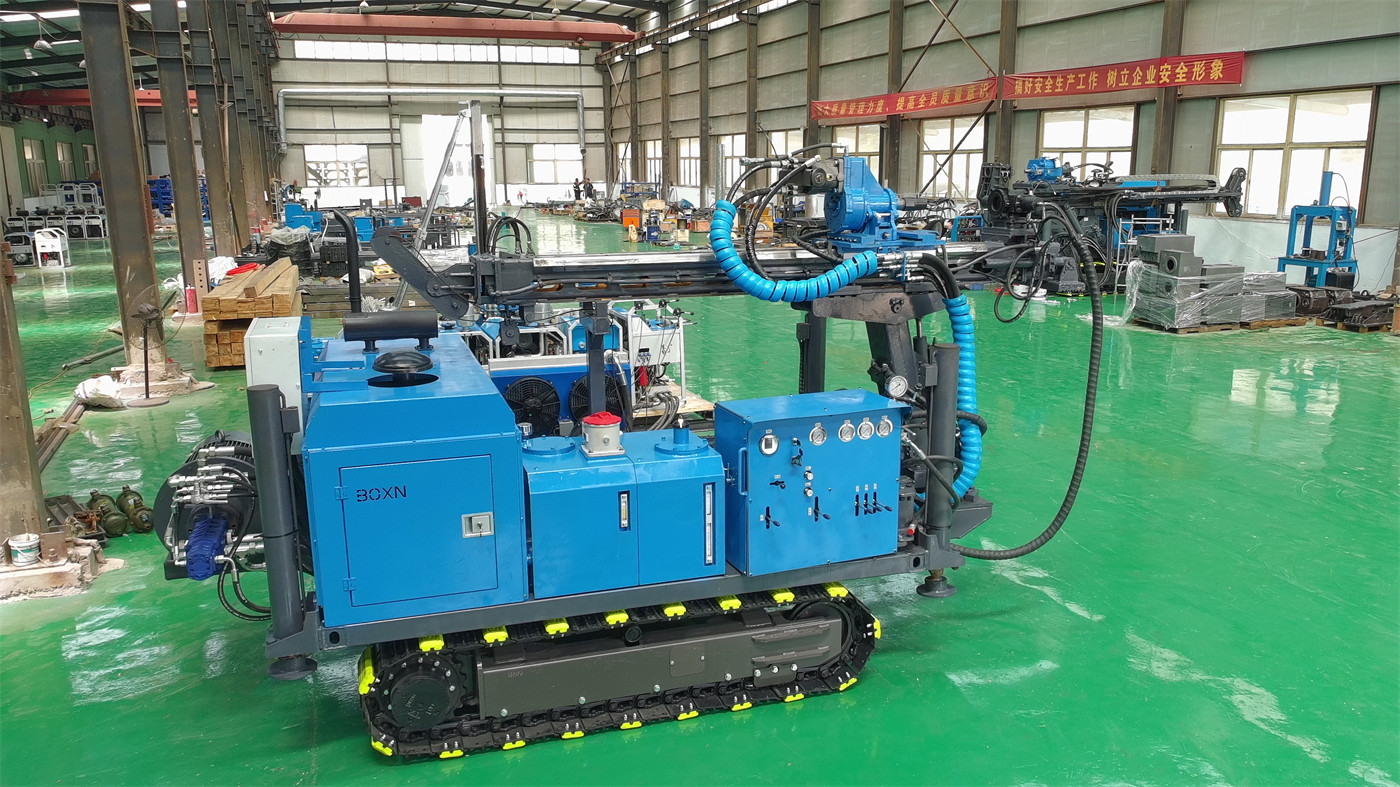
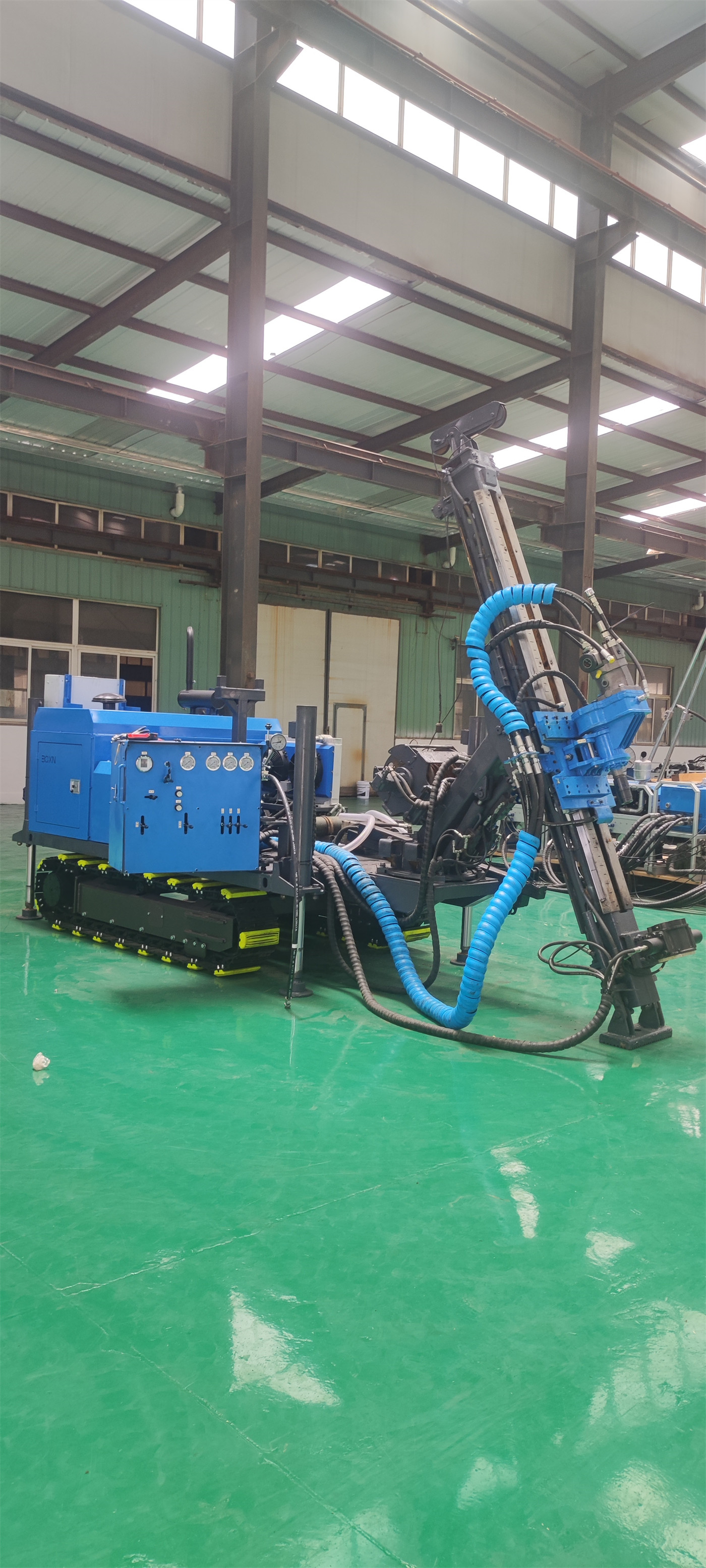
The drilling rig end: both DTH drilling rigs and water well drilling rigs can be matched, but interfaces must be checked
The information states that the 55A can be used with DTH drilling rigs, water well drilling rigs, and other equipment. This describes the category of compatible equipment, not that any DTH rig or water well rig can be directly connected. What needs to be checked is whether the output speed of the rig's rotary head is within the hammer's tolerable range, whether the feed force and lifting force are sufficient to handle the entire drill string, and whether the air line interface specifications on the rig match the hammer's air inlet. These are interface-level conditions not listed item by item in the information, and must be confirmed separately during selection.
Air compressor: pressure and displacement are prerequisites for the hammer to achieve its rhythm
A DTH hammer is driven by compressed air to make its internal piston reciprocate at high frequency to impact the drill bit. In the 55A information, impact energy is stated as 180–220 and impact frequency as 18–22, both without units. The original information does not give specific values for the required working pressure and air displacement, so the air compressor specifications cannot be inferred from these two numbers. What can be determined is: if supply pressure and displacement are insufficient, the piston impact rhythm will be affected; the operating instructions also mention that stable air supply should be maintained. During selection, the air compressor's working pressure and displacement must be checked item by item against the matching requirements provided by the hammer manufacturer, rather than looking only at the drilling rig itself.
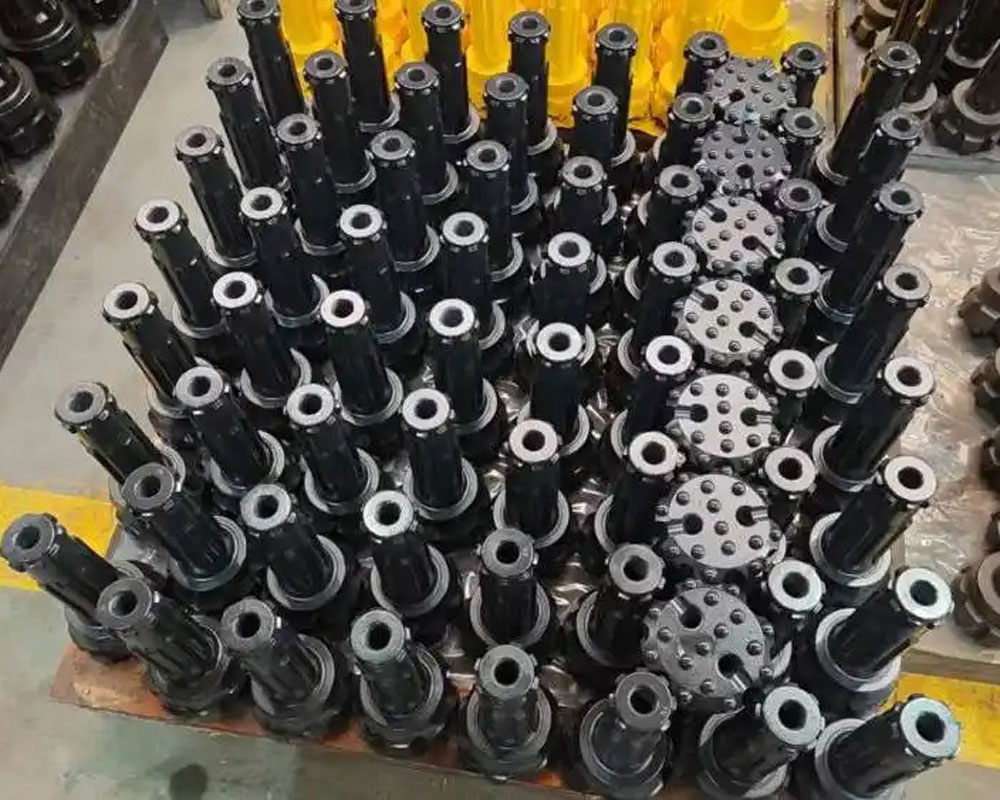
Drill bit and drill rod: specifications must be determined together with hole diameter and hammer interface
The information lists drill bit specifications and drill rod specifications as items to be confirmed during matching selection. The drill bit diameter must fall within the 85–185 mm range and be consistent with the target hole diameter; the drill rod specifications must match the rig's rotary system and the hammer's connection end. The information does not provide specific dimension tables for these two items; they are part of what must be confirmed with the manufacturer according to the actual project configuration.
Which features correspond to which requirements
- Wear-resistant structure: the information emphasizes suitability for high-frequency, high-load drilling environments such as mines and quarries. This corresponds to wear management of the hammer body and connection parts during continuous operation, not to maintenance-free operation; the operating instructions require regular inspection of wear on the hammer, drill bit, and connection parts.
- 85–185 mm hole diameter coverage: this corresponds to various mining, engineering, and water well drilling needs, but each specific project must still be confirmed according to its own hole diameter, hole depth, and rock formation.
- High-frequency impact rock breaking: this corresponds to medium-hard to hard rock formations. The information also states that actual drilling efficiency is affected by rock hardness, hole diameter, supply pressure, air displacement, drill bit wear, and operating method, and these factors are not part of the hammer's individual parameters.
Application boundaries and information gaps
Based on the verified information, the applicable scope of the 55A is stated as engineering drilling scenarios such as mines, quarries, road cutting, and water well drilling. This does not mean it is equally applicable under all hard rock conditions, nor that it can be directly run downhole as long as the hole diameter is within range. The four original values—drilling depth, drilling speed, impact energy, and impact frequency—are all stated without units and cannot be used as directly convertible engineering indicators. During selection, the drilling rig model, target hole diameter, drilling depth, rock hardness, drill rod specifications, drill bit specifications, and air compressor working pressure and displacement should be listed as a checklist; for each missing item, confirm with the manufacturer or on-site technical personnel.
An actionable matching checklist
| Check item | Basis given in 55A information | Needs separate confirmation |
|---|---|---|
| Target hole diameter | Applicable 85–185 mm | Whether hole depth and rock hardness match the selected drill bit |
| Matching drilling rig | Can be matched with DTH drilling rigs and water well drilling rigs | Rotary head speed, feed and lifting force, air line interface specifications |
| Air compressor | Driven by compressed air, requires stable air supply | Specific requirements for working pressure and air displacement |
| Drill bit and drill rod | Listed as items to confirm during matching selection | Specific dimensions and connection method |
| Hole depth capability | Drilling depth stated as 200, unit not marked | Unit and applicable measure |
The purpose of this table is not to provide conclusions, but to shift the selection discussion from "whether the hammer itself is suitable" to "whether the entire set of supporting conditions is complete." If any one of the four items—hole diameter, drilling rig, air compressor, drill bit and drill rod—does not match, then no matter how suitable the hammer parameters are, it cannot work stably in the hole. For parts not covered by the information, confirm item by item with the manufacturer according to the table above before making a decision.