












The chassis selection for a water well drilling rig essentially answers two questions: whether the equipment can drive to the well site, and whether it can stand stably once it arrives. Steel tracks and wheeled structures perform differently on these two matters, but there is no universal answer to "which is better"—it depends on site conditions, relocation distance, and the rig's overall configuration. Using the publicly available information on this site's st1 steel track undercarriage as a reference, this article breaks down the differences between the two chassis types based on their known characteristics item by item, explaining which conditions correspond to the advantages of the track structure and which conditions still require on-site verification.
First, clarify what each chassis type addresses
Wheeled structures travel on tires, steer flexibly, and usually move faster on hardened roads or flat sites; steel tracks contact the ground through track shoes, providing a larger ground contact area and offering adhesion and support on mud, sand and gravel, crushed stone, and undulating terrain. The differences between the two structures lie in three specific aspects: the method of ground contact, the degree to which load per unit area is distributed, and the degree to which the travel mechanism depends on ground flatness.
This site's information describes the st1 steel track undercarriage as follows: it is mainly a track-type travel undercarriage component for water well drilling rigs, providing stable movement and support capability for the rig; compared with ordinary wheeled travel structures, the steel track has a larger ground contact area and is more suitable for mud, crushed stone, sand and gravel, and undulating drilling construction sites. This statement corresponds to site adaptability, not a general conclusion for all working conditions.
Judgment sequence corresponding to site conditions
Before considering the chassis type, the site conditions can be sorted in the following order and then compared against the characteristics of the two structures:
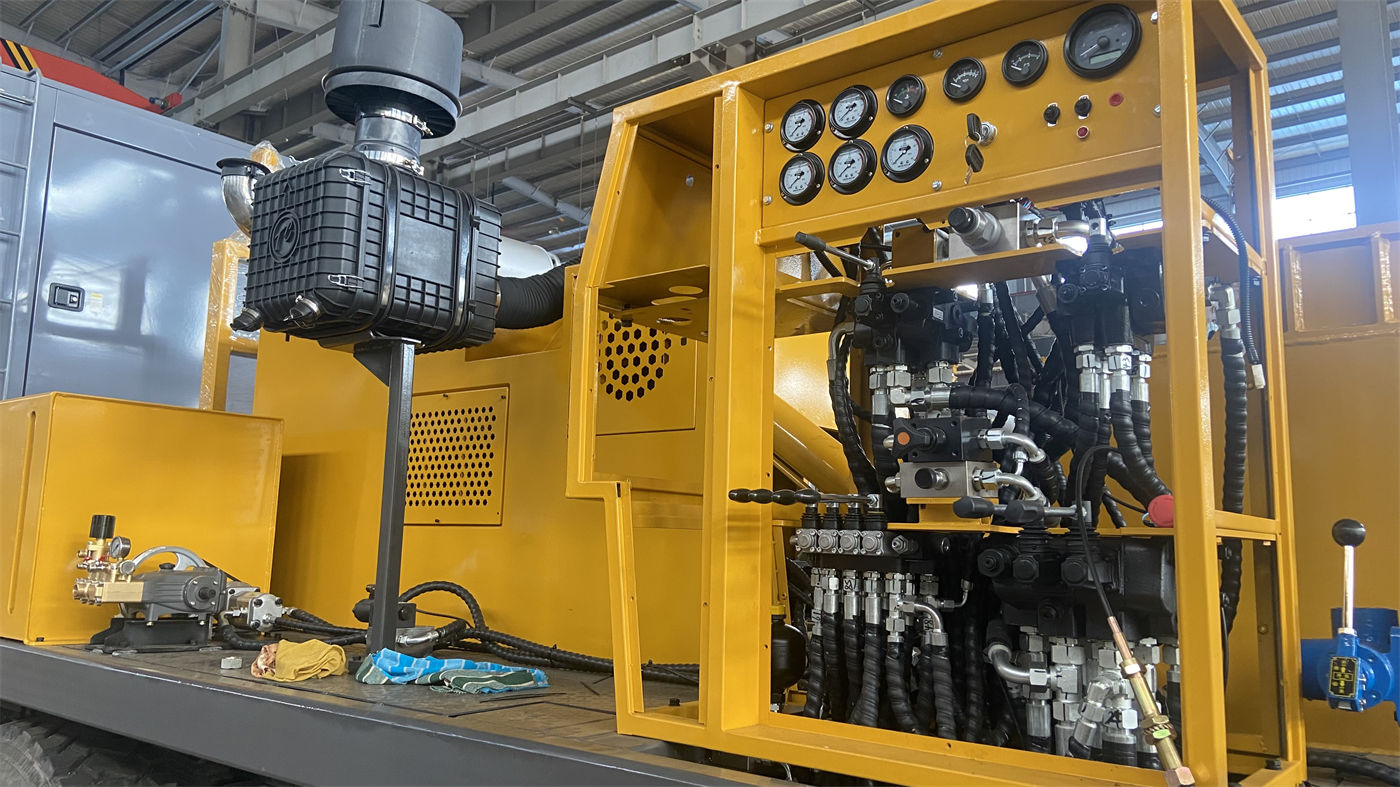
- Road surface conditions at the well site: whether the route from the equipment parking point to the well site is a hardened road, a field dirt road, a gravel access road, or trackless wasteland.
- Site flatness: whether the equipment needs to move, position, and deploy outriggers on undulating ground around the well site.
- Relocation distance and frequency: the distance from one completed well to the next, and the number of moves required within a day or a week.
- Machine weight and installation space: the rig model, overall weight, chassis width, and mounting interface determine whether the chassis can match.
Among these four conditions, the first two mainly affect passability and support stability, while the latter two affect whether the chassis can be matched to the rig, and these usually need to be confirmed item by item with the manufacturer before purchase.
Conditions under which steel tracks are more worth considering
Based on the st1 information, the steel track structure corresponds more directly to operational requirements under the following types of conditions:
Unhardened or complex ground
Water well drilling rigs often need to operate in farmland, mountainous areas, mining areas, wasteland, and unhardened construction sites. The information explicitly lists st1 as suitable for mud, sand and gravel, crushed stone, and uneven construction sites, and mentions that it is "especially suitable for water well construction sites where wheeled chassis have difficulty passing." The applicable boundary of this statement is site conditions and does not involve specific drilling depth, hole diameter, or formation capability.
Need to distribute overall machine weight
Tracked undercarriages have a large ground contact area, which helps distribute equipment weight and provides stable support during rig movement, positioning, and construction preparation. For water well drilling rigs with a large overall weight, this characteristic is directly related to the need to "stand stably"; however, the actual load-bearing capacity should still be based on the final technically confirmed solution.
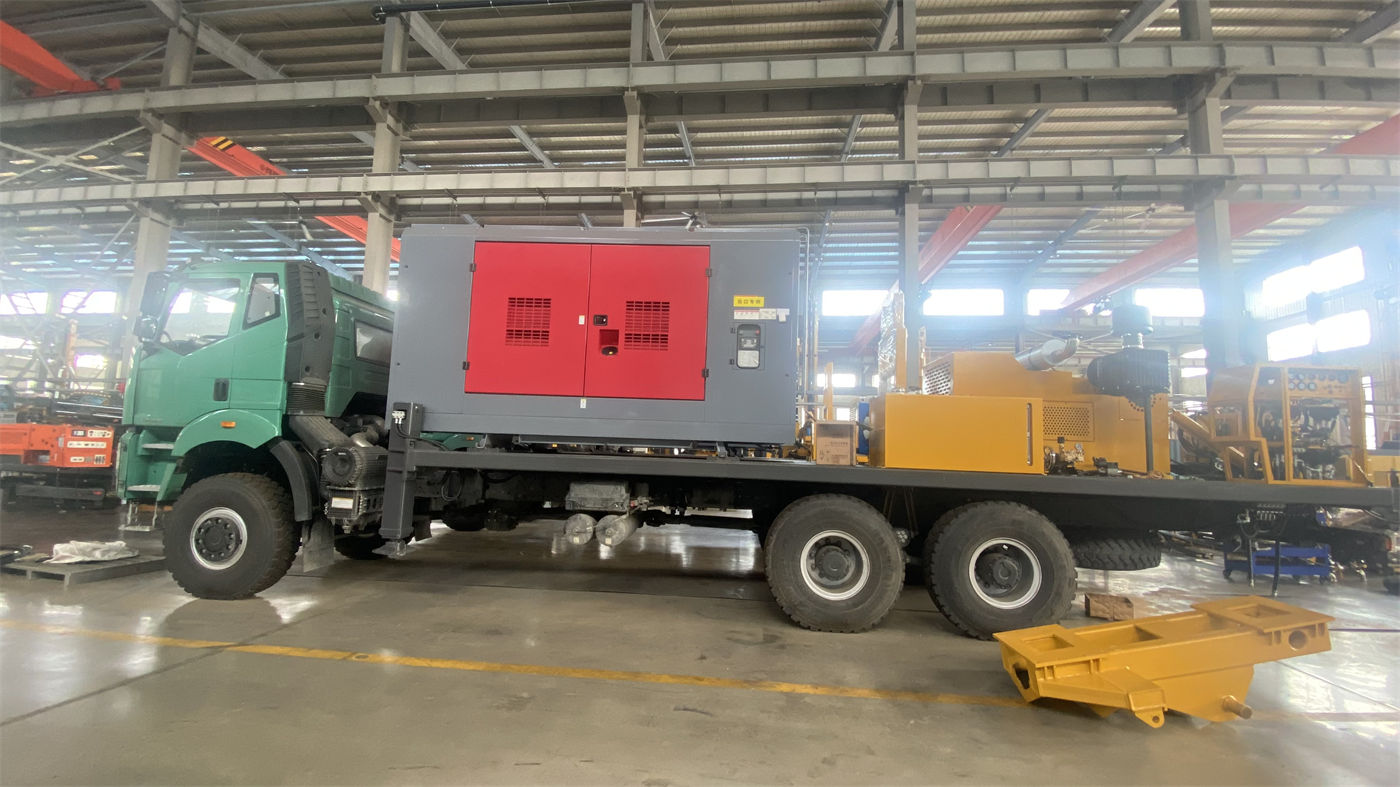
Frequent short-distance relocations
In addition to drilling, water well construction sites often involve short-distance relocations, travel over complex ground, and construction positioning. The information lists "balancing passability and support stability" as a matching advantage of the steel track undercarriage in continuous field construction, and also states that it can meet the chassis durability requirements of rigs for frequent movement, relocation, and outdoor construction. What is discussed here is the adaptability of the chassis structure to relocation actions, and it does not involve relocation speed or time data.
Conditions under which wheeled structures still have a place
This site's information does not provide specific model parameters for water well drilling rigs with wheeled undercarriages, so no performance-level conclusion can be made about wheeled structures. From the known comparative statements, wheeled structures are described as "ordinary wheeled travel structures," and their differences from steel tracks are concentrated in ground contact area and adaptability to complex ground. What can be confirmed is that under conditions of hardened roads, flat sites, and longer relocation distances, the travel method of wheeled operation differs from that of track travel; however, which is more suitable specifically needs to be judged separately based on equipment model and on-site road conditions.
Comparing the two structures under the same set of conditions
| Comparison item | Steel track undercarriage (st1 information) | Wheeled structure (not elaborated in the information) |
|---|---|---|
| Method of ground contact | Steel tracks, relatively large ground contact area | Tire travel |
| Applicable sites | Mud, sand and gravel, crushed stone, and uneven sites | No specific applicable site description provided in the information |
| Distribution of overall machine weight | Helps distribute equipment weight | Not covered in the information |
| Relocation characteristics | Suitable for frequent movement, short-distance relocation, and outdoor construction | Not covered in the information |
| Matching items to confirm | Rig model, overall weight, chassis width, installation dimensions, drive method | Needs to be confirmed separately with the manufacturer |
The blank parts in the wheeled column of the table are content not covered by this article's information and should not be filled in with speculation. If model information for a rig with a wheeled undercarriage is available, the same set of site conditions can be substituted and compared item by item before making a judgment.
Matching conditions to be settled before choosing a track undercarriage
The st1 information clearly states that this undercarriage currently has no unified fixed parameters, and the actual configuration needs to be confirmed according to the water well drilling rig model, overall weight, chassis width, installation dimensions, drive method, and construction environment; before purchase, it is recommended to provide the rig model, equipment weight, and chassis installation dimensions so that a suitable track undercarriage can be matched. It also reminds that the actual load-bearing capacity, dimensions, drive structure, and mounting interface should be based on the final technically confirmed solution, and it is not recommended to replace directly based only on appearance or model.
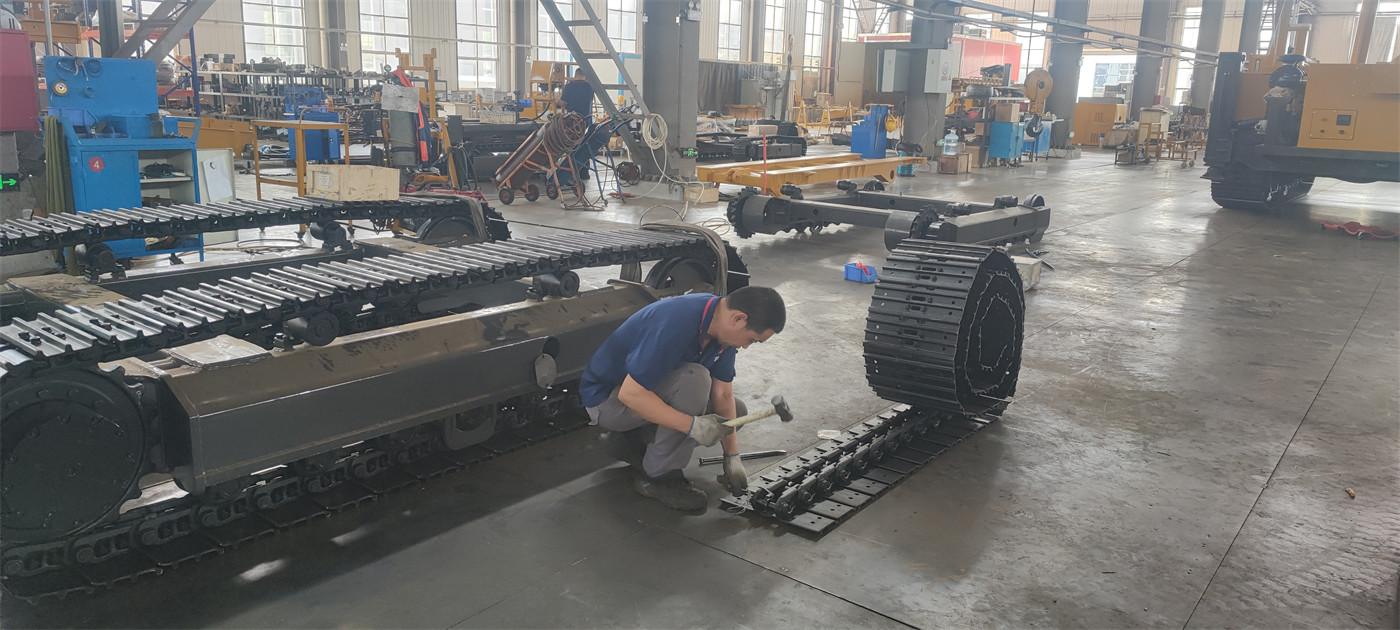
This means that chassis selection is not simply buying a travel component separately, but is part of the overall machine matching. The following items should be prepared during the inquiry stage:
- The model and overall weight of the current or intended rig;
- The dimensions and interface type of the chassis installation space;
- Drive method requirements;
- The ground type and undulation conditions of the main construction sites;
- The method and distance range of daily relocation.
Applicable boundaries and matters still requiring confirmation
The use covered by the st1 information is travel and support for water well drilling rigs, and depending on equipment structure it can also be used for some geological drilling rigs, down-the-hole drilling rigs, and engineering drilling equipment. For applications outside this scope, the information provides no basis. In addition, the information does not provide specific values such as the load-bearing tonnage, travel speed, climbing ability, or ground contact pressure of the track undercarriage, so it is impossible to judge from this how a certain rig model will perform under specific slope or soft foundation conditions. These conditions need to be raised with the manufacturer during the technical confirmation stage and verified against the actual site.
Chassis type is only one part of water well drilling rig selection; drilling depth, hole diameter, lifting force, rotary torque, and drilling process also affect whether the equipment can complete a well. The chassis determines how the equipment reaches the well site and how it stands stably; as for how deep to drill and how large a well casing to install, this still needs to be checked item by item against the overall machine parameters and formation conditions.