












Most problems with reverse circulation sampling drill pipe at the arrival stage are not with the pipe body itself but with interface mismatches: the thread is not the same type as the existing drill string, the power head output cannot connect, the RC hammer specifications do not match the drill pipe inner tube passage, or the drill pipe length combination does not align with the target hole depth and mast stroke. If these problems are found before shipment, they are just order changes; if found after arrival, they become waiting for parts, returns and exchanges, and idle time. Below, with the goal of "what interface information needs to be gathered before arrival," the items to verify are broken down one by one, and the corresponding relationships are explained using public information on Φ114 dual-wall reverse circulation drill pipe as a reference.
First clarify which sections "interface" refers to in this system
Reverse circulation drill pipe is not an isolated tube; its upper and lower ends connect to the power head, RC hammer, or downhole tools respectively, and inside there is an independent sample return passage. So-called interface information falls into at least the following five sections:
- The thread type between drill pipes and between drill pipe and downhole tools;
- The connection form between the upper end of the drill pipe and the rig power head output;
- The RC hammer specifications and their matching relationship with the drill pipe inner tube passage;
- The combination of single-pipe length, total number of pipes, target hole depth, and mast stroke;
- Whether the thread, pipe diameter, and accessories of the existing drill string system as a whole are unified.
If any of these five sections is missing information, it is difficult to judge before arrival whether the entire reverse circulation drill string can be connected and operated smoothly. The public information gives clear options for some of these, while others require separate confirmation based on the site configuration.
Thread type: the information gives options, but options are not the same as what is on site
The public information on Φ114 dual-wall reverse circulation drill pipe states that the connection thread can be selected from Remet, Metzke, FH, or IF. These four are the optional range at the time of purchase, not a universal interface where "any one will work." The information itself also notes that at actual ordering, the specific thread specification should be confirmed according to the rig, power head, RC hammer, and existing drill string system.
What needs to be verified before arrival is not "which thread we choose" but "what thread the existing set on site is using." Specifically, this includes:
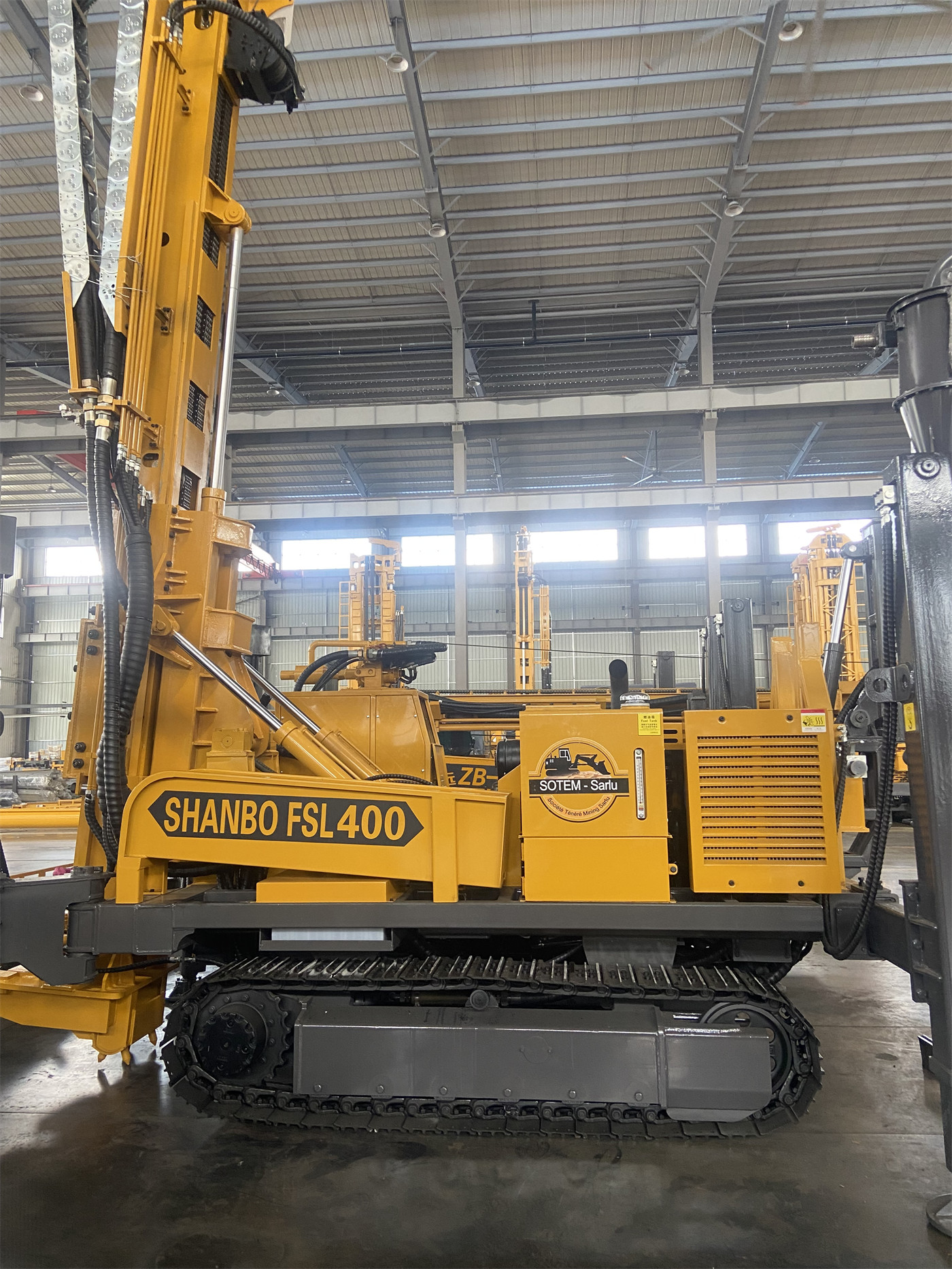
- The thread type used by existing drill pipes, subs, and crossover subs;
- The thread type connecting the upper end of the RC hammer to the drill pipe;
- Whether the power head output requires a crossover sub, and the thread form of that sub.
If the site uses a mix of drill string with different thread types, it is especially important to confirm which end serves as the reference. The information does not provide a list of crossover parts between different thread types; this part needs to be confirmed separately with the manufacturer and the site drill string management, and it cannot be assumed that the four thread types are interchangeable on site.
Rig and power head: first confirm whether the output end can connect
The interface between the drill pipe and the rig is at the power head output. The public information requires the rig model to be provided in the selection instructions, one purpose of which is to confirm this end. Information that needs to be established in advance includes:
- The rig model and the connection form of the power head output;
- Whether a crossover sub is needed between the power head and the upper end of the drill pipe;
- Whether the through-hole or center passage of the power head is compatible with the inner tube sample return passage of the dual-wall drill pipe.
The last item is easily overlooked. Dual-wall drill pipe forms independent air flow and cuttings recovery passages through the outer pipe and inner tube, and samples return to the surface through the inner tube. If this end of the power head does not have a corresponding passage or interface, the inner tube sample return path cannot connect on the surface side. The information does not elaborate on the specific requirements for the power head center passage; this is an interface condition that needs to be verified with the rig manufacturer or equipment supplier.
RC hammer specifications: a matching relationship with the drill pipe inner tube passage
The information lists RC hammer specifications as one of the items that should be provided at purchase and notes that dual-wall drill pipe is suitable for RC reverse circulation drilling systems. The relationship between the RC hammer and the drill pipe is not just whether the thread can be screwed on; it also includes the matching of the hammer body specifications with the drill pipe inner tube passage. Before arrival, confirm:
- The RC hammer model and specifications, and its upper-end connection thread;
- The dimensional matching relationship between the RC hammer and the drill pipe inner tube passage;
- The spatial relationship among the drill pipe outer pipe diameter, the RC hammer outer diameter, and the hole diameter.
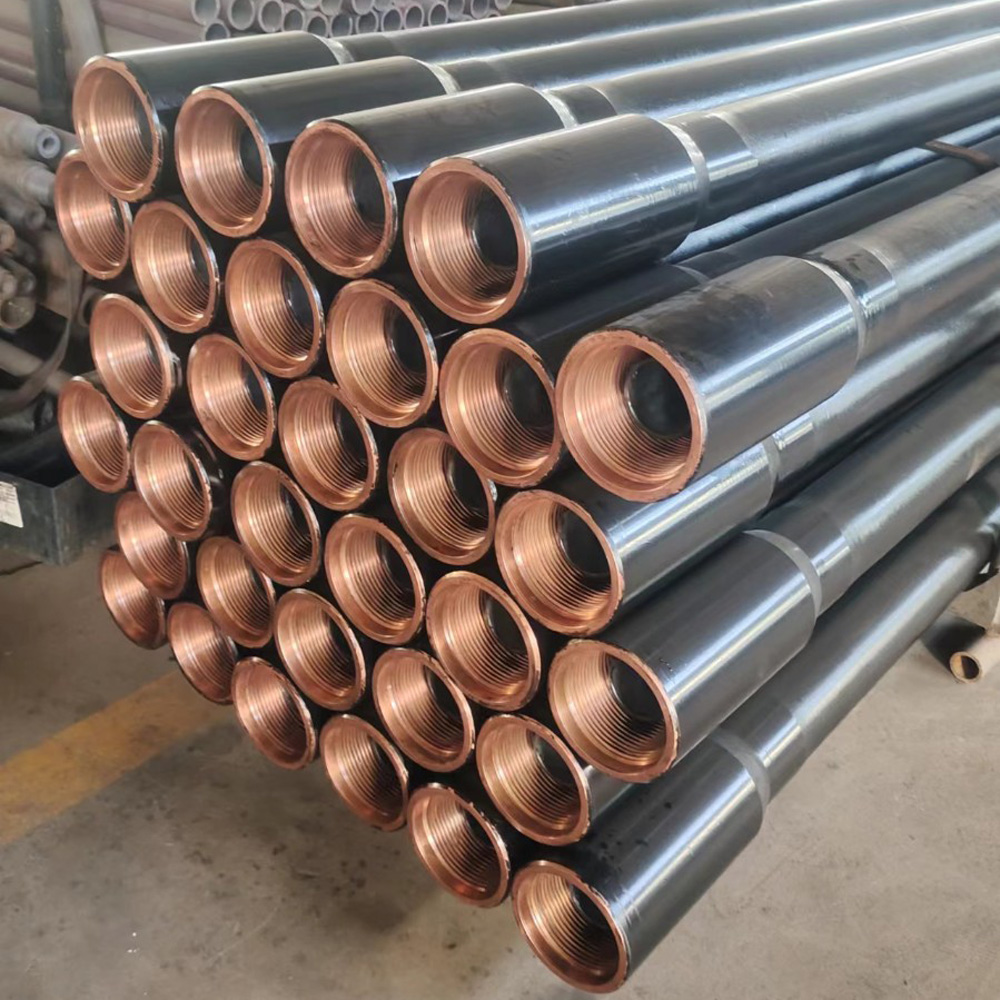
The outer pipe diameter of Φ114 drill pipe is 114 mm, the wall thickness is 8–10 mm, and the inner tube is made of wear-resistant material. The information does not give the specific inner diameter value of the inner tube, nor does it list a matching table with RC hammers of various specifications. Therefore, whether "this RC hammer can be matched with Φ114 drill pipe" cannot be inferred from the outer diameter alone; it needs to be confirmed item by item with the manufacturer based on the RC hammer specifications and the drill pipe inner tube interface.
Length combination: the 1500–9500 mm options must be tied to hole depth and mast stroke
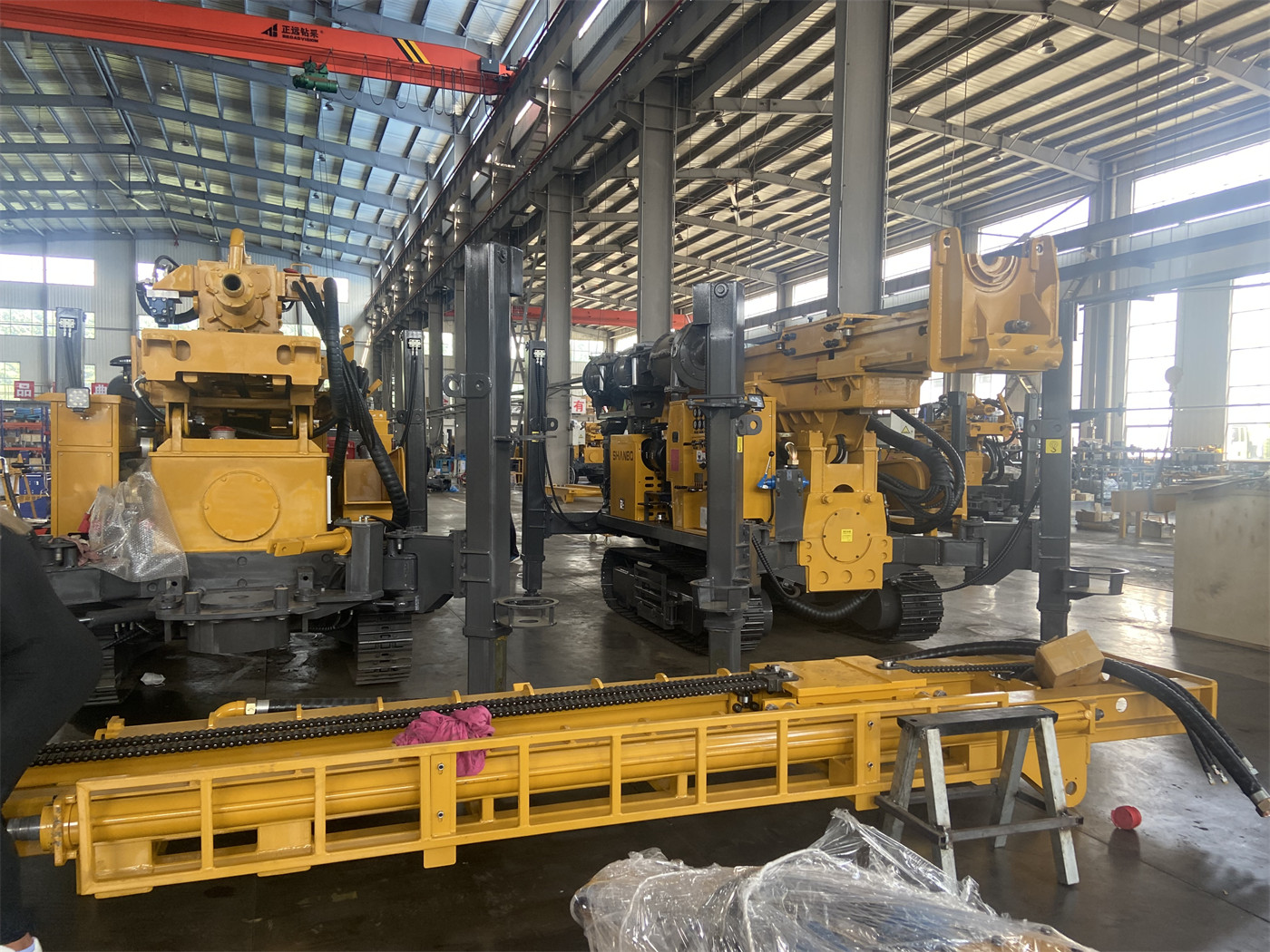
The length range of this drill pipe model is 1500–9500 mm. This range indicates that the single-pipe length can be selected according to the project, but it does not indicate that a certain length combination is suitable for a certain hole depth. Before arrival, the length needs to be verified together with the following conditions:
- The target hole depth and the estimated total number of drill pipes;
- The rig mast stroke or single feed length, and the operating space for adding and breaking pipes;
- The restrictions of transportation and site storage conditions on single-pipe length;
- Whether the height from the collar to the power head allows the selected single-pipe length to be connected and disconnected smoothly.
The information only gives the length range; it does not give the recommended correspondence between single-pipe length and hole depth, nor does it explain the impact of different length combinations on drilling efficiency. This part needs to be calculated separately according to the project hole depth and rig mast parameters. Directly interpreting "wide range" as "suitable for any hole depth" would obscure the actual constraints between length combination and site operations.
Existing drill string system: uniformity is worth checking before individual parameters
In the selection instructions, the information lists "existing drill string system" alongside rig model, RC hammer specifications, drill pipe length, thread type, target hole depth, and main formation information. The reason is that reverse circulation drill pipe must be assembled with the existing drill string into one set: if the threads and pipe diameters of subs, crossover subs, stabilizers, or other downhole tools are not consistent with the newly added drill pipe, then no matter how suitable the individual drill pipe parameters are, a complete drill string cannot be assembled.
Before arrival, it is recommended to organize the existing drill string information in the following order:
- List every tool directly connected to the drill pipe and its thread type;
- Mark which items are newly added and which are retained;
- Confirm whether the retained crossover subs can cover the thread differences between the new and old ends;
- Check the pipe body outer diameter and wall thickness together with the existing drill string to avoid mixing pipe bodies with excessive differences in the same drill string.
The information does not provide a specification list of crossover subs or accessories, nor does it explain the restrictions when mixing different pipe bodies. This part can only be established item by item between the drill string ledger and manufacturer confirmation.
Interface information verification checklist
The above content is consolidated into a checklist organized by object, making it convenient to tick off or mark "to be confirmed" item by item before inquiry and shipment.
| Verification object | Information to be established | Basis or gap in the information |
|---|---|---|
| Drill pipe thread | The thread type actually used by the site drill string; which of Remet, Metzke, FH, IF it corresponds to | The information gives four options and requires confirmation according to the rig, power head, RC hammer, and existing drill string |
| Rig/power head | The connection form of the power head output; whether a crossover sub is needed; whether the center passage can connect to the inner tube sample return | The information requires the rig model to be provided; the specific interface at the power head end is not elaborated |
| RC hammer | The hammer body specifications and upper-end thread; the matching relationship with the inner tube passage | The information requires RC hammer specifications to be provided; no matching table or specific inner tube inner diameter is given |
| Length combination | The matching of single-pipe length, total number of pipes with hole depth, mast stroke, and transportation conditions | The information gives a range of 1500–9500 mm but no recommended combination |
| Existing drill string system | The consistency of threads and pipe diameters of accessories such as crossover subs and subs | The information requires existing drill string information to be provided; no accessory list is given |
What information is already clear and what must be confirmed separately
The parts already clear in the public information include: outer pipe diameter 114 mm, wall thickness 8–10 mm, length range 1500–9500 mm, four optional thread types, dual-wall structure (high-strength alloy steel outer pipe plus wear-resistant inner tube), and suitability for RC reverse circulation sampling in mining exploration, ore sampling, and geological drilling. The information also states that at actual ordering, the specific thread specification should be confirmed according to the rig, power head, RC hammer, and existing drill string system.
The parts not given in the information and requiring separate confirmation include: the specific inner diameter of the inner tube; a matching table with RC hammers of various specifications; the interface requirements of the power head center passage; the specifications of crossover parts between different thread types; the recommended combination of single-pipe length and hole depth; and the impact of different rig configurations, hole depths, and formation conditions on the actual performance and service life of the drill pipe. These gaps do not prevent using interface information as the main line of verification before arrival, but they mean that the matching judgment for the entire drill string cannot be completed based only on the model and parameter table.
If the site conditions are not yet complete, a practical approach is: first organize the rig model, power head output form, RC hammer specifications, existing drill string thread type, and target hole depth into a one-page information sheet, then mark each item against the optional threads and length range in the information as "confirmed" or "to be confirmed by manufacturer." Before the "to be confirmed" items are cleared, it is not advisable to schedule the drill pipe arrival too close before the drilling start date.