












When discussing air supply for deep-well DTH drilling, two simplified questions often arise: is this air compressor's pressure sufficient, or is its displacement sufficient. What actually happens on site is that the pressure gauge reads correctly, yet the DTH hammer at the hole bottom still runs unevenly; the nominal displacement is not small, yet cuttings removal in the deep hole section still cannot keep up. The reason is that deep-well air supply requires more than one condition to hold simultaneously—pressure, air volume, compression structure, and continuous power constrain one another. The problem this article addresses is: breaking the operational objective of "deep-well high-pressure air supply" into several verifiable equipment conditions, then against AC125D's published data, explaining which conditions have parameter support and which must be separately confirmed.
First, break "deep-well air supply" into several conditions
During DTH drilling, compressed air performs two tasks in the hole: driving the hammer piston to do work, and carrying rock cuttings from the hole bottom up the annulus to the collar. These two tasks impose different requirements on the air source. Starting and maintaining the hammer's rhythm requires pressure above a certain threshold; cuttings removal requires sufficient air volume, and the deeper the hole and the larger the diameter, the more pronounced the friction losses along the path and the upward return resistance. Therefore, deep-well air supply must be checked against at least the following conditions:
- Whether the pressure can reach the hammer's working threshold and remain sufficient after friction losses along the hole;
- Whether, after deducting the hammer's air consumption, there is still margin in the displacement for cuttings removal;
- Whether the high-pressure output relies on single-stage compression barely achieved, or is structurally suited for sustained high pressure;
- Whether the power end can supply air stably during long continuous outdoor operations;
- Whether the matching relationship among the drilling rig, hammer, hole diameter, and hole depth has been clearly established.
Of these five items, the first four relate to the air compressor itself, and the last belongs to the supporting-end conditions. Checking only one of them easily leads to the conclusion that "the parameters are sufficient," yet cannot explain why the site still runs poorly.
Which items do AC125D's published data correspond to
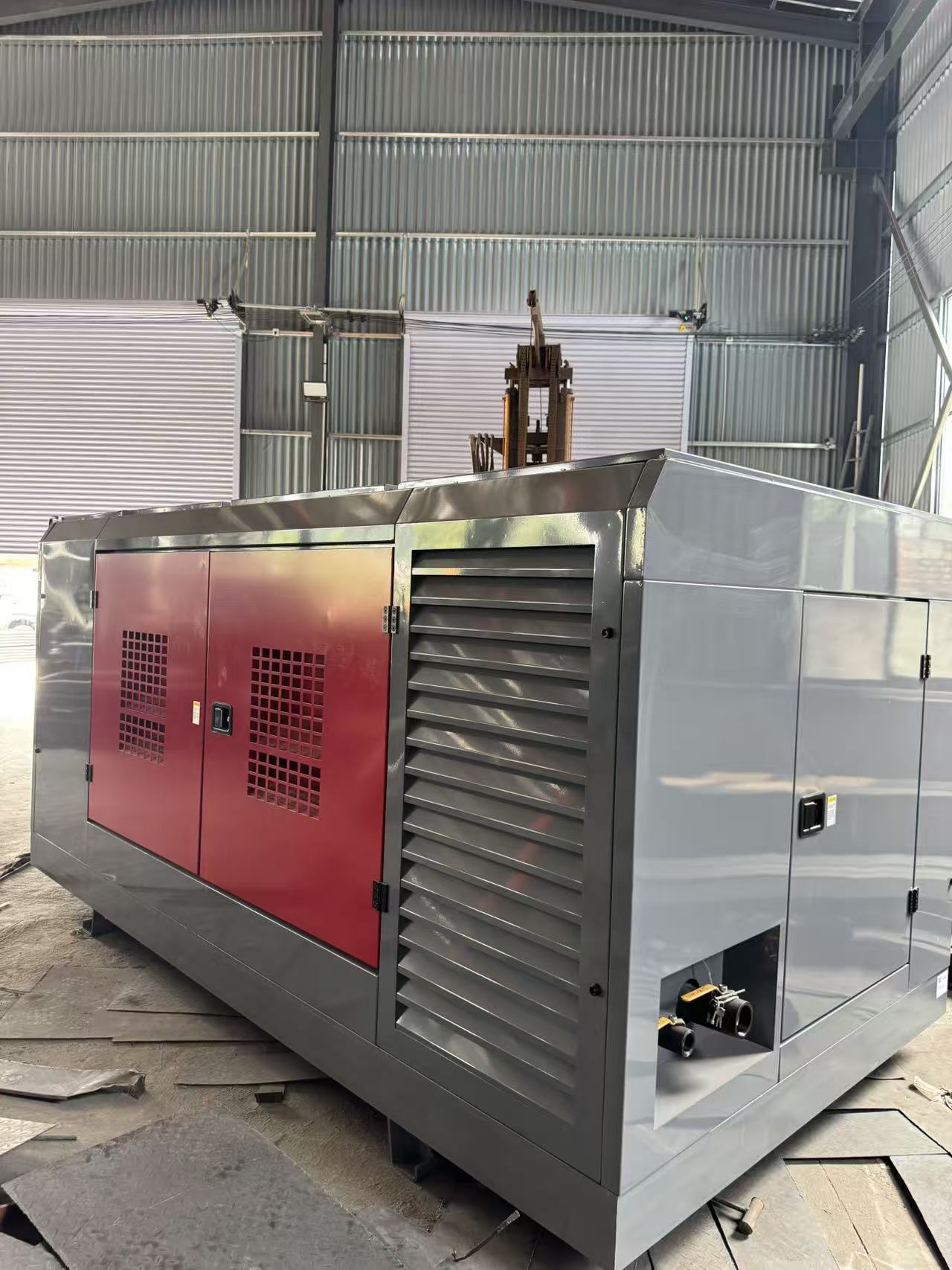
The data for this site's AC125D diesel mobile air compressor gives the following core values: displacement 36 m³/min, rated working pressure 30 bar, two-stage compression structure, equipped with a Cummins QSZ13-C550-30 engine, power 410 kW (550 hp), water-cooled, 600 L fuel tank, total weight 5820 kg, air outlets G1-1/2 and G2-1/2 dual outlets, noise level 82 dB(A), and applicable working conditions stated as deep-well water well drilling rigs and geothermal drilling.
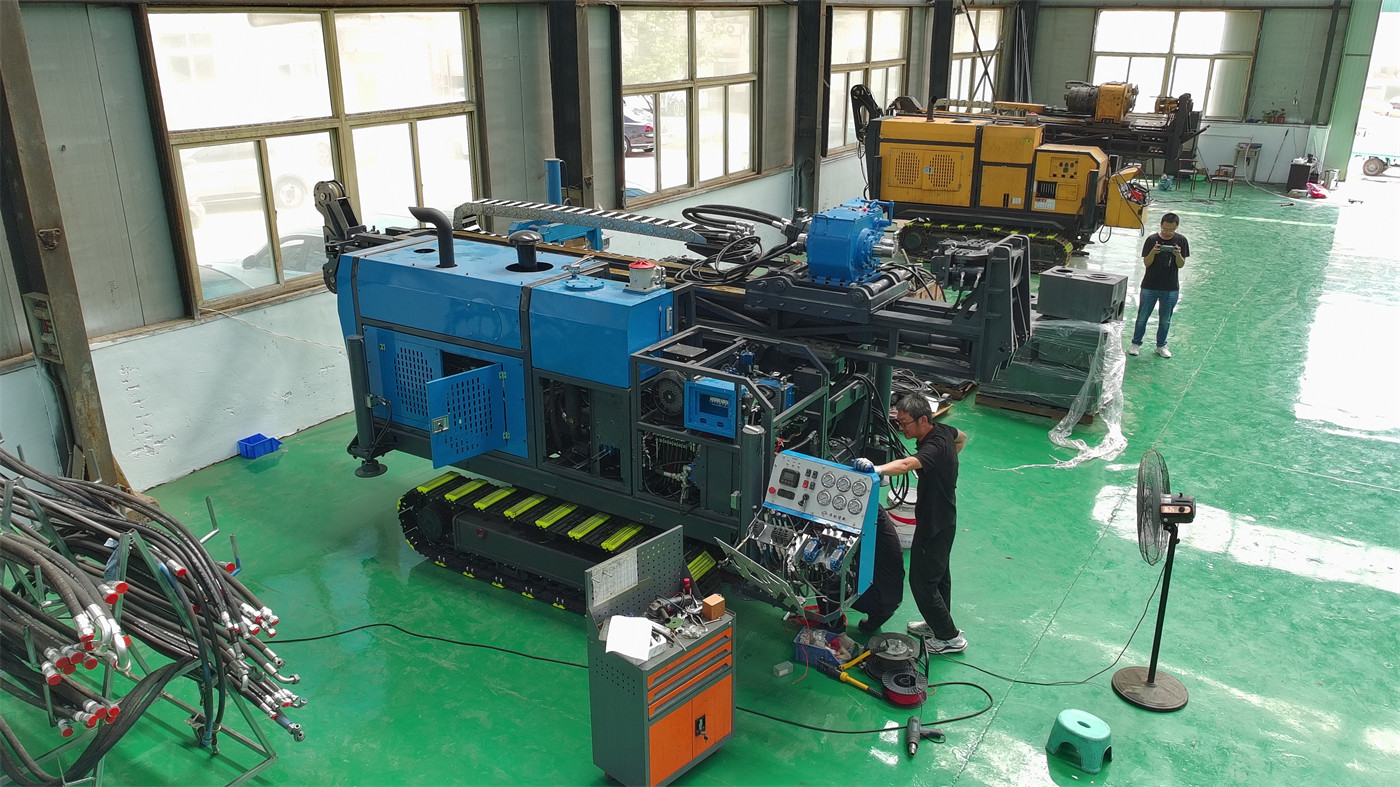
Putting these values back into the condition list above, the correspondence can be understood as follows:
| Air supply condition | Relevant item in the data | What it indicates |
|---|---|---|
| Pressure threshold | Rated working pressure 30 bar | The equipment has 30 bar-class high-pressure output capability; whether it meets the hammer threshold depends on the hammer specifications |
| Cuttings removal air volume | Displacement 36 m³/min | Large-displacement air supply, but the cuttings removal margin after deducting hammer air consumption must be calculated according to hole depth and diameter |
| Sustained high-pressure structure | Two-stage compression | Structurally oriented toward high-pressure output conditions; the data states it helps maintain stable air supply during continuous drilling operations |
| Continuous power | Cummins 410 kW, water-cooled, 600 L fuel tank | Power configuration oriented toward outdoor drilling and long continuous construction |
| Supporting interfaces | G1-1/2, G2-1/2 dual outlets | Provides dual air outlets; actual piping connections must be confirmed with the drilling rig and hammer end |
This table only indicates that a correspondence exists between the parameters in the data and the requirement items; it does not constitute a conclusion that "this model is suitable for a specific project." The data itself also states that during actual matching, the required air volume and pressure should be confirmed according to the drilling rig, hammer, hole diameter, and construction depth.
Why pressure and air volume cannot be viewed separately
30 bar and 36 m³/min are two parallel rated values on the parameter table, but in an actual air supply system they are not indicators that can each be independently delivered. The higher the pressure, the lower the actual air volume the same machine can push out usually becomes; part of the air volume is consumed by the hammer, and only the remainder is used for cuttings removal. Under deep-hole conditions, friction losses along the piping and upward return resistance in the annulus further change the actual situation reaching the hole bottom.
This means the judgment sequence should be: first confirm the hammer's working pressure threshold, then confirm whether the air volume available at that pressure can cover the hammer's air consumption and cuttings removal requirements, and only then check whether the air compressor's rated values have margin. AC125D's 36 m³/min and 30 bar can serve as an air supply capability reference, but how much air volume and pressure a specific combination of hole diameter, hole depth, and hammer requires is not calculated in the data and must be determined by the technical parameters on the drilling rig and hammer side. The data also notes that for deep holes, large diameters, or hard rock construction, sufficient air volume and pressure margin should be reserved.
What do two-stage compression and power configuration each constrain
The description of two-stage compression in the data is "suitable for high-pressure output conditions, conducive to maintaining stable air supply capability during continuous drilling operations." This statement points to structural-level suitability, not an efficiency figure that can be directly converted. For deep-well conditions requiring continuous operation at 30 bar-class pressure, the number of compression stages relates to the working mode of the high-pressure section; however, the data does not give details such as stage pressure ratios or discharge temperatures, so specific energy consumption or service life performance cannot be inferred from it.
The 410 kW power end and 600 L fuel tank correspond to the condition of long continuous outdoor construction. The water-cooling method and Cummins engine model are items explicitly stated in the data; as for whether power remains sufficient at a specific altitude, ambient temperature, or continuous operating duration, the data does not provide derating curves or environmental adaptability data, which are matters requiring confirmation with the manufacturer.
What other conditions at the supporting end must be implemented
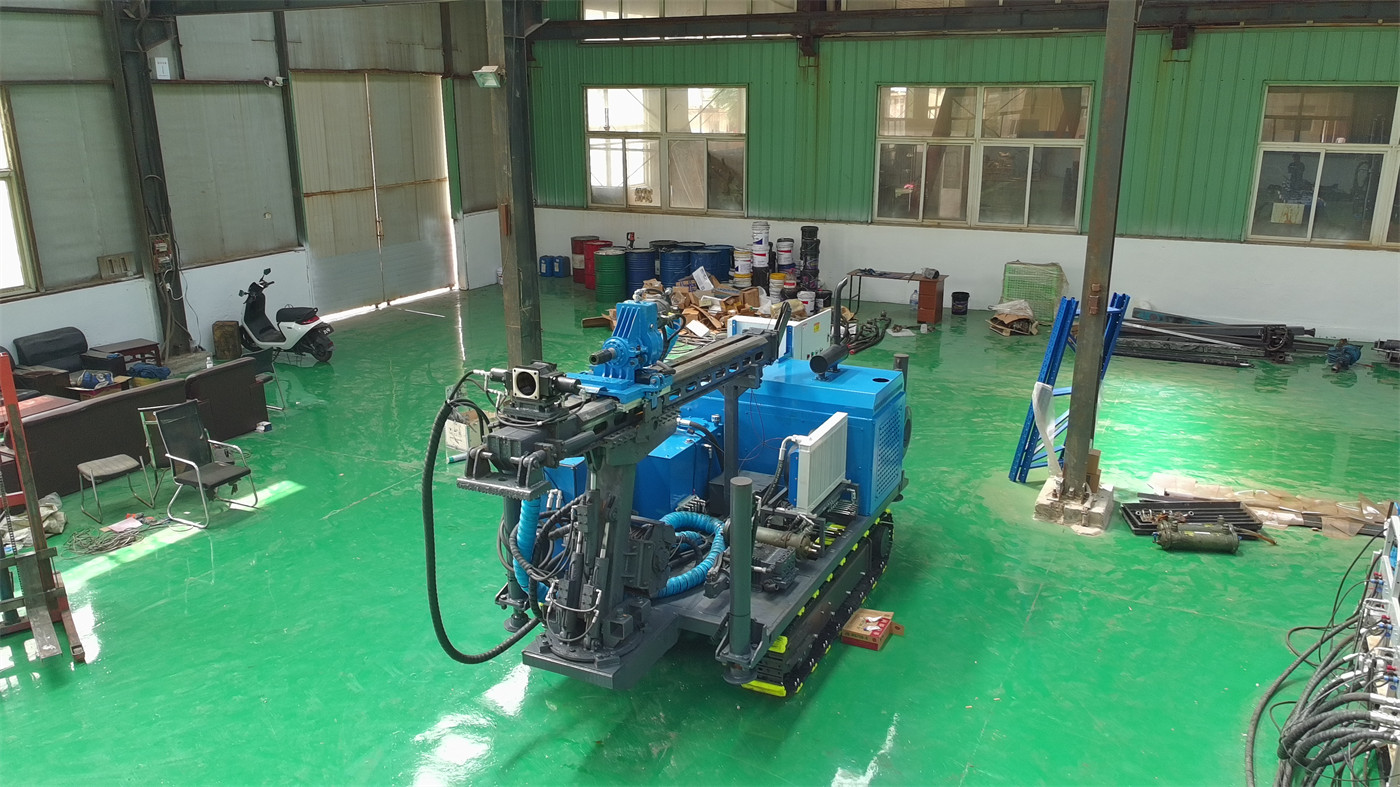
The air compressor is only one segment of the air supply system. The data lists items requiring confirmation in the matching and selection notes: drilling rig model, hole diameter, target depth, main formation, DTH hammer specifications, and required working pressure and displacement. According to this list, at least the following types of information must be established before entering the site:
- Hammer specifications: The working pressure range and air consumption are the direct basis for judging whether 30 bar and 36 m³/min are sufficient;
- Hole diameter and target depth: Determine the annulus cross-sectional area and friction losses, affecting the air volume required for cuttings removal;
- Main formation: Hard rock and loose layers have different requirements for cuttings removal; the data explicitly states that different geological conditions affect actual air demand;
- Piping and interfaces: The equipment provides G1-1/2 and G2-1/2 dual outlets, but on-site pipe length, number of elbows, and fitting specifications will cause additional pressure drop, which is not covered in the data;
- Site and transport: Total weight 5820 kg, dimensions 4220×2000×2300 mm; as mobile equipment, site access roads and positioning space must be checked accordingly.
Among these, piping pressure drop is easily overlooked: the compressor outlet reaching 30 bar does not mean the hammer inlet is still at 30 bar. The data does not provide pressure drop data for different piping configurations, so this part can only be separately evaluated according to the actual on-site layout.
Applicable boundaries and parts still requiring confirmation
AC125D's data states the applicable working conditions as high-pressure, large-displacement air supply scenarios such as deep-well water well drilling rigs and geothermal drilling, and it can also serve as a supporting air source for drilling equipment requiring high-pressure, large-displacement compressed air. This is the applicable scope given by the data, which does not mean it holds for all deep-well projects. The following situations fall outside the data's coverage and require separate confirmation:
- When the working pressure required by a specific hammer model is higher than 30 bar, whether the equipment can still meet it;
- Under a specific combination of hole diameter and depth, whether the cuttings removal air volume after deducting hammer air consumption is sufficient;
- Whether engine power and displacement change under high-altitude or extreme-temperature environments;
- Whether the pressure drop caused by on-site pipe length and fitting types affects the hole-bottom pressure;
- How to distribute air volume between the dual outlets when driving multiple air-consuming devices simultaneously.
These questions cannot be answered from the existing parameters alone. A more prudent approach is to compile the drilling rig model, hammer specifications, hole diameter, hole depth, formation, and on-site piping conditions into an air demand specification, then check with the manufacturer the equipment's actual air supply performance under that combination. Whether deep-well high-pressure air supply holds ultimately depends on whether the four ends—pressure threshold, cuttings removal air volume, continuous power, and supporting piping—can align simultaneously, rather than any single rated value meeting the standard on its own.