












When laying out boreholes for mineral exploration, one easily overlooked question must be answered first: what is this hole meant to obtain? Is it cuttings samples returned continuously along depth, used to quickly judge lithology, alteration and mineralization trends; or is it complete core, used to observe stratigraphic sequence, structures and orebody contact relationships? The two differ in sample form and information content, and when translated into equipment, the required capability items also differ. This article separates these two requirements for comparison, then examines which judgments the public information on the RC400 supports and which conditions need separate confirmation at the project level.
The difference between the two sampling methods is not only "what is brought up"
Reverse circulation cuttings sampling establishes an independent return channel through dual-wall drill pipes; compressed air drives the downhole drilling tool, and cuttings return to the surface along the inner pipe and can be collected in sections by hole depth. Continuous coring lowers a core barrel to the hole bottom and, through rotary cutting, preserves the rock in the form of cylindrical core, which is retrieved in sequence after tripping out. The former yields fragmented samples, while the latter yields core that retains its original structure.
This difference directly determines that the two types of projects focus on different equipment aspects. Cuttings sampling projects care more about whether sample return is continuous, whether the correspondence between samples and depth is reliable, and how many boreholes can be completed per unit time; continuous coring projects care more about core recovery, the coordination between core barrel and drilling tools, and the impact of tripping frequency on downhole conditions. If equipment selection only compares drilling depth figures, these two types of requirements will be conflated.
Equipment conditions imposed by cuttings sampling
Using the public information on the RC400 as a reference, the equipment requirements for reverse circulation cuttings sampling can be broken down into several items: the sample return channel must remain sealed, the air supply must be sufficient to maintain downhole circulation, the drill string handling capacity must cover the target hole depth, and the drilling angle must be able to follow the geological design. All these items have corresponding parameters in the information, but the boundaries each parameter can explain are not the same.
Sample return channel: sealing of dual-wall drill pipes and condition of the inner pipe
The RC400 recommends 89 mm or 102 mm RC drill pipes with a length of 3 m. The information clearly states that RC drill pipes differ in structure from ordinary single-wall drill pipes, requiring reliable sealing and connection of the inner and outer channels; during operation, the dual-wall drill pipe joints, seals and inner pipe wear should be checked regularly to avoid air leakage and sample contamination. This shows that "being able to connect the drill pipe" is only the first step; the sealing condition of the sample return channel is what determines whether samples can return stably by depth.
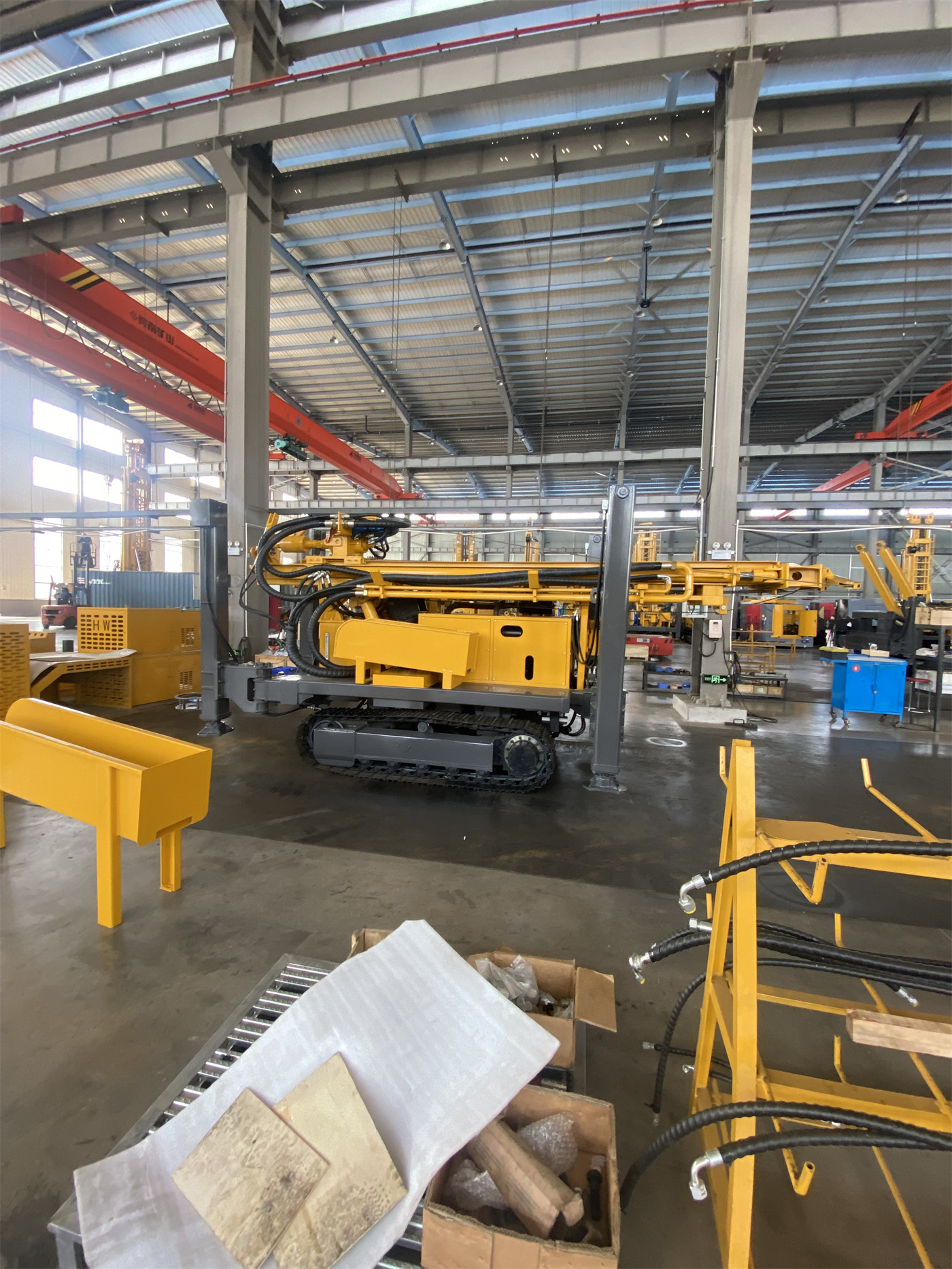
A common understanding needs to be distinguished here: the sampling capability of a reverse circulation drill is not determined by a single component; drill pipe sealing, downhole drilling tools and air supply conditions jointly maintain sample return. The information describes inspection items and risk points, but does not give replacement cycles for seals under different formations; this part needs separate confirmation based on on-site usage.
Air supply: pressure and displacement jointly determine sample return status
The RC400 information gives a working air pressure of 1.2–3.5 MPa and an air consumption of 16–55 m³/min. Reverse circulation drilling has relatively high requirements for both the pressure and displacement of the air compressor. The information specifically mentions that when hole depth increases, hole diameter increases, or the rock formation is harder, insufficient air volume will reduce the cuttings return speed, possibly affecting sampling continuity and hole bottom cleanliness.
This means air supply is not simply a matter of connecting an air compressor. In actual configuration, the target hole depth, maximum hole diameter and formation hardness need to be considered together, and then it should be checked whether the pressure and displacement of the air compressor can satisfy both at the same time. The information does not give minimum air volume values corresponding to different hole depths, so the specific matching still needs to be confirmed with the manufacturer according to project conditions.
Drill string handling: margin of lifting force and torque
The RC400 has a lifting force of 22 T, an axial pressure of 6 T, a rotary system maximum torque of 8000/4000 N·m, and corresponding maximum speeds of 75/150 r/min. The information links these values to 400-meter-class drill string handling, large hole diameters and high-load drilling: lifting force is used for drill pipe tripping, drilling tool recovery and some casing operations; higher torque conditions are suitable for large hole diameters and high-load drilling, while higher speeds are suitable for hole sections with less resistance.
For cuttings sampling projects, the significance of these capability items lies in supporting the pace of continuous drilling. If the margin of lifting force or torque is insufficient at the target hole depth and hole diameter, tripping and downhole handling will take more time, affecting the progress of the entire exploration plan. However, the information also reminds that reverse circulation operation should simultaneously take into account bit cutting, downhole impact and cuttings return status, and it is not advisable to pursue speed or torque alone.
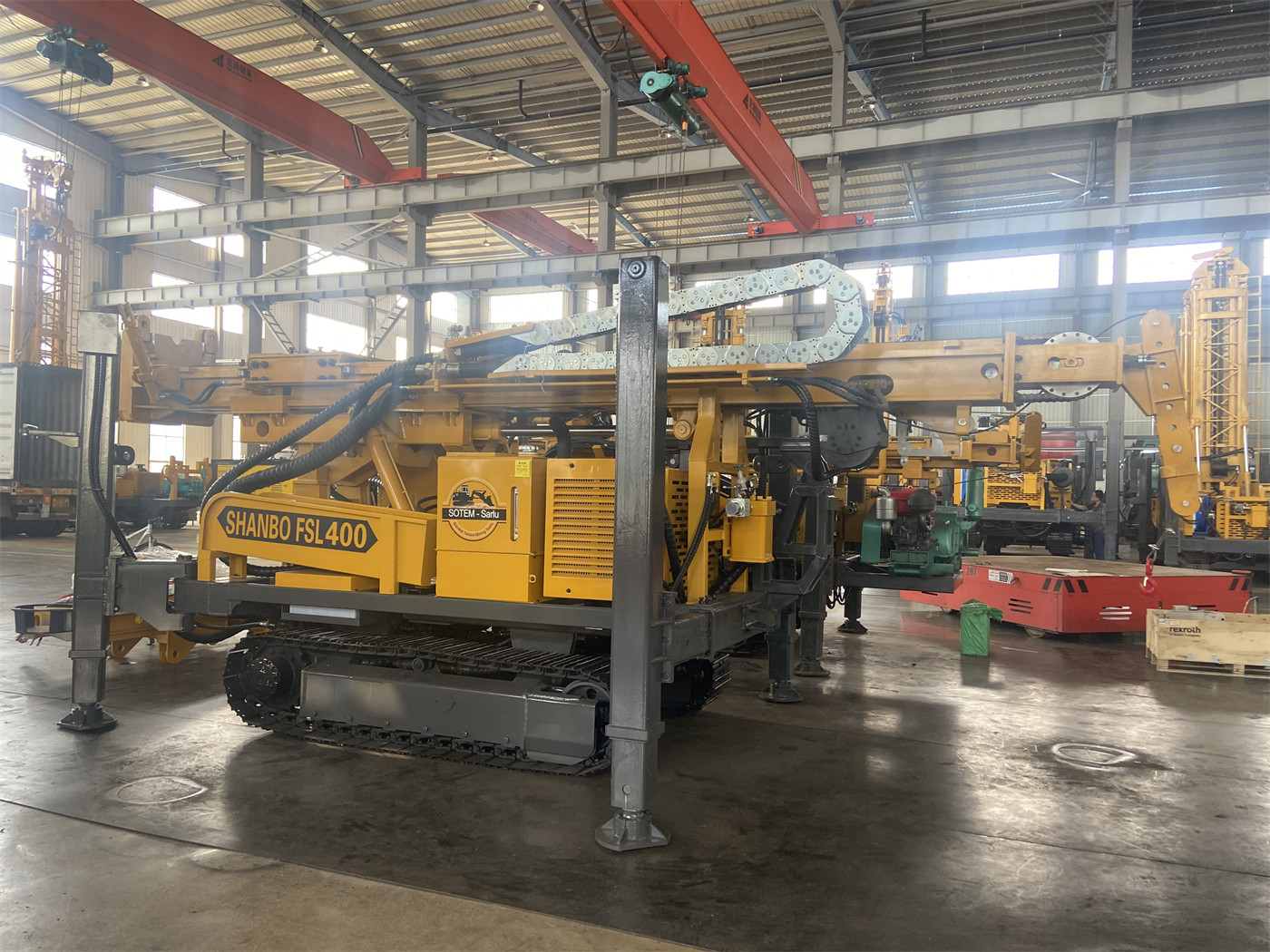
Drilling angle: laying out holes according to geological design
The RC400 supports two working angles, 45° and 90°. Vertical holes are suitable for groundwater, overburden investigation and some mineral exploration, while 45° inclined holes can be used for inclined orebodies, structural belts or specific target verification. The information states that before formal construction, the hole direction and hole angle should be confirmed according to the geological design. This item corresponds to the common inclined-hole verification needs of cuttings sampling projects, but selectable angles do not mean any angle can be laid out; the information only gives these two angles, and whether other angles are feasible is outside its coverage.
Why continuous coring requirements are outside the scope of this equipment's information
When describing sampling capability, the RC400 information explicitly states "cuttings samples returned by depth, rather than continuous complete core." This is the divergence point between the two sampling methods at the equipment level: reverse circulation drills organize drilling around the sample return channel and air supply, while core drills organize drilling around the core barrel, wireline and coring process. The information does not include core barrel specifications, wireline capacity, coring tool matching or similar content, so the continuous coring capability of the RC400 cannot be inferred from its parameters.
If the project goal is to obtain complete core, the drilling depth, hole diameter, lifting force, torque and coring matching need to be checked separately against core drill information. This does not mean reverse circulation drills cannot be used for mineral exploration; rather, the type of information they obtain differs from continuous coring, and their tasks in the exploration process also differ. The information mentions that RC sampling is suitable for quickly establishing more borehole control points in large exploration areas, and then deciding based on the results which key areas need further core drilling. This precisely illustrates the division of labor between the two methods in a project.
Boundaries when the same equipment also serves water well purposes
The RC400 information also lists deep water wells as one of its main applications, with a maximum drilling depth of 400 m and a hole diameter of 105–305 mm. For rural water supply, farmland irrigation, industrial water use and groundwater development in mining areas, down-the-hole hammers, mud drilling or other suitable methods can be selected according to formation and well completion requirements. The information clearly states that water well construction does not necessarily require the RC sampling system throughout the entire process.
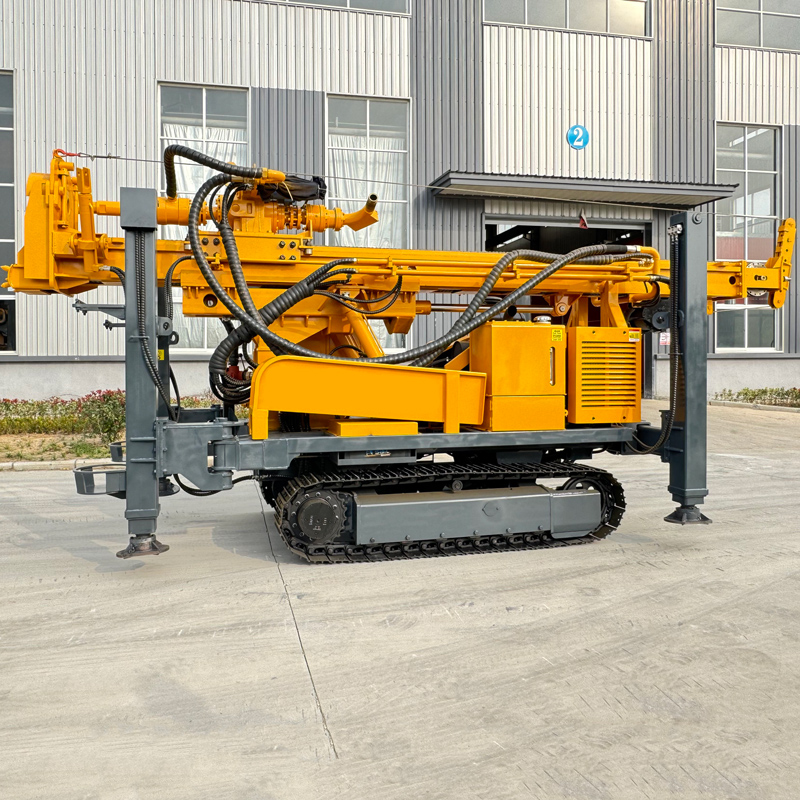
The significance of this item for selection lies in the following: if a project has both exploration hole and water well needs, the equipment's multi-purpose capability can reduce the variety of configurations, but the two uses have different focuses. Exploration holes focus more on sample quality, while water wells focus more on hole formation stability, well diameter and water-producing layers. When the upper loose overburden is prone to collapse, the information indicates that this model supports mud drilling, and mud circulation and casing can be selected according to hole wall conditions, then the process can be switched after entering stable rock formations. The feasibility of such process switching needs to be judged in combination with specific formations; the information does not give reference values for switching depth.
Site conditions and supporting matters
The RC400 has an overall weight of about 11 T, dimensions of about 7×1.85×2.86 m, a travel speed of about 2.5 km/h, and a maximum climbing angle reference of 21°. The information notes that due to the relatively large overall weight, ground bearing capacity, slope and transport routes should be confirmed before relocation. Reverse circulation projects usually also require air compressors, sampling and splitting equipment, and fuel, equipment placement and construction access should be planned in advance on site.
Regarding sample management, the information states that RC samples should be numbered, weighed and sealed according to fixed hole depth intervals, and the borehole number, depth, time and abnormal conditions should be recorded; the sampling system, cyclone or splitting equipment also need regular cleaning. These are process-level requirements; the equipment provides the drilling platform, and final sample quality also depends on the on-site sampling process and personnel operation.
Which situations require separate confirmation
- When the target hole depth is close to 400 m, the actual drilling depth will be affected by hole diameter, drill pipe, air compressor capacity, formation conditions, hole deviation and drilling tool wear. The information describes 400 m as a reference capability under typical configuration; whether a specific project can achieve it needs to be verified according to supporting conditions.
- The information does not give recommended air compressor selection values graded by hole depth and hole diameter; this needs to be confirmed according to the air consumption range and site conditions.
- Fractured zones and formations with developed fissures are prone to block falling and local hole enlargement, which may affect the correspondence between samples and depth. The information recommends controlling penetration speed, maintaining stable air supply and keeping good records, but does not give specific operating parameters.
- If the project requires continuous complete core, the RC400 information does not cover this requirement, and a core drill should be selected separately.
Returning to the question at the beginning: the divergence between cuttings sampling and continuous coring first lies in "what information is needed," and only then in equipment capability items. The RC400 information supports the requirements on the reverse circulation cuttings sampling side, including the sample return channel, air supply, drill string handling and drilling angle; the requirements on the continuous coring side need to be checked separately against core drill information. Judging these two sides separately can reduce selection deviations better than comparing drilling depth figures.