

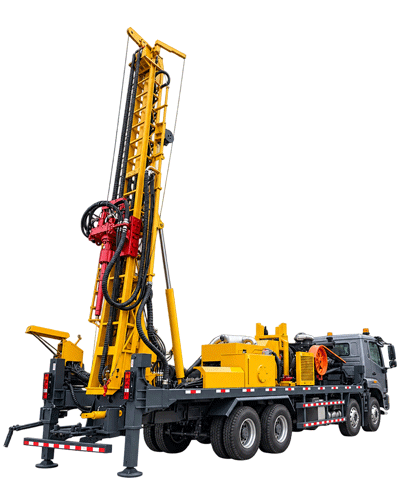
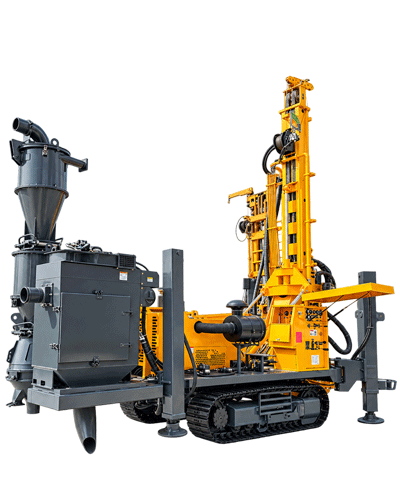
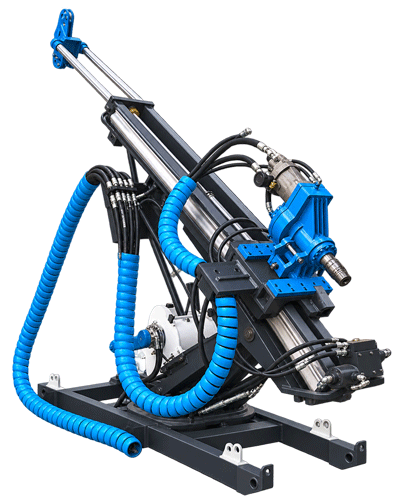
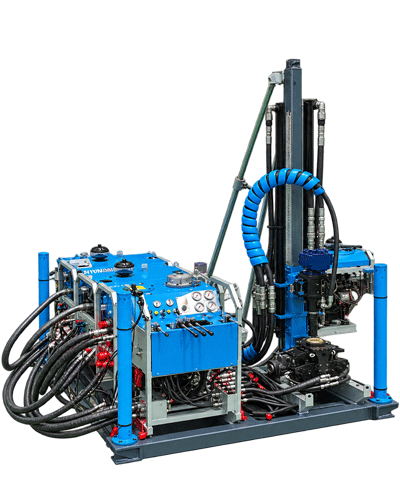
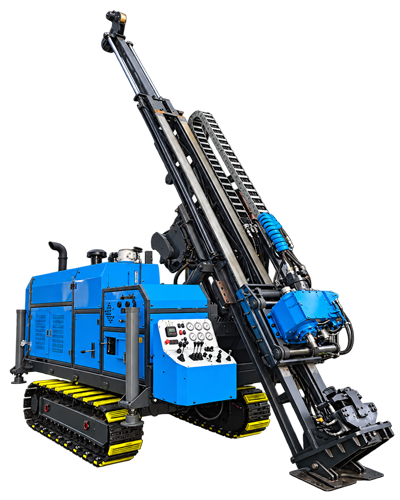
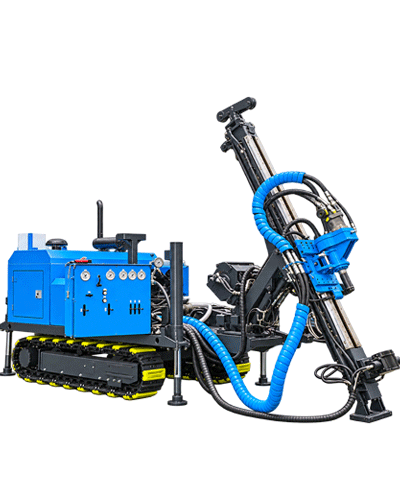
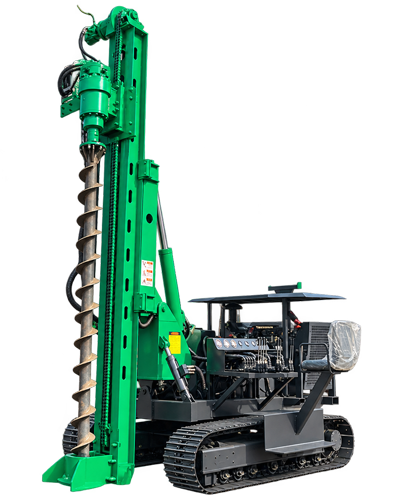
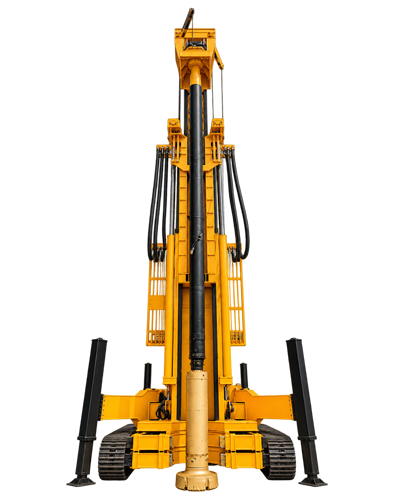
The WRT600 specifications list a set of parallel parameters: maximum drilling depth 600 m, bore diameter 140–450 mm, 37 T lifting force, 15000/7500 N·m dual-mode rotary torque, dual-speed rotation 70/140 r/min, 7 m feed stroke, 132 kW diesel power, and an overall weight of approximately 26 T. These figures serve agricultural irrigation, municipal water supply, industrial water wells, and mining water supply projects simultaneously, but the four types of targets require different things from this machine. The same WRT600, placed in projects with different applications, will require different parameter combinations to be verified in advance. The following breaks this down item by item according to use target.
First, distinguish which parameters belong to the same constraint group
Bore diameter 140–450 mm, maximum drilling depth 600 m, and drill pipe length 3 m/6 m form one group: the larger the bore diameter, the higher the torque, lifting force, and cuttings removal capacity required per hole section, and the 600 m figure is harder to achieve at larger bore diameters than at smaller ones. The 37 T lifting force and recommended drill pipe diameters 102/114/127 mm form another group: as hole depth increases, the self-weight of the drill pipe and borehole wall friction together consume the lifting force margin. The 15000/7500 N·m torque and 70/140 r/min dual speed are a third group, corresponding to two working conditions: high-resistance hard rock hole sections and stable low-resistance hole sections. Under DTH conditions, there is also a group consisting of 1.2–3.5 MPa working air pressure and 16–55 m³/min air consumption, which belongs to the air compressor package and is not included in the rig parameters. Only by looking at these groups separately can one determine which figures need to be aligned first for a specific application.
Agricultural irrigation and farm water supply: look first at hole density and water-finding margin
Irrigation wells for farmland, orchards, pastures, and greenhouses are characterized by scattered hole positions; individual well depths are not necessarily large, but after finishing one location, the rig must move to the next as quickly as possible. The WRT600 uses a truck-mounted chassis, and road relocation is completed by the chassis itself, requiring fewer loading and unloading cycles than equipment that needs separate towing. For such projects, the significance of the 600 m drilling depth is to provide water-finding margin in areas with deep groundwater levels and unstable shallow aquifers; the actual hole depth used should still be based on hydrogeological conditions and the target aquifer depth, and 600 m should not be treated as the expected depth for every well.
Irrigation wells usually do not need to use the 450 mm upper limit of bore diameter; the matching relationship among bore diameter, filter pipe, and submersible pump is more important than pursuing a large bore diameter. What needs to be confirmed in advance is whether the road width, bridge load capacity, height limits, and turning radius between farms allow the passage of a 26 T truck-mounted rig measuring approximately 10 × 2.48 × 3.75 m—the truck-mounted structure solves road relocation, not site clearance.
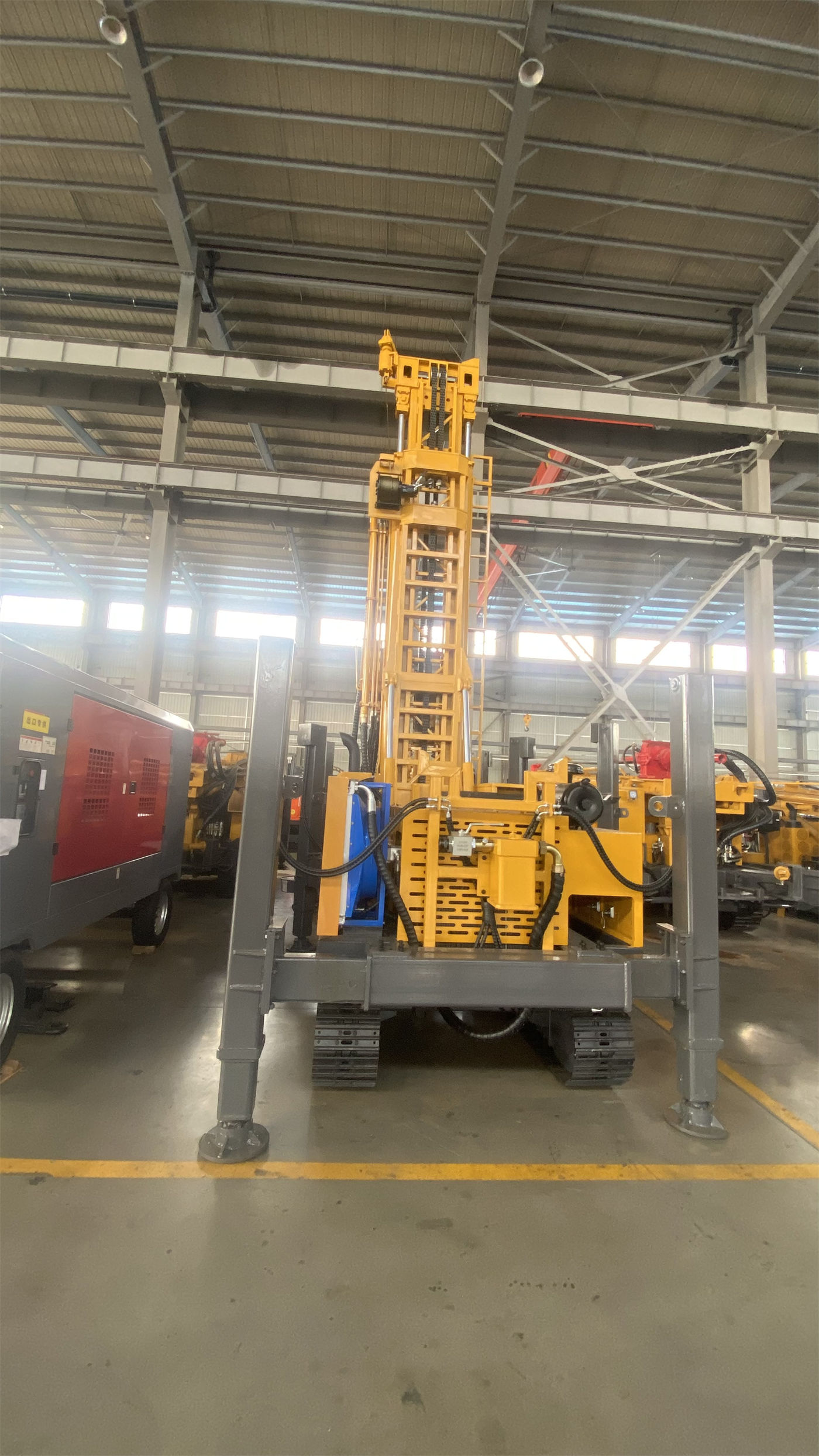
Municipal and community water supply: determine bore diameter and well completion structure first, then discuss equipment
For water supply projects for villages, communities, and public facilities, once a well is completed it must operate for the long term, so the work of determining well depth, bore diameter, filter pipe, and pump type should be completed before drilling begins. The WRT600's 140–450 mm bore diameter range allows different well completion structures to be designed according to well casing, DTH hammer, and expected water yield; bore diameter selection serves the final well completion target, not the other way around.
In such projects, the significance of the 37 T lifting force and 7 m feed stroke leans more toward construction organization: deep hole sections involve frequent tripping of drill pipes, 6 m drill pipes reduce the number of connections compared with 3 m drill pipes, and the combination of a 7 m feed stroke with 6 m drill pipes can reduce the number of power head return trips. However, continuous drilling efficiency is still affected by formation, downhole conditions, and operating methods; the specifications themselves do not promise a specific rate of penetration.
Mining water supply and dewatering: hard rock proportion determines whether to switch to DTH
Mining sites can use the WRT600 to drill camp water supply, dust suppression, equipment washing, and auxiliary production water wells, and it may also handle some dewatering holes. The key difference between such projects and agricultural irrigation lies in the rock formation: after entering relatively intact limestone, sandstone, or granite, medium- and high-pressure DTH hammers can be configured for DTH drilling, corresponding to 1.2–3.5 MPa working air pressure and 16–55 m³/min air consumption.
When selecting an air compressor, reaching 1.2–3.5 MPa is not enough; insufficient displacement will still cause inadequate impact and difficult cuttings removal. Selection should simultaneously consider bore diameter, hole depth, DTH hammer specifications, rock hardness, and altitude. If return cuttings decrease, air pressure becomes abnormal, or rotary resistance increases, first determine whether there is cuttings accumulation at the hole bottom, air leakage, or drilling tool wear, and handle it by cleaning the hole and assessing downhole conditions; it is not advisable to rely solely on the 37 T lifting force to pull forcefully.
Mining roads and site conditions are usually rougher; before entry, the truck-mounted chassis's road passage, turning, and platform load-bearing conditions need to be confirmed. In addition, many water wells have loose overburden in the upper section and transition to weathered rock and intact hard rock in the lower section. This type of mixed formation is suitable for using mud rotary or casing wall protection in the upper section and switching to DTH in the lower section, reducing the problem of a single method covering the entire hole section.
Water-scarce areas: applicable conditions for pneumatic drilling
In suitable rock formations, DTH drilling mainly relies on compressed air impact and cuttings removal and has low dependence on large amounts of drilling water, so it can be used in arid agricultural areas, remote mining sites, and projects lacking a stable mud water source. However, this advantage has prerequisites: when the upper loose layer is thick, mud or casing assistance may still be needed. The specifications do not provide a conclusion that a complete well can be completed under waterless conditions; water source organization should still be planned separately in conjunction with the hole structure.
What the four types of targets should focus on verifying
| Use target | Parameters to verify first | Conditions to confirm separately |
|---|---|---|
| Agricultural irrigation, farm water supply | Truck-mounted relocation capability, water-finding margin corresponding to 600 m drilling depth, bore diameter and pump type matching | Farm road width, bridge load capacity, height limits, and turning radius |
| Municipal, community water supply | Well completion structure within the 140–450 mm bore diameter range, 6 m drill pipe and 7 m feed stroke | Hydrogeological survey and water quality evaluation results, well depth, filter pipe, and water stop section design |
| Mining water supply and dewatering | 1.2–3.5 MPa air pressure and 16–55 m³/min air consumption under DTH conditions, dual-mode torque | Rock formation integrity, air compressor displacement, mining platform load-bearing and road conditions |
| Industrial park, construction camp water supply | Entry feasibility under 26 T overall weight and transport dimensions, bore diameter selection | Site layout, work area clearance, power and filter maintenance arrangements for continuous construction |
Several easily confused points
- 600 m is the maximum drilling depth limit, not the default well depth for every well; actual well depth should be based on hydrogeological conditions and the target aquifer.
- The 37 T lifting force is a capability limit, not a means of handling deep-hole tripping resistance; if abnormal resistance occurs, first assess downhole conditions.
- The 132 kW diesel engine provides power for rotation, feed, winch, and auxiliary systems. During long periods of hard rock or deep hole construction, the maintenance frequency of engine cooling, air filtration, and fuel systems needs to be arranged separately in the plan; sites with heavy dust should increase the cleaning frequency of filter elements and radiators.
- The dual-mode torque 15000/7500 N·m corresponds to two rotation speeds of 70/140 r/min. Low speed and high torque are used for large bore diameters, hard rock, and high-resistance hole sections, while the high-speed gear is used for stable formations with lower resistance. During construction, adjustments should be made dynamically according to rotary load, return cuttings, and drilling tool conditions.
Main technical parameters
| Parameter item | Parameter value |
|---|---|
| Product model | WRT600 |
| Equipment type | Truck-mounted direct-mast water well drill rig |
| Mast structure | Direct mast |
| Maximum drilling depth | 600 m |
| Bore diameter | 140–450 mm |
| Rotary torque | 15000 / 7500 N·m |
| Rotary speed | 70 / 140 r/min |
| Lifting force | 37 T |
| Axial pressure | 6 T |
| Feed stroke | 7 m |
| Drill pipe length | 3 / 6 m |
| Recommended drill pipe diameter | 102 / 114 / 127 mm |
| DTH working air pressure | 1.2–3.5 MPa |
| Air consumption | 16–55 m³/min |
| Diesel engine | 132 kW |
| Auxiliary winch | 3 T + 1.5 T |
| Fast lifting speed | 30 m/min |
| Fast feed speed | 41 m/min |
| Overall weight | Approximately 26 T |
| Transport dimensions | Approximately 10 × 2.48 × 3.75 m |
Items not covered by the specifications include: actual rate of penetration in different rock formations, reference values for single-well completion cycles, specific methods for adjusting hole cleaning parameters in strong aquifers and water inflow sections, and temperature, circulation medium, and cementing requirements for geothermal survey holes. These need to be confirmed in writing with the manufacturer and project party based on specific project hydrogeological data and hole design, and cannot be inferred from this article.