












“Rated for 600 meters—does that mean it can take on any kind of water well project?” This question comes up repeatedly in the selection of 600-meter-class water well drilling rigs. It treats drilling depth as a standalone capability, but whether a rig can actually be used on a given project depends on whether four things hold true at the same time: the target aquifer depth falls within the rig’s drilling depth coverage, the completed well diameter falls within the borehole diameter range, the formation combination has a usable drilling method, and the complete rig can reach the hole location and be set up smoothly. Using publicly available WRT600 information as a reference, this article places 600-meter-class truck-mounted direct-mast equipment within these four constraints and explains where its applicable scope ends and what conditions must be secured before work begins.
First, identify which equipment specifications directly correspond to the well’s operational objectives
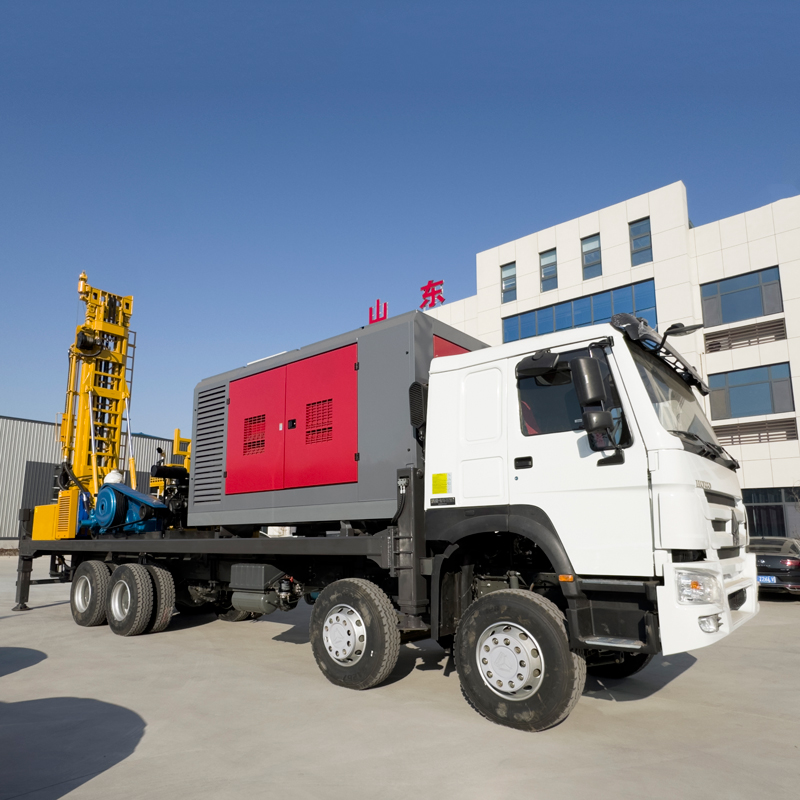
The WRT600 is a truck-mounted direct-mast fully hydraulic water well drilling rig. The publicly available parameters directly related to operational objectives are: maximum drilling depth 600 m, borehole diameter 140–450 mm, lifting force 37 T, dual-condition torque 15000/7500 N·m (corresponding to maximum rotation speeds of 70/140 r/min), feed stroke 7 m, complete rig weight approximately 26 T, and transport dimensions approximately 10 × 2.48 × 3.75 m. Each of these values constrains a certain segment of the well’s operations; they are not parallel “capability labels.”
- The 600 m drilling depth constrains the final hole depth, but the actual well depth also depends on the target aquifer position and hydrogeological conditions.
- The 140–450 mm borehole diameter constrains the completed well structure design among the drill bit, well casing, screen pipe, and submersible pump; a larger diameter is not necessarily better.
- The 37 T lifting force and 6 T axial pressure constrain the margin for tripping the drill string in deep holes, recovering the down-the-hole hammer, and certain casing operations.
- The dual-condition torque constrains the rotation mode under different formation resistances; low-speed high-torque and high-speed settings correspond to different hole sections.
Looking at these four items together, the applicable scope of 600-meter-class truck-mounted direct-mast equipment can be summarized as: medium-to-deep groundwater development, medium-to-large borehole diameters, formations transitioning from loose overburden to hard rock, and scenarios requiring road relocation between project sites. Beyond any one of these, the judgment must be reassessed.
Four judgment dimensions of the applicable scope
Judgment dimension 1: The relationship between target aquifer depth and 600 meters
600 m is the upper limit of the equipment’s capability, not the target well depth for every project. In agricultural irrigation, municipal water supply, industrial water wells, and mining area water supply projects, if the groundwater level is relatively deep or shallow aquifers are unstable, 600-meter-class depth can provide greater margin for water exploration; however, if the target aquifer is relatively shallow and the well diameter requirement is also within 140–450 mm, 600-meter-class capability is not the primary reason for selection. The information explicitly states that actual well depth should be based on hydrogeological conditions and the target aquifer, and this point should be placed before equipment discussion.
Judgment dimension 2: Matching completed well diameter with well casing and pump type
The 140–450 mm diameter is a range, not a recommended value. Agricultural and community water wells typically do not require long-term use of the maximum diameter; mining, industrial, and high-flow water supply projects may require larger well diameters. Diameter selection must serve the final completed well objective: the well casing outer diameter, screen pipe structure, submersible pump size, and expected water yield jointly determine the final hole diameter. The equipment information also lists recommended drill pipe diameters of 102/114/12 (as in the original text; specifications are subject to the manufacturer’s final documentation). Drill pipes, borehole diameter, and drill bit must be checked as a matched set; the equipment should not be judged as “large enough” based only on the maximum borehole diameter.
Judgment dimension 3: Formation combination determines whether methods can be connected
The WRT600 information provides two method paths: soil, clay, sand, and gravel layers can use mud rotary drilling, while relatively intact rock formations can be equipped with medium-to-high air pressure down-the-hole hammers for DTH drilling. Recommended DTH drilling working air pressure is 1.2–3.5 MPa, with air consumption of 16–55 m³/min. Mixed formations can use a staged approach with upper mud rotary drilling or casing wall protection and lower DTH switching. This means that the applicable scope of 600-meter-class truck-mounted direct-mast equipment partly depends on whether the project formation falls within the combinations coverable by these two methods, and whether the air compressor displacement and pressure can simultaneously satisfy the selected down-the-hole hammer and hole depth. Reaching pressure alone without sufficient displacement will cause insufficient impact and difficult cuttings removal.
Judgment dimension 4: Relocation method and mobilization conditions
The significance of the truck-mounted chassis lies in road relocation. Compared with crawler-type or trailer-type equipment that requires separate towing, the WRT600 relies on a truck-mounted chassis to move between project sites, reducing loading and unloading cycles. But truck-mounted does not mean it can start work at any time: the complete rig weighs approximately 26 T with transport dimensions of approximately 10 × 2.48 × 3.75 m, and the direct-mast structure requires advance confirmation of road height restrictions, site clearance, and turning space during transport and mobilization; the bearing capacity of the drilling site ground must also be verified. The information explicitly states that before project mobilization, road width, bridge load capacity, height restrictions, turning radius, and drilling site ground bearing capacity must be confirmed to avoid being unable to set up operations after arrival. These are prerequisites, not issues that can be resolved temporarily after the equipment arrives.
What the direct-mast structure means within this applicable scope
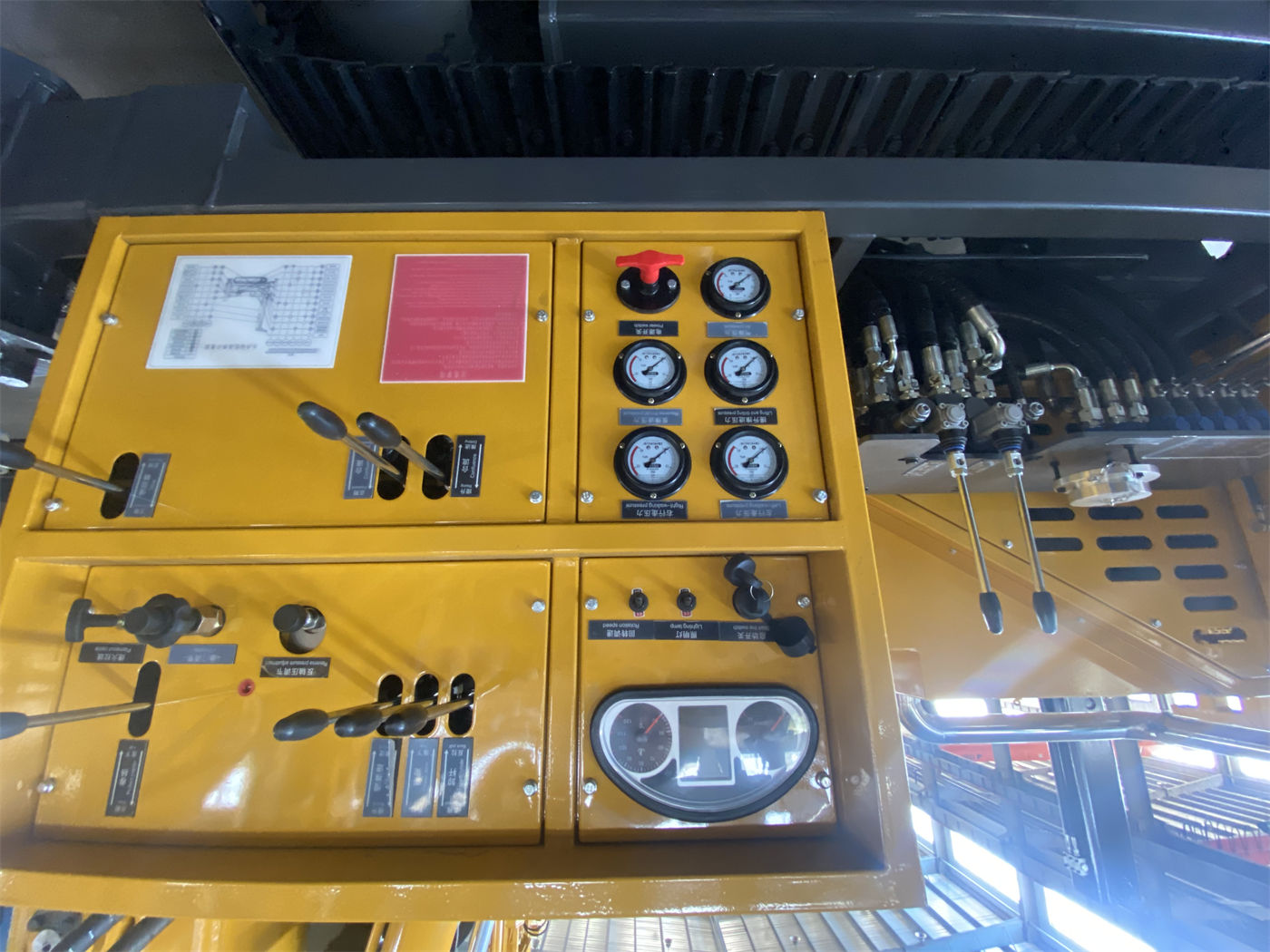
The WRT600 uses a direct-mast structure that does not change mast length through multiple telescoping stages, resulting in a more direct overall load path. The information relates this to continuous rotation, deep-hole drill pipe handling, and high-load water well construction. This feature also brings two boundaries: first, transport and mobilization have clearer requirements for height restrictions, clearance, and turning space, which must be verified at the selection stage; second, the direct-mast structure is relatively simple and intuitive to maintain, but this does not exempt daily inspection of the mast, hydraulic system, and winch. The 7 m feed stroke works with 3 m or 6 m drill pipes; 6 m drill pipes reduce the number of pipe connections, while 3 m drill pipes suit sites with limited space or ordinary handling conditions—this is a trade-off between stroke and drill pipe combination, and does not mean 6 m drill pipes can be used on any site.
Prerequisites to be secured before starting work
The following checklist is organized in the order of “first confirm whether mobilization is possible, then confirm whether the well can be completed,” and applies to projects considering 600-meter-class truck-mounted direct-mast equipment:
- Mobilization conditions: road width, bridge load capacity, height restrictions, turning radius, drilling site ground bearing capacity, and clearance.
- Well location conditions: target aquifer depth, expected final hole diameter, well casing and screen pipe structure, and submersible pump size.
- Formation combination: thickness of upper loose layers, integrity of lower rock formations, and whether casing wall protection and staged method switching are required.
- Air supply support: if DTH drilling is used, air compressor pressure and displacement must simultaneously satisfy the selected down-the-hole hammer, borehole diameter, hole depth, and altitude conditions; the air consumption range of 16–55 m³/min is a reference range given in the information, not the sole basis for selection.
- Drilling tools and winch: drill pipe length and diameter, and on-site division of labor between the 3 T large auxiliary winch and the 1.5 T small auxiliary winch.
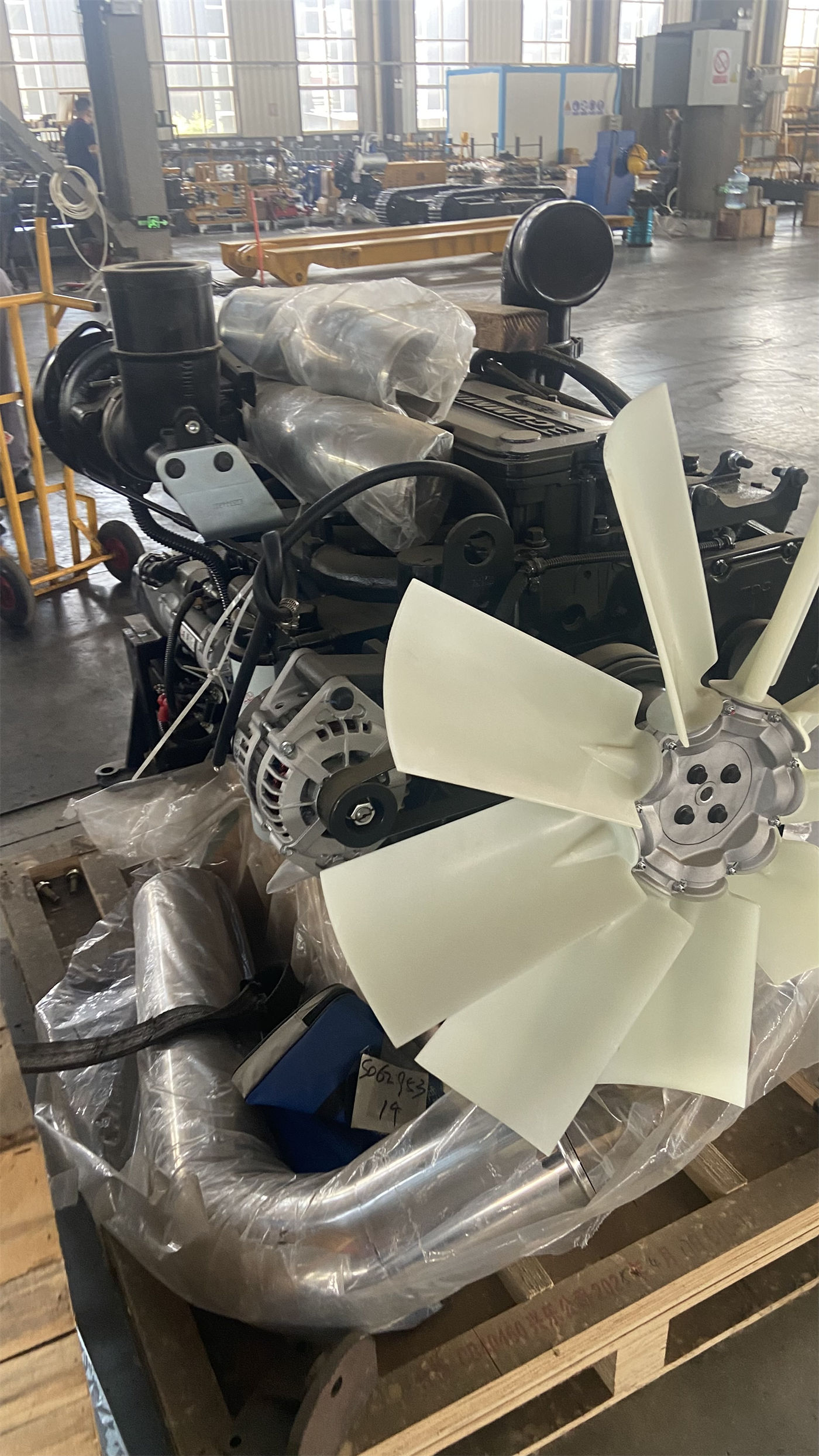
- Power and maintenance: the 132 kW diesel engine serves rotation, feed, winch, and auxiliary systems; sites with heavy dust require more frequent cleaning of filter elements and radiators.
- Well completion stage: recording the depth of main water-producing layers, setting screen pipes and water-stop sections, and adjusting hole cleaning methods in water inflow sections.
The purpose of this checklist is not to replace hydrogeological design, but to separate the parts that equipment information can answer from the parts that must be confirmed by the project party. Specific formation parameters, water quality evaluation, and well completion design not covered by the information still need to be completed separately at the project level.
Cases where 600-meter-class truck-mounted direct-mast equipment should not be directly taken as the first choice
The following judgments are based only on the capability boundaries of the equipment information itself and do not constitute recommendations for other models:
- When the target aquifer is clearly shallower than 600 meters and the diameter requirement is near the lower limit of the range, 600-meter-class drilling depth is not the main reason for selection.
- When the required final hole diameter exceeds 450 mm, the equipment’s borehole diameter range does not cover it.
- When there is no usable road between hole locations, or the mobilization route cannot accommodate a vehicle length of approximately 10 m, a height of 3.75 m, and a complete rig weight of 26 T, the advantage of truck-mounted relocation cannot be realized, and the mobilization plan must be reassessed.
- When the formation combination exceeds the range coverable by mud rotary drilling and DTH down-the-hole hammers, process feasibility should be separately confirmed.
- When the project requires continuous coring or cuttings sampling, the equipment information falls within the category of water well drilling rigs, and sampling capability is not within the scope of its publicly available information.
These boundaries are not a denial of the equipment’s capability, but rather a limitation of “applicable” to conditions with a basis. Specific formation suitability conclusions, well completion results, and construction efficiency not provided in the information should be based on actual site conditions.
Matters still requiring confirmation from the manufacturer or project party
The publicly available information already specifies drilling depth, borehole diameter, lifting force, torque, feed stroke, air pressure and air consumption ranges, complete rig weight, and transport dimensions, but the following matters do not have complete conclusions in the information and should be confirmed item by item during the selection stage:
- The line for recommended drill pipe diameter is truncated in the original information; complete specifications must be based on the manufacturer’s final technical documents.
- Specific matching schemes for air compressor displacement and pressure under different combinations of borehole diameter, hole depth, and rock hardness.
- Transport permits, bridge load calculations, and on-site lifting or setup plans under specific road conditions.
- Water quality evaluation of the target aquifer, well completion structure, and water-stop section design.
- For geothermal investigation or temperature gradient hole applications, additional equipment conditions imposed by formation temperature, circulation media, casing, and cementing requirements.
Securing these issues before starting work is more decisive than comparing drilling depth figures on a parameter table in determining whether 600-meter-class truck-mounted direct-mast equipment is truly suitable for a given project.