












When requesting a quote for a kilometer-class deep well drilling rig, the easiest thing to compare is the whole-machine price tag. But from mobilization to well completion, the links that truly lengthen the construction period and increase investment are often not in the equipment itself: whether the circulation process needs to be changed, to what stage the casing is run, how much time drill string handling takes, whether the towed chassis can enter the site smoothly, and how the filter pipes and water shutoff are arranged after completion. Looking at these links together, the standalone machine price is only one item in the full-process cost.
Using the public information of the WRTR1000 as a reference, this article discusses how 1000-meter-class deep water wells, geothermal and mining area water supply projects can expand the cost focus from the price tag to full-process conditions during equipment selection. It should first be noted that the following analysis is based on product information and selection logic, not settlement data from a specific project, and does not represent that any customer has adopted this equipment.
In deep well projects, where the money is usually spent
The operational chain of kilometer-class drilling is longer than that of medium-shallow wells, including at least site mobilization, mast deployment, drill string assembly, circulation medium, casing operations, well completion structure and demobilization. Each stage has corresponding equipment conditions or supporting conditions, and any mismatch may translate into costs through downtime, process changes or additional auxiliary equipment.
- Circulation process stage: mud direct circulation, air foam, DTH hammer, optional air-lift reverse circulation; different processes correspond to different pumps, air compressors and drill string configurations.
- Drill string and casing stage: the deeper the hole, the greater the drill string weight and casing load; lifting force, mast load and rotary table through-hole jointly constrain this stage.
- Relocation stage: the towed platform mounts the mast, rotary table, mud pump and power system together; when moving between projects, road, bridge and height-limit conditions need to be verified.
- Well completion stage: filter pipes, water shutoff and pump type design are outside the scope of the rig information, but they in turn affect the borehole diameter and casing program.
Why consider a 1000-meter-class rotary table rig
The WRTR1000 has a maximum drilling depth of 1000 m, a maximum rotary table torque of 25 kN·m, four speed ranges of 37 / 52 / 84 / 145 r/min, and is equipped with a 60 T hydraulic telescopic K-type mast, a BW1200/7 mud pump and a 269 kW Cummins diesel engine. Taken together, these parameters correspond to three types of demand—deep-hole drill string handling, large-displacement mud circulation and multi-process switching—rather than a single drilling depth indicator.
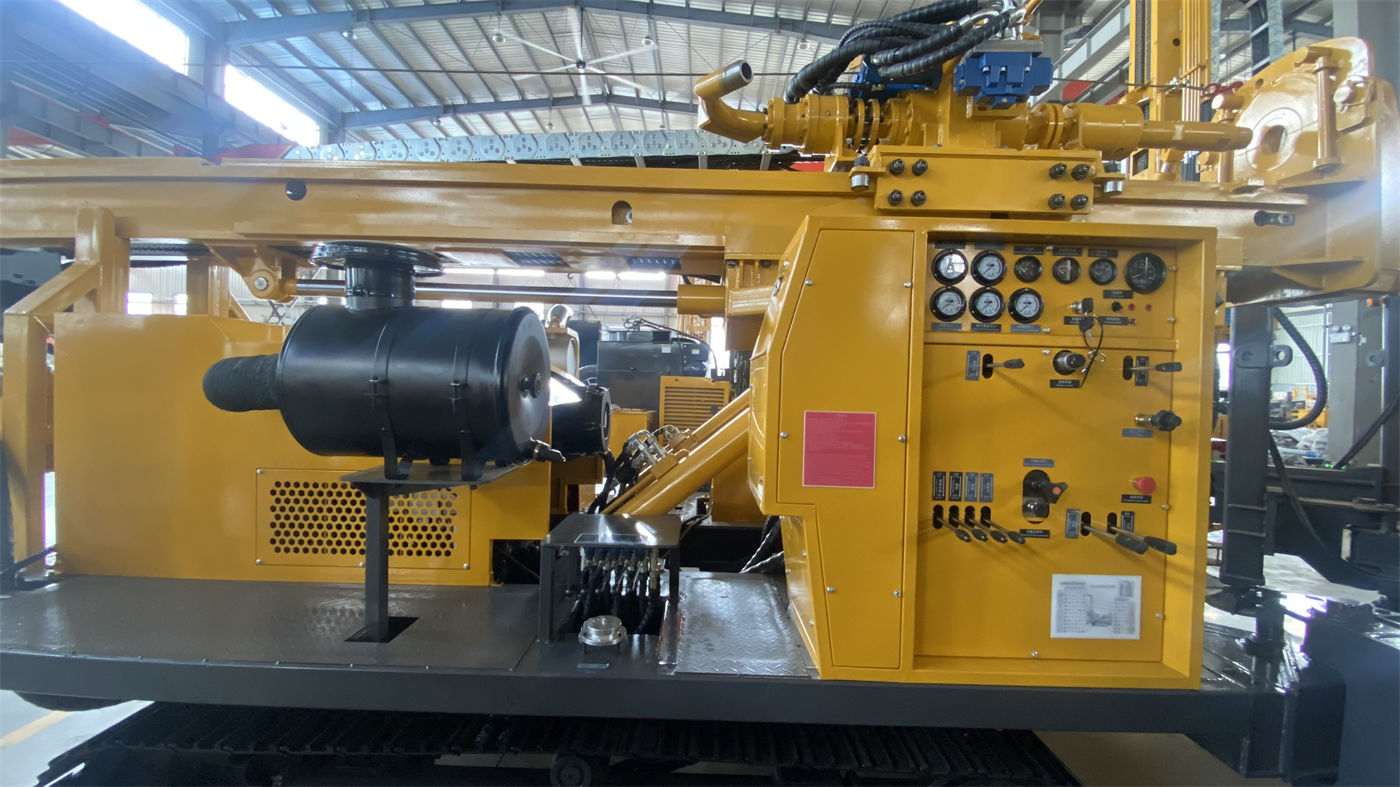
If the project target aquifer is relatively deep, the final hole diameter needs to accommodate larger well casing, and the formation transitions from loose layers to bedrock, a single medium-shallow well equipment often requires repeated compromises in process and drill string. The value of 1000-meter-class equipment lies in reserving operational margin for these stages, but whether the margin can be used still depends on the specific well depth, hole diameter and formation design.
How the choice of circulation method affects full-process cost
The WRTR1000 supports mud direct circulation, air foam, DTH hammer and optional air-lift reverse circulation. In the information, the BW1200/7 mud pump has a maximum pressure of 7 MPa and a displacement of 1200 L/min, used for cuttings carrying, wall protection, drill bit cooling and downhole pressure control in deep-hole mud direct circulation. The deeper the hole, the greater the circulation resistance and the distance for cuttings transport; a large-displacement pump helps maintain stable mud return.
But the circulation method is not a free option. Switching to DTH hammer requires matching air compressors, DTH hammers and drill bits; switching to air foam requires adjusting foam concentration, air volume and injection method according to hole depth, hole diameter and formation permeability; selecting air-lift reverse circulation also requires matching dual-wall drill pipes, an air compression system and sampling equipment. Whether these supporting items are included in the budget often affects the total project investment more than the main machine price tag.
| Circulation method | Corresponding conditions in the information | Supporting items to be separately confirmed |
|---|---|---|
| Mud direct circulation | BW1200/7 mud pump, 7 MPa, 1200 L/min | Mud materials, desanding and solids control, waste mud treatment |
| DTH hammer | The information mentions configurable air compressor, DTH hammer and drill bit | Air compressor pressure and displacement, DTH hammer lubrication, cuttings discharge status |
| Air foam | The information mentions suitability for some dry, lost-circulation or cuttings-carrying-improvement hole sections | Foaming agent, injection method, compatibility with hole depth and hole diameter |
| Air-lift reverse circulation (optional) | The information lists it as an optional process, not a dedicated RC exploration rig | Dual-wall drill pipes, air compression system, sampling equipment |
This table illustrates one thing: the choice of circulation method is not just an operating preference; it directly determines the breadth of the supporting list. If these supporting items are not included in the comparison at the selection stage, the difference in standalone machine quotes is easily offset by subsequent add-on items.
Equipment conditions corresponding to drill string and casing handling
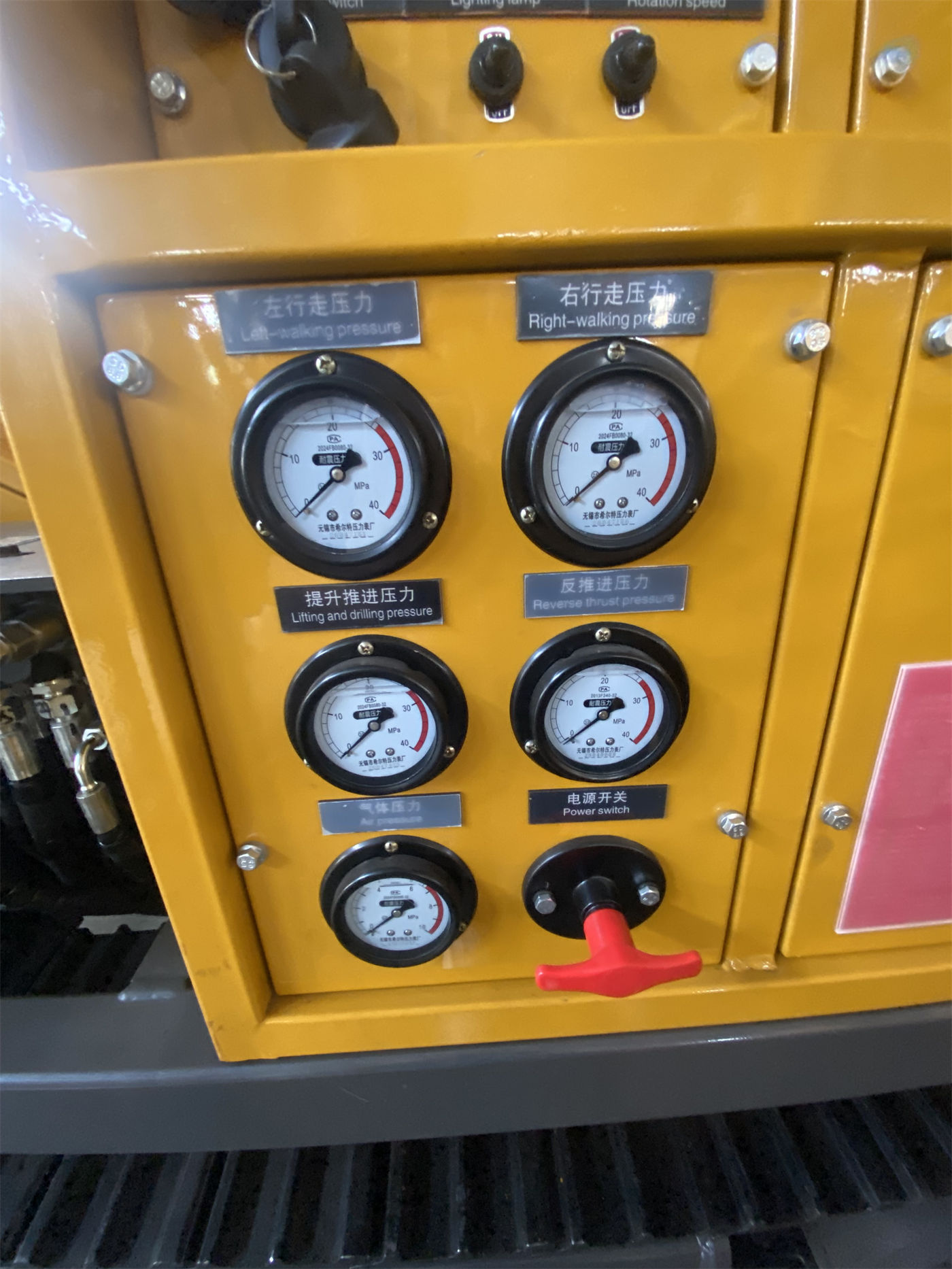
In 1000-meter-class drilling, drill string weight, casing weight and borehole wall friction increase with depth. The WRTR1000 main hoist has a single-rope lifting force of 90 kN, the auxiliary hoist 50 kN, the traveling block and swivel both have a rated load of 60 T, and the mast has a maximum load of 60 T and an effective height of 18.482 m. These values jointly constrain the capability boundaries of tripping and casing operations.
The rotary table has a maximum through-hole diameter of 660 mm, providing space for large-size kelly, drill string and casing operations. The information also reminds that the through-hole size cannot be directly understood as a fixed borehole diameter; the final hole diameter still needs to be designed according to the aquifer, well casing, pump type and formation stability. This point is crucial for cost judgment: a large through-hole does not mean the completion diameter can be arbitrarily enlarged; the number of casing stages and the well casing specifications are the factors determining material investment.
The kelly specification is 108 × 108 × 12192 mm, the standard drill pipe is 89 × 9400 mm, and optional drill pipe diameters are 89 / 114 / 127 mm. Longer drill pipes reduce the number of connections, but place higher demands on mast space, lifting and transport organization. The time savings from fewer connections should be calculated together with drill pipe procurement, transport and on-site lifting conditions.
Relocation conditions of the towed platform
The WRTR1000 adopts a towed heavy-duty platform, with the mast, rotary table, hoist, mud pump and power system arranged around the chassis, and can be transferred between projects by a suitable towing vehicle. For mining areas, farms, geothermal fields and remote water well projects, this structure is more convenient for cross-project mobilization than a fully fixed drilling site.
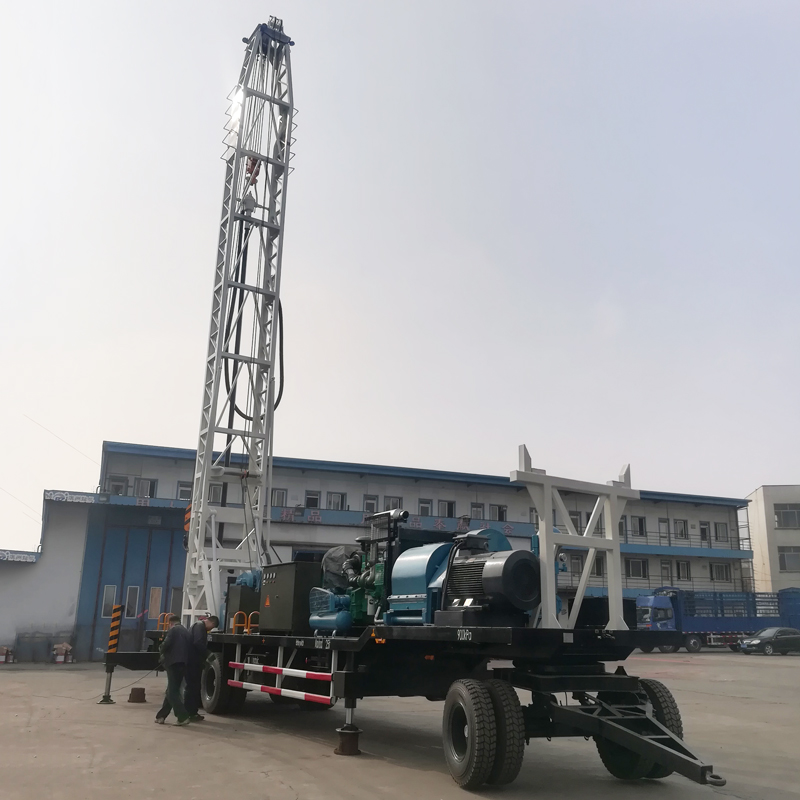
But towed does not mean it can go anytime. The information clearly requires prior verification of road width, bridge load capacity, turning radius and transport height limits. When deep well project sites are dispersed, the number of relocations and the difficulty of each relocation will enter the full-process cost; if road conditions are not met, segmented transport or on-site road construction may be required, and this investment is not in the equipment quote.
Applicable boundaries and items to be confirmed
The WRTR1000 information covers drilling depth, torque, mast load, pump displacement and circulation methods, but does not provide drilling speed under specific formations, completion water yield, fuel consumption and wear part life. These data need to be separately confirmed at the project level in combination with hydrogeological information, hole diameter design and construction organization.
- Whether the target aquifer depth and final hole diameter really require 1000-meter-class equipment, or whether medium-shallow well equipment plus a casing program can cover them.
- Whether the formation combination requires multiple circulation methods in sequence, and whether the supporting air compressor, foaming agent and dual-wall drill pipes have been included in the budget.
- Whether the road, bridge and height-limit conditions between sites allow whole-machine transfer of the towed rig.
- Whether the filter pipes, water shutoff and pump type in the completion design match the 660 mm through-hole and casing program.
- If the project requires continuous high-quality cores, the information clearly states that a dedicated core drilling rig should be selected; the WRTR1000 does not serve this purpose.
Only by looking at these items alongside the price tag can one judge where the cost center of a deep well drilling rig actually lies. The standalone machine price is only the starting point; circulation support, casing program, relocation conditions and completion design are the parts more easily underestimated in the full process of a deep well.