












Both belonging to the 600-meter class, the difference in organization methods between the WRTR600 and WR600RC begins with how the equipment enters the site. The WRTR600 centrally arranges the diesel generator, 3NB-130 mud pump, rotary table, double winches, mast, and outriggers on a trailer chassis; the WR600RC mounts the power and rotary system on a crawler chassis, with a total weight of about 12.5T, and adopts dual-wall drill pipe reverse circulation technology. This article does not compare which is stronger, but rather explains, based on four sets of construction organization conditions, the arrangements toward which each type of equipment pulls on-site resources.
First Look at the Chassis: Trailer-Mounted and Crawler Types Determine the Entry Method
The WRTR600's installation form is a trailer-mounted chassis. The overall transport dimensions vary with the mast version: the short mast is about 15100 × 2480 × 4100 mm, and the long mast is about 16630 × 2480 × 4100 mm. This means its organization method necessarily includes the link of "towing vehicle + cross-project mobilization." Before cross-regional construction, road width, turning radius, bridge load-bearing capacity, height limits, and local trailer transport requirements must be confirmed.
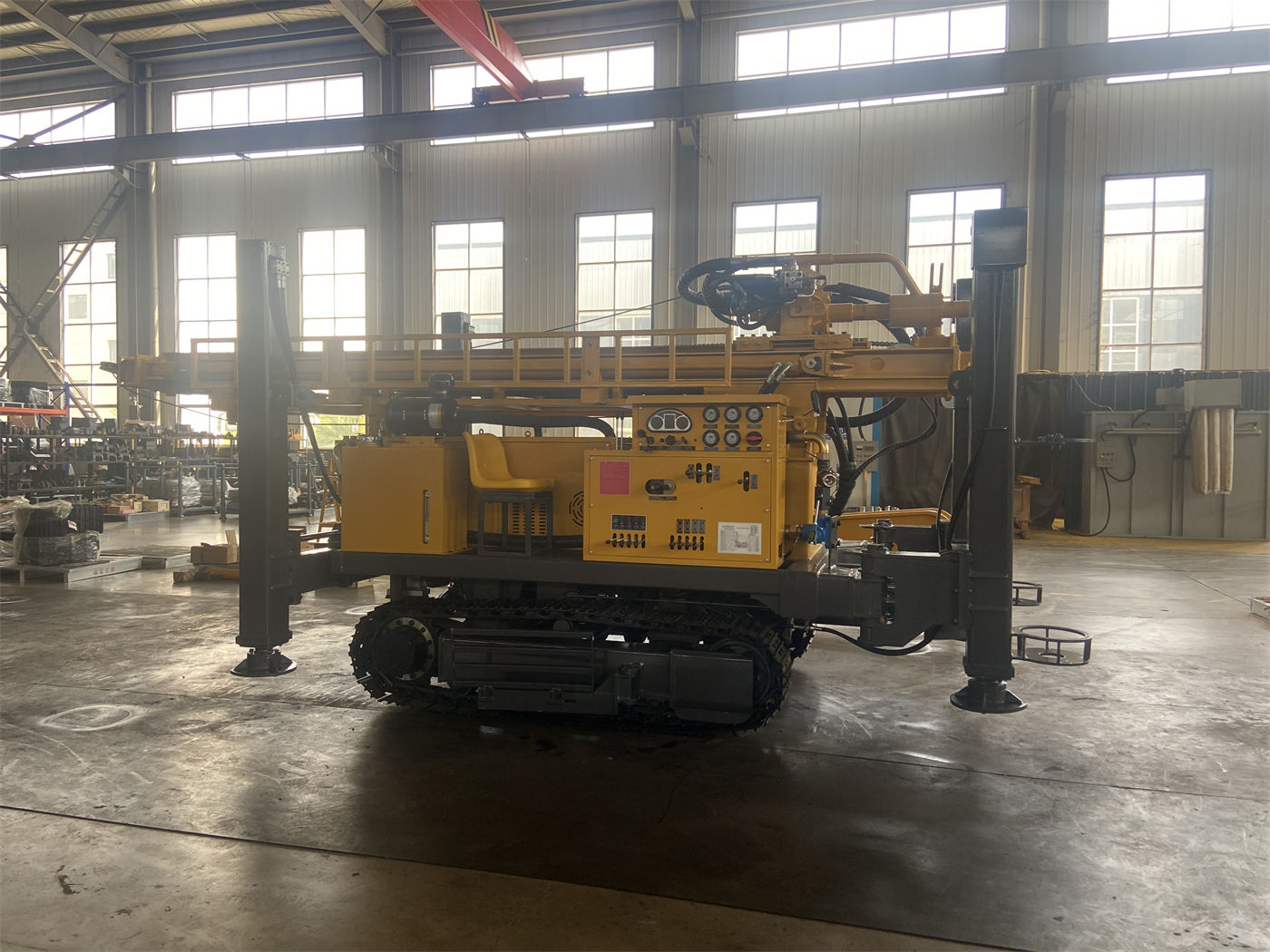
The WR600RC's overall dimensions are about 7 × 2.1 × 2.9 m, with a total weight of about 12.5T, a travel speed of about 3.5 km/h, and a maximum climbing angle reference of 21°. Its organization method leans more toward "self-travel between hole positions + rig movement within the platform": the crawler chassis is suitable for gravel roads in mining areas, field exploration platforms, and generally uneven ground, but road load-bearing capacity and site stability still need to be confirmed before mobilization.
| Organization Condition | WRTR600 | WR600RC |
|---|---|---|
| Installation Form | Trailer-mounted chassis | Crawler chassis |
| Mobilization Method | Cross-project transfer by towing vehicle | Crawler self-travel, speed about 3.5 km/h |
| Overall Transport Dimensions | Short mast about 15100 × 2480 × 4100 mm; long mast about 16630 × 2480 × 4100 mm | About 7 × 2.1 × 2.9 m, total weight about 12.5T |
| Leveling Method | Outriggers | Outrigger stroke 1.7 m |
Organizational Differences in Circulation Medium and Supporting Equipment
The WRTR600 centers on rotary table drilling and mud circulation, equipped with a 3NB-130 mud pump, with a specified displacement of 8.4–16.6 L/s, rated working pressure of 5–10 MPa, and 90 kW motor drive; it also integrates an SCGC-200kW diesel generator set, with rated voltage 380 V, rated current 360 A, and frequency 50 Hz, which can supply power to the mud pump, hydraulic oil pump, and auxiliary electrical equipment, making it suitable for remote areas and projects lacking a stable power grid. The organizational implication of this configuration is that mud materials, water supply, mud pits, and circulation pipelines must be planned together with the hole positions, while the generator solves the power issue on site.
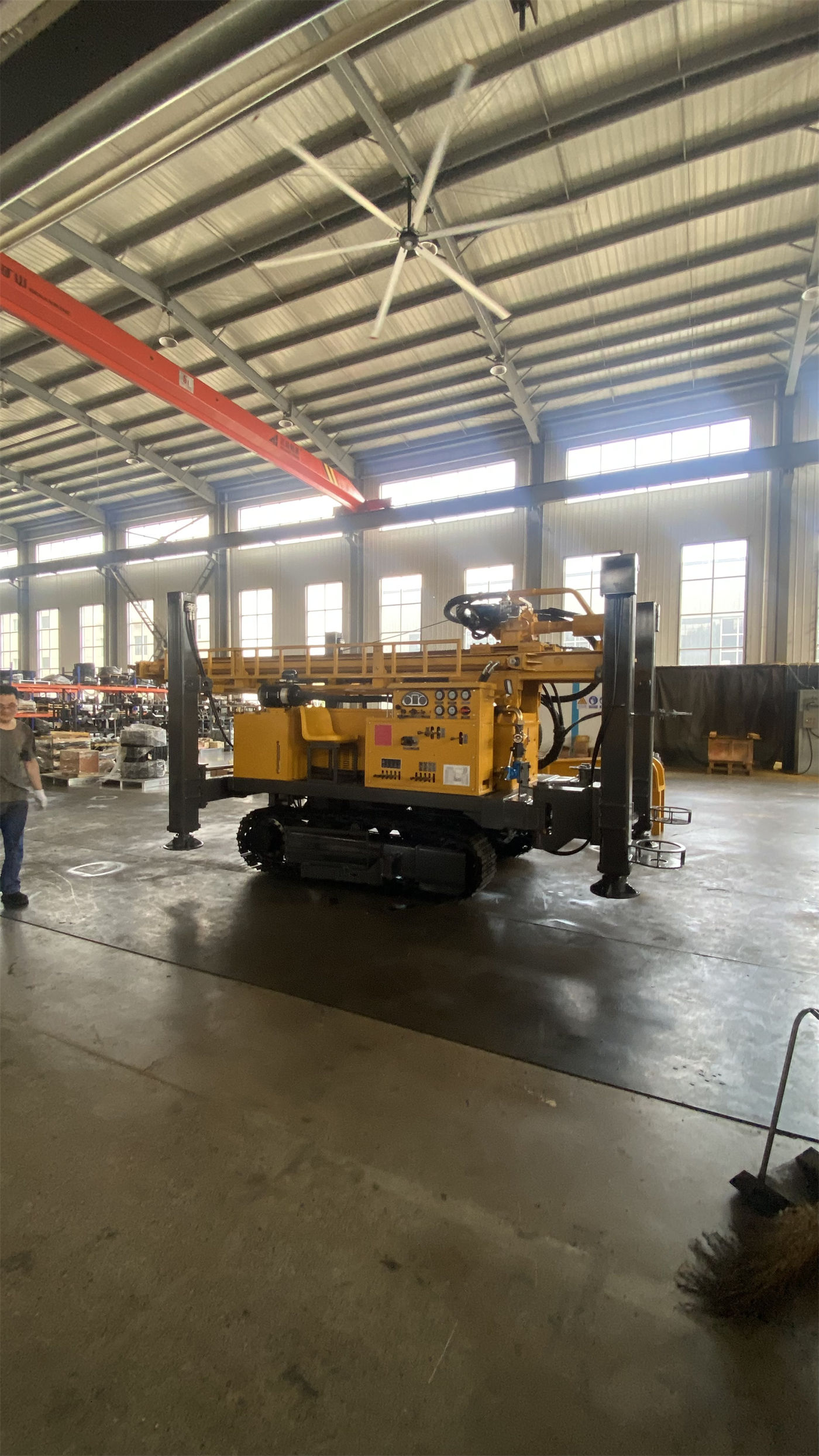
The core of the WR600RC is reverse circulation inner tube sample return: compressed air travels down along the outer channel of the dual-wall drill pipe, drives the RC hammer and bit at the bottom of the hole, and then carries cuttings back to the surface through the inner channel. The recommended working air pressure given in the data is 1.6–6 MPa, with air consumption of 16–75 m³/min. The organizational implication is that large air compressors, sample return hoses, sampling devices, and sample areas must all enter platform planning, and fuel, equipment positions, and maintenance space need to be arranged in advance on site to avoid interference among different equipment.
Hole Position Organization: Continuous Construction at Multiple Hole Positions and Deep Hole Control Points
The WRTR600's trailer structure is more suitable for continuous construction across multiple sites. When contractors for village and town water wells, agricultural irrigation, geothermal, and engineering drilling rotate among multiple projects, the entire drilling rig can be transferred in one tow, reducing the complexity of separately transporting the mast, power, and mud system. The rotary table provides three speed ranges of 38 / 57 / 85 r/min, corresponding to theoretical torques of about 13.8 / 9.2 / 6.2 kN·m: the low-speed range has higher torque, suitable for larger hole diameters, heavy drilling tools, and formations with greater resistance; higher speeds are suitable for drilling stages with less resistance. The main winch single-rope pull is 40 kN, the auxiliary winch single-rope pull is 30 kN, and the swivel has a maximum load of 30 T and an inner diameter of 63.5 mm.
The WR600RC's organizational focus leans more toward completing deep hole and inclined hole control on one platform. The maximum drilling depth is 600 m, the drilling diameter is 105–450 mm, the lifting force is 29 T, and the rotary torque is 12000 / 6000 N·m, corresponding to maximum rotary speeds of 75 / 150 r/min; it supports 45° and 90° working angles. 45° is suitable for inclined crossing of inclined ore bodies, veins, and fault zones, while 90° is used for conventional vertical exploration and water well construction. The on-site organization for such projects is not frequent site changes, but rather equipping the fixed platform with air compressors, sampling, and sample management personnel.
Process Conditions in the Water Well Completion Stage
The WRTR600 has a maximum drilling diameter of 500 mm and a rotary table through-hole diameter of 500 mm, which can provide working space for larger-sized drill pipes, casings, and some engineering drilling tools, making it suitable for larger-diameter hole opening and casing operations in water wells and foundation engineering. In soil layers, clay, and soft overburden, mud viscosity should be adjusted according to formation permeability, hole diameter, and mud return conditions; sand layers, gravel layers, and loose overburden are prone to hole collapse and mud loss, and temporary casing or staged casing can be combined to first establish a stable hole section before continuing deeper. If a project requires continuous high-quality cores, a dedicated core drilling rig should be used.
In addition to mineral exploration, the WR600RC can also be used for deep water well construction. Agricultural irrigation, mining water supply, industrial water, and groundwater investigation can choose ordinary DTH or mud drilling based on the formation. The data shows that this equipment supports RC drilling and conventional DTH down-the-hole hammer drilling. Loose overburden such as soil layers, sand layers, and gravel layers may not be suitable for direct high-air-pressure RC drilling, but mud rotary methods can be supported to first stabilize and form the upper hole section, and then switch to RC or DTH processes after entering stable rock formations. The focus of water well projects is the borehole wall, well diameter, aquifer, and completion structure, which differs from the focus of mineral RC sampling projects.
Conditions to Verify Before Purchase
- Mobilization route: For the WRTR600, check road width, turning radius, height limits, and bridge load-bearing capacity according to the short mast or long mast transport dimensions; for the WR600RC, check the load-bearing capacity and slope of roads for the 12.5T total machine weight.
- Site planning: For the WRTR600, plan mud materials, water supply, mud pits, and circulation pipelines; for the WR600RC, plan air compressors, sample return hoses, sampling devices, sample areas, and safe distances between equipment.
- Process support: For the WRTR600, verify the match between the mud pump displacement of 8.4–16.6 L/s and the target hole diameter and formation; for the WR600RC, verify whether the air compressor can stably provide air supply conditions of 1.6–6 MPa and 16–75 m³/min.
- Drilling tools and completion structure: The drilling depth and hole diameter of both models are descriptions of equipment capability. Actual drilling depth and hole diameter are affected by formation, drilling tools, mud circulation, casing design, and downhole resistance, and must be checked item by item according to the project completion design.
- Resource radius: The WRTR600's 200 kW generator can cover sites without a stable power grid, but fuel supply routes must be arranged in advance; in addition to the WR600RC's 132 kW Cummins engine, fuel and maintenance space must also be planned for the air compressor and sampling system.
Matters Not Covered by the Data That Need to Be Confirmed with the Manufacturer
This article is compiled based on publicly available product information on this site. The actual drilling efficiency and well completion results of the two rigs under specific formation combinations, as well as operational details such as mud performance adjustment, fractured zone treatment, and sample quality control, are not given as directly quotable judgment values in the data and should be confirmed in writing by project working condition data, contracts, or the manufacturer. Before the equipment enters the site, the mast, winches, wire ropes, swivel, rotary table, mud pump, generator, and electrical system should also be inspected; when raising the mast, confirm that there are no overhead lines or obstacles above; during mud circulation, pay attention to high-pressure pipelines, pump pressure, and leaks; personnel must not stand under suspended drilling tools or near rotating drilling tools.