












Calling trailer-mounted rotary table with mud direct circulation 'outdated' usually comes from a comparison method: pitting it against DTH hammers, air-lift reverse circulation, and air foam on a per-hole speed basis. This comparison disadvantages rotary table direct circulation, but it compares general capability, not applicability. There is no such thing as a process being wholly eliminated; only its applicable scope changes. Using publicly available information on the WRTR600 from this site, this article examines the conditions under which this combination still holds up.
First, what this combination is
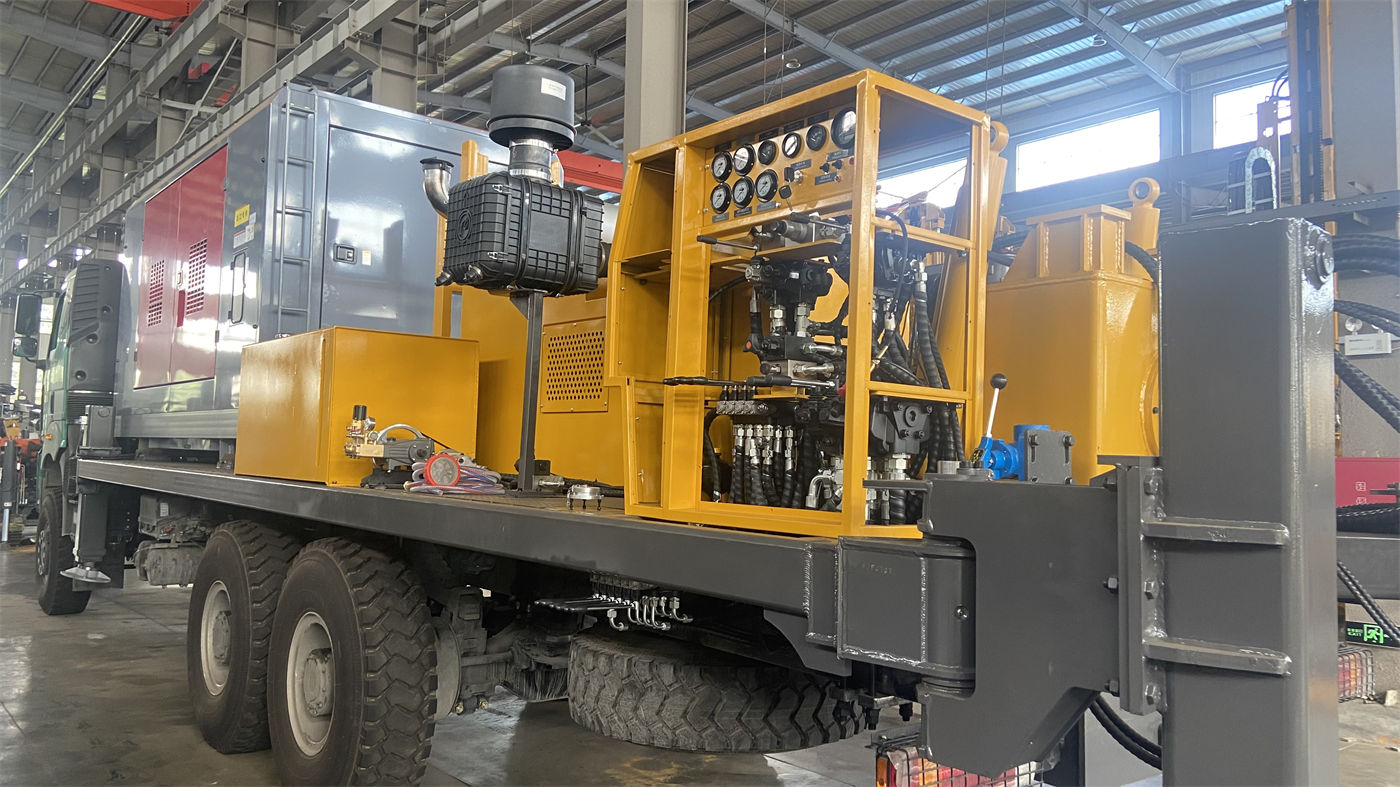
The WRTR600 is a 600-meter-class trailer-mounted rotary table water well drilling rig. The drilling method is rotary table rotary drilling, and the circulation method is mud direct circulation. The entire machine centrally arranges the diesel generator, mud pump, rotary table, double winch, mast, outriggers, and auxiliary breakout mechanism on a trailer chassis.
This determines two basic characteristics: first, rotary at the collar with cuttings carried upward by mud; second, the entire system moves with the vehicle, so power and mud systems do not need to be disassembled and transported separately during relocation.
Where the applicable scope has narrowed
Narrowing means that under the following conditions, rotary table direct circulation is no longer the preferred option.
- Hard rock dominates, and continuous coring or rapid penetration is the core objective. The information on this site clearly states: if a project requires continuous high-quality cores, a dedicated core drilling rig should be used. The WRTR600 can be used for hydrogeological surveys and general formation drilling, but its sampling form is not continuous coring.
- Hard rock sections account for a high proportion, and single-hole footage speed is pursued. The information mentions that roller cones, drag bits, and other rotary drilling tools can be selected for weathered rock and mixed soil-rock formations, but in terms of rock-breaking speed alone, the performance of DTH and similar methods in hard rock is not on the same comparison plane. The equipment itself does not provide pneumatic rock drilling conditions.
- Formations with water shortage, severe loss, and difficulty establishing mud circulation. Mud circulation is the core system of this equipment. Once circulation cannot be established, both cuttings transport and wall protection are affected. The response direction given in the information is to adjust mud properties, use temporary casing or staged casing, rather than change the circulation medium.
Parts that have not narrowed and still hold
Looking from another direction, under the following conditions, the match between rotary table and mud direct circulation is actually higher.
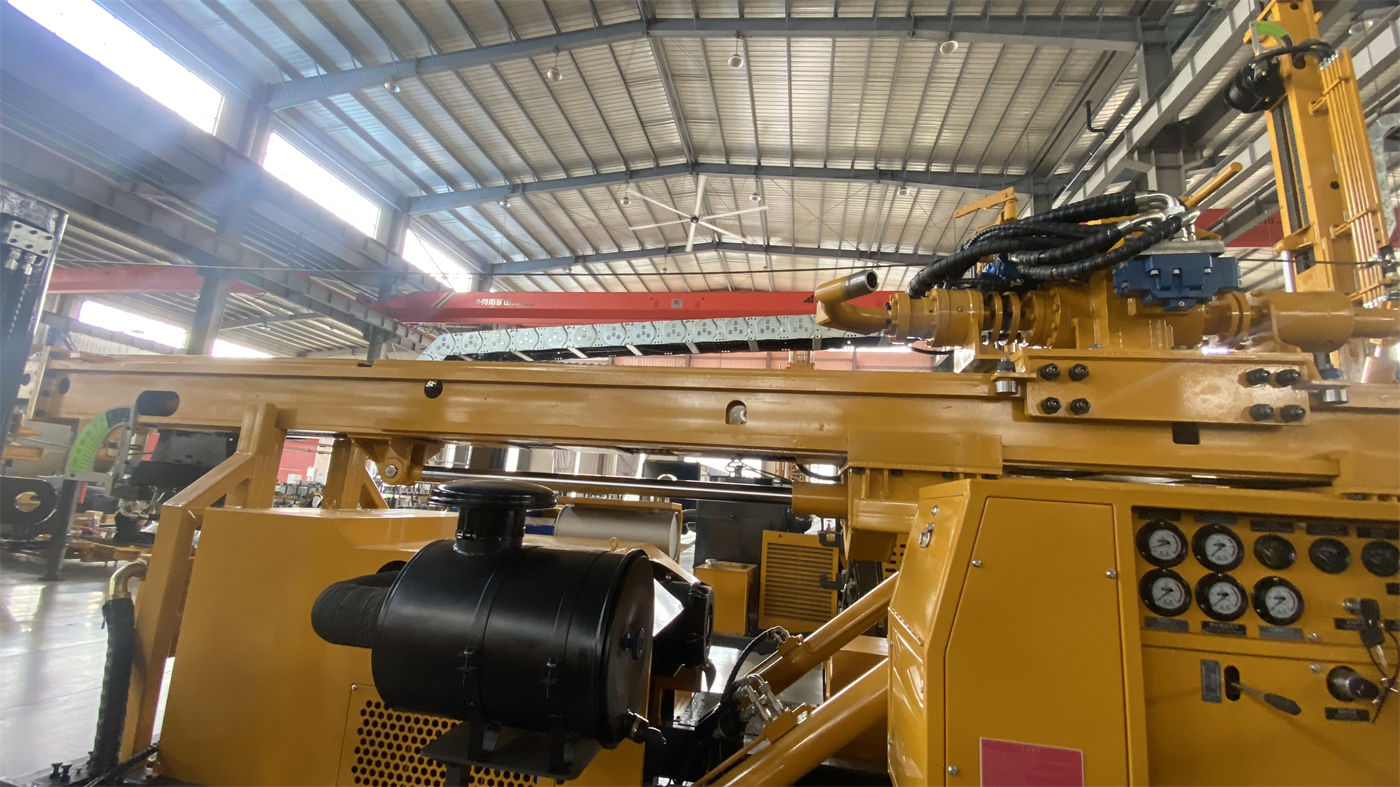
Well completion projects with loose overburden and high proportions of sand and gravel layers
Mud here does more than carry cuttings. The information on soil and clay formations states: mud viscosity should be adjusted according to permeability, hole diameter, and return conditions. Too thin may result in insufficient cuttings removal and borehole wall instability; too thick increases circulation resistance and pump load. Sand layers, gravel layers, and loose overburden are prone to collapse and mud loss; temporary casing or staged casing can be combined to first establish a stable hole section before advancing deeper. This combination of 'mud wall protection + casing' is precisely why rotary table direct circulation has long been used for water well completion.
Wells requiring larger opening diameters
The WRTR600 has a maximum drilling diameter of 500 mm, and the rotary table through-hole diameter is also 500 mm. The through-hole size determines what size drill pipe, casing, and some engineering drilling tools can pass through. For projects such as village and town water supply, agricultural irrigation, and some foundation engineering that require larger well diameters and completion space, this point is more critical than single-hole speed. The completed hole diameter must still be determined based on formation and well completion design.
Remote areas and sites without a stable power grid
The equipment integrates an SCGC-200kW diesel generator set, rated power 200 kW, rated voltage 380 V, rated current 360 A, frequency 50 Hz, supplying power to the mud pump, hydraulic oil pump, and auxiliary electrical equipment. For sites without reliable mains electricity, this self-contained power supply structure can operate as an independent system.
Construction organization with continuous work across multiple sites
The value of the trailer structure is not in drilling itself, but in relocation. The entire drilling rig can be transferred between different projects via a suitable towing vehicle, reducing the complexity of transporting the mast, power, and mud system separately. For contractors with dispersed hole locations and short single-hole cycles, such as village water wells and agricultural irrigation, this is a matching construction organization method.
Several parameter groups that must be read together
Applicability judgment cannot rely only on the single number '600 meters.' The following groups of values mutually constrain each other.
| Parameter group | Value | What it constrains |
|---|---|---|
| Maximum drilling depth / maximum hole diameter | 600 m / 500 mm | Upper limit of the depth-diameter combination; actual performance is affected by formation, drilling tools, mud circulation, casing design, and downhole resistance |
| Rotary table speed / theoretical torque | 38 / 57 / 85 r/min, approx. 13.8 / 9.2 / 6.2 kN·m | Low-speed gear has high torque, suitable for larger diameters, heavy drilling tools, and high-resistance formations; high speed is suitable for stages with lower resistance |
| Mud pump displacement / pressure / drive power | 8.4–16.6 L/s, 5–10 MPa, 90 kW motor | Capability range for cuttings transport, drill bit cooling, maintaining borehole wall stability, and controlling downhole pressure |
| Swivel load / inner diameter | Max 30 T / 63.5 mm | As hole depth increases, drill string weight and borehole wall friction rise; must match winch, kelly, and drill pipe |
| Main winch / auxiliary winch single-line pull | 40 kN / 30 kN | Correspond to operations such as drilling tool lifting, casing assistance, and tool handling, respectively |
The mast has two versions: short mast and long mast. The short mast has an effective height of 12 m, equipped with a 7.5 m kelly and 5.5 m drill pipe; the long mast has an effective height of 15 m, equipped with a 10.5 m kelly and 9 m drill pipe. The short mast transport dimensions are approximately 15100 × 2480 × 4100 mm, and the long mast approximately 16630 × 2480 × 4100 mm. The long mast reduces the number of pipe connections, but has longer transport dimensions. Before cross-regional construction, road width, turning radius, bridge load capacity, and height restrictions must be confirmed.
It is not incapable of other work, but should not be treated as an all-purpose machine
The typical applications of the WRTR600 are listed as deep water wells, rural agricultural and industrial and general groundwater development, medium-deep geothermal surveys and some geothermal wells, hydrogeological surveys, and some foundation engineering. This list itself already indicates the boundaries: medium-deep groundwater development is the main field; geothermal and exploration are usable but require additional conditions; occasions requiring continuous high-quality cores require a different machine.
Geothermal construction, in addition to drilling depth, must also consider formation temperature, circulation medium, casing, and cementing requirements—these are beyond the information and need to be confirmed separately for each project.
Items recommended to confirm in writing before purchase
- Short mast or long mast: choose based on hole depth organization and relocation road conditions, and confirm final transport dimensions and local height/width restrictions.
- On-site adaptation plan for mud parameters: viscosity adjustment approach for different formations, and whether temporary casing or staged casing support is reserved.
- Drilling tool and hole depth matching: calculate the relationship between drill string weight, friction, and the 30 T swivel load according to the planned hole diameter and depth.
- Conditions for achieving actual drilling depth and hole diameter: the information states that actual drilling depth and hole diameter are affected by formation, drilling tools, mud circulation, casing design, and downhole resistance; final results are subject to on-site conditions.
- Safety and inspection items: before starting work, inspect the mast, winch, wire rope, swivel, rotary table, mud pump, generator, and electrical system; when erecting the mast, confirm there are no overhead lines or obstacles above; during mud circulation, pay attention to high-pressure lines, pump pressure, and leaks; personnel must not stand under suspended drilling tools or near rotating drilling tools.
The dividing line in process selection is not new versus old, but whether formation conditions, well completion requirements, and construction organization methods match.