












For a water supply well planned at a depth of 400 to 500 meters, two options often appear at the quotation stage: a rig whose drilling depth rating just covers the requirement, and a rig one tier higher. The price gap is there, but the question is not simply "can the extra drilling depth be used." What really needs to be judged is whether any one of these factors—downhole load, completion hole diameter, formation process, or mobilization conditions—is already approaching the capability limit of the lower-tier rig. If only the depth figure is close, an upgrade may not be necessary; if multiple conditions are tight at the same time, the larger drilling depth rating is often just an outward indicator of the overall capability margin.
First Distinguish Two Things: The Rig's Maximum Drilling Depth and the Well's Actual Requirements
The maximum drilling depth in the equipment information is a capability ceiling, not a target that every well must reach. The WR500S has a maximum drilling depth of 500 m, but the information also clearly states that a 500-meter-class depth does not mean every well must be drilled to 500 meters; the final well depth should be determined based on local hydrogeology and the location of the water-producing zone. Therefore, the first step in judging "whether a higher tier is worth it" is not to look at the difference in drilling depth, but to first define the target aquifer depth, completion hole diameter and formation combination, and then compare them item by item against the coverage of the lower-tier rig.
If the target aquifer is within the drilling depth coverage of the lower-tier rig, and there is margin in both completion hole diameter and drill string handling, then upgrading solely on the basis of the drilling depth figure will in most cases not correspond to actual operational pain points. Conversely, if the well depth is close to the limit, the final hole diameter is on the large side, and the upper loose layer is thick and requires casing, when several conditions stack up, the margin of the lower-tier rig may be compressed on multiple fronts at once.
Which Capability Groups to Examine for an Upgrade Decision, Rather Than Drilling Depth Alone
Hoisting Capacity and Drill String Load
As hole depth increases, the weight of the drill pipe, borehole wall friction and casing weight all rise, and the hoisting capacity required for tripping and casing operations increases accordingly. The WR500S is configured with 30 T hoisting capacity, which the information positions as "providing greater margin for deep-hole drill string handling." When judging whether a higher-tier rig is needed, a rough calculation can be made comparing the estimated drill string weight at final depth with the hoisting capacity of the lower-tier rig: if normal tripping is already close to the rated value and margin is low, a higher tier is worth considering; if there is still obvious headroom, the urgency of upgrading is weaker.
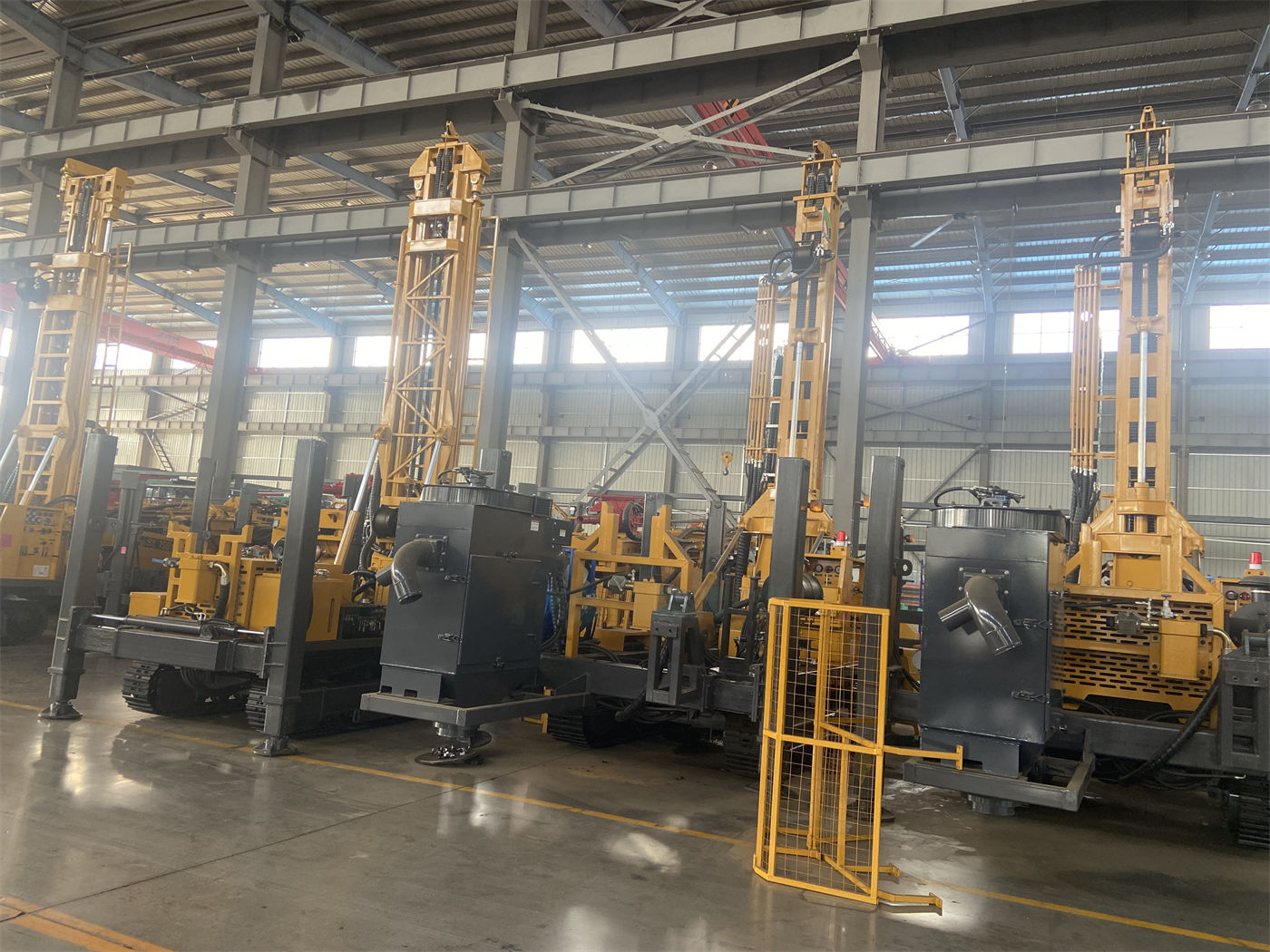
It should be noted that the information also cautions that if abnormal resistance is encountered during pull-out, the hole should first be cleaned and the condition of the borehole wall and drilling tools assessed, avoiding direct use of maximum hoisting capacity to force a solution. Hoisting capacity margin cannot replace judgment in handling downhole anomalies.
Matching Rotary Torque with Hole Diameter and Rock Type
The WR500S rotary system has a maximum torque of 11000 / 5500 N·m, corresponding to maximum rotary speeds of 75 / 150 r/min; the low-speed high-torque condition is suitable for large hole diameters, hard rock and higher loads. If the completion hole diameter of this water supply well is large, or if a high proportion of hard rock must be penetrated, the torque of the lower-tier rig may be tight in hard rock sections; in that case the value of a higher-tier rig lies not only in drilling depth but in whether the torque range can cover large hole diameters and hard rock sections. The WR500S has a drilling diameter range of 105–400 mm; the planned hole diameter should be placed within this range during judgment, rather than comparing drilling depth alone.
Process Differences Brought by Mast Type and Drill Pipe Length
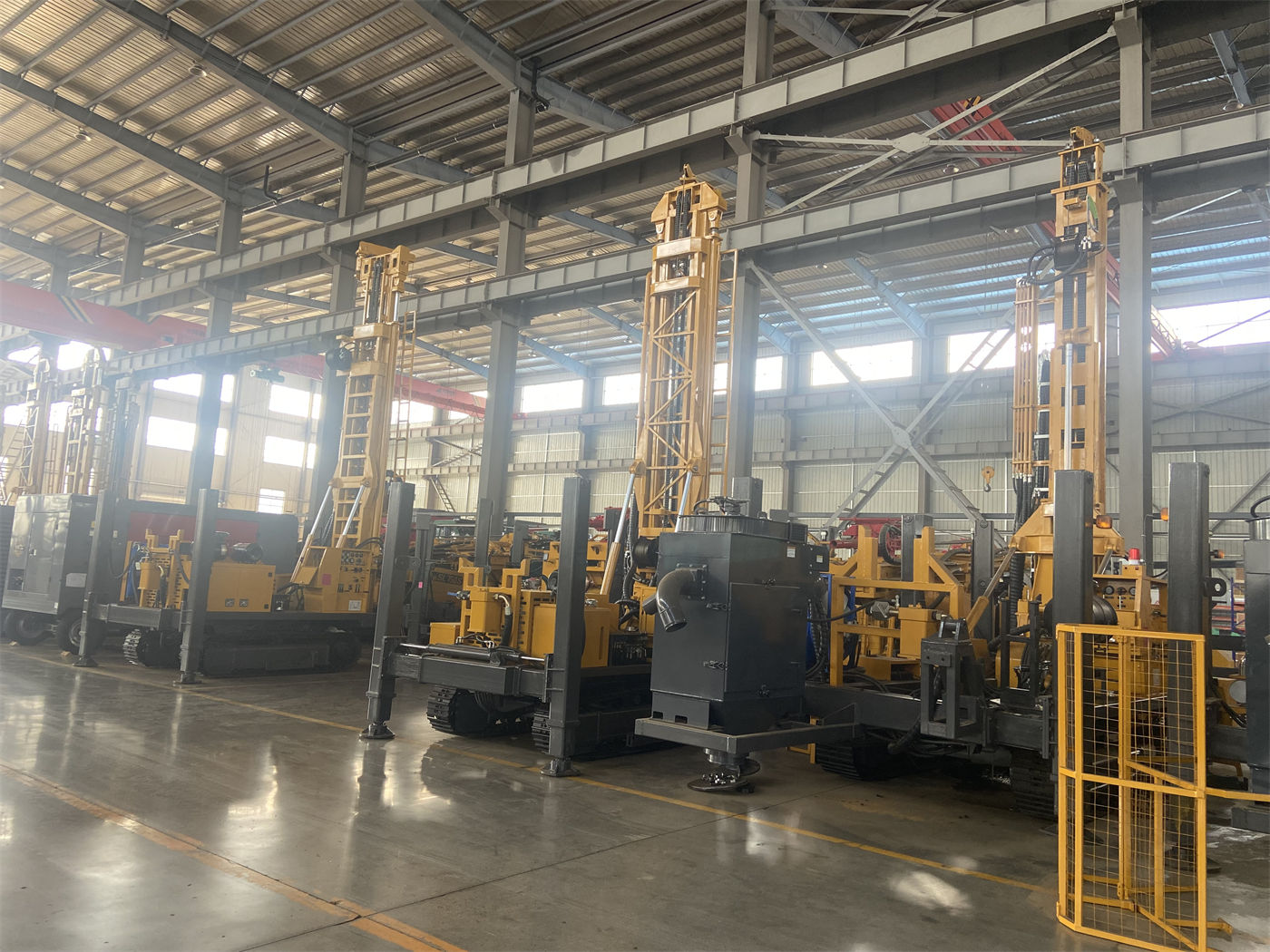
The WR500S uses a telescopic mast, which can shorten the equipment's overall dimensions in transport condition and, once deployed on site, supports continuous operation with 6 m drill pipes. For 500-meter-class hole depths, reducing the number of pipe connections can lower auxiliary time. If the lower-tier rig uses shorter drill pipes or a fixed mast, pipe connections are more frequent, and process continuity in deep hole sections becomes more frequent. Whether this constitutes a reason to upgrade depends on whether the well depth actually falls in the range requiring frequent pipe connections, and on the site's requirements for construction pace.
Supporting Conditions for Air Supply and Circulation Process
The WR500S supports DTH down-the-hole drilling and mud rotary drilling; pneumatic DTH drilling recommends a working air pressure of 1.2–3.5 MPa and an air consumption of 16–55 m³/min. The information clearly states that when hole diameter increases, rock formation hardens, hole depth increases or altitude rises, the requirement for air compressor displacement will be higher, and air compressor selection should consider both pressure and flow. Therefore, upgrading the rig does not automatically mean the well can be constructed smoothly—whether the air compressor can match is a supporting condition that must be verified in parallel in the upgrade decision. If the on-site air compressor capacity is insufficient, the drilling depth and torque of a higher-tier rig cannot be brought into play either.
Putting These Conditions Back into a Single Decision Table
| Decision Item | Cases with a Stronger Upgrade Tendency | Cases Requiring Further Verification |
|---|---|---|
| Target well depth | Close to the drilling depth limit of the lower-tier rig, and the aquifer location may be deeper | Aquifer depth not yet determined, only a rough estimate available |
| Completion hole diameter | Planned hole diameter close to the upper limit of the lower-tier rig's hole diameter range | Well casing and submersible pump specifications not yet decided |
| Drill string load | Estimated drill string weight at final depth close to the hoisting capacity of the lower-tier rig | Actual weight of drill pipe and casing not calculated |
| Rock type and torque | Hard rock or large-diameter hole sections account for a relatively high proportion | Formation column data incomplete |
| Air supply support | Hole depth and diameter require a simultaneous increase in air compressor displacement | Pressure and flow of existing air compressor unknown |
| Mobilization and setup | Site can accommodate the mast deployment and outrigger layout of a larger-tier rig | Road width limits, height limits and ground bearing capacity not confirmed |
The purpose of this table is not to give a one-size-fits-all conclusion, but to pull "upgrading" back from a single-item drilling depth comparison to a simultaneous check of multiple conditions. Only when most decision items fall on the left side is a higher-tier rig more likely to correspond to actual operational requirements; if most fall on the right side, completing the information first is more meaningful than directly comparing prices.
Two Supporting Aspects in the WR500S Information Worth Considering Together
First, outriggers and site stability. The WR500S is configured with 1.6 m hydraulic outriggers for equipment leveling and stable support; the information states that additional pads should be added on soft ground to prevent settlement after long-term loading of the outriggers. This means that even if an upgrade is decided, site conditions must be implemented in parallel; otherwise mast loading and hole deviation control will still be affected.
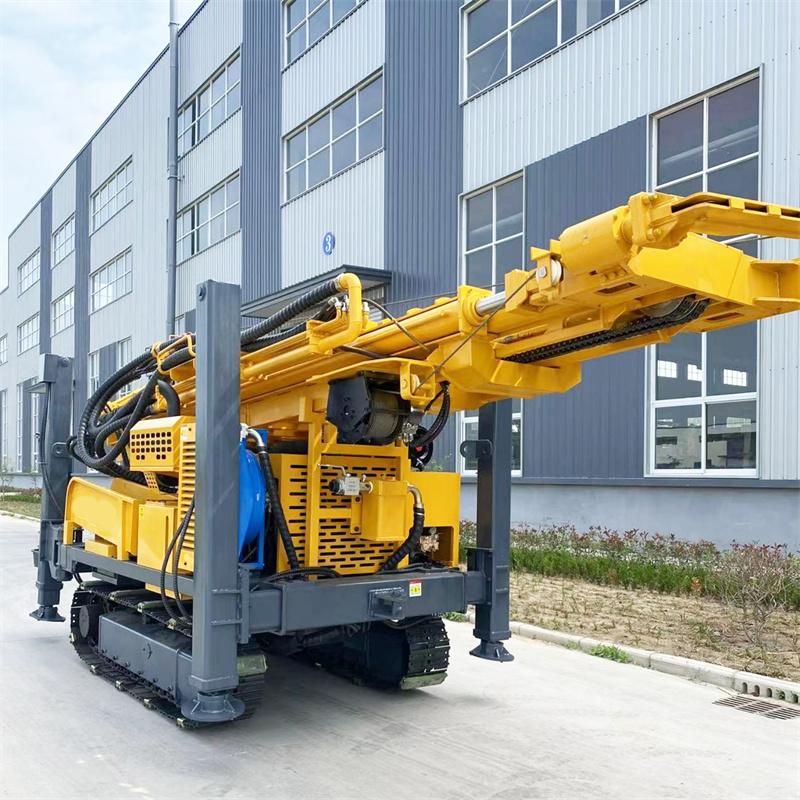
Second, overall transport conditions. The WR500S has an overall weight of approximately 10.6 T and overall dimensions of approximately 6.52 × 1.85 × 2.51 m; during transport, a flatbed truck must be arranged according to vehicle load capacity, road width limits and height limits. Higher-tier rigs usually have additional requirements for transport and setup; when judging whether to upgrade, the access route and site space should be included, rather than looking only at drilling capability.
When There Is No Need to Rush an Upgrade
- The target aquifer depth clearly falls within the coverage of the lower-tier rig, and the final hole diameter is not close to the upper limit.
- The formation is mainly soil, sand and weathered layers, with a low proportion of hard rock sections and no prominent torque requirement.
- The existing air compressor displacement and pressure can already match the planned hole diameter and depth, with no need to replace the air supply equipment at the same time.
- Site space, road conditions and relocation frequency impose additional constraints on a larger-tier rig.
These situations only indicate that the reasons for upgrading are insufficient; they do not mean the lower-tier rig is necessarily suitable. The specific decision should still be based on on-site hydrogeology and the well completion design.
Matters Still Requiring On-Site Confirmation
This article is compiled based on publicly available WR500S information and does not involve specific project cases. When actually judging whether a water supply well warrants a higher-tier rig, at least several items still need to be confirmed at the project level: the accurate depth and yield of the target aquifer, the well structure and filter pipe and water shut-off design, the wall protection method for the upper loose layer, the actual pressure and displacement of the existing air compressor, and the equipment access road and site bearing capacity. Formation parameters and well completion results not given in the information cannot be inferred solely from equipment parameters.