












For a water supply well planned to a depth of 300 to 400 meters, equipment inquiries often raise the question of whether the lifting force is sufficient. The difficulty with this question is that lifting force is not an independent specification: the same 22T lifting force, paired with 6-meter drill pipes versus 3-meter drill pipes, results in different actual tripping rhythms; in intact rock formations and fractured zones, the situations where the drill string encounters resistance also differ. To judge whether the lifting force is sufficient, it must first be placed back into the specific operational steps of medium-deep water well construction.
Lifting force mainly handles three things in water well drilling
The lifting force of a water well drilling rig is essentially how much upward pull the hook or power head can apply to the drill string. In 400-meter-level medium-deep construction, this pull is mainly used in three places: lifting the drill string during tripping, handling casing, and dealing with downhole anomalies. These three tasks have different requirements for lifting force and cannot simply be summarized as "the larger the tonnage, the safer."
Tripping: drill string weight increases linearly with hole depth
As hole depth increases, the weight of drill pipes, joints, and bottom hole tools continuously accumulates. Estimated with 6-meter drill pipes and the recommended diameter of 89/102 mm, at a hole depth of 400 meters the drill string weight is already a non-negligible load. The lifting force must first cover this weight and leave a certain margin to cope with borehole wall friction. If the lifting force only barely equals the drill string weight, once diameter reduction or block falling is encountered during tripping out, the operational margin is very limited.
Casing handling: weight is concentrated and the running process is irreversible
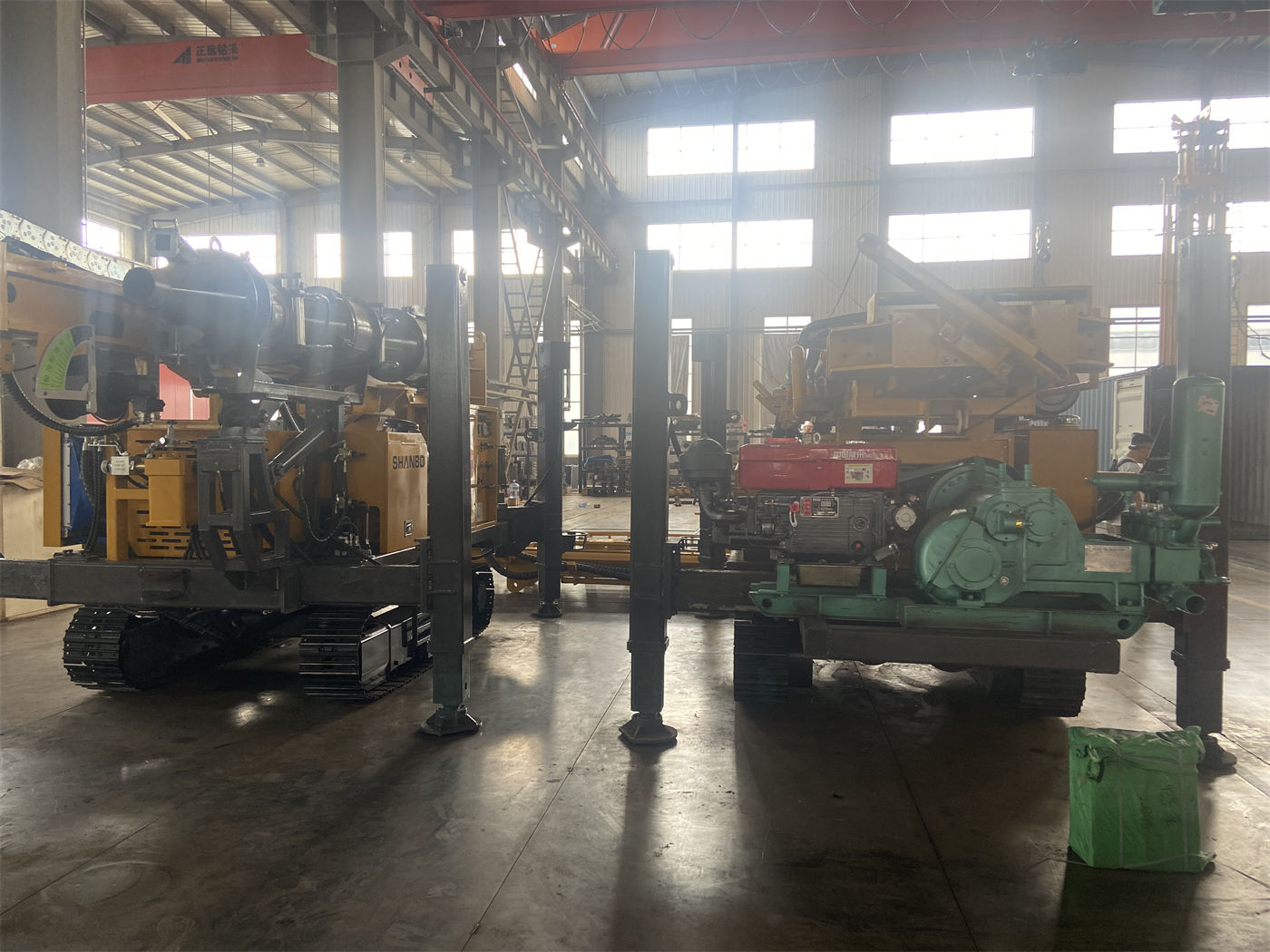
During the well completion stage of a water well, casing needs to be run. The weight of the casing is concentrated in a single running process, and if problems occur after running, handling is far more difficult than with drill pipes. The lifting force needs to cover the weight of a single joint or section of casing, while also coordinating with the auxiliary winch to move and connect casing tools. The auxiliary winch lifting force of the WR400QS is 1.5 T, which can be used for moving on-site accessories such as down-the-hole hammers, drill pipes, and casing tools, but the lifting of the casing body still relies on the main lifting system.
Downhole anomalies: lifting force is a means, not a solution
When stuck pipe, diameter reduction, or borehole wall block falling occurs, lifting force is often used as a means to "pull it out." However, the documentation clearly indicates that in such situations, priority should still be given to solving the problem through hole cleaning and process adjustments, rather than simply relying on maximum lifting force to pull forcefully. This point is easily overlooked during selection: the greater the lifting force, the more clearly it should be understood that it corresponds to the margin for normal tripping, not the ability to handle downhole accidents.
What 22T lifting force corresponds to in 400-meter-level water well construction
The WR400QS documentation shows that this model has a maximum drilling depth of 400 m, a drilling diameter of 105–325 mm, a lifting force of 22 T, and supports 6 m drill pipes. Putting these values together, it can be seen that the 22T lifting force corresponds to a conventional operational combination for medium-deep water wells.
- Matching relationship between drilling depth and lifting force: At a 400-meter-level hole depth, the 22T lifting force leaves a margin for drill string weight and borehole wall friction, representing an upper-middle lifting capacity configuration among equipment of this class.
- Impact of 6-meter drill pipes: Longer drill pipes reduce the number of connections, and the drill string length for a single trip is longer, which correspondingly raises the requirement for stable continuous output of lifting force.
- Coordination with dual-condition rotation: The 8000/4000 N·m dual-condition rotation corresponds to maximum speeds of 75/150 r/min. Low speed and high torque are suitable for large diameters and hard rock, where the drill string load is also greater, and the lifting force needs to be judged in coordination with the rotation condition.
Whether the lifting force is sufficient also depends on these supporting conditions
Lifting force is part of the overall machine capability, and looking at this value alone cannot answer "whether it is sufficient." The following conditions directly affect how the lifting force performs in actual construction.
Matching of mast and drill pipe length
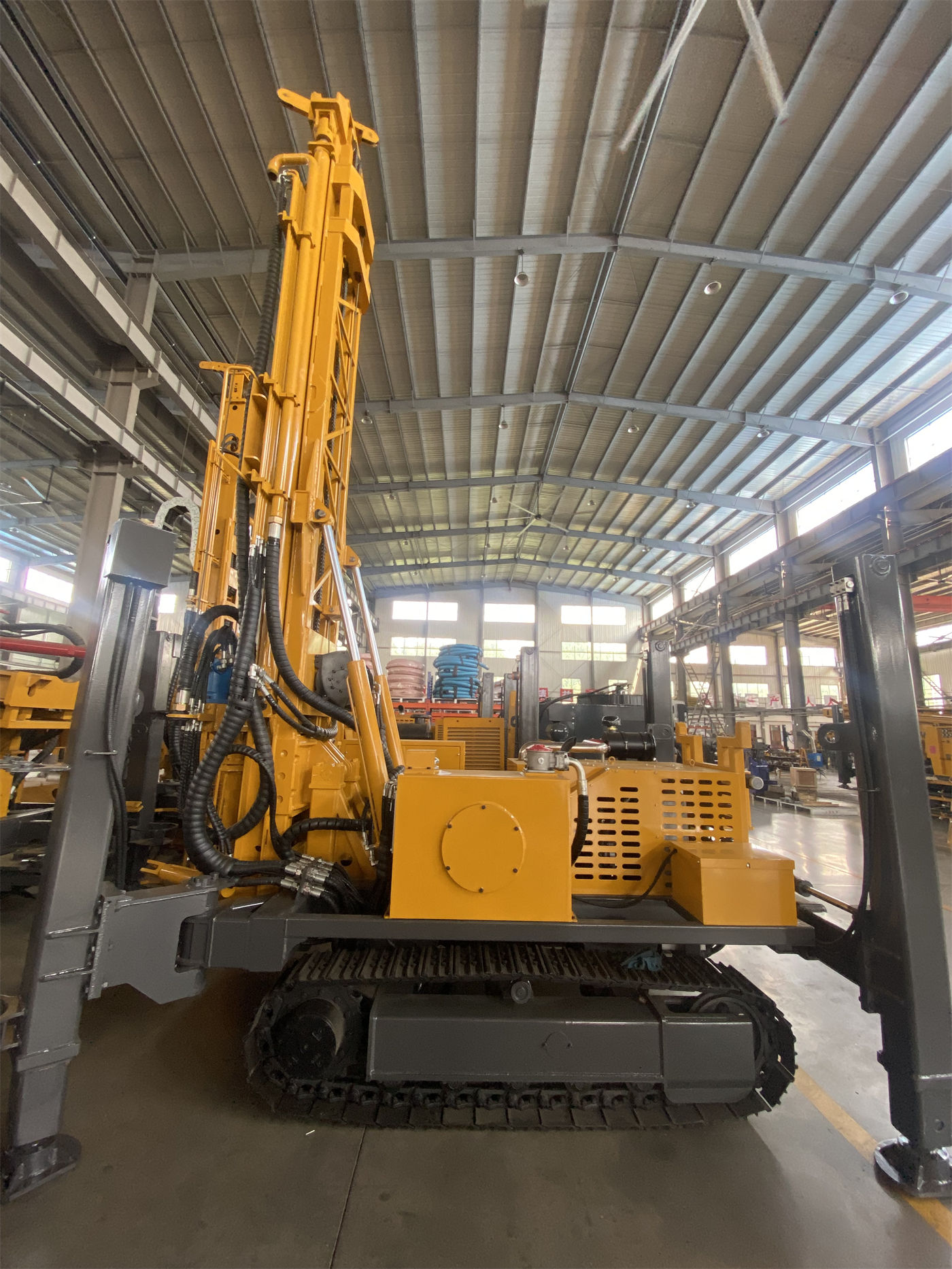
6-meter drill pipes require sufficient tripping space in the mast. If the effective stroke of the mast does not match the drill pipe length, the advantage of longer drill pipes in reducing connections cannot be realized, and the rhythm of using the lifting force will also be disrupted. During selection, drill pipe length, mast type, and lifting force need to be checked together.
Drilling diameter and drill string assembly
The drilling diameter range of 105–325 mm is relatively wide. When drilling with large diameters, the drill string assembly is heavier, and borehole wall friction may also be greater. If the project's final hole diameter tends toward the upper limit of the range, the lifting force margin needs to be re-evaluated and cannot directly apply experience from small and medium diameters.
Formation conditions and borehole wall stability
Fractured zones and fissured formations may cause block falling and stuck pipe. At this time, the lifting force faces not the normal drill string weight but additional resistance. The documentation recommends reducing the penetration rate, maintaining hole cleaning, and using auxiliary measures such as foam and casing as appropriate in such formations. The magnitude of the lifting force cannot replace these process adjustments.
Outrigger stability and ground bearing capacity
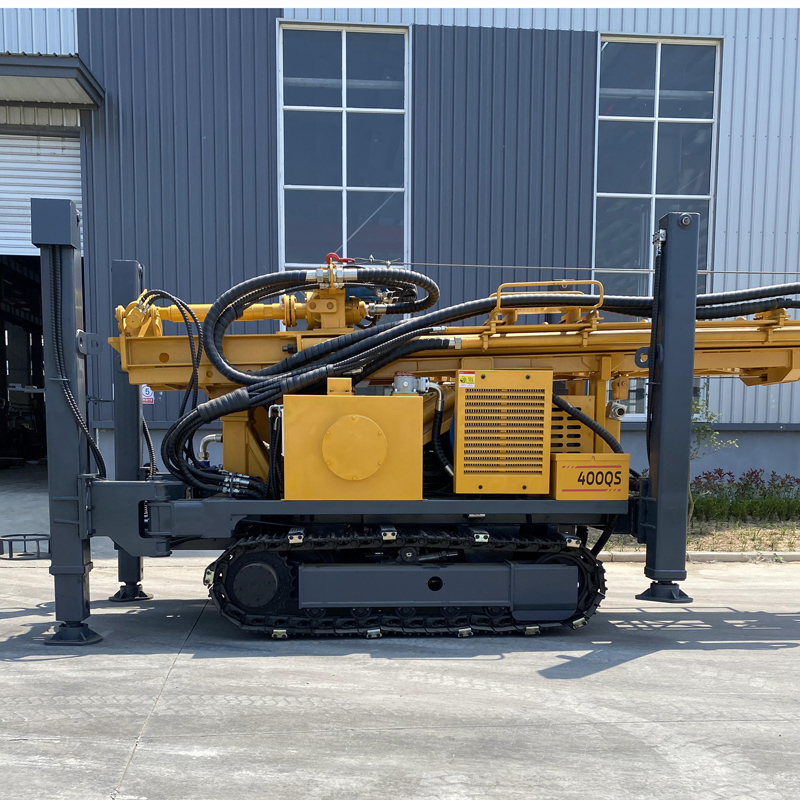
The WR400QS is equipped with 1.6 m stroke hydraulic outriggers, and the overall machine weight is 8.6 T. When the lifting force is applied, stable support of the entire machine is a prerequisite. On soft ground, pads need to be used to ensure even force on the outriggers and avoid long-term settlement causing the mast to tilt. If the site conditions are insufficient for stable support, the actual usable value of the lifting force will be reduced.
When the 22T lifting force may be insufficient
The documentation does not conclude that "22T lifting force is suitable for all 400-meter-level water wells." The following situations require separate confirmation:
- The final hole diameter remains close to the 325 mm upper limit for a long period, significantly increasing the weight and friction of the drill string assembly;
- Downhole diameter reduction and block falling occur frequently, requiring multiple treatments for drill string resistance;
- The casing section is long or the casing wall thickness is large, and the single lifting load exceeds conventional estimates;
- The drilling angle is not vertical, and the distribution of borehole wall friction differs from that of a vertical hole.
In these situations, whether the lifting force is sufficient cannot be judged solely by the number 22T; specific calculations need to be made based on the drill string assembly, casing specifications, and formation conditions.
Items to confirm before selection
The judgment of lifting force must ultimately return to project conditions. After preliminary screening against the WR400QS documentation, the following items still need to be confirmed with the manufacturer or project owner:
- The total weight of the drill string assembly corresponding to the target well depth, including drill pipes, joints, and bottom hole tools;
- The specifications, single-section length, and estimated total weight of the completion casing;
- Whether the expected final hole diameter is close to the 325 mm upper limit, and the friction conditions of the corresponding formation;
- The matching dimensions of the mast effective stroke and 6-meter drill pipes;
- Whether the on-site ground bearing capacity meets the requirements for supporting the 8.6 T overall machine plus outriggers.
Whether the lifting force is sufficient is not a question that can be answered separately from hole depth, hole diameter, drill string, and formation. The 22T lifting force has its corresponding operational range in the WR400QS 400-meter-level configuration, but this range needs to be confirmed by checking the above conditions item by item.