












When a piece of farmland or an orchard needs multiple irrigation wells drilled continuously, the construction crew is often not comparing how deep a single well can be drilled, but rather how much time in a day is spent connecting and disconnecting drill pipes. With similar well depths and similar hole diameters, equipment with more rod connections will have its auxiliary time amplified well by well. To judge whether a piece of equipment can reduce rod connections in a continuous irrigation well project, one must first break 'reducing rod connections' into several specific conditions, and then see which parameters in the equipment information correspond to them.
What Determines Rod Connection Frequency
The number of rod connections is not an independent indicator; it is affected by at least three things together: the length of a single drill pipe, the effective stroke of one feed of the mast, and the hole depth. Once the hole depth is fixed, the shorter the drill pipe and the shorter the stroke, the more connection and disconnection operations there are; if the drill pipe is lengthened but the mast stroke cannot keep up, the advantage of the long drill pipe cannot be realized. Therefore, discussing 'fewer rod connections' is actually discussing the coordination between drill pipe length and feed stroke.
- Drill pipe length determines how much hole depth a single pipe can cover;
- Single feed stroke determines how far the power head can advance without reversing;
- Only when the two match will the number of drill pipe connections and disconnections truly decrease.
Several Practical Constraints of Continuous Irrigation Well Projects
Irrigation well projects have several characteristics different from single water supply wells, and these characteristics affect equipment selection. First, well locations are scattered across large farmland, orchards, nurseries, or greenhouse parks, and the equipment must move between soft ground and field roads. Second, the depth of most single wells is within the conventional range and does not require ultra-deep holes, but the number of wells is large and the pace must be continuous. Third, the construction crew is often limited in manpower; if repetitive labor such as rod connection and pipe handling relies entirely on manpower, the intensity will accumulate.
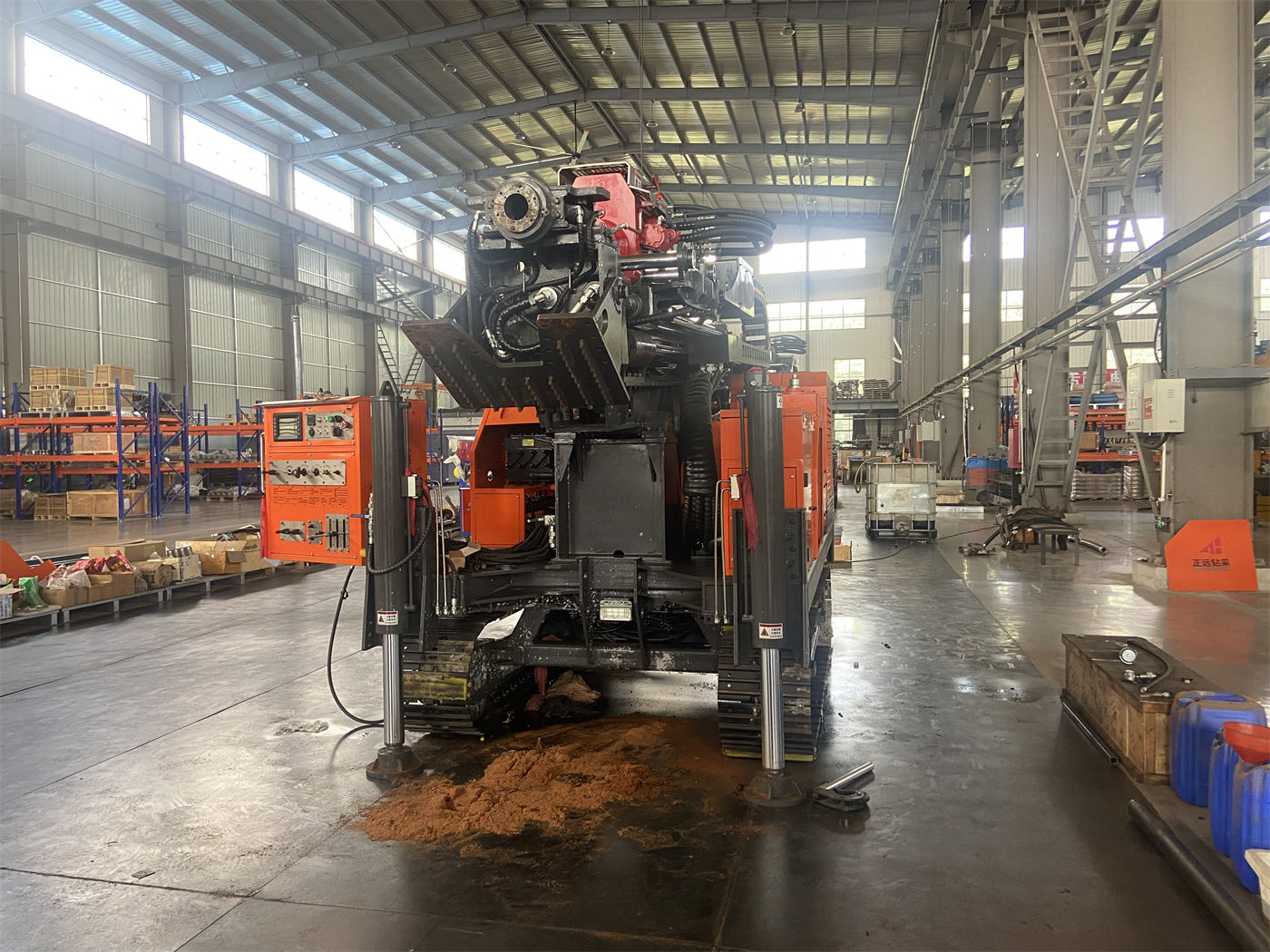
These constraints point in the same direction: reducing auxiliary actions per well is more practically meaningful than simply pursuing a certain ultimate capability. It should be noted that what is described here are the general operational characteristics of continuous irrigation wells, not the construction record of a specific project.
Several Items Directly Related to Rod Connections in WR300SEL Information
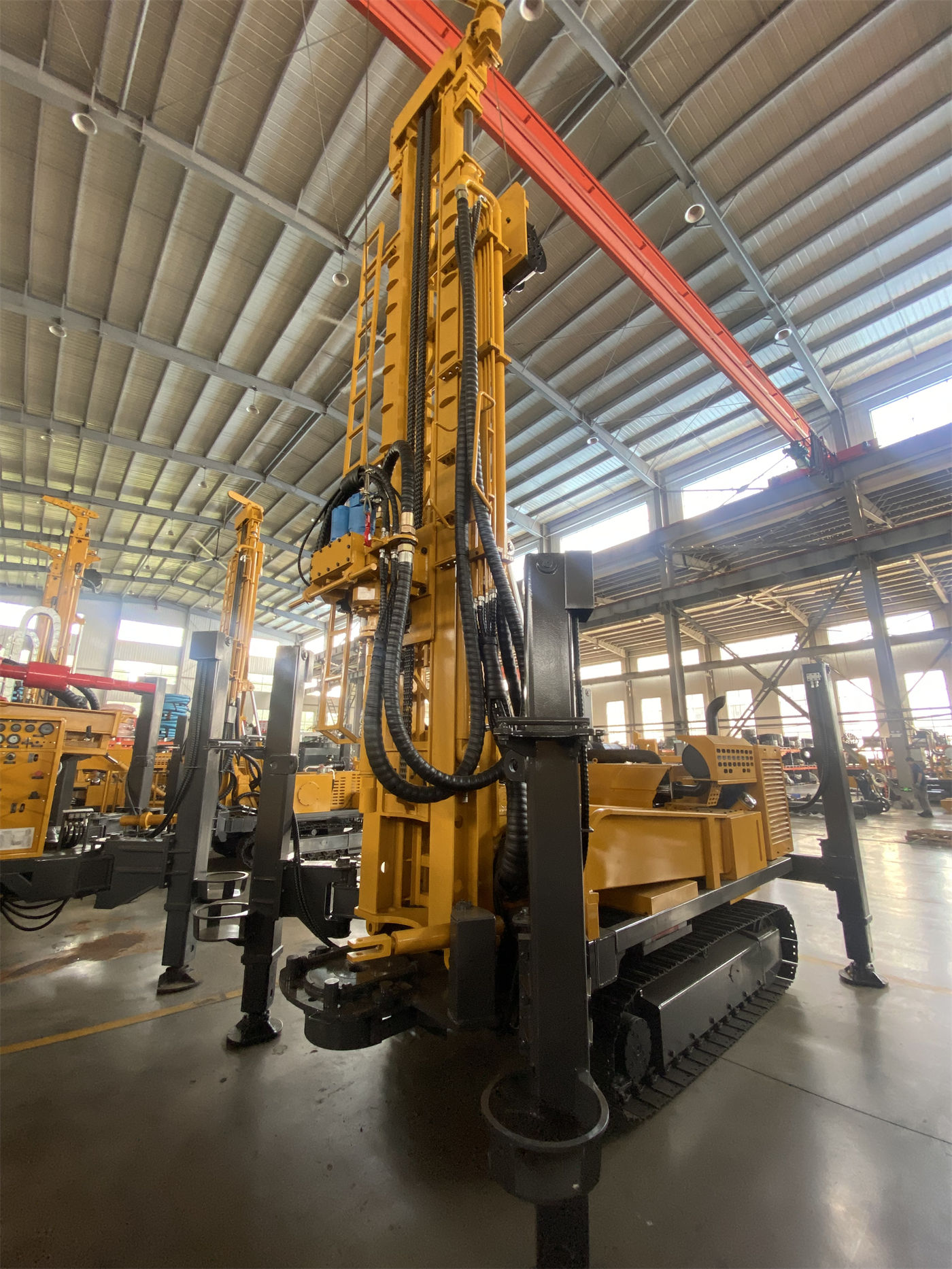
The WR300SEL is a 300-meter-class long-stroke crawler water well drilling rig. In the public information, the items directly related to 'reducing rod connections' are mainly two: first, a single feed length of 6.6 meters; second, compatibility with drill pipes up to 6 meters long. The information also states that this model is compatible with 1.5 m, 2 m, 3 m, and 6 m drill pipes, with drill pipe diameters of 76, 89, and 102 mm available. The maximum drilling depth is 300 m, and the drilling diameter is 140–325 mm.
Looking at these items together: a single feed of 6.6 m is longer than the single-pipe length of a 6 m drill pipe, meaning that when using 6 m drill pipes, the power head can advance one full drill pipe within one stroke, and rod connection actions are concentrated in the drill pipe connection step rather than being interrupted into multiple operations by the stroke. The positioning description of this model in the information is 'long stroke, fewer rod connections, higher continuous drilling efficiency,' which is consistent with the direction of reducing auxiliary time in continuous irrigation wells.
| Information Item | Value or Range | Corresponding Operational Issue |
|---|---|---|
| Single feed length | 6.6 m | Drilling length coverable by a single stroke of the power head |
| Compatible drill pipe length | 1.5–6 m | Shorten drill pipes when site conditions are constrained; use long drill pipes for continuous construction |
| Maximum drilling depth | 300 m | Covers the depth range of conventional irrigation wells |
| Drilling diameter | 140–325 mm | Corresponds to well completion diameter requirements |
| Lifting force | 18 T | Tripping of the drill string as hole depth increases |
Why Stroke and Drill Pipe Must Be Considered Together
Emphasizing only a long mast and large stroke can easily lead to overlooking the drill pipe configuration. If 3 m drill pipes are used on site for transportation or site reasons, even if the equipment stroke is 6.6 m, a single drill pipe is only 3 m, and the number of rod connections is still calculated at one pipe per 3 m. Conversely, 6 m drill pipes themselves also require the mast to have sufficient unfolding space and tripping height. The WR300SEL information clearly states that a single feed of 6.6 m can directly use drill pipes up to 6 m long; this combination is where it differs from standard-stroke models. However, this is a condition at the equipment configuration level; whether 6 m drill pipes can actually be used still depends on site clearance and transportation arrangements.
Other Supporting Conditions Brought by the Long Stroke
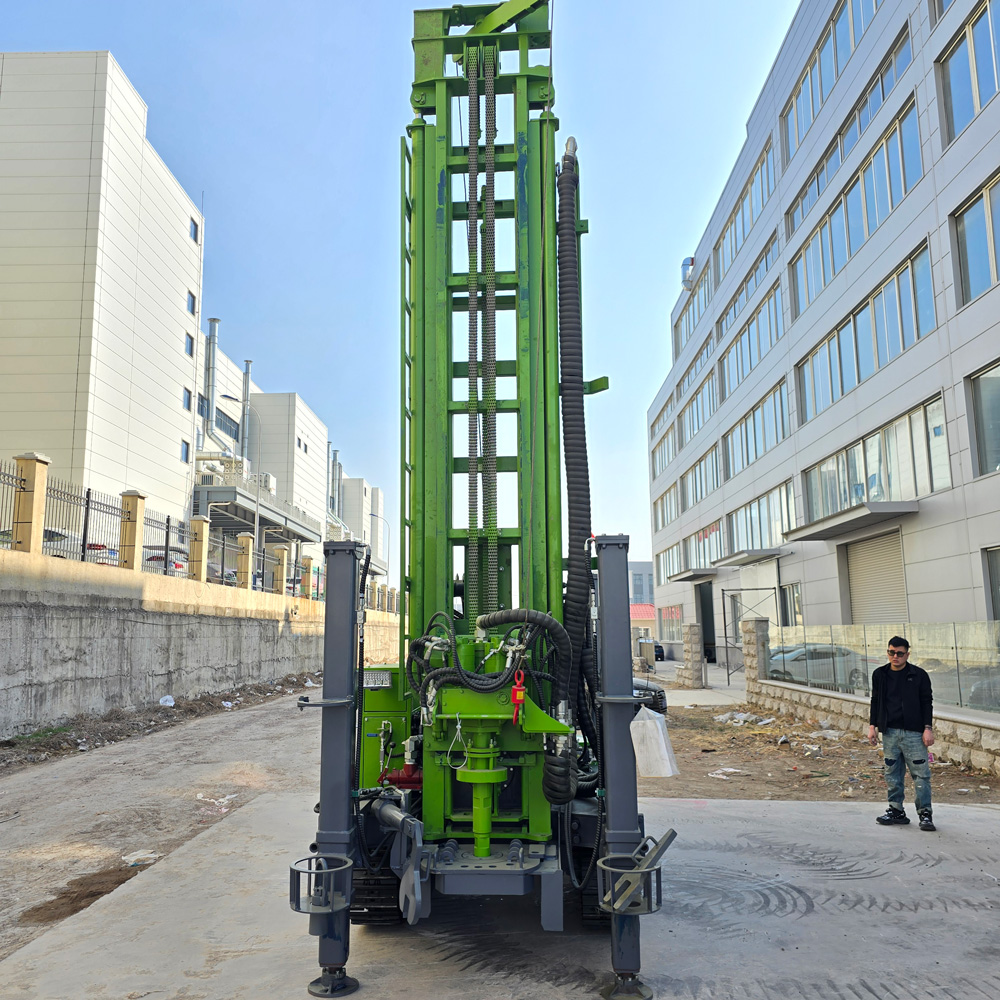
Reducing rod connections is not without cost. The information gives several usage notes for the long-stroke version: the long-stroke mast and 6 m drill pipes impose higher requirements on site clearance, drill pipe handling, and equipment stability. Before drilling, the mast unfolding space, ground bearing capacity, and outrigger loading must be confirmed, and lateral forces must be avoided when using long drill pipes. The reference weight of the whole machine is about 8 tons, and the overall dimensions are about 5900×1850×2200 mm. Before transportation, the vehicle length, loading fixation points, and site turning space must be confirmed. These conditions can usually be met in relatively open places such as farmland and orchards, but they still need to be implemented project by project.
In addition, the information gives a rotary torque of 5700–7500 N·m and a rotary speed of 40–70 r/min, which can be used with a down-the-hole hammer for drilling in weathered rock, limestone, sandstone, granite, and other formations; for pneumatic down-the-hole drilling, the reference working pressure is 1.7–3.0 MPa, and the air consumption is 17–36 m³/min, so the air compressor must simultaneously meet the pressure and displacement requirements. If there is a relatively thick loose layer in the upper part of an irrigation well project, the information mentions that mud, casing, or other hole-stabilizing methods may be needed, and the mud pump and casing plan should be considered in advance during the supporting stage. These are conditions beyond reducing rod connections but equally affecting continuous construction.
Applicable Boundaries and Matters to Be Confirmed
The 300-meter-class drilling depth of the WR300SEL is suitable for a large number of conventional irrigation wells and rural water supply projects. However, if the planned well depth of a project clearly exceeds 300 m, or the well completion diameter exceeds the 140–325 mm range, the information for this equipment no longer covers it, and a separate judgment is required. Similarly, the advantage of the long stroke is mainly reflected in continuous drilling using 6 m drill pipes; if site conditions force the use of short drill pipes, this advantage will be diminished.
Information not provided in the materials includes: actual rod connection time savings under specific formations, number of wells completed per day, fuel consumption, and manpower configuration requirements. These cannot be inferred from the existing parameters and need to be confirmed separately at the project level in combination with the formation, drilling tools, and construction organization. Whether continuous irrigation wells are suitable for selecting long-stroke equipment ultimately depends on whether several conditions—well depth range, site clearance, transportation conditions, and construction crew organization—are all met at the same time.