












For the same water supply purpose, a well depth of 300 meters and a well depth of more than 1,000 meters present completely different downhole conditions and site organization for the equipment. Shallow water supply projects usually have smaller borehole diameters, lighter drill string loads and flexible relocation; deep-bore water wells, by contrast, must maintain construction continuity under longer drill strings, larger borehole diameters and more complex well completion structures. The equipment capability requirements of the two types of projects are not on the same order of magnitude. To judge which equipment level to use, one must first see which end the operational objective falls on.
Several Operating Conditions That Must First Be Distinguished Between the Two Types of Projects
The difference between deep-bore water wells and shallow water supply projects is not just the well depth figure. The following conditions widen the gap in equipment requirements:
- Well depth and drill string dead weight: The deeper the hole, the longer the drill string, the greater the load the hoisting system must bear during tripping, and the more auxiliary time is needed for making up and breaking out drill pipes.
- Completed well borehole diameter: When the water supply scale is large and the aquifer is deeply buried, the completed well borehole diameter is often larger, and the requirements for rotary torque, air compressor displacement and drilling tool specifications increase accordingly.
- Formation combination and wall protection: Once the upper loose layer of a deep well shrinks or collapses, subsequent deep construction will be affected, and the borehole wall stability requirements at the opening stage are higher.
- Site organization: Deep-bore projects have long construction cycles and many supporting tools, and equipment weight and overall dimensions impose additional constraints on transport and site layout.
Only when these conditions are superimposed do they constitute the actual basis for choosing the equipment level. Looking only at the single figure of well depth makes it easy to push shallow projects to an excessively high configuration and also easy to underestimate the difficulty of drill string control in deep-bore projects.
Deep-Bore Direction: Capability Correspondence of 1500-Meter-Class Equipment
When a project's well depth enters the kilometer range, the borehole diameter is relatively large, the formation is complex and the construction cycle is long, the equipment needs not only drilling depth margin but also hoisting capacity, rotary torque and drill pipe organization support. In the public information on the WR1500S, the following items are directly related to the operational needs of deep-bore water wells.
Drilling Depth and Borehole Diameter Coverage
The WR1500S has a maximum drilling depth of 1500 m and a borehole diameter of 105–1000 mm. For areas where shallow aquifers cannot meet demand and deep water layers are buried deep, the 1500-meter-class drilling depth provides margin in construction capability; the 105–1000 mm borehole diameter range covers conventional deep water wells, large-diameter groundwater wells and some mine dewatering and large engineering holes. The actual well depth and borehole diameter must still be determined based on hydrogeology, well completion design and drilling tool combinations, and the equipment upper limit cannot be directly taken as the project target.
Hoisting Force and Drill String Load
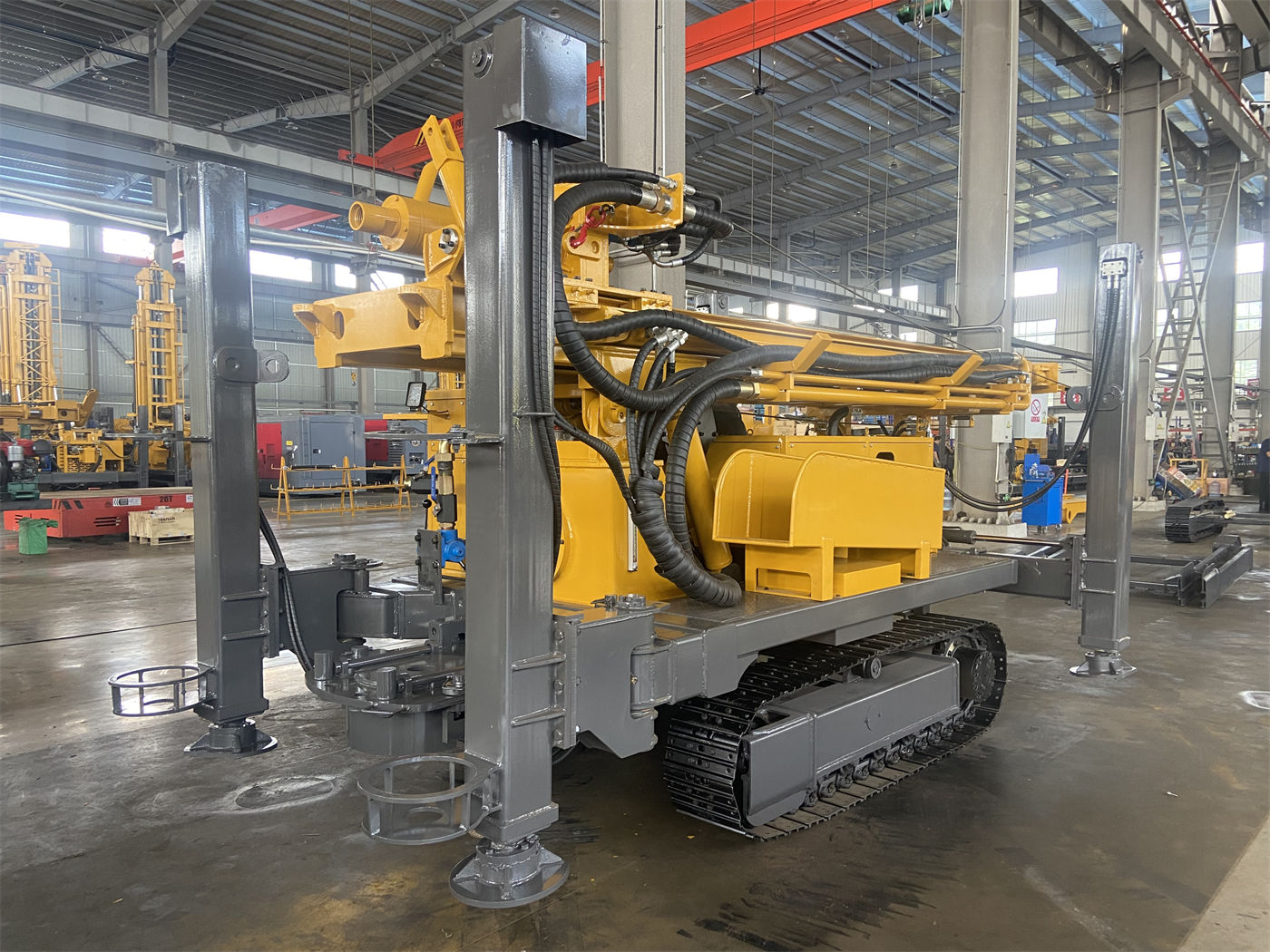
As borehole depth increases, drill string dead weight, borehole wall friction and casing weight all rise significantly. The WR1500S has a hoisting force of 80 T and a bit pressure of 16 T. Greater hoisting capacity facilitates normal tripping, drilling tool recovery and some large-specification casing operations, but when abnormal resistance is encountered, the priority should still be to clean the hole, hoist slowly and judge the downhole condition; hoisting force is a means, not a solution.
Rotary Torque and Working Condition Switching
The WR1500S has a maximum rotary torque of 31000 / 15500 N·m and a maximum rotary speed of 70 / 140 r/min. Low speed and high torque suit large-diameter, hard rock and high-friction conditions, while higher speed suits stable borehole sections with relatively low resistance. During deep-bore construction, adjustments should be made dynamically according to drill string load, cuttings return and drilling tool condition. The two torque values correspond to values under different working conditions, not a simple choice between two speed settings.
Drill Pipe Length and Rod Connection Frequency
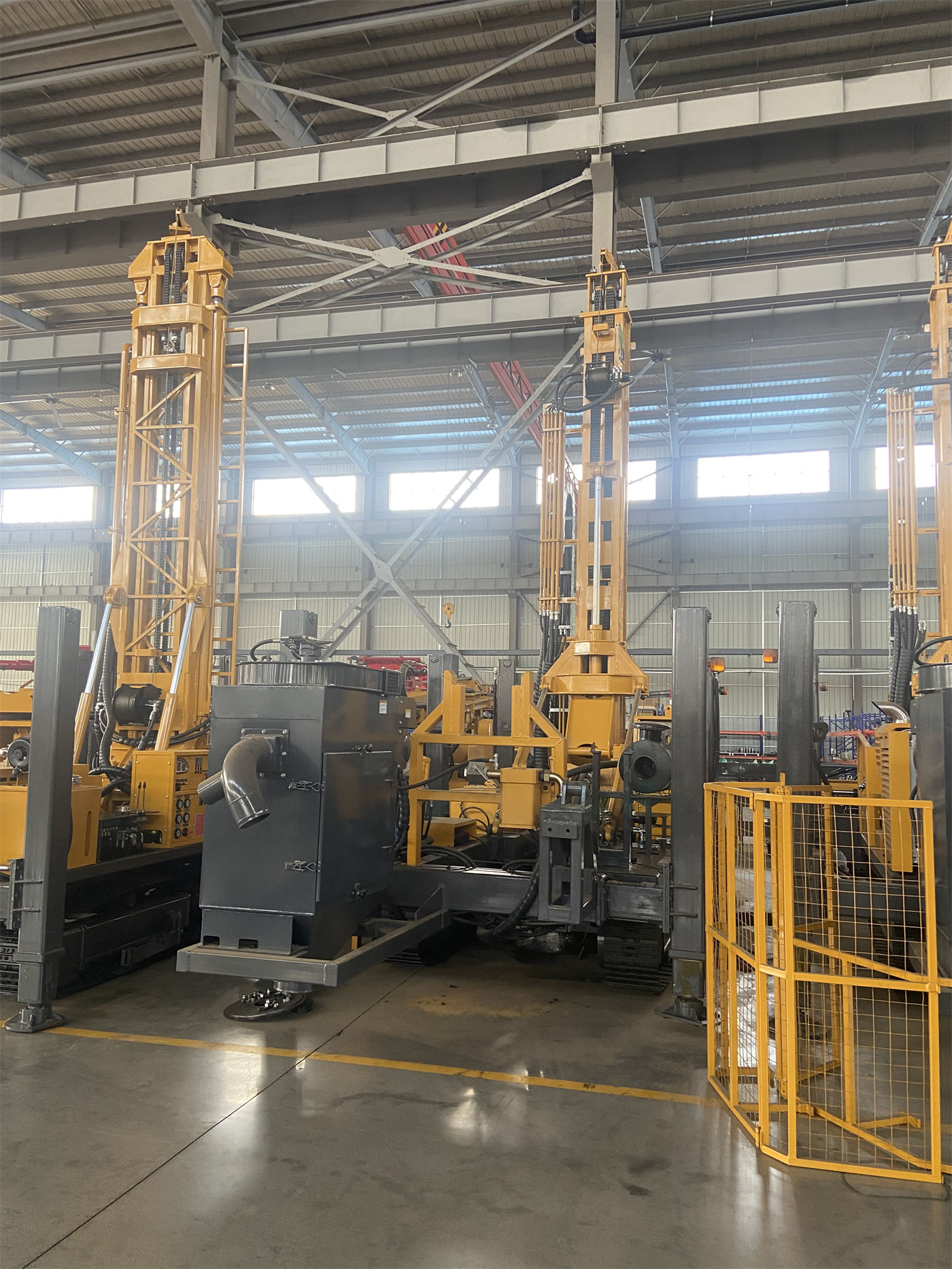
The equipment supports 9.6 m drill pipes, with recommended drill pipe diameters of 114 / 127 mm. For 1500-meter-class deep holes, using short drill pipes increases the number of make-up and break-out operations. Long drill pipes can reduce connection frequency, but the construction site must have sufficient operating space and standardized drill pipe handling organization; 9.6 m drill pipes usually require separate transport.
Mast Form and Transport Conditions
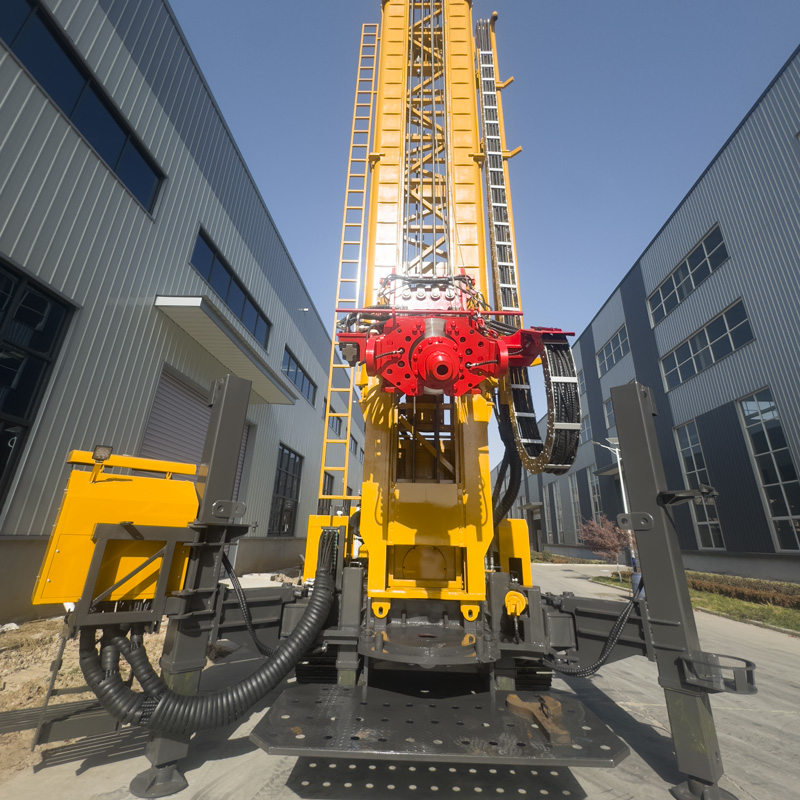
The WR1500S adopts a telescopic mast structure, which, while ensuring the working height for deep-bore construction, can improve the overall machine profile in transport condition. The overall weight is about 28 T and the overall dimensions are about 11.5 × 2.6 × 3.5 m. For cross-regional transport, the flatbed truck load capacity, road height limits, bridge load capacity and turning space must be confirmed in advance. A telescopic mast helps reduce the transport difficulty caused by a fixed long mast, but it does not mean that transport and site planning can be simplified.
Air Supply and Drilling Process
When DTH hammer drilling is used, the recommended working air pressure is 1.65–8 MPa and the air consumption is 16–120 m³/min. 1500-meter-class deep-bore and large-diameter hard rock projects have very high requirements for air compressor displacement, and both pressure and displacement must simultaneously meet the needs of the DTH hammer and downhole cuttings removal. For soil layers, clay, sand layers and gravel layers, mud rotary drilling, casing or other wall protection methods can be used, and DTH drilling is switched to after entering the rock formation. Water inflow from deep aquifers will change downhole cuttings removal and the working state of the DTH hammer. During construction, the depth of the main water-producing layers should be recorded, and air supply, hole cleaning and casing methods should be adjusted accordingly.
Shallow Water Supply Direction: Which Projects Do Not Need to Go Up to This Level
The well depth of shallow water supply projects is usually within several hundred meters, the borehole diameter is relatively conventional, the drill string load is light, and the relocation frequency may be higher. The core requirements of such projects for equipment are flexible site entry, simple rod connection organization and controllable supporting burden. The drilling depth margin, 80 T hoisting force and 28 T overall weight of 1500-meter-class equipment are difficult to convert into actual benefits in shallow projects; instead, they increase transport, site and supporting costs.
If the project well depth is several hundred meters, the borehole diameter is within the conventional range, the formation is mainly loose overburden and medium-hard rock, and the borehole positions are scattered with frequent relocation, then the choice of equipment level should focus more on overall machine dimensions, traveling and positioning capability and rod connection organization rather than the drilling depth upper limit. This is exactly the reverse of the judgment order for deep-bore projects.
Putting the Two Types of Requirements into the Same Judgment Table
| Judgment Item | Deep-Bore Water Well Project | Shallow Water Supply Project |
|---|---|---|
| Well depth | More than one kilometer, requiring drilling depth margin | Within several hundred meters, just covered by drilling depth |
| Borehole diameter | Relatively large, requiring matching torque and air supply | Conventional, with controllable supporting burden |
| Drill string load | High, hoisting force needs margin | Low, hoisting force requirements relatively relaxed |
| Transport and site | Heavy-load transport and site layout need advance planning | Flexible relocation takes priority |
| Construction cycle | Long, with many supporting tools | Relatively short, with simple organization |
This table is not a selection formula, but rather translates the differences between the two types of projects into checkable items. Actual projects often fall between the two ends, and the equipment level must be judged according to the few most demanding conditions rather than simply taking a middle value.
Supporting Conditions and Applicable Boundaries
When considering 1500-meter-class equipment such as the WR1500S, several supporting conditions need to be confirmed at the same time: whether the pressure and displacement of the air compressor can meet the needs of the DTH hammer and cuttings removal; whether there is sufficient space for the transport and on-site storage of drill pipes, casing and well completion materials; whether the site can bear the 28 T overall weight and deploy the outriggers; and whether the construction cycle is long enough to spread out the preparatory work for equipment entry and commissioning. If any one of these conditions does not hold, the actual usability of the equipment will be affected.
Conversely, if the project well depth and borehole diameter clearly fall within the shallow water supply range, a higher-level equipment should not be selected merely because it has "greater drilling depth margin." The choice of equipment level serves the operational objective; bigger is not always safer.
Matters Still to Be Confirmed
This article explains the capability correspondence of deep-bore water well projects based on public information about the WR1500S, but whether it applies to a specific project still requires verification of hydrogeological data, well completion design, formation combination and on-site transport conditions. The equipment's maximum drilling depth, borehole diameter and torque are capability upper limits; actual construction results are affected by geological conditions, downhole tools and operating methods and should be based on on-site working conditions. The judgment of equipment level for shallow water supply projects likewise needs to be confirmed based on specific well depth, borehole diameter and relocation arrangements, and conclusions should not be drawn directly from the comparison table in this article alone.