












The term "split-portable" appears frequently in geological exploration equipment literature, but what truly needs to be assessed is two things: what transport units the equipment is divided into, and what procedures must be completed at the borehole collar to restore the drilling state. If one looks only at the total machine weight without considering the heaviest unit, or only at whether the equipment can be split without asking whether the site has lifting points and an assembly platform, it is easy to understand "portability" as a vague selling point.
Using the public information on the CR600P as a thread, this article places the split structure back into the access and setup scenario of roadless borehole sites in mountainous areas, explaining what site conditions correspond to the division of transport units and the assembly procedures, and which figures should be checked at the selection stage.
First, clarify which phase of work "portability" rewrites
The working sequence of an integrated crawler-mounted rig is typically: the equipment travels by itself or on a flatbed truck to near the borehole collar, then deploys, levels, and starts drilling. A split-type rig changes this sequence to: first transport modules in batches to the area around the borehole collar, then assemble and install, and then start drilling. In other words, portability is not demonstrated during the drilling phase but during the access and hole-to-hole transfer phases.
This gives rise to at least three groups of assessment items: the number of modules and individual component weights determine how many people are needed and whether lifting equipment is required; the dimensions after splitting determine what kind of road can be used and whether forest paths can be navigated; the number of assembly procedures and connection methods determine how much auxiliary time is needed after reaching the borehole collar. The CR600P documentation describes these contents as "the power, hydraulic, operating, mud, and drilling mechanisms are split into multiple functional units that can be independently transported," and provides reference weights for some modules, which can be used to compare against site conditions.
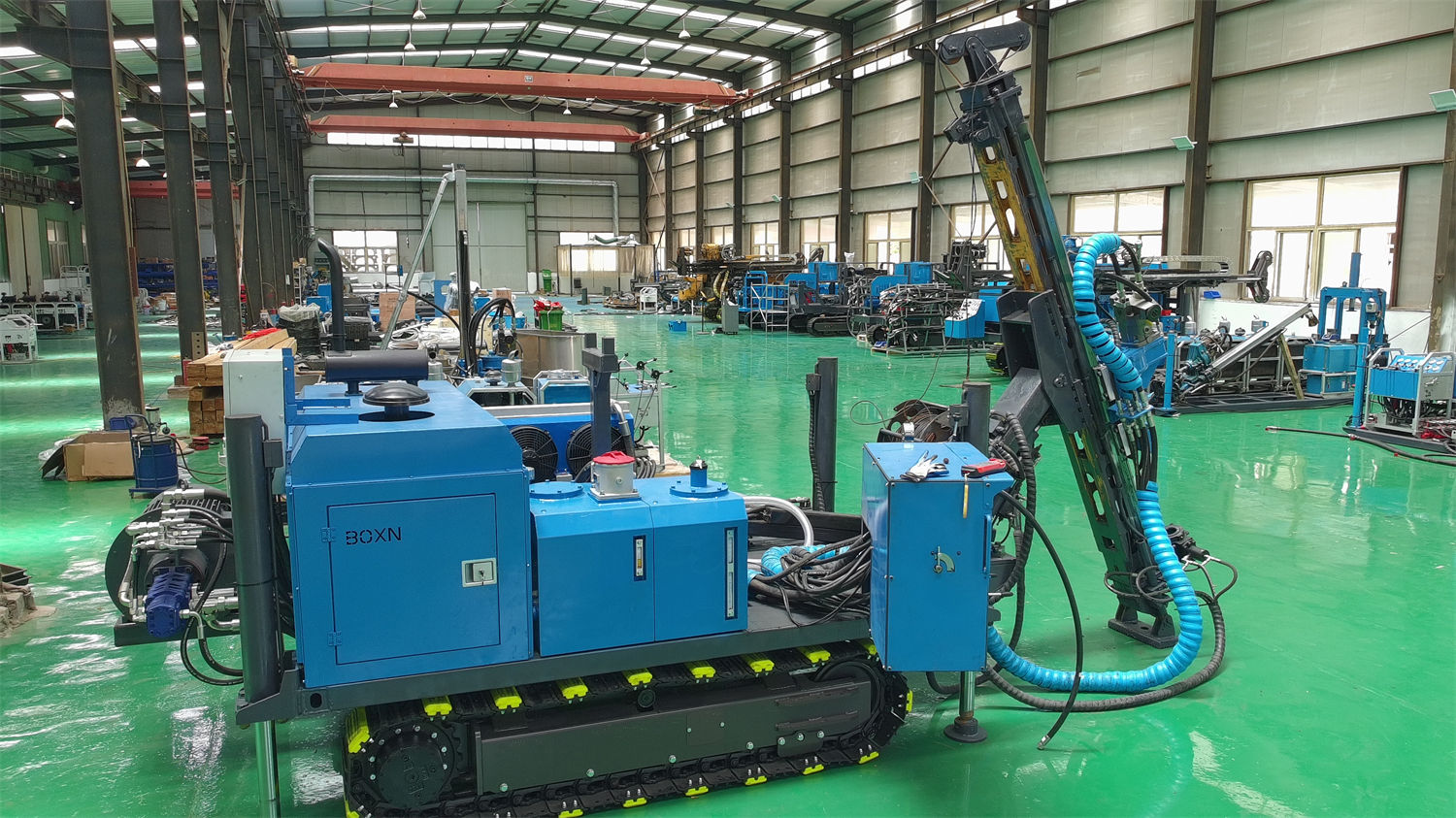
How transport units are divided determines how equipment is moved up the mountain
The module reference weights listed in the CR600P documentation are: power unit 180–260 kg, operating unit 125 kg, hydraulic oil unit (including oil) 140 kg, mud unit 86 kg, and total weight 1200 kg. The significance of these figures is not their ranking but the range of handling methods corresponding to each individual weight: modules in the hundred-kilogram class typically require multiple people working together or the aid of simple hoisting and slope-climbing tools, while a power unit exceeding two hundred kilograms relies more on on-site winches, cableways, or small transport vehicles.
What the documentation does not provide includes: how many pieces the drilling mechanism itself is split into, the dimensions of each piece, and the number of available quick-change connectors. This information should be separately requested from the manufacturer at the selection stage in the form of a module list and outline drawings, especially for forest or woodland borehole sites, where passage clearance often becomes a limiting condition earlier than weight.
| Modules listed in the documentation | Reference weight | Corresponding handling conditions to confirm |
|---|---|---|
| Power unit | 180–260 kg | Whether winches, cableways, or small transport vehicles are needed; slope gradient and turning radius along the climbing route |
| Operating unit | 125 kg | Manpower configuration for multi-person carrying and footholds along the route |
| Hydraulic oil unit (including oil) | 140 kg | Whether oil is transported with the unit; leak prevention and securing methods en route |
| Mud unit | 86 kg | Transport arrangements for mud materials and mixing water up the mountain |
This table covers only the modules for which weights are explicitly given in the documentation. There is still a difference between the total machine weight of 1200 kg and the figures above, meaning the remaining structural components also require separate calculation of transport methods; one should not assume that "the heaviest is the power unit."
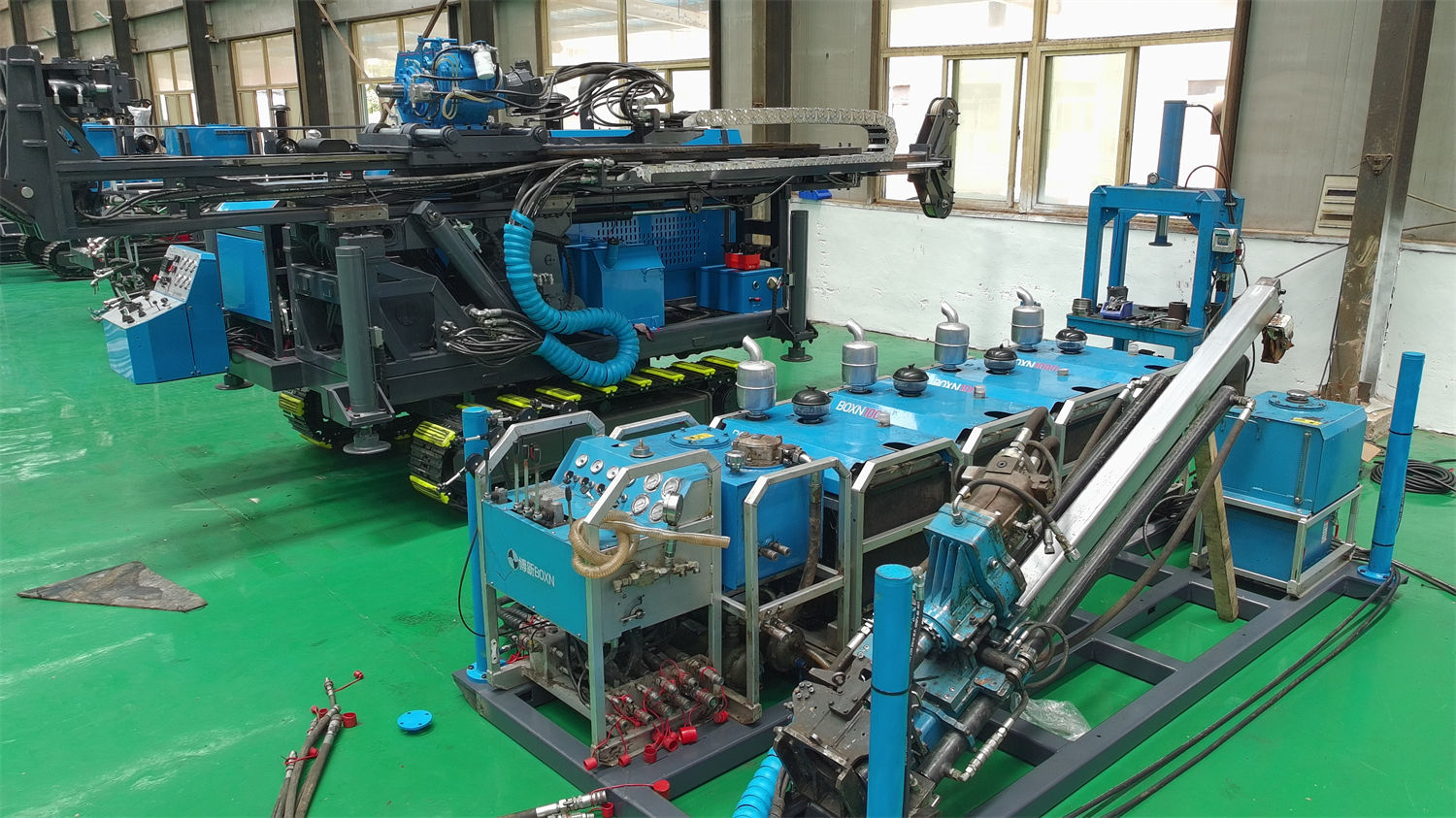
What on-site preparations do the assembly procedures correspond to
The documentation states that assembly can be completed in approximately 30 minutes at the fastest, while noting that actual time required will be affected by transport distance, site conditions, operator proficiency, and supporting equipment. This statement should be understood as a procedural organization target rather than a time commitment for all sites. The assembly stage involves at least module positioning, connection of hydraulic lines and quick-change connectors, docking of electrical and operating circuits, and stable adjustment of the drill mast and base, each of which requires usable level area near the borehole collar.
For construction organization, there are two preparation items that are easily overlooked. The first is the borehole collar platform dimensions: after modules arrive in batches, they need temporary placement and then piece-by-piece assembly; the platform must accommodate not only the final complete machine but also the placement and operator space during assembly. The second is tools and checklists: the documentation's precautions mention that after assembly is completed, quick-change connectors, hydraulic lines, and structural connections should be checked, and that before inclined hole construction, the stability of the drill mast and base must be ensured. These check items need to be written into the hole-to-hole transfer procedure; otherwise, "quick disassembly and assembly" can only shorten connection time, not guarantee connection quality.
Under what conditions do these features constitute an advantage
The value of a split structure depends on borehole site conditions. If the borehole site is beside an existing road with an open platform, an integrated rig actually saves several disassembly and assembly procedures; if borehole sites are distributed in forest areas, hillsides, or valleys where large vehicles cannot reach directly, the role of the split structure becomes apparent. The documentation explicitly states that this equipment is intended for mountainous areas, forest areas, and roadless mining districts, and mentions that it can reduce road construction and lower dependence on large vehicles; this corresponds to the choice of access organization method, not an improvement in drilling capability.
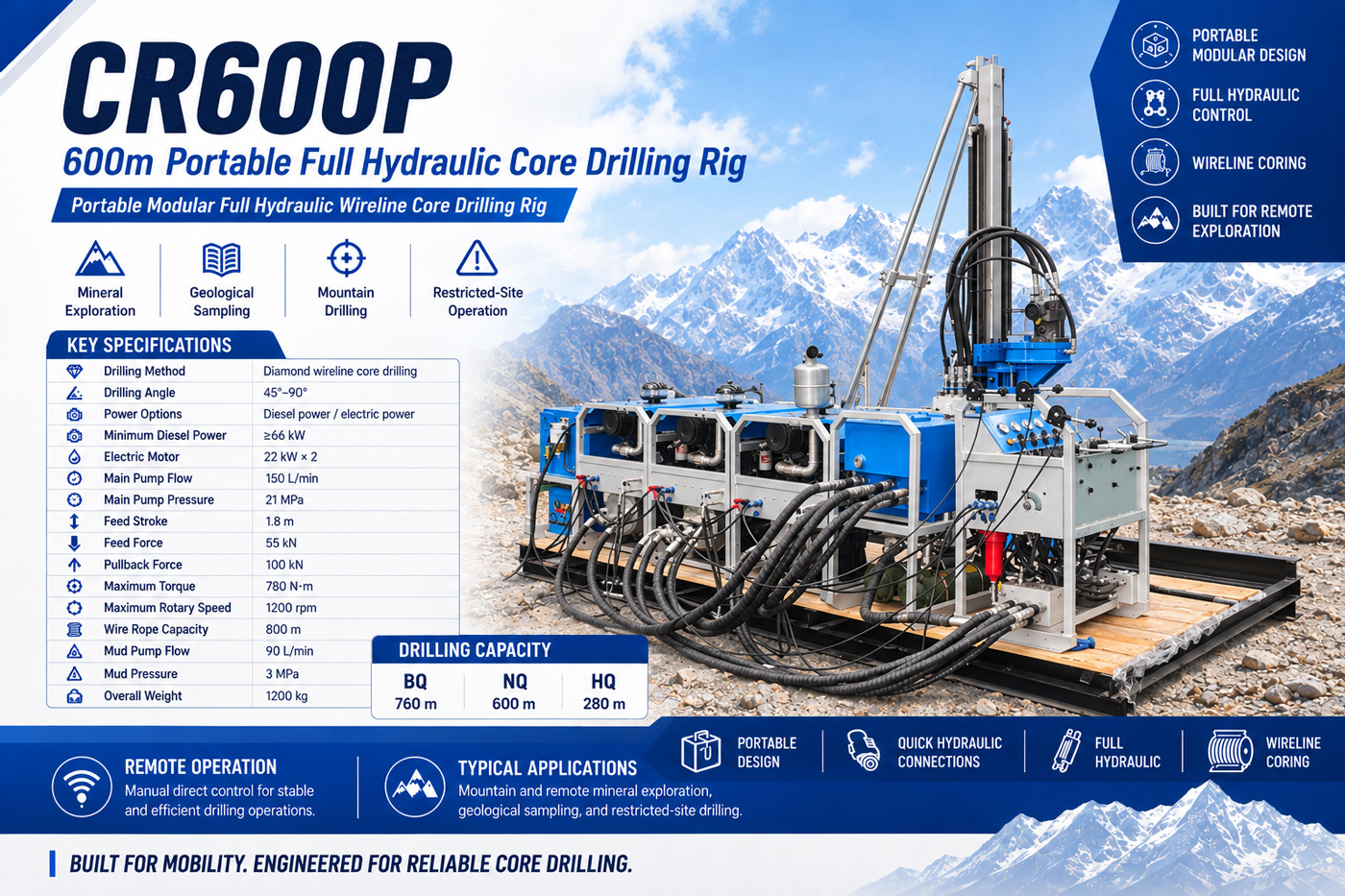
In terms of in-hole capability, the CR600P has a reference drilling depth of 760 m for BQ, 600 m for NQ, and 280 m for HQ, a drilling angle of 45°–90°, a power head maximum rotation speed of 1200 rpm and maximum torque of 780 N·m, a thrust force of 55 kN and pull force of 100 kN, a winch rope capacity of 800 m (6 mm wire rope), a mud pump flow rate of 90 L/min and pressure of 3 MPa, and power options of ≥66 kW diesel engine or 22 kW×2 electric motor. These parameters indicate that it is intended for medium-depth core drilling tasks and, together with the split transport method, forms a solution: first solve the problem of reaching the borehole collar, then arrange core drilling according to NQ or BQ diameter. They do not indicate actual drilling speed or core recovery performance in any specific formation; that must be determined by on-site conditions.
Applicable boundaries and matters still requiring confirmation
Treating split-portability as "able to enter any mountainous area" is an understanding that should be avoided. The documentation itself also suggests that before construction, slope stability, rockfall, rainy-season roads, manual carrying routes, and temporary platform load-bearing capacity should still be assessed. The following items should be implemented one by one at the planning stage; matters not covered by the documentation need to be confirmed with the manufacturer or through on-site surveys:
- Module list and individual component dimensions, especially the largest piece after the drilling mechanism is split;
- Manual carrying distance, slope, and obstacles along the route from the vehicle-accessible location to the borehole collar;
- Area and load-bearing capacity of the temporary borehole collar platform, and whether it can accommodate batch placement and assembly;
- Number of personnel required for disassembly and assembly, their proficiency, and whether lifting assistance is needed;
- Transport and storage methods for hydraulic oil and mud materials up the mountain;
- Stability treatment plan for the drill mast and base during inclined hole construction;
- Actual performance of assembly time after multiple hole-to-hole transfers should be based on on-site measured records; the shortest time in the documentation should not be directly cited as a planning basis.
If multiple items above cannot be implemented, the flexibility brought by the split structure will be offset by transport and assembly stages. Conversely, when borehole sites are scattered, road conditions are poor, and the project can organize the corresponding carrying manpower and auxiliary tools, this approach of exchanging transport unit division for access capability is worth prioritizing. Whether to ultimately select the CR600P still requires separate judgment based on planned hole depth, core diameter, and formation conditions.