












When an orebody has been preliminarily controlled and requires further verification at depth, the designed hole depth often rises to the kilometer level, and hole locations are frequently on slopes or in forest areas without existing roads. At this point, whether the equipment can reach that depth is usually not the only bottleneck. The questions that must be answered first are: whether the equipment can be broken down into transportable units to access the hole site, which procedures are required to resume drilling after arriving at the hole, and whether the planned inclined hole direction can be laid out on a limited platform. The conditional differences between integrated and modular configurations unfold from these three aspects.
The problem starts with site access conditions, not the maximum drilling depth
Drilling tasks in the deep resource control stage have two common prerequisites: first, hole locations are scattered in the mining area periphery or on mountain platforms; second, the designed depth of a single hole reaches the kilometer level. Deep-hole equipment has larger power and hydraulic systems. If transported as an integrated unit, the requirements for road width, curve radius, and lifting conditions will be higher. The modular approach is to break the equipment into multiple functional modules and bring them in batches according to on-site transport capacity, transferring the difficulty of transport to the assembly stage. Whether this transfer is worthwhile depends on whether the site can provide an assembly platform, lifting points, and sufficient preparation time.
The published data for the CR1200P gives reference module weights including 180–260 kg for the power unit, 160 kg for the operating unit, 160 kg for the hydraulic oil unit (including oil), and 210 kg for the mud unit, with an overall weight of 1880 kg. These figures can be used to evaluate individual handling methods, but they cannot replace item-by-item verification of the heaviest module, road gradient, and lifting points.
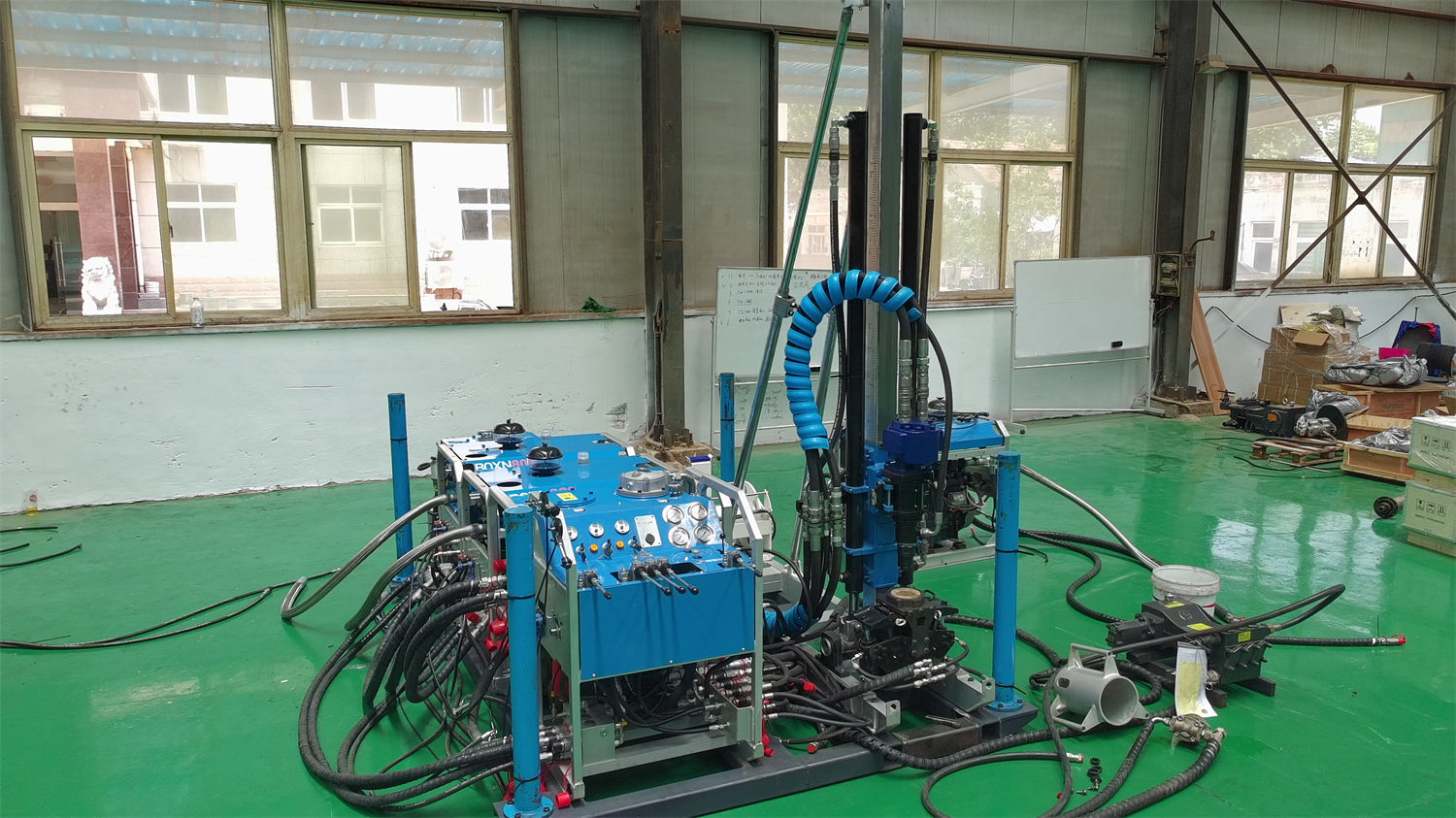
Which work stages are changed by modularization
The difference between integrated and modular configurations is not limited to transport; it also extends to assembly, inspection, disassembly, and relocation. The main stages involved in a modular solution are listed below in operational order for comparison with site conditions.
- Division of transport units: Whether the equipment can be moved in batches by module—power, operating, hydraulic oil, mud, and so on—depends on whether module weights match road access capacity. The data provides reference module weights but does not cover specific transport vehicles or gradient limits.
- Hole-site assembly: After module assembly, hydraulic interfaces and mechanical connections must be checked item by item; the data mentions this requirement in the construction precautions. The time and staffing required for assembly procedures must be arranged separately according to site conditions.
- Inclined hole layout: The CR1200P supports drilling angles of 45°–90°. Whether an inclined hole direction can be laid out on a limited platform also depends on platform dimensions and drill rod length. The data specifies applicable drill rod lengths of 1 m or 1.5 m, which is relevant to both the assembly site and the collar layout.
- Disassembly and relocation: A modular solution also requires disassembly and reassembly when changing holes. Projects with high relocation frequency need to include this procedure in construction planning.
Inclined hole direction enters the judgment—not just a single line of angle data
Holes in the deep resource control stage are often laid out obliquely along exploration line directions to control the deep extension of the orebody or structural connectivity. The CR1200P data gives a drilling angle range of 45°–90°, which means the equipment is capable of covering both inclined and vertical holes, but the angle range itself does not indicate whether a specific direction is feasible at a specific hole depth. Angle, hole depth, drill rod length, and platform conditions need to be considered together: inclined holes increase drill string loading and friction, and the deeper the hole, the higher the requirements for lifting force, torque, and downhole management. The 130 kN lifting force and 67 kN thrust in the data are equipment capability values and cannot be used to infer the actual performance of a specific inclined hole at 1200 m depth.
Correspondence between hole depth ratings and core diameters
The CR1200P reference drilling depths are rated by core diameter: BQ reference depth 1500 m, NQ reference depth 1200 m, and HQ reference depth 700 m. When selecting a core diameter in the deep resource control stage, the core specification and drill rod series should first be clarified, then compared with the reference depth for the corresponding rating. Treating the depth figure for one rating as the capability of the entire rig under all diameters is a common misreading of the data. In addition, the maximum applicable drill rod diameter is 114 mm and the chuck through-hole capacity is 54–127 mm. These parameters are related to the choice of drilling tool system, but the data does not provide a complete supporting list for each diameter; the actual configuration must be confirmed with the manufacturer.
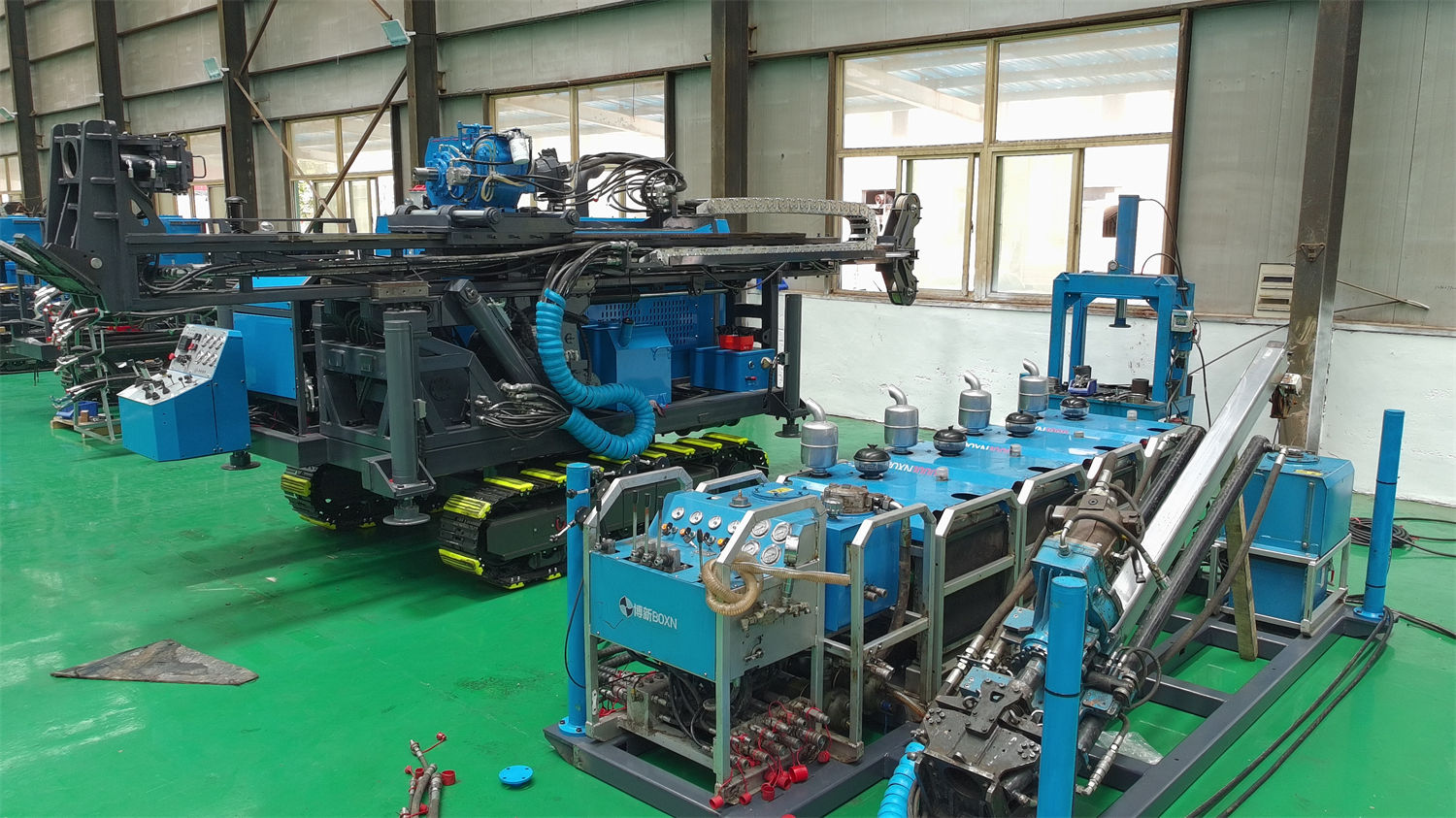
Supporting requirements of rotation, circulation, and hoisting for continuous deep-hole operation
Modularization solves the access problem, but the continuity of downhole procedures still depends on equipment capability. The following groups of data related to deep-hole operation are from the CR1200P documentation:
| Item | Data value | Corresponding operation stage |
|---|---|---|
| Maximum torque of power head | 1360 N·m | Adjust torque according to rock type and hole diameter at different deep-hole stages |
| Maximum speed of power head | 1500 rpm | Belongs to a different gear from torque; maximum values cannot be taken simultaneously |
| Lifting force / thrust | 130 kN / 67 kN | Used to judge downhole conditions when pulling resistance increases |
| Wireline winch rope capacity | 1400 m (6 mm wire rope) | Consider together with planned hole depth and number of inner tube lifts |
| Mud pump flow / pressure | 150 L/min / 7 MPa | Cuttings carrying, cooling, and wall protection in deep holes |
| Main pump flow / pressure | 250 L/min / 25 MPa | Hydraulic system load for continuous deep-hole operation |
The above values indicate that the equipment has a data basis for kilometer-level deep-hole operation, but the data also makes clear that in deep holes, controlling hole deviation, maintaining borehole wall stability, and reducing drill rod friction are more important than simply increasing lifting force. When pulling resistance continues to increase, circulation, pull-out inspection, or borehole wall treatment should be carried out as described in the data, rather than relying only on equipment capability values.
Power options and supply conditions in remote mining areas
The CR1200P can use diesel power, with a diesel engine power requirement of ≥147 kW; brands available include Kubota, Cummins, Yunnei, and Yuchai. It can also use a 30 kW × 4 electric motor combination. Remote field projects place more emphasis on independent power and fuel security, while fixed mine platforms with stable power supply can evaluate electric configurations. The choice of power form should be judged together with on-site power supply conditions, fuel supply distance, and maintenance capability. The data does not provide a cost or fuel consumption comparison between the two options.
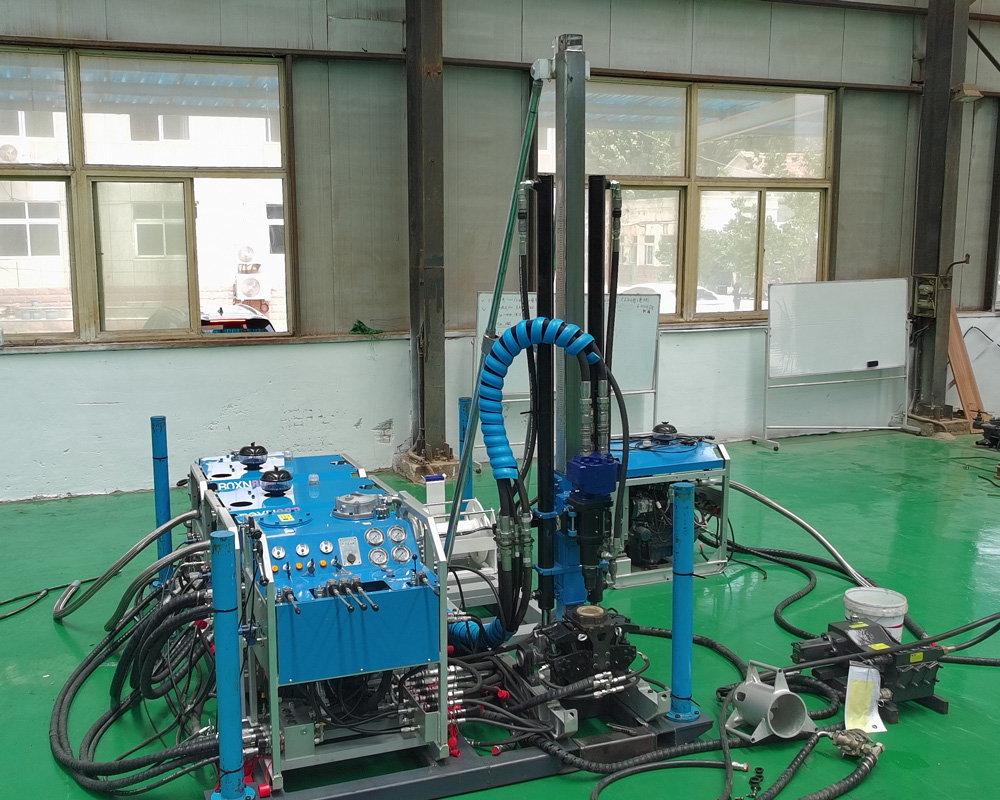
Applicable boundaries of the modular solution and items to be confirmed
The modular design corresponds to scenarios where large integrated rigs cannot reach the hole site through existing roads while the project still requires deep core drilling capability. However, modular does not mean access to any mountain terrain, nor does it mean the assembly workload disappears. The following items do not have complete answers in the data and need to be verified separately at the project level:
- Whether the width, gradient, and curve radius of on-site roads can accommodate the transport method for each module;
- Whether there is a platform area near the hole site sufficient for assembly and inclined hole layout;
- The organization of lifting points, water supply, power, and spare parts supply;
- Wall protection and casing plans under complex formations such as fractured zones and lost circulation layers;
- The supporting list of drill rods, casings, and wireline coring tools for specific core diameters.
The final choice between modular and integrated configurations depends on the balance among transport conditions, assembly conditions, and continuity of downhole procedures. The CR1200P data provides module weights, depth ratings, and main capability values for the modular solution, which can serve as a starting point for conditional judgment; whether a specific project can be implemented still must be determined after on-site verification.