












When a water well drilling rig moves between well sites in farmlands, village roads, and gravel areas, a wheeled chassis may encounter sinking, slipping, or unstable positioning. In such cases, switching the chassis to steel tracks is an option worth considering. However, replacing the chassis is not simply removing the old wheels and installing new tracks: whether the site conditions truly require tracks, whether the chassis can support the rig's total weight, and whether the mounting interfaces match—these three factors determine whether the replacement is feasible. Based on public information about the st1 steel track chassis, this article explains the assessment sequence and the items that still need confirmation.
Step 1: Look at the site first, not the tracks
Before switching to steel tracks, first clarify the ground types the rig typically travels on. If the working surface is mainly hardened village roads or flat farmland roads, a wheeled chassis usually offers sufficient mobility; switching to tracks would instead mean slower travel speed and the need for other transport methods for long-distance moves. Conversely, when well sites are often located on mud, sand, gravel, or uneven ground, wheeled chassis are prone to insufficient traction and sinking—this is the actual reason to consider tracks.
The st1 steel track chassis documentation lists applicable sites as mud, sand, gravel, and uneven construction sites. This description corresponds to the need for "equipment to move and support itself on unpaved ground," not "tracks are better than wheels on any ground." During assessment, the site can be divided into two categories: the travel route before the rig enters the well site, and the ground where the rig parks and supports itself after positioning. Tracks mainly improve the latter; the former still requires separate evaluation of transport methods.
Step 2: Verify total machine weight and mounting dimensions
Whether a track chassis can be used first depends on the rig's total weight and the chassis load capacity. The st1 documentation clearly states that the chassis must be confirmed based on the water well drilling rig model, total weight, chassis width, mounting dimensions, drive method, and construction environment; there are no unified fixed parameters. This means one cannot judge that a particular rig can be fitted based solely on the description "dedicated for water well drilling rigs."
Before purchase, the information to provide to the supplier should include at least:
- Rig model and total weight;
- Interface dimensions of the original chassis or mounting position;
- Planned drive method;
- Ground types of the main construction sites.
If any of these items is missing, chassis dimensions and interfaces can only remain at the estimation stage. The documentation also advises against direct replacement based solely on appearance or model; actual load capacity, dimensions, drive structure, and mounting interfaces should be subject to the final technical confirmation plan.
Step 3: See which on-site problems the track structure addresses
After the site and machine conditions initially match, examine how the features of the st1 steel track chassis correspond to the needs. The features listed in the documentation all point to the movement and support of water well drilling rigs on unpaved field sites:
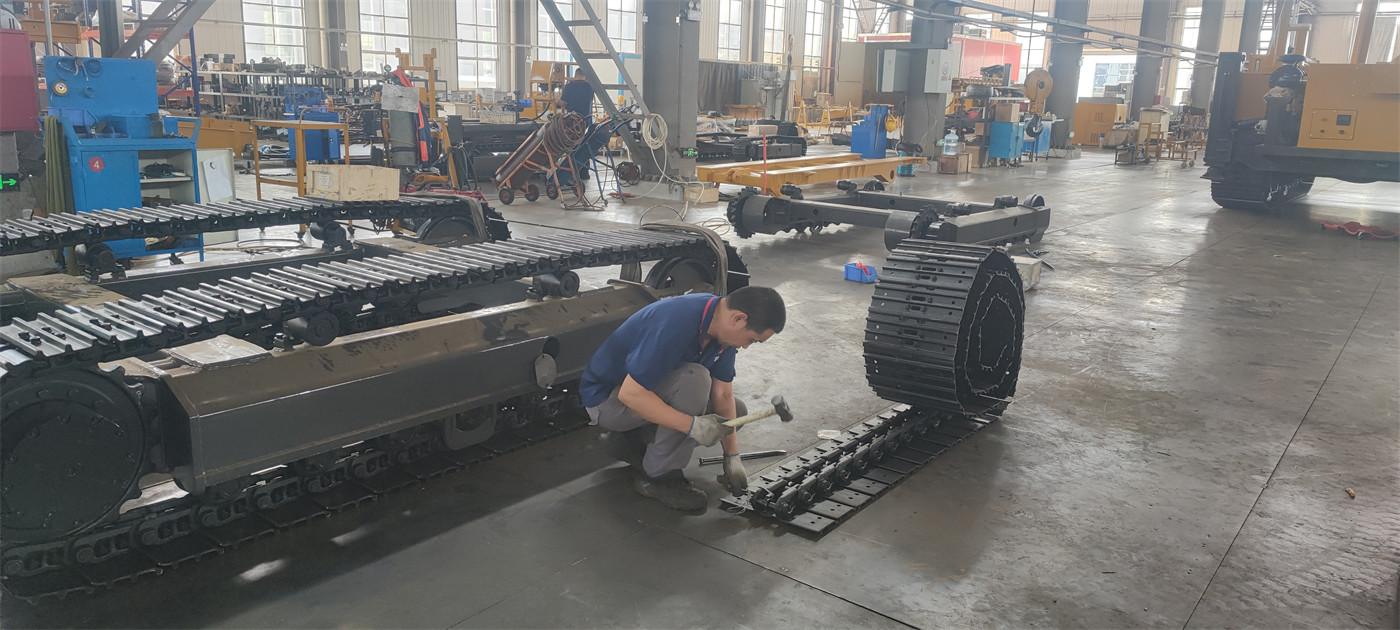
- Larger ground contact area: The track chassis has a larger ground contact area than ordinary wheeled structures, which helps distribute equipment weight and provides support during rig movement, positioning, and construction preparation.
- Adapts to complex ground: Steel tracks are suitable for mud, sandy soil, gravel roads, mining areas, and similar scenarios, directly addressing water well construction sites where wheeled chassis have difficulty passing.
- Steel structure: The documentation positions it as a chassis type suitable for long-term engineering operations and frequent movement and relocation.
These descriptions help determine whether the chassis type matches the site, but they cannot be used to infer load tonnage, travel speed, or gradeability, as these values are not provided in the documentation.
Applicable scenarios and situations to avoid
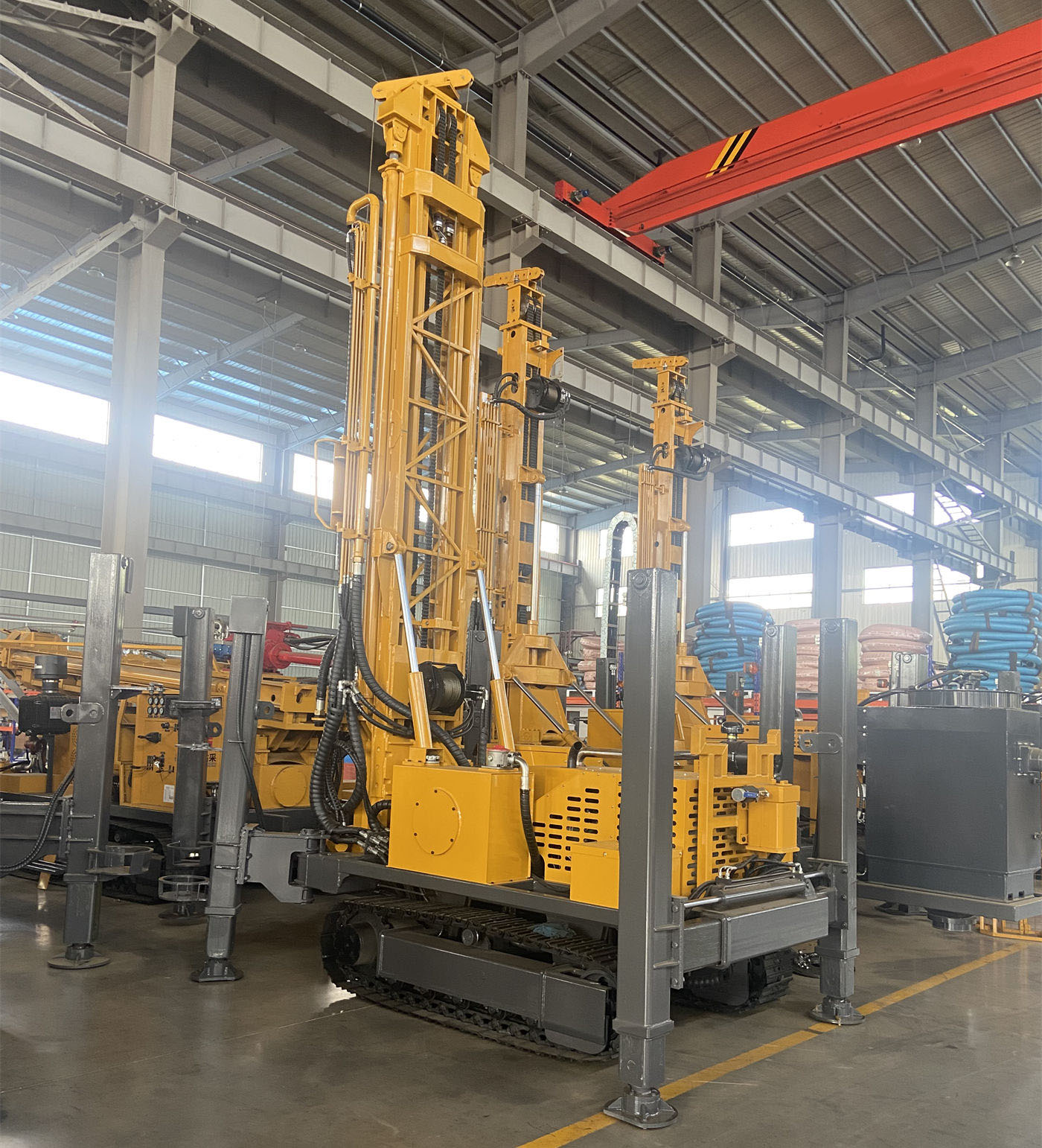
The st1 steel track chassis is primarily used for the travel and support of water well drilling rigs, with applications including agricultural irrigation wells, rural water supply wells, industrial water wells, geothermal wells, and other water well drilling equipment; the documentation also mentions that it can be used for some geological drilling rigs, down-the-hole drilling rigs, and engineering drilling equipment depending on the equipment structure. This indicates that it is positioned as a matching component, not a standalone machine.
The following situations require separate assessment before replacement:
- The rig needs long-distance road relocation: track chassis typically do not handle road travel, so transport methods must be arranged separately.
- The site is already hardened and requires ground protection: steel tracks exert different contact pressure on the ground than wheels, and whether their use is permitted must be confirmed with the site owner.
- The original rig chassis structure is special: whether mounting interfaces and drive methods can match can only be determined by the technical confirmation plan.
These are selection boundaries, not a rejection of the st1. The documentation itself does not provide solutions for road transport, ground protection, or special interfaces, which need to be confirmed separately based on project conditions.
Information to confirm before purchase
If both site and machine conditions point to steel tracks, the following information can be organized into a checklist before communicating with the supplier:
| Check item | Why it is needed |
|---|---|
| Rig model and total weight | To match chassis load capacity |
| Chassis mounting dimensions and interfaces | To confirm whether it can connect to the original rig structure |
| Drive method | Affects the choice of chassis drive structure |
| Main site ground types | To determine whether the track type corresponds to actual trafficability requirements |
Beyond the table, the relocation method should also be clarified: after the track chassis is in place, how the rig will be transported between job sites and who is responsible for loading and unloading. The documentation does not cover this supporting aspect, which needs to be arranged separately based on project transport conditions.
Items still requiring confirmation
The st1 steel track chassis does not have a unified fixed parameter table; load capacity, dimensions, drive structure, and mounting interfaces are all subject to the final technical confirmation plan. Therefore, this article can only provide an assessment sequence and cannot conclude that "a certain rig is definitely suitable for conversion." Before actual purchase, the rig information and site conditions must be submitted to the supplier for matching confirmation, and the connection method between chassis and rig, the source of travel drive, and the transport plan must be verified. Until these items are confirmed, the replacement plan remains in a to-be-confirmed status.