












When reading reverse circulation drill pipe data, outer diameter and wall thickness are often written as two adjacent rows and easily mistaken for the same type of dimensional information. In fact, these two rows answer different questions: outer diameter determines whether the pipe can "connect and fit" within the entire RC drill string system, while wall thickness mainly affects the pipe body strength and the cross-sectional conditions of the inner tube channel. If only one row is checked before purchasing or configuring the drill string, the constraints corresponding to the other row are easily overlooked.
First distinguish what the two rows of figures each answer
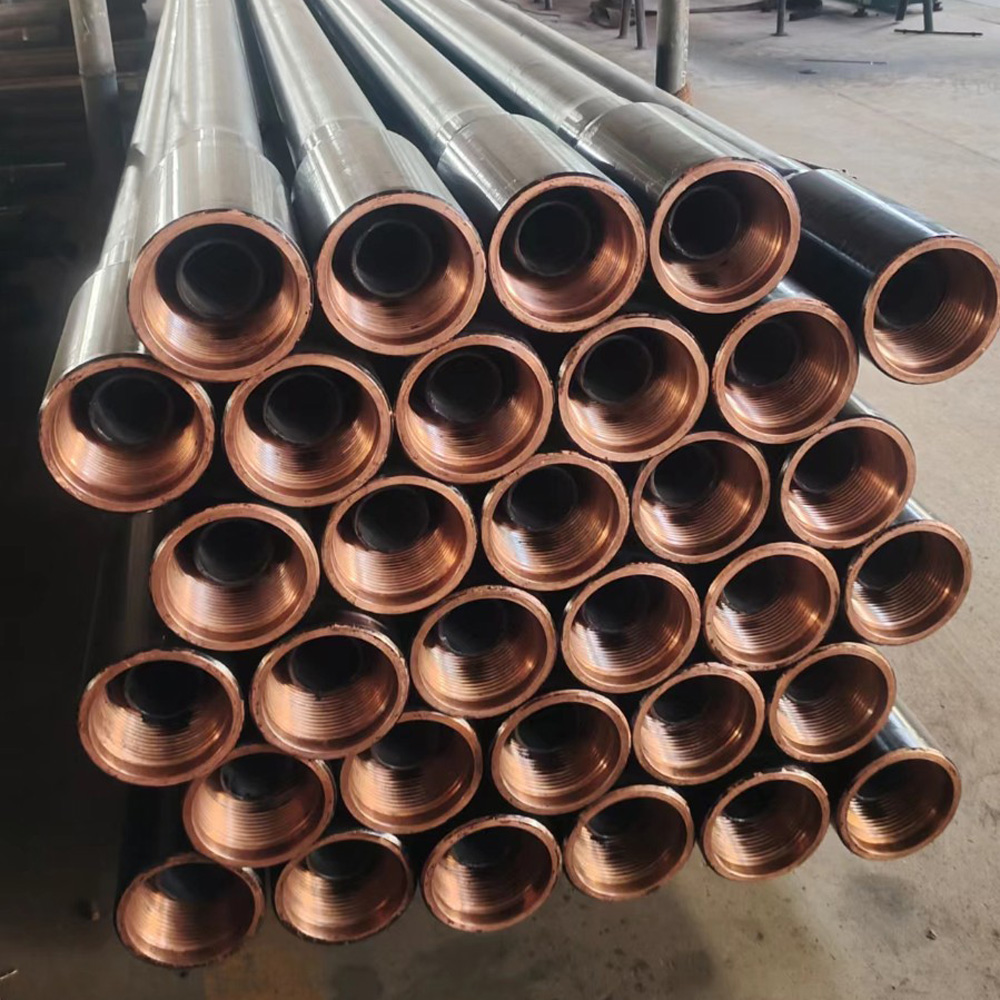
Take the Φ114 RC dual-wall reverse circulation drill pipe with an outer diameter of 114 mm as an example; the data lists it as a 4 1/2 inch pipe body. This outer diameter is first of all the interface dimension of the drill string system, and it must form a reasonable fit with the RC hammer, power head, collar equipment, and the designed borehole diameter. The wall thickness of 8–10 mm is written in the same parameter table and refers to the cross-sectional thickness of the pipe body itself. The two are not interchangeable; rather, they constrain from different directions whether the same drill pipe can be used in a specific project.
Outer diameter constrains interface and annulus fit, not just "thickness"
On site, the outer diameter row mainly governs two things. First is connection-end matching: the data states that this model can be supplied with Remet, Metzke, FH, or IF threads, and the specific thread specification must be confirmed according to the rig, power head, RC hammer, and existing drill string system at the time of order. Together with the thread form, the outer diameter determines whether this drill pipe can be connected to the existing RC drill string. Second is the relationship with borehole structure: in the hole, dual-wall drill pipe must leave an annulus channel between the outer tube and the borehole wall. The larger the outer diameter, the higher the requirements for borehole diameter and annulus conditions. The data does not give specific recommended annulus values for each borehole diameter; this part must be confirmed separately according to the project borehole diameter and RC hammer specifications.
Wall thickness constrains pipe body strength and the cross-sectional conditions of the inner tube channel
The wall thickness row of 8–10 mm corresponds to the cross-sectional thickness of the outer tube. The data states that the outer tube is made of high-strength alloy steel, internally upset at both ends, and friction welded and tempered to enhance the strength and stability of the connection areas. Here, wall thickness mainly affects the pipe body's ability to withstand continuous drilling and high-load construction. At the same time, in the dual-wall structure, an independent airflow channel must be formed between the outer tube and the inner tube, and the inner tube is responsible for conveying cuttings and samples. Changes in wall thickness affect the cross-sectional arrangement between the inner and outer tubes, but the data does not give specific values for the inner/outer tube clearance, so the sample return channel capacity cannot be inferred from wall thickness alone.
Beyond the two rows, several supporting items must also be checked together
After clearly reading the outer diameter and wall thickness, the remaining items in the data should still be checked together before purchase; otherwise, these two rows alone are not enough to determine whether the entire drill string matches:
- Thread type: Remet, Metzke, FH, or IF are optional; the actual choice depends on the rig, power head, RC hammer, and existing drill string system.
- Length: 1500–9500 mm range, which must correspond to the planned hole depth, rod connection method, and mast stroke.
- Rig and RC hammer specifications: the data recommends providing the rig model, RC hammer specifications, drill pipe length, thread type, target hole depth, and main formation information at the time of purchase.
- Structure and application: dual-wall structure, suitable for RC reverse circulation sampling in mining exploration, ore sampling, and geological drilling.
Application boundaries and matters still requiring confirmation
The data clearly states that different rig configurations, RC hammer specifications, hole depths, formation conditions, and operating methods will affect the actual performance and service life of the drill pipe, and the final result is subject to on-site working conditions and technical matching results. Therefore, the outer diameter of 114 mm and wall thickness of 8–10 mm only indicate the pipe body specifications of this model and cannot be used to infer its specific performance at a certain diameter, a certain hole depth, or in a certain formation. If the project involves special borehole diameters, ultra-deep holes, or complex formations, items not covered by the data—such as the fit values between borehole diameter and annulus, inner/outer tube clearance, and joint strength verification—must be confirmed separately with the supplier.