












In deep hole drilling in coal mines and drilling in medium-hard formations, construction teams often encounter two types of problems: first, cuttings in the hole are not discharged promptly, causing repeated crushing, reduced drilling speed, and even risks of sticking; second, the drill pipe needs to transmit torque stably under high loads, and the joints and pipe body must not fail first. Spiral drill pipes are a type of drilling tool developed for such cuttings removal and transmission needs. However, "spiral" does not mean it is suitable for any hole depth or any formation. Based on public information about Φ42S spiral geological drill pipes, this article explains under what conditions they are worth considering and which boundaries need to be confirmed in advance.
First Clarify Operational Objectives and On-Site Constraints
Spiral drill pipes mainly serve continuous drilling and cuttings removal operations. In deep hole drilling in coal mines, mine blast holes, and geological boreholes, if the formation is medium-hard and cuttings need to be continuously carried out of the hole, the spiral structure has room to perform. Conversely, if the hole depth clearly exceeds the recommended range of the drill pipe, or the drill bit diameter does not match the spiral diameter of the pipe body, the cuttings removal channel and the forces on the pipe body will deviate from the design conditions. Therefore, judging the applicability boundaries cannot rely only on the word "spiral"; hole depth, drill bit diameter, formation hardness, and drilling rig interface must be compared together.
Information Conditions for Φ42S Spiral Drill Pipes
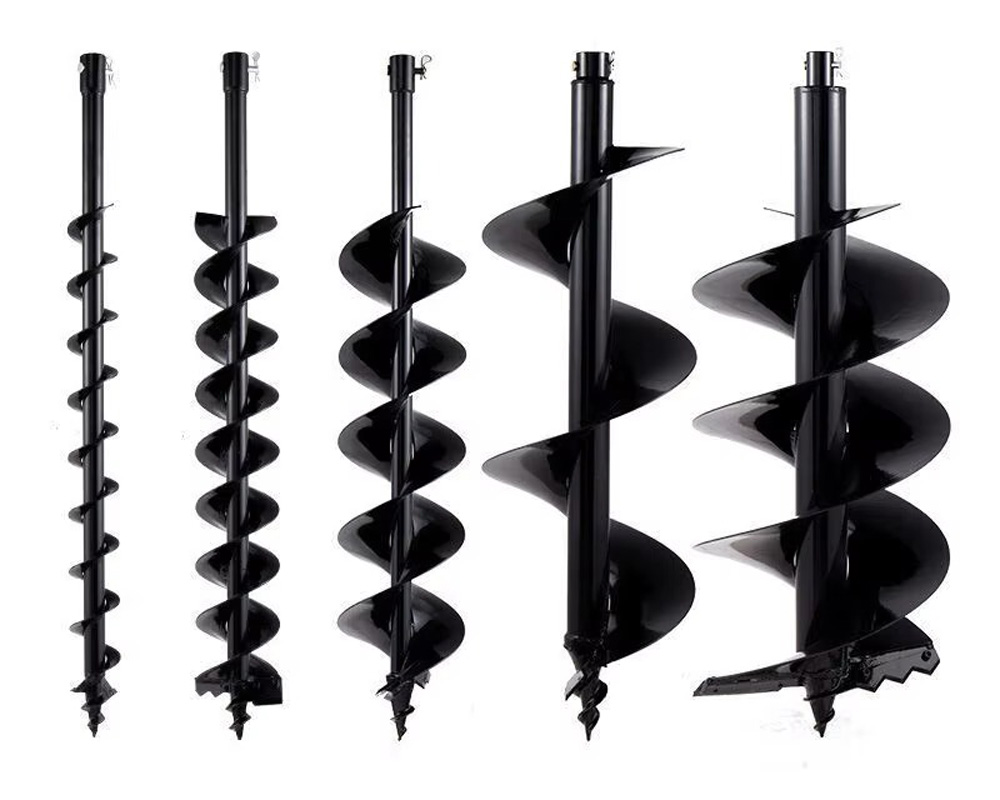
According to product information on this site, the Φ42S spiral geological drill pipe has a pipe body diameter of 42 mm, a spiral diameter range of 50–100 mm, common lengths of 1 m, 2 m, and 3 m, steel grade DZ50, maximum torque of 3000 N·m, recommended drilling depth of 100 m, compatible drill bit diameters of 65–146 mm, and joint hardness of HPC28-32. The pipe body uses high-quality alloy steel pipe, and the joint uses alloy structural steel; after high-pressure forming and heat treatment, it is connected to the pipe body by friction welding. The information states that its main uses include mine blasting, deep hole drilling in coal mines, and geological boreholes, and that it is suitable for continuous drilling and cuttings removal operations under medium-hard geological conditions.
For selection purposes, these data can be broken down into several judgment points: the recommended drilling depth of 100 m means it is more suitable for medium-deep holes rather than ultra-deep holes; compatible drill bit diameters of 65–146 mm mean a reasonable cuttings removal clearance must be formed between the drill bit and the spiral outer diameter; the maximum torque of 3000 N·m corresponds to the transmission demand under relatively high loads in medium-hard formations, but the actually usable torque is also affected by drilling rig capacity and downhole friction.
Which Requirements Are Directly Related to the Spiral Structure
Cuttings Removal Continuity and Downhole Cleanliness
During rotation, the spiral pipe body helps carry cuttings along the spiral channel out of the hole mouth and reduces accumulated cuttings in the hole. For operations requiring continuous cuttings removal, such as deep hole drilling in coal mines and mine blast holes, this structural feature can reduce downtime caused by hole cleaning. However, the cuttings removal effect is not determined only by the drill pipe; it is also related to drilling rig rotation speed, flushing medium, formation water content, and cuttings particle size. The information does not provide cuttings removal efficiency data under different formations, so actual performance must be judged in combination with on-site working conditions.
Torque Transmission in Medium-Hard Formations
The information lists the maximum torque as 3000 N·m and states that it is suitable for deep hole drilling in medium-hard formations, helping maintain stable transmission under relatively high load conditions. Here, "medium-hard" is the application direction given by the information, not a promise for all hard rocks. When formation hardness exceeds the bearing range of the drill pipe and drill bit combination, torque, wear, and downhole resistance will all change and must be verified separately.
Connection Strength and Bending Resistance
The pipe body and joint are connected by friction welding, and the joint is heat-treated. The information states that it balances connection strength, bending resistance, and durability. For boreholes requiring multiple drill pipes connected together, the joint is the location of concentrated stress. Joint hardness HPC28-32 can serve as a reference for checking matching parts, but it cannot replace confirmation of the drilling rig interface dimensions and actual connection method.
Matching Conditions and Applicability Boundaries
The drill pipe is only one part of the drilling tool assembly. Before selecting the Φ42S spiral drill pipe, at least the following items need to be confirmed:
- Whether the drilling rig model and output torque match the maximum torque of 3000 N·m, avoiding insufficient rig capacity or long-term overload of the drill pipe;
- Whether the drill bit diameter falls within the 65–146 mm range and forms a reasonable cuttings removal match with the spiral diameter of 50–100 mm;
- Whether the target hole depth is within the recommended drilling depth of 100 m; if it exceeds this range, the drill pipe assembly and lifting and rotation conditions must be re-evaluated;
- Whether the drill pipe length matches the drilling rig structure and construction space; 1 m, 2 m, and 3 m specifications can be combined according to hole depth and pipe connection method;
- Whether the interface dimensions and connection method are consistent with the existing drilling rig and drill bit; the information recommends confirming actual matching requirements before ordering.
Regarding applicability boundaries, the information clearly states that it is intended for mine blasting, deep hole drilling in coal mines, and geological boreholes, and emphasizes medium-hard geological conditions. If the site consists of loose layers, fractured zones, or formations with very high water content, the effect of spiral cuttings removal and hole wall stability will change. The information does not cover performance under these conditions, so it should not be directly applied. Drilling angle, operating method, and drilling tool assembly also affect actual use results, cuttings removal efficiency, and service life. The information notes that final conditions are subject to on-site working conditions and actual technical matching results.
Matters Still Requiring Confirmation
This article is based on public product information and does not constitute an applicability conclusion for any specific project. Before actual selection, it is recommended to verify with the supplier: the specific lithological description and hardness range of the target formation, drilling rig interface drawings, the matching dimensions of the drill bit and spiral pipe body, alternative solutions when hole depth exceeds 100 m, and on-site cuttings removal medium and hole wall stability conditions. Only after these details are confirmed can it be judged whether the Φ42S spiral drill pipe falls within its applicability boundaries.