












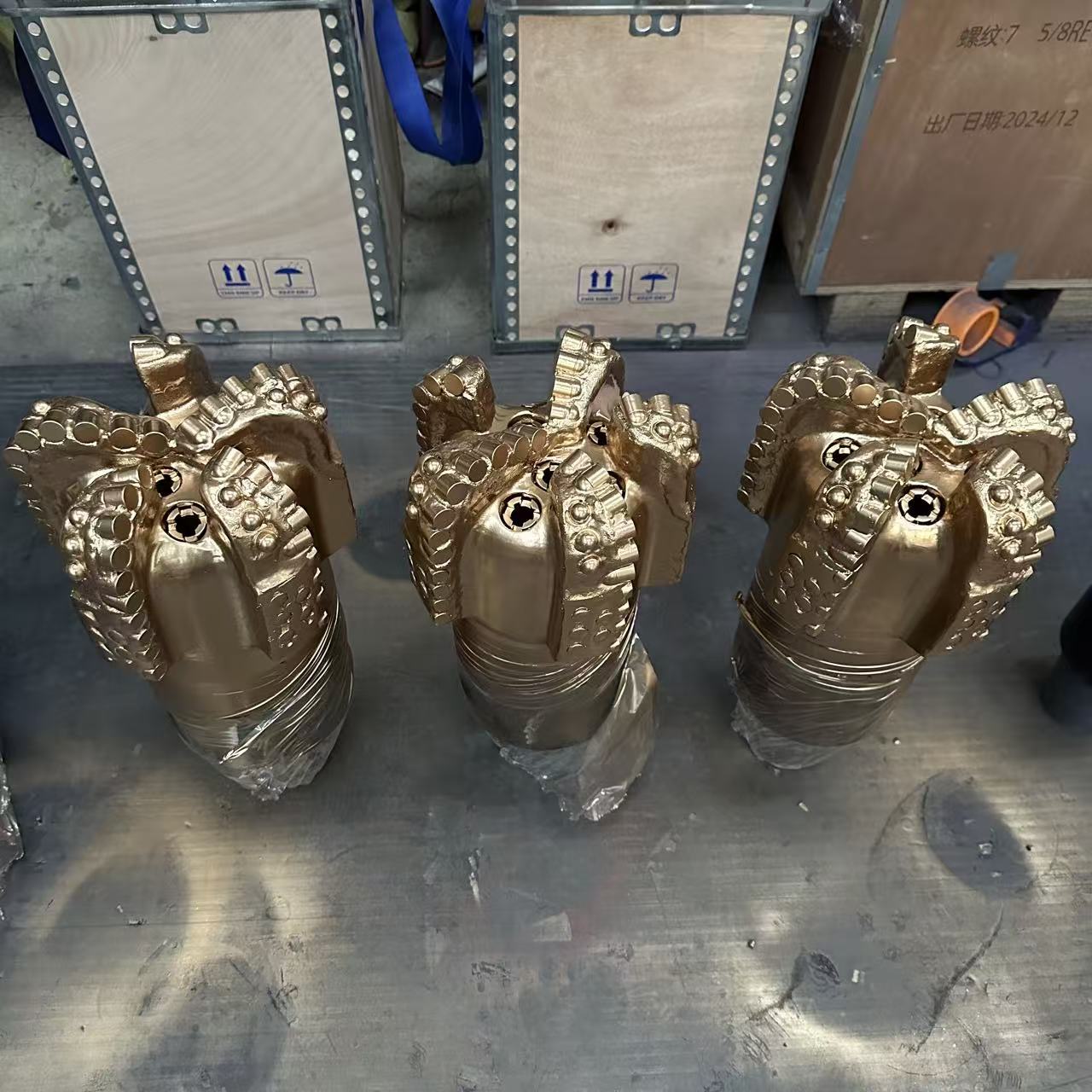
When you receive a PDC bit data sheet, the blade count, bit body type, and cutter size are usually listed in separate columns, each appearing simple on its own. However, if you look at them separately during selection, a situation can arise: the blade count matches, but the bit body conflicts with the budget or formation conditions, and the cutter size does not match the first two. These three columns are actually a set of mutually constraining conditions that need to be judged together.
What each of the three columns answers
Taking the data for an 8.5-inch 5-blade PDC bit as an example, the three columns correspond to questions at three different levels:
| Data column | Question answered | Available range in this site's data |
|---|---|---|
| Blade count | How many blades the bit structure uses, corresponding to which type of drilling condition | 5 blades |
| Bit body type | What form the bit body takes, related to wear resistance and budget | Steel body / Matrix body |
| Cutter size | Which diameter grade of cutting element is selected, matching the formation and construction requirements | Φ13 mm / Φ16 mm / Φ19 mm |
Looking at any single column alone is not enough to form a selection basis. The blade count determines the structural matching space; the data states that "the specific cutting structure and cutter configuration can be matched according to different formation conditions"; the bit body type corresponds to the trade-off between wear resistance and cost; and the cutter size must be configured in conjunction with the bit structure, formation conditions, and construction requirements. The three together constrain the same bit and cannot be chosen like items from a menu.
Blade count is not an independent indicator
The 8.5-inch 5-blade PDC bit uses a 5-blade structure, and the data states that it can be used in various drilling conditions. It is important to note here that "can be used in various conditions" does not mean "the blade count alone determines applicability." In the same data, the cutter configuration is explicitly listed as an item that can be matched to formation conditions, indicating that the blade structure must be considered together with the cutting elements. If you judge that the bit is suitable for a certain formation based only on the 5 blades, you are separating the structure column from the configuration relationship.
Steel body or matrix body: first look at friction conditions and budget
The bit body can be either steel or matrix. The difference given in the data is: steel body has a relatively lower cost, while matrix body emphasizes wear resistance. This trade-off is not a question of which is more advanced, but rather two conditions entering the judgment simultaneously: how much friction and wear pressure the formation places on the bit body, and which grade the procurement budget allows. The data does not provide a life comparison of the two bit body types in specific formations, nor does it recommend which one must be selected for a particular formation. Therefore, the actual choice still needs to be confirmed in conjunction with field operating conditions and technical matching results.
Cutter size must be determined together with the first two columns
The cutter diameter can be 13 mm, 16 mm, or 19 mm. The data explicitly states that this choice must be configured in conjunction with the bit structure, formation conditions, and construction requirements. In other words, the cutter size is not an isolated specification line; it is part of the same configuration decision as the 5-blade structure and the steel or matrix body option. Determining the cutter size first and then looking for a bit body, or determining the bit body first and then casually matching a cutter grade, will break the correspondence among the three columns.
After the three columns are determined, match the drill string system
Once the bit itself is selected, the connection method is another level of verification. This product uses a Pin connection, and thread types include IF, API REG, NC, and FH, among others. The data requires that the specific thread specification be confirmed according to the drilling rig, drill pipe, and on-site connection standards when actually ordering. This step is not in the same column as the blades, bit body, and cutters, but it equally affects whether the bit can be smoothly integrated into the existing drill string assembly, and should be implemented together during selection.
Applicable formations and usage boundaries
The applicable formations listed in the data include clay, mudstone, chalk, gypsum, salt rock, shale, limestone, sandstone, dolomite, and marble. The main application directions are oil and gas drilling, directional well construction, and other projects suitable for PDC cutting drilling. At the same time, the data also notes that different geological conditions, drill string configurations, drilling angles, and operating methods will affect the actual performance and life of the bit, and the final result is subject to field operating conditions and actual technical matching results. This means that the configuration of the three columns above only provides optional directions within the scope of the data and cannot replace on-site technical matching.
Items still to be confirmed before ordering
- Whether the specific thread specification is consistent with the connection standards of the existing drilling rig and drill pipe;
- The choice between steel body and matrix body under the target formation conditions; the data does not provide formation-by-formation life data;
- The combination scheme of cutter size, blade structure, and bit body needs technical matching confirmation with the supplier;
- The impact of drilling angle and operating method on bit performance is only noted in the data, with no quantitative conclusions provided.
Reading these three columns together is actually answering the same question: do the structure, wear resistance, and cutting elements of this bit point to the same set of construction conditions? If any one column stands alone apart from the other two, the selection basis is incomplete.