












The WR260 specification table contains a set of parallel figures: maximum drilling depth 260 m, drilling diameter 140–305 mm, rotary torque 4000–5300 N·m, lifting force 15 T, 76 kW diesel power, overall weight approximately 5.7 T, and dimensions approximately 3900 × 1750 × 2250 mm. These figures correspond simultaneously to three types of use—rural water supply, agricultural irrigation, and mining water wells—but the three types of projects demand different things from this machine: rural water supply is concerned with whether the well depth can cover the aquifer and match the well casing, irrigation is concerned with whether the rig can move quickly between hole locations, and mining is concerned with the proportion of hard rock and the air supply configuration. The following sections break these three types of demand down separately.
What the Three Types of Water Demand Ask of the WR260
First, a rough comparison. All three types of projects require well completion, but the emphasis differs:
| Demand Type | Main Questions | Corresponding WR260 Specifications |
|---|---|---|
| Rural water supply | Aquifer depth, well diameter and casing matching | 260 m drilling depth, 140–305 mm hole diameter |
| Farmland irrigation and orchards | Relocation efficiency between multiple hole locations | Crawler chassis, walking speed approximately 2.5 km/h, overall weight approximately 5.7 T |
| Small mining water use | Hard rock proportion, DTH hammer and air compressor configuration | 4000–5300 N·m torque, 1.7–2.5 MPa working air pressure, 17–31 m³/min air consumption |
This table only illustrates the distribution of concerns; it does not mean that each of the three project types can only use one configuration. Actual projects are often mixed—for example, an agricultural area may also have a mining camp water supply need, or a mining area may also require village water wells nearby. The value of looking at them separately is that before procurement, you need to know which type of demand dominates, and then decide which conditions must be confirmed in writing.
Rural Water Supply: Well Depth and Well Diameter Must First Align with the Aquifer
The WR260 can be used for household water wells, village water wells, and small community water supply well construction. The 140–305 mm drilling diameter can cover a variety of well casing and submersible pump configurations, which means there is relatively more flexibility in choosing the well diameter, but this does not mean it can be set arbitrarily.
In rural water supply projects, the first thing to establish is the aquifer location and expected water yield, then work backward to determine well depth, well diameter, screen pipe, and sealing intervals. The 260 m drilling depth margin is suitable for situations where the groundwater level is relatively deep but heavy equipment of 500 m or more is not required; if the local aquifer is shallow, using a 260-meter-class machine is not a matter of insufficient capability, but rather whether the project needs to retain deeper construction capacity on the same machine.
One point to note: the drilling capability and applicable scope described in the materials are established under conditions that include a matched DTH hammer, drill bit, and air compressor. Well depth, well diameter, and screen pipe configuration fall within the scope of well completion design and are not entirely determined by the equipment specifications themselves.
Farmland Irrigation: Multiple Hole Locations—Time for Relocation and Setup Must Be Calculated Separately
Agricultural irrigation is one of the typical applications of this type of drilling rig, and it can be used for water wells in farmland, orchards, greenhouses, and nurseries. Irrigation projects often involve more than one well, and a construction crew may need to complete multiple hole locations consecutively within the same area.
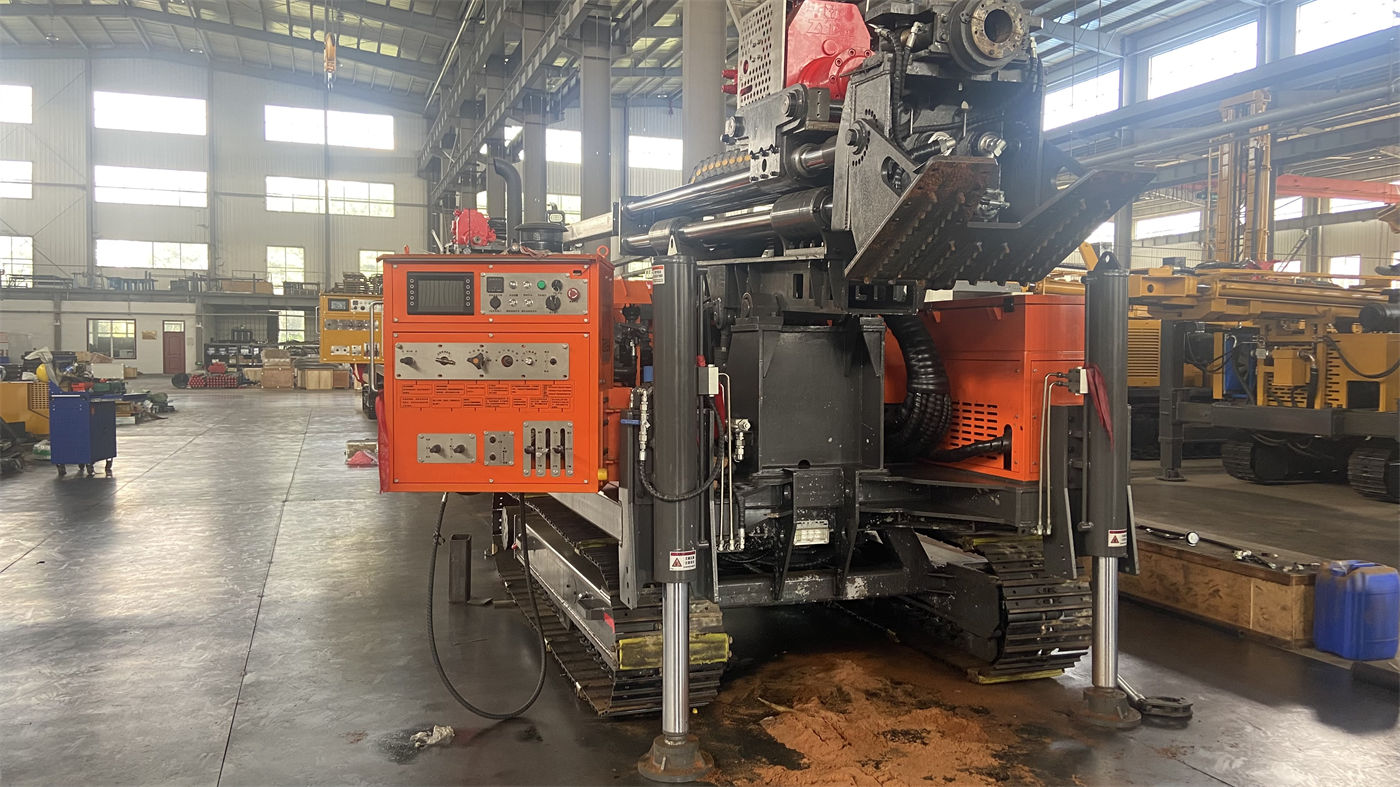
The WR260 uses a steel crawler chassis with a walking speed of approximately 2.5 km/h and a reference maximum gradeability of 30°. The crawler chassis facilitates relocation on village roads, field roads, and gravel sites. Its overall weight is approximately 5.7 T, and its dimensions are approximately 3900 × 1750 × 2250 mm, making it easier to enter space-restricted areas compared with large deep water well drilling rigs.
However, the actual efficiency of irrigation wells is not entirely determined by walking speed. The equipment has a 1.4 m outrigger stroke for support and leveling; soft ground requires additional pads to prevent outrigger settlement that could cause mast tilting and hole position deviation. After each relocation, re-leveling and re-drilling are required, and this time is directly related to field ground conditions. The materials do not provide corresponding time data, so it needs to be calculated based on site conditions.
In addition, the WR260 has a single feed length of 3.3 m and can be matched with 1.5 m, 2 m, and 3 m drill pipes. A longer single feed can reduce auxiliary time for repeated power head return and drill pipe connection, which is advantageous for arranging continuous construction at multiple hole locations. Actual penetration efficiency still depends on rock properties, hole diameter, DTH hammer, and air compressor performance.
Small Mining Water Use: Hard Rock Proportion Determines the Supporting Equipment, Not the Machine Itself
Mining and geological exploration sites often require domestic water, equipment washing, and dust suppression water sources. The WR260's crawler chassis is suitable for moving on gravel roads and generally uneven sites in mining areas, and it can be used for mining camp water wells and small auxiliary production water wells.
The biggest difference between mining projects and rural water supply or irrigation is that the proportion of hard rock is usually higher. The WR260 uses DTH hammer drilling, with a reference working air pressure of 1.7–2.5 MPa and air consumption of 17–31 m³/min. With a suitable DTH hammer, drill bit, and air compressor, it can be used in relatively intact rock formations such as limestone, sandstone, and granite. The most important thing to confirm in advance here is the air compressor displacement: insufficient displacement will cause insufficient DTH hammer impact and difficult cuttings removal; when hole diameter increases, rock layers become harder, or altitude rises, a more ample air flow is usually required.
If the mining formation contains fracture zones, fissures, or karst caves, conditions will be more complex. Fractured formations are prone to block falling, air leakage, and drill jamming; in limestone karst caves, open fissures, or severely air-leaking formations, the air compressor pressure and flow may be difficult to effectively transmit to the bottom of the hole. Such situations may require foam, casing, increased air volume, or a change in construction method, and the specific approach should be judged according to the degree of air leakage and downhole feedback. The materials do not provide operating parameters for these situations, so the actual formation conditions of the mining area should be explained to the manufacturer before procurement.
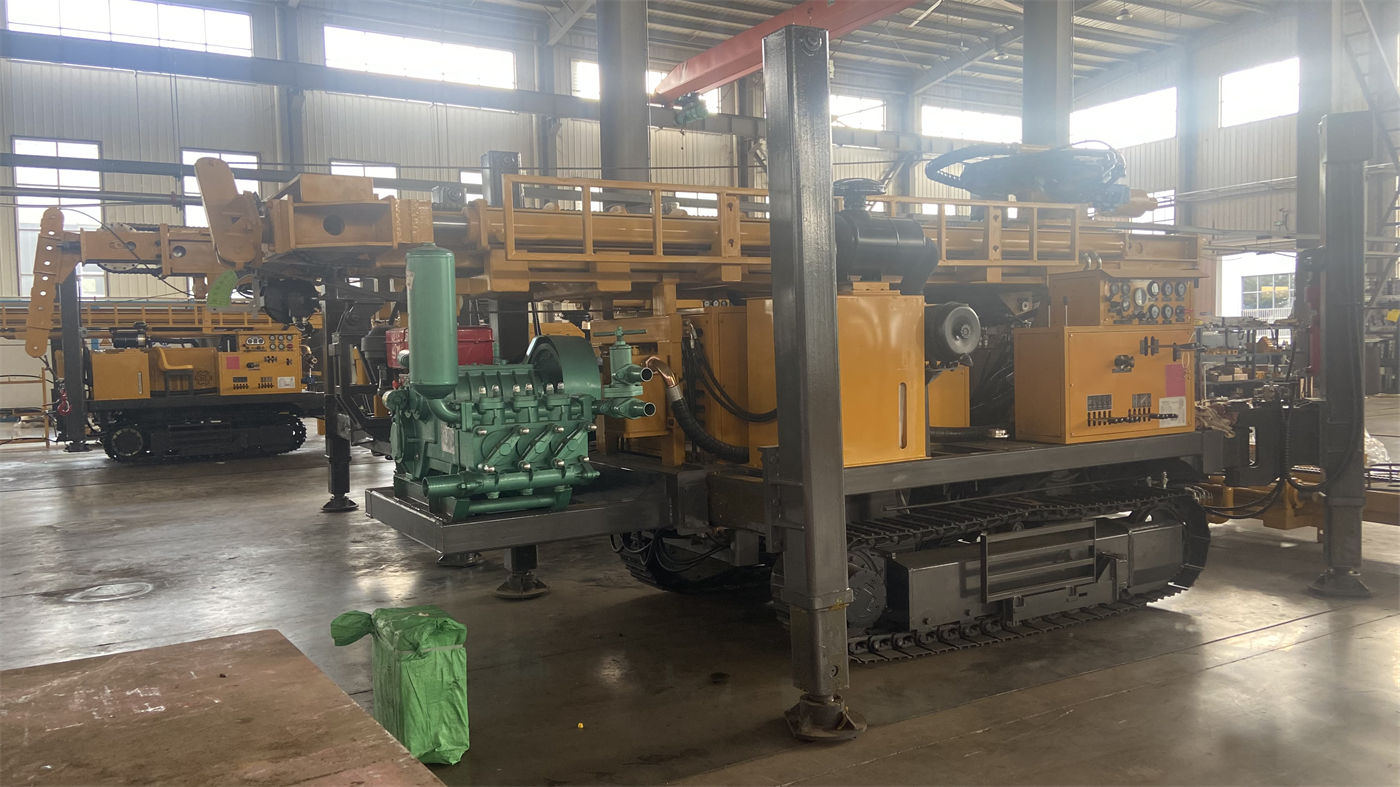
There is also the situation of alternating hard rock and overburden. Directly using a DTH hammer in loose overburden may cause hole collapse and drill burial. Casing, mud, or other hole stabilization techniques should be selected according to the formation, first establishing a stable collar and upper hole section before entering the rock layer for pneumatic DTH drilling. This means that mining projects need to consider auxiliary process conditions such as casing in addition to the drilling rig itself.
Common Constraints Across the Three Types of Demand: Lifting Force and Drill String Management
Regardless of the project type, as the borehole deepens, the self-weight of the drill pipe and the friction of the hole wall increase. The WR260's 15 T lifting force can be used for normal tripping, drill pipe handling, DTH hammer recovery, and some casing operations; the auxiliary winch lifting force is 1.5 T, which can be used for handling DTH hammers, drill pipes, casing tools, and some on-site auxiliary equipment.
The materials contain a clear handling principle: if abnormal tripping resistance persists, the hole should first be cleaned and the hole wall and drilling tools inspected, rather than directly relying on maximum lifting force to force a solution. This applies to all three types of projects, but mining projects and weathered rock formation projects are more likely to encounter such abnormalities.
In terms of power, the WR260 uses a 76 kW diesel engine, and the materials also provide an optional electric motor power solution. For plant areas, mines, or fixed construction projects with stable power supply conditions, electric motor power can reduce diesel refueling and exhaust issues; the final motor power, voltage, and control method should be based on the formal configuration. This item is more relevant for mining water use projects that are mainly at fixed sites, while rural water supply and irrigation projects usually require the equipment to relocate on its own, so the logic for choosing the power solution is different.
Main Technical Parameters
| Parameter | Value |
|---|---|
| Product Model | WR260 |
| Equipment Type | Compact crawler fully hydraulic water well drilling rig |
| Maximum Drilling Depth | 260 m |
| Drilling Diameter | 140–305 mm |
| Rotary Torque | 4000–5300 N·m |
| Rotary Speed | 45–70 r/min |
| Lifting Force | 15 T |
| Auxiliary Winch Lifting Force | 1.5 T |
| Single Feed Length | 3.3 m |
| Fast Lifting Speed | 24 m/min |
| Fast Feed Speed | 40 m/min |
| Power Configuration | 76 kW diesel engine / optional electric motor power |
| Chassis Type | Steel crawler chassis |
| Walking Speed | Approximately 2.5 km/h |
| Reference Maximum Gradeability | 30° |
| Outrigger Stroke | 1.4 m |
| Overall Weight | Approximately 5.7 T |
| Dimensions | Approximately 3900 × 1750 × 2250 mm |
| Working Air Pressure (DTH) | 1.7–2.5 MPa |
| Air Consumption (DTH) | 17–31 m³/min |
| Width Marked in Materials | 2.73 m (original materials mark it as "Width of loading") |
Regarding the last item: the original materials include a 2.73 m parameter marked as "Width of loading." This name is inconsistent with the overall external width of 1750 mm. This article retains it in the parameter table as "Width Marked in Materials" and does not further interpret it as actual transport width. The final value should be confirmed with formal production technical materials.
Items to Confirm in Writing Before Procurement
- The main formation types and hard rock proportion at the project location, which determine the DTH hammer specifications and air compressor displacement.
- Rural water supply projects: aquifer location, expected water yield, well depth, well diameter, screen pipe, and sealing interval design.
- Irrigation projects: number and spacing of hole locations, field road access conditions, and ground bearing conditions.
- Mining projects: whether fracture zones, fissures, karst caves, or severely air-leaking formations exist, and the corresponding treatment processes.
- The power, voltage, and control method of the optional electric motor power, subject to the formal configuration.
- Specifications and supply scope of supporting equipment such as air compressors, DTH hammers, and drill pipes.
- The actual meaning of the marked parameter 2.73 m, which needs to be confirmed with formal production technical materials.
The reference drilling efficiency given in the materials is 10–35 m/h, and this value will vary significantly with rock formation conditions. Actual drilling efficiency, drilling depth, and well completion results should be based on on-site working conditions, and this article does not make further calculations on this.