












A project requirement at the 1500-meter level is often compressed into one sentence when applied to equipment: need larger parameters. The screening order then becomes drilling depth first, then lifting force and torque, and whichever has larger numbers is favored. The problem with this approach is not comparing parameters, but comparing a set of mutually constraining conditions separately and mistakenly assuming the values can substitute for one another. In the publicly available WR1500S data on this site, the values 1500 m, 105–1000 mm, 80 T, 31000/15500 N·m, 9.6 m, 28 T, 1.65–8 MPa, and 16–120 m³/min exist simultaneously, which can precisely illustrate what each of them constrains.
Drilling depth is a description of a rig's upper capability limit
The WR1500S data states a maximum drilling depth of 1500 m. "1500-meter class" means the rig design covers a hole depth range up to this tier; it does not mean the final hole depth of a specific project. Actual well depth must also be determined jointly by hydrogeology, hole diameter, drill pipe, air compressor, and well completion design. The same data also gives applicable formations as unconsolidated formations and rock formations, which means the usability of the 1500 m upper limit differs across formations. The data itself does not provide final hole depths subdivided by formation; this part needs to be confirmed separately for each project.
The upper hole diameter limit conversely constrains drilling depth
The WR1500S drilling diameter range is 105–1000 mm. Hole diameter and drilling depth are not two independent indicators: the larger the hole diameter, the greater the cuttings discharge volume, rotary torque, and lifting margin required per unit hole section. The data states that "the larger the hole diameter, the higher the requirements for the air compressor, drilling tools, casing, rotary torque, and lifting capacity," but it does not provide a table of achievable hole depths corresponding to a given hole diameter. Therefore, one cannot directly infer from "maximum 1500 m" and "maximum 1000 mm" that "a 1000 mm hole diameter can also drill to 1500 m."
Lifting force addresses the weight of the drill string in the hole
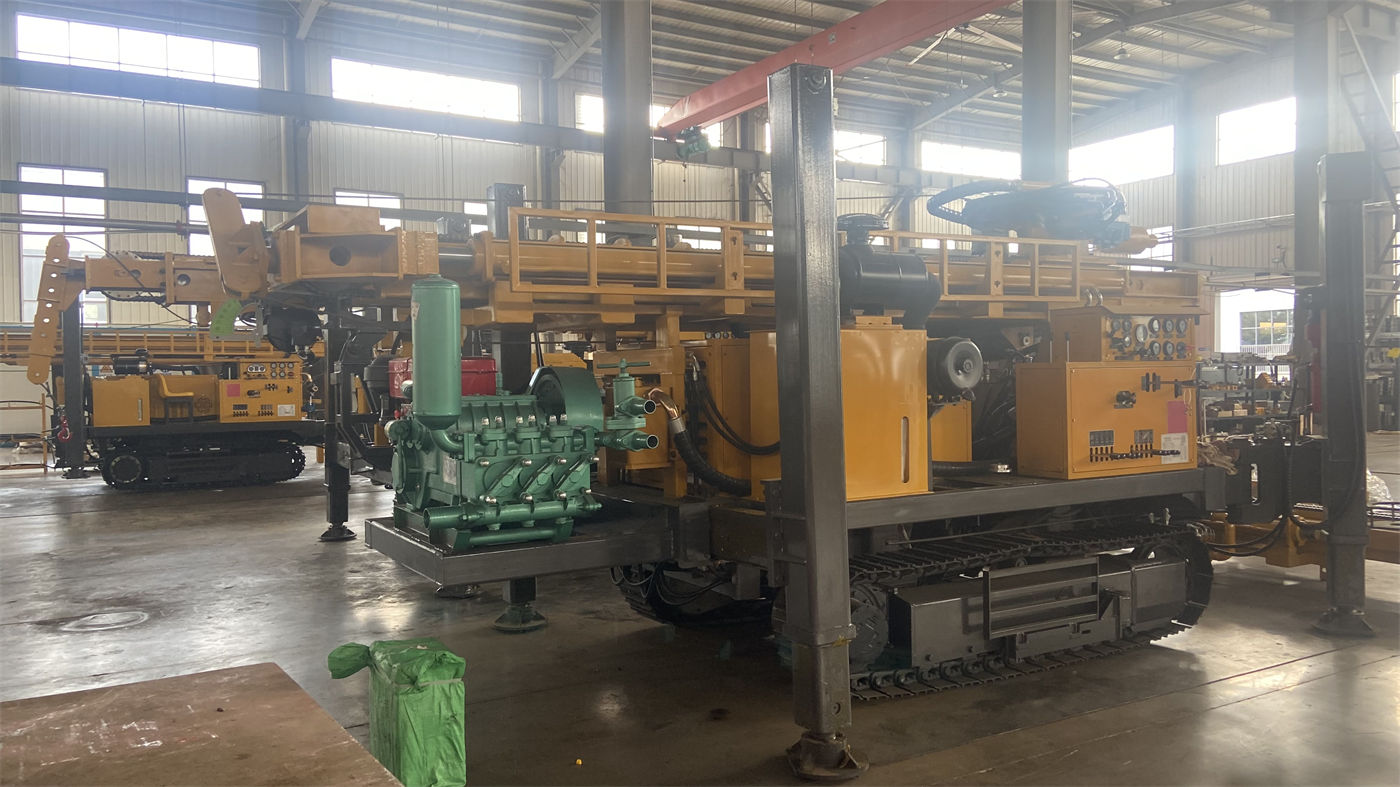
The data gives the WR1500S a lifting force of 80 T, axial pressure of 16 T, fast lifting speed of 28 m/min, and fast feed speed of 44 m/min. These values correspond to tripping and feeding actions. As hole depth increases, drill string self-weight, hole wall friction, casing weight, and local sticking all accumulate, so lifting capacity constitutes a practical boundary for hole depth. However, the data also states that when abnormal resistance occurs, priority should be given to hole cleaning, slow lifting, and judging downhole conditions, indicating that lifting force is not a means to forcibly pull out stuck pipe.
Rotary torque and rotation speed must be understood as a pair
The WR1500S maximum rotary torque is 31000/15500 N·m, corresponding to maximum rotary speeds of 70/140 r/min. The data explains these two sets of values as follows: low speed and high torque are more suitable for large hole diameters, hard rock, and high-friction conditions, while higher rotation speeds are suitable for stable hole sections with relatively low resistance; during construction, adjustments should be made dynamically according to drill string load, cuttings return, and drilling tool condition. This does not constitute a statement of "two selectable gears," nor does it explain how the two sets of values transition continuously between each other; this point is not covered by the data.
9.6-meter drill pipe affects rod connection frequency and site organization
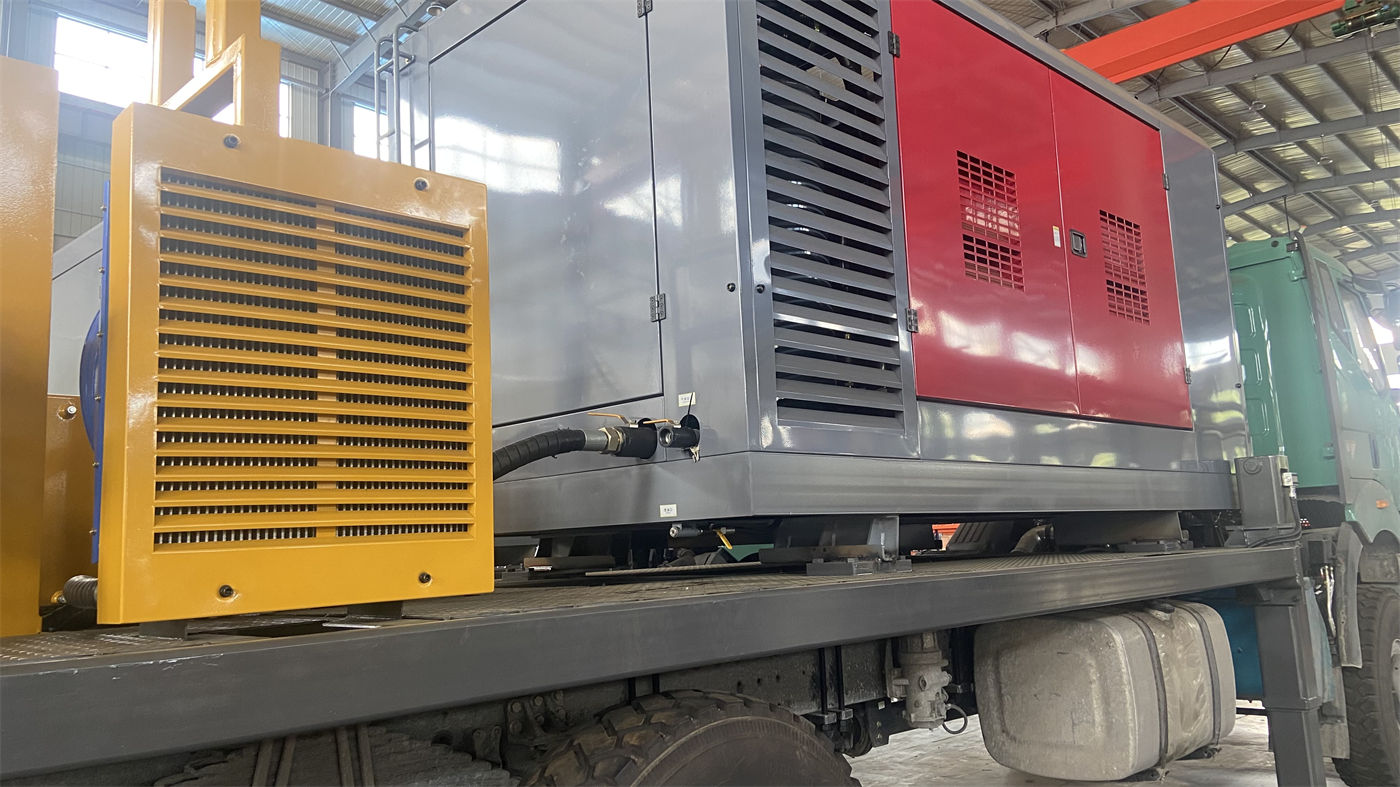
The data states support for 9.6 m drill pipe, with recommended drill pipe diameters of 114/127 mm. Long drill pipe reduces the number of connections and disconnections in ultra-deep holes, but at the same time requires sufficient operating space on site and more standardized drill pipe handling organization. The data also notes that 9.6 m drill pipe usually requires separate transport. In other words, drill pipe specifications simultaneously affect efficiency, site, and transport, so one cannot look only at the number of connections.
Air pressure and air consumption must both be satisfied
When using DTH down-the-hole hammer drilling, the WR1500S recommends a working air pressure of 1.65–8 MPa and a recommended air consumption of 16–120 m³/min. The data clearly states that pressure and displacement must simultaneously meet the needs of the down-the-hole hammer and bottom-hole cuttings discharge; otherwise, insufficient impact, difficult cuttings discharge, and bottom-hole cuttings accumulation are likely. Projects at the 1500-meter level and with large hole diameters have very high air compressor displacement requirements, but the data does not provide an air compressor selection table corresponding to a given combination of hole depth and hole diameter.
Transport and site are also among the simplified constraints
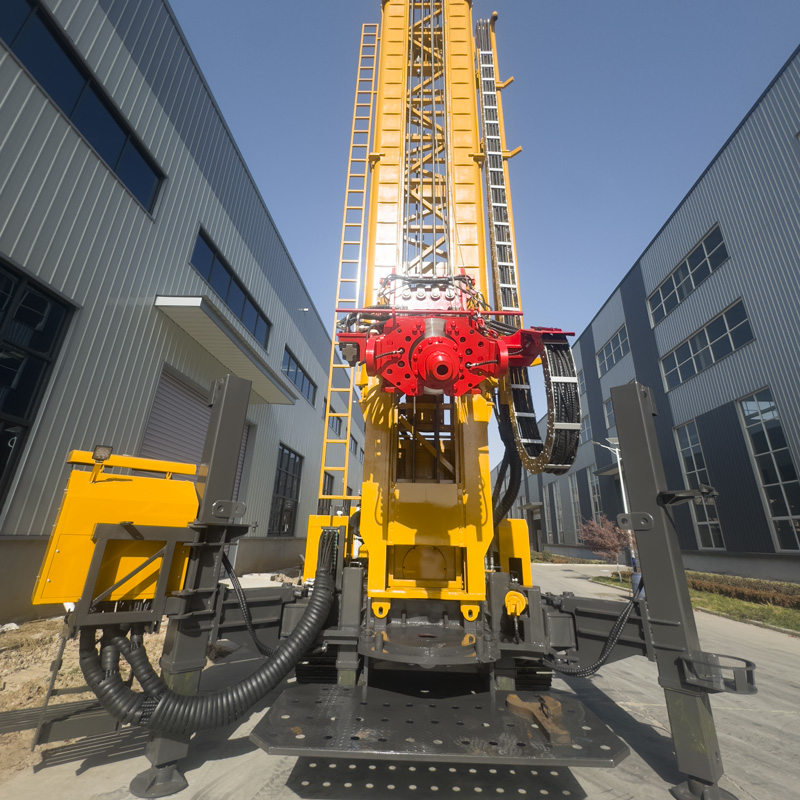
The WR1500S overall weight is about 28 T, with overall dimensions of about 11.5 × 2.6 × 3.5 m, and it adopts a telescopic mast structure. The data explains that the telescopic mast helps reduce the transport difficulty caused by a fixed long mast, but 28 T-class equipment still requires advance planning for road passage, loading, site turning, and internal site transfers. Cross-regional transport requires confirming flatbed load capacity, road height limits, bridge load-bearing capacity, and turning space. These conditions are unrelated to drilling depth, yet they can equally determine whether the equipment can be put in place.
What the data can support and what it cannot
- Can support: the rig belongs to the 1500-meter class; hole diameter range 105–1000 mm; lifting force 80 T, axial pressure 16 T; dual-condition torque 31000/15500 N·m and 70/140 r/min; supports 9.6 m drill pipe, recommended 114/127 mm; air pressure and air consumption ranges; overall weight and dimensions; dual auxiliary winches 5 T and 2.5 T.
- Cannot support: the actual hole depth achievable under a given hole diameter and formation; the conversion relationship between lifting force and torque; specific air compressor models and quantities; the complete dimensional changes of the telescopic mast in extended and retracted states; the actual drilling speed in a given formation.
- Needs confirmation: project formation profile and aquifer location; final hole diameter and well completion structure; specific combination of drilling tools and casing; air compressor matching plan; on-site road and site organization conditions.
Simplifying ultra-deep hole construction to "larger parameters" obscures precisely the mutual constraints among these parameters. A more useful approach during selection is to first list hole depth, hole diameter, formation, drill string, and well completion structure as a set of conditions, then check item by item how far the equipment data can support, and clearly leave the parts not covered by the data as matters to confirm with the manufacturer.