












When selecting equipment for ultra-deep water well projects, a common dilemma arises: reserve in drilling depth, lifting force, and torque is generally seen as a safeguard for deep-hole construction; however, when reserve accumulates beyond a certain point, transport dimensions, air supply displacement, site bearing capacity, and power configuration also become heavier. Reserve itself is neither right nor wrong; the key is whether it corresponds to the depth and hole diameter the project truly needs to drill, or is prepared merely for "what if." Below, using the public information of the WRT1200 as a reference, several capabilities are placed back into specific operational procedures to illustrate where the boundary between reserve and burden lies.
First, define: which reserves belong to in-hole operations, and which spill over into mobilization conditions
Drilling depth, lifting force, and rotary torque mainly act in the hole: drilling depth determines the target well depth the equipment can cover, lifting force corresponds to the handling of drill strings and casings in deep holes, and torque corresponds to the rock-breaking resistance in large-diameter and hard-rock sections. The hole diameter range affects both in-hole and surface operations—large diameters mean more space for larger well casings and submersible pumps, but also increased drill tool loads, casing weight, cuttings removal requirements, and air compressor loads.
Another category of capabilities spills over into mobilization and site organization: overall weight, transport dimensions, mast type, power rating, and air supply support. These items may not be directly reflected in the hole, but they determine whether the equipment can reach the well site, be set up, and operate continuously. By separating these two categories, the nature of the reserve becomes clear.
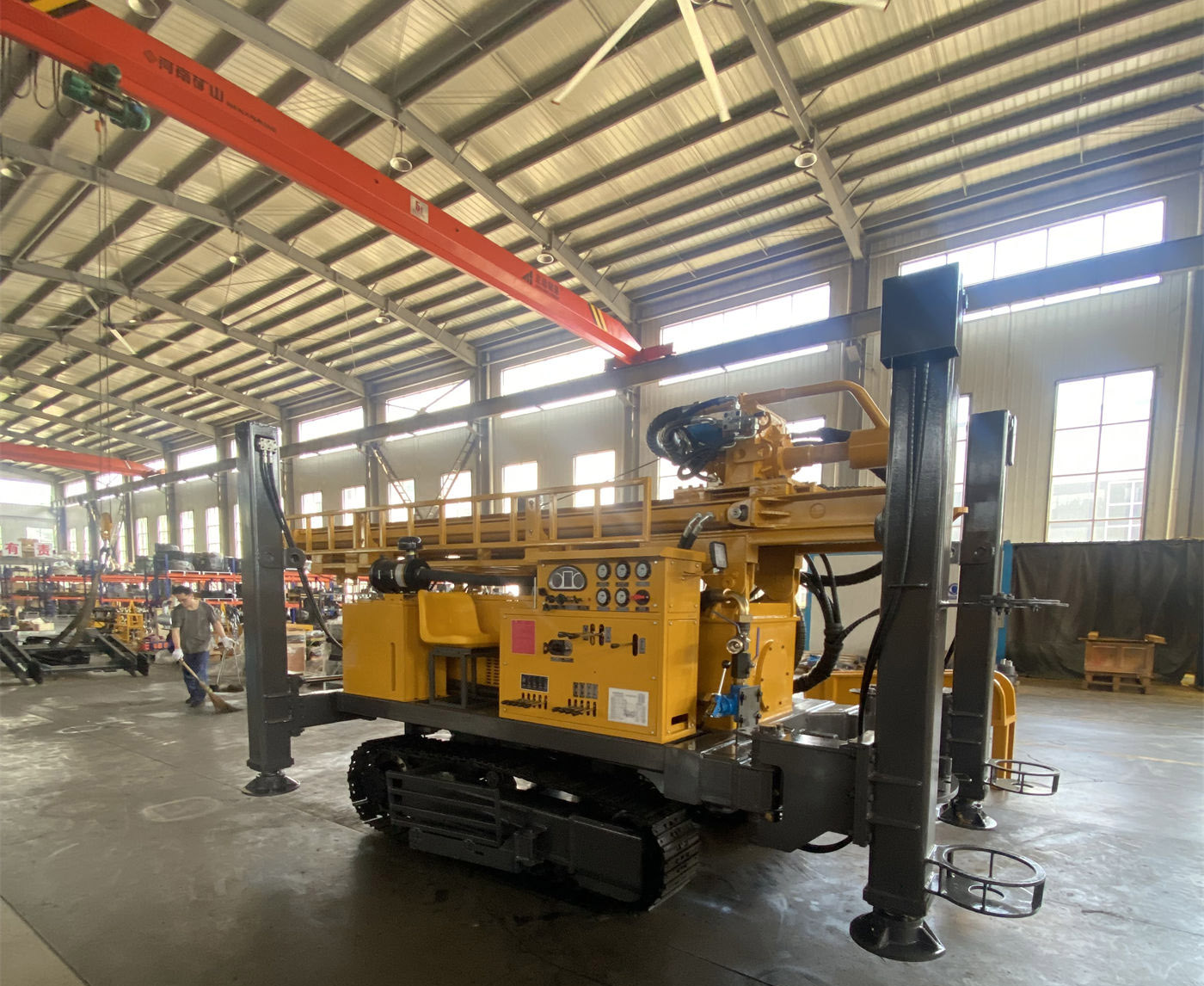
In the WRT1200 data, several in-hole capabilities corresponding to reserve
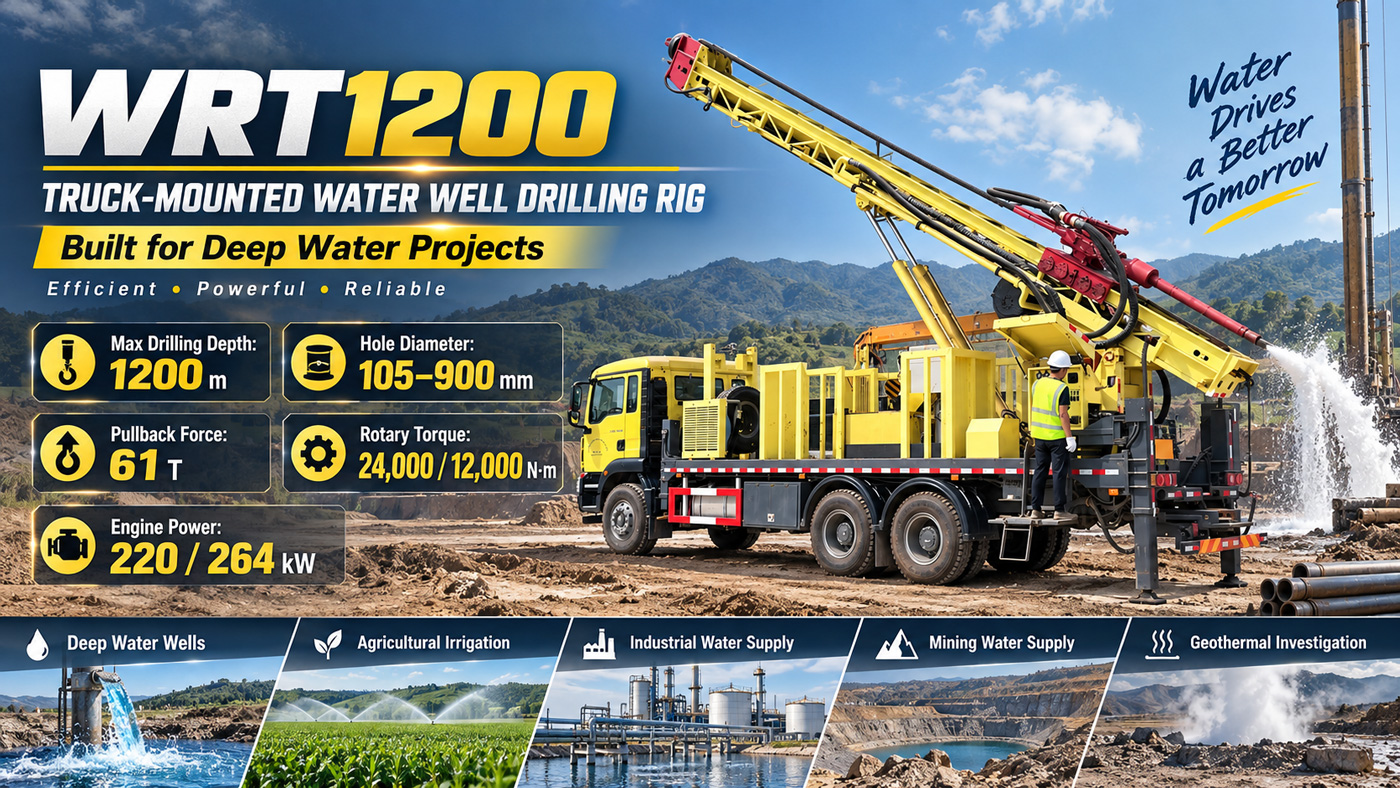
The WRT1200 is a 1200-meter-class truck-mounted straight-mast water well drilling rig, with a maximum drilling depth of 1200 m, a hole diameter of 105–900 mm, a lifting force of 61 T, dual-condition rotary torque of 24000 / 12000 N·m, 220 / 264 kW diesel power, an axial pressure of 13 T, recommended drill pipe diameter of 127 mm, drill pipe lengths of 3 m or 6 m, feed stroke of 7 / 13 m, an overall weight of approximately 32 T, and transport dimensions of approximately 11.5 × 2.25 × 3.2 m.
- 1200 m drilling depth: Covers deep groundwater projects that ordinary medium-deep well equipment struggles to handle. Its significance lies in the ability to verify deeper formations when shallow aquifers have insufficient yield, mines require a more stable water source, or industrial projects need highly reliable water supply—not that every project must drill to the limit.
- 61 T lifting force: As hole depth increases, the self-weight of drill pipes, casing weight, and borehole wall friction rise; higher lifting capacity is used for deep-hole tripping, DTH hammer retrieval, and some casing operations. The data also indicates that when abnormal lifting resistance occurs, the hole should be cleaned first and the condition of the borehole wall, drill tools, and sediment assessed, rather than simply pulling with maximum lifting force.
- 24000 / 12000 N·m dual-condition torque: Corresponds to a 75 / 150 r/min two-speed configuration. Low speed and high torque suit large-diameter, hard-rock, and high-friction hole sections, while the high-speed gear suits stable formations with lower resistance. During operation, it is necessary to switch according to drill tool load, cuttings return, and torque changes, rather than using a fixed gear.
- 105–900 mm hole diameter: Covers conventional deep water wells to large-diameter groundwater wells. Larger diameters facilitate the installation of larger well casings and submersible pumps, but simultaneously increase drill tool loads, casing weight, cuttings removal requirements, and air compressor loads. The hole diameter should be determined by water yield, well casing, and pump type design, rather than taking the upper limit of the range.
Several points where reserve becomes a burden
Whether the reserve of 1200-meter-class equipment becomes a burden is mainly not in the hole, but in mobilization and support. Several conditions in the data are worth calculating in advance:
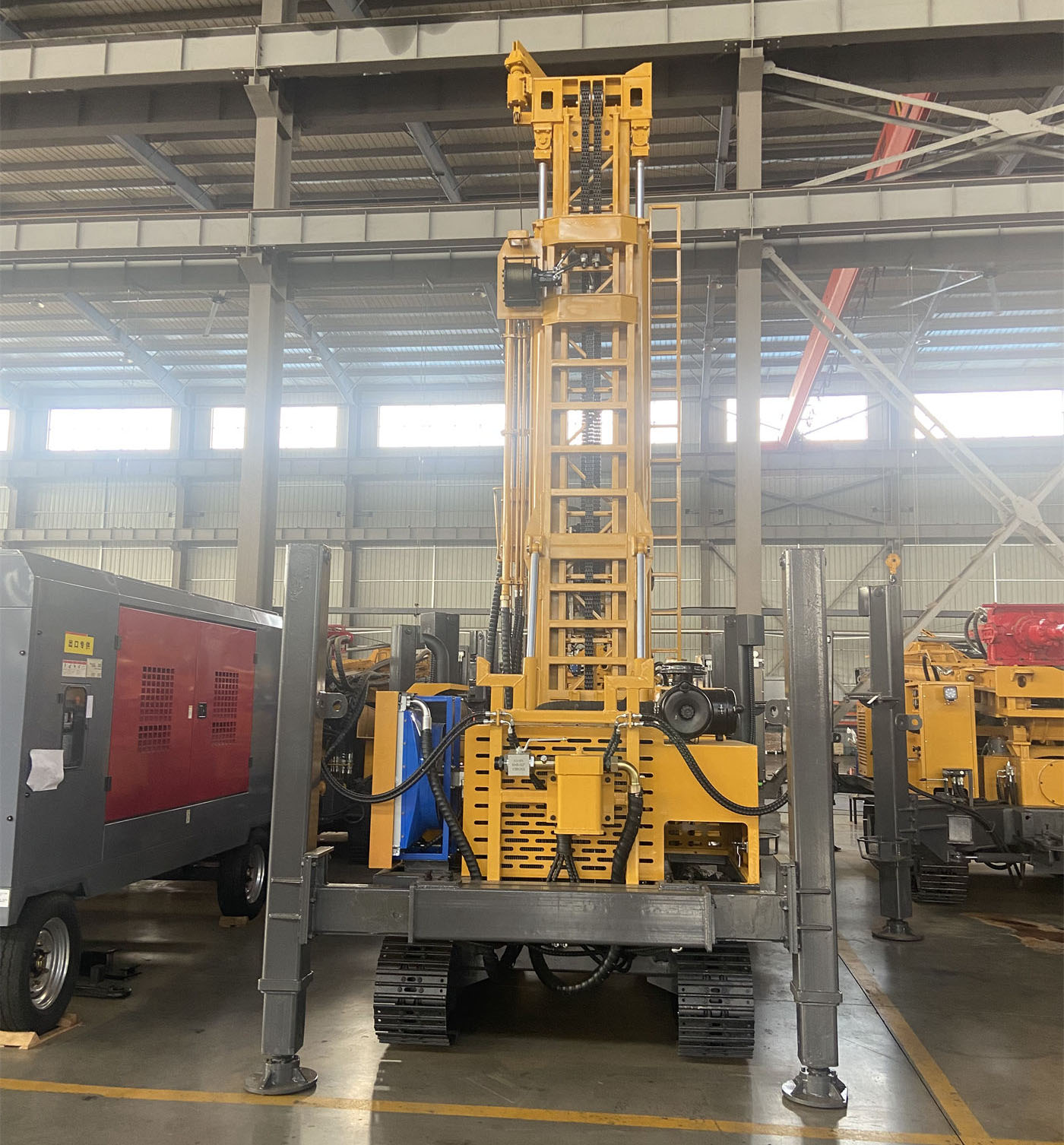
- Transportation and roads: The overall weight is approximately 32 T, and transport dimensions are approximately 11.5 × 2.25 × 3.2 m. The truck-mounted structure improves road transfer efficiency, but before mobilization, road width, bridge load capacity, turning radius, site bearing capacity, and overhead obstacles still need to be verified.
- Mast type: The straight-mast structure has a direct load path and is suitable for long-term high-torque rotation and heavy drill string tripping; the cost is a more fixed transport profile, so road height limits, access space, and site clearance must be confirmed before construction.
- Air supply support: DTH hammer drilling recommends a working pressure of 1.65–8 MPa and air consumption of 16–120 m³/min. For 1200-meter-class deep holes, large diameters, and hard rock, the pressure and displacement requirements for the air compressor are very high; if only pressure is met but displacement is insufficient, it may still lead to insufficient impact, difficult cuttings removal, and bottom-hole sediment accumulation. This support capability is not on the drilling rig itself and needs separate confirmation.
- Power configuration: The two power options of 220 kW or 264 kW should be selected based on the main hole diameter, rock hardness, auxiliary systems, and project load. For long-term large-diameter or high-load hard-rock construction, power reserve and heat dissipation capacity need to be fully considered.
Under which operational objectives is this equipment tier worth including in comparison
Putting the above conditions back into project objectives, the applicable scope mentioned in the WRT1200 data includes deep water supply, agricultural irrigation, mine dewatering, and geothermal investigation. The judgment can be made in the following order:
- Whether the target well depth truly falls into a range that ordinary medium-deep well equipment struggles to cover, or only needs to reach a few hundred meters.
- Whether the design hole diameter is for high-flow well completion requiring larger well casings and submersible pumps, or conventional diameter is sufficient.
- Whether the formation contains relatively intact hard rock requiring a DTH hammer, and whether the upper section has loose layers requiring mud rotary drilling or casing for hole stabilization.
- Whether the project involves multiple well locations or cross-regional transfers, whether the truck-mounted structure can reduce loading and unloading, and whether road conditions allow the entire vehicle to pass.
- Whether air compressors, drill tools, well casing screens, and other support items are implemented in sync according to hole depth and diameter.
If the first two objectives are not high, the drilling depth and torque reserve of 1200-meter-class equipment will be difficult to translate into actual operational value in the hole, and instead will create additional organizational pressure in transportation, site, and air supply. Conversely, if the project truly requires deep holes, large diameters, and hard-rock DTH drilling, these reserves correspond to the operational space for deep-hole tripping, large-diameter well completion, and hard-rock breaking.
Items still requiring confirmation before commencement
The data can illustrate the equipment's capability range and some applicable conditions, but cannot replace project-level verification. The following items are recommended to be confirmed separately before selection and mobilization:
- Target aquifer depth and hydrogeological evaluation results, to avoid construction solely based on maximum drilling depth.
- The matching relationship between design hole diameter, well casing specifications, submersible pump model, and the rig's hole diameter range.
- Whether the actual pressure and displacement of the air compressor cover the air consumption requirements of the intended DTH hammer.
- Whether road height limits, bridge load capacity, turning radius, and drilling site bearing capacity meet the mobilization conditions for a 32 T complete vehicle.
- The final configuration of the 7 m or 13 m feed stroke, and the transportation and pipe connection organization for 3 m or 6 m drill pipes, subject to technical confirmation data from the supplier.
- Hole stabilization, cleaning, and casing plans for upper loose layers, weathered rock, fractured zones, and strong aquifers.
The boundary between reserve and burden ultimately does not depend on the size of a single value, but on whether the project objectives truly utilize this capability and whether mobilization and support conditions can keep up. After aligning these two ends, judging whether this equipment tier is worth including in the comparison range is closer to reality than looking only at the maximum drilling depth.