












It is common practice for contractors to rotate village water supply wells and geothermal investigation wells within the same crew. Well depths for the two project types may range from just over one hundred meters to four or five hundred meters, hole locations are scattered along village roads, field ridges, or within project compounds, and some sites lack a stable power grid. Equipment selection must answer not how deep a single well can be drilled, but whether the same drilling site can switch between the two project types, and what site, power, and mud system preparations are required for each switch.
Using public information on the WRTR600 as a reference, the following breaks this type of rotational operation into several site conditions: which capabilities correspond to village wells, which to geothermal wells, and which are constraints that must be verified in advance when sharing a single trailer-mounted drilling site.
Different Requirements That the Two Project Types Place on the Same Drilling Site
The typical target of village water supply wells is medium-to-deep groundwater. Well diameter is affected by completion design and pump selection, hole locations are mostly near village roads and field ridges, sites are narrow, and relocations are frequent. For geothermal investigation wells or some geothermal well projects, well depth may approach the upper limit of equipment capability, and requirements for continuity of mud circulation and downhole pressure control are more pronounced. Site conditions depend on the project location and are not necessarily more spacious than those for village wells.
What the two project types share is that neither wants the mast, power, and mud system transported in multiple loads and assembled on site. This is precisely why trailer-mounted structures are considered, but whether sharing a single drilling site is feasible still requires item-by-item verification of conditions.
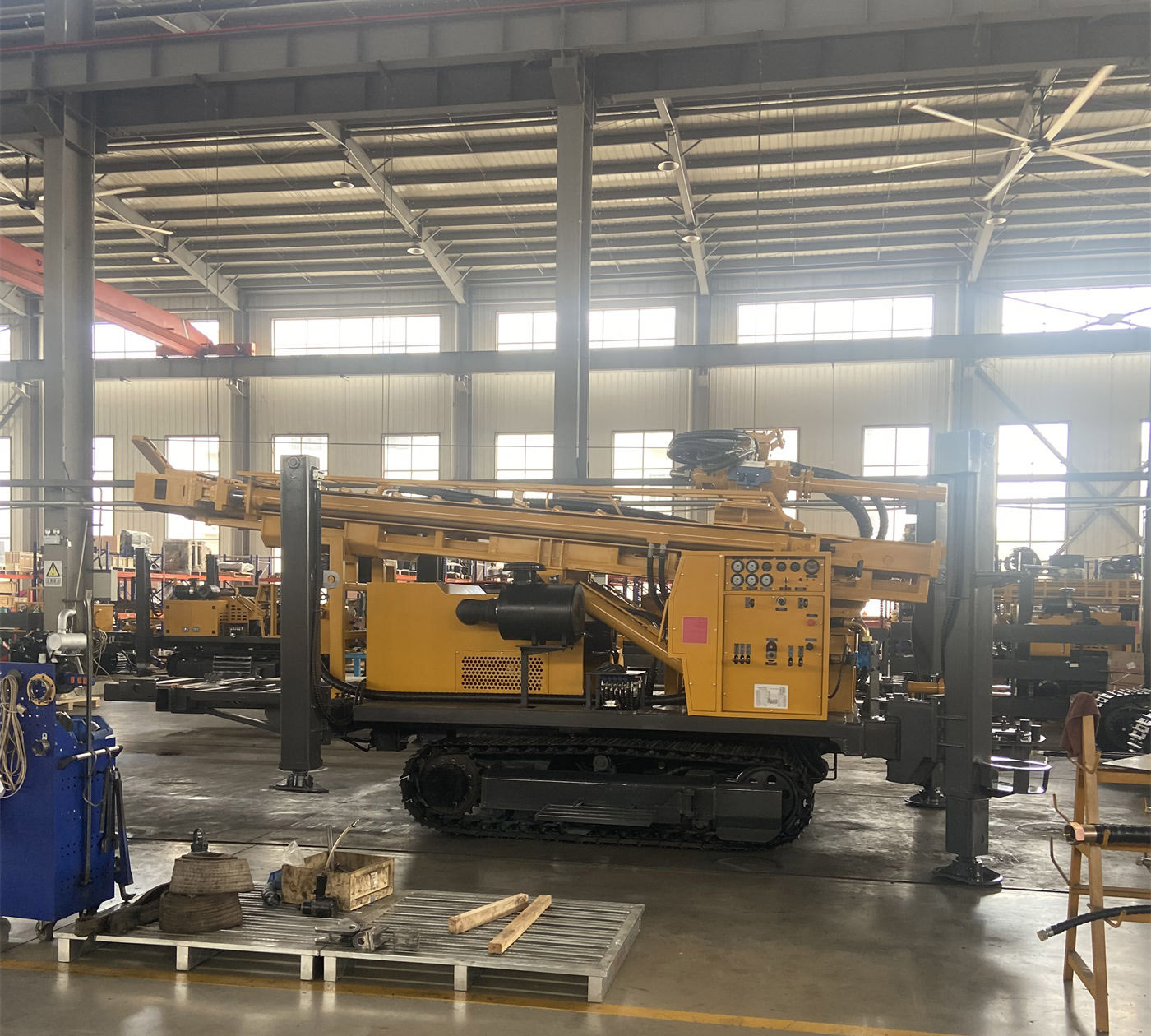
Drilling Depth and Hole Diameter: First Check Whether the Targets of Both Project Types Fall Within the Same Coverage Range
The WRTR600 has a maximum drilling depth of 600 m, a maximum drilling diameter of 500 mm, and a rotary table through-hole diameter of 500 mm. If the depths and hole diameters of village water supply wells and some geothermal investigation wells fall within this range, the equipment has a basis for discussion in terms of capability coverage.
The documentation also states that actual drilling depth and hole diameter are affected by formation, drilling tools, mud circulation, casing design, and downhole resistance. In other words, 600 m is the upper limit of equipment capability and does not mean every project can be organized to that limit. If a geothermal well involves higher formation temperatures, special circulation media, or cementing requirements, it must be verified separately and applicability cannot be judged on drilling depth alone.
Power and Mud System Integrated on the Trailer Chassis Correspond to Sites Without a Power Grid
The equipment integrates an SCGC-200kW diesel generator set with a rated voltage of 380 V, rated current of 360 A, and frequency of 50 Hz, supplying power to the mud pump, hydraulic oil pump, and auxiliary electrical equipment. The 3NB-130 mud pump has a specified displacement of 8.4–16.6 L/s and a rated working pressure of 5–10 MPa, driven by a 90 kW motor.
For village well sites and some geothermal projects, the significance of this integration is that the site does not need to separately coordinate mains power connection or configure a standalone generator set; mud circulation and auxiliary electrical power are provided by the power source on the same chassis. However, this also means that fuel supply, generator set heat dissipation, and on-site noise control must be incorporated into site layout. This is especially true for locations near village roads or residential areas, where operating hours and distance conditions must be confirmed in advance.
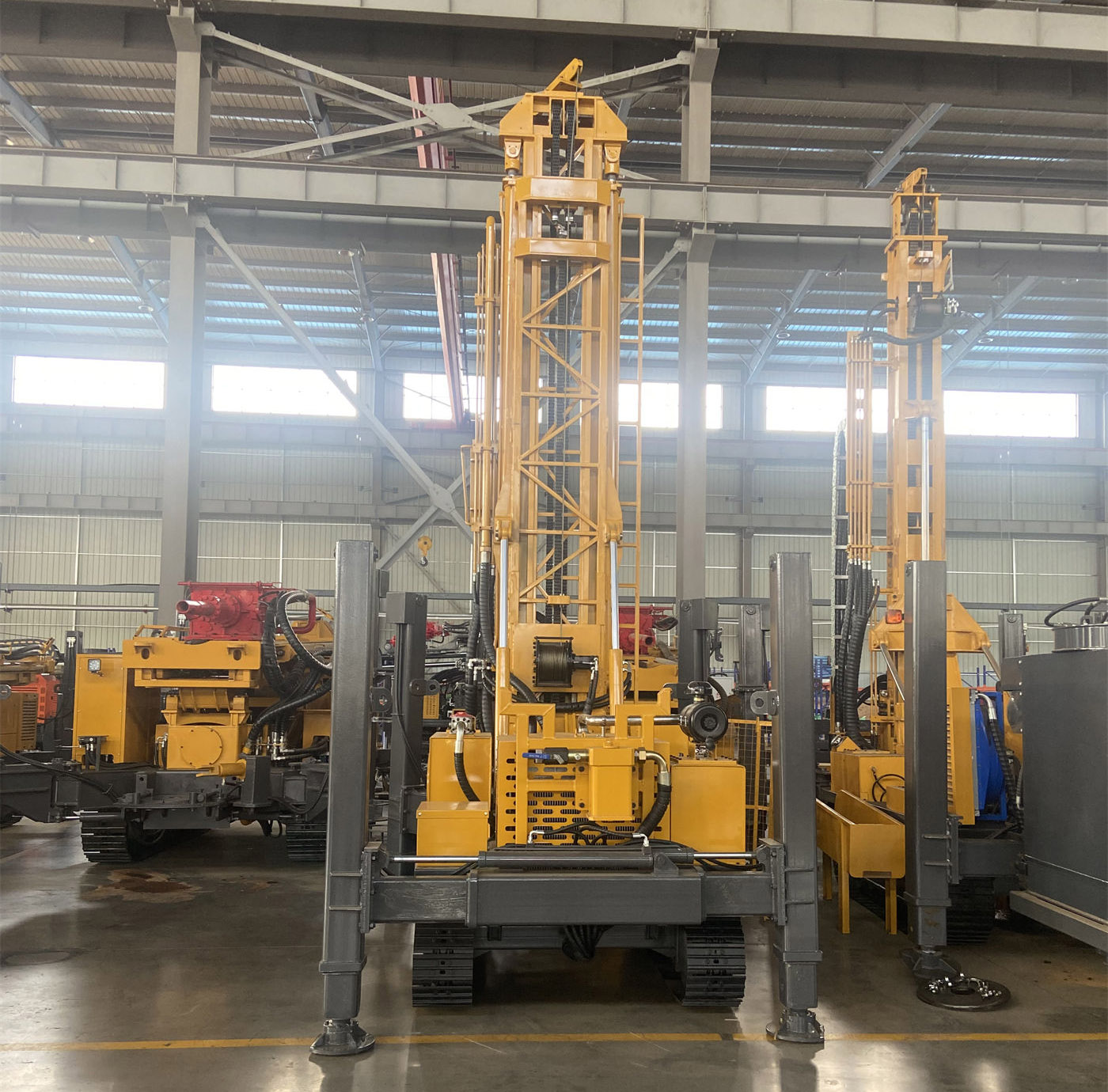
Short Mast vs. Long Mast: Decide Which Version to Use Before Rotating Projects
The short mast version has an effective height of 12 m and is equipped with a 7.5 m kelly and 5.5 m drill pipe; the long mast version has an effective height of 15 m and is equipped with a 10.5 m kelly and 9 m drill pipe. The short mast is more conducive to transport and site adaptability, while the long mast reduces the number of pipe connections and is suitable for continuous drilling in deep holes.
If the same crew takes on both village wells and geothermal wells, the choice of mast version will affect the organization of both project types: the short mast is more convenient for entry alongside village roads and field ridges, but the number of pipe connections increases in deep hole sections; the long mast provides a smoother pace in deep hole sections but has larger transport dimensions. The documented transport dimensions are approximately 15100 × 2480 × 4100 mm for the short mast and approximately 16630 × 2480 × 4100 mm for the long mast. Before relocating between projects, road width, turning radius, height clearance, and bridge load capacity must be checked against this profile.
Three-Speed Rotary Table and Dual Winches: Corresponding to Formation Changes and Drilling Tool Handling
The rotary table provides three speed ranges of 38 / 57 / 85 r/min, corresponding to theoretical torques of approximately 13.8 / 9.2 / 6.2 kN·m. The low-speed range provides higher torque and is suitable for larger hole diameters, heavy drilling tools, and formations with greater resistance; higher speeds are suitable for drilling stages with less resistance. The main winch has a single-line pull of 40 kN, the auxiliary winch has a single-line pull of 30 kN, and the swivel has a maximum load of 30 T and an inner diameter of 63.5 mm.
Both village wells and geothermal wells may encounter alternating soil layers, sand layers, gravel layers, and weathered rock. The process directions given in the documentation are: for soil and clay, focus on controlling mud properties; for sand and gravel layers, combine with casing for wall protection; for weathered rock and mixed formations, select drilling tools and adjust speed, torque, and mud pump displacement according to actual conditions. These fall within the scope of process selection. For a specific project, they still need to be confirmed against the formation column and completion design, and the directional descriptions in the documentation cannot be treated as a fixed construction plan.
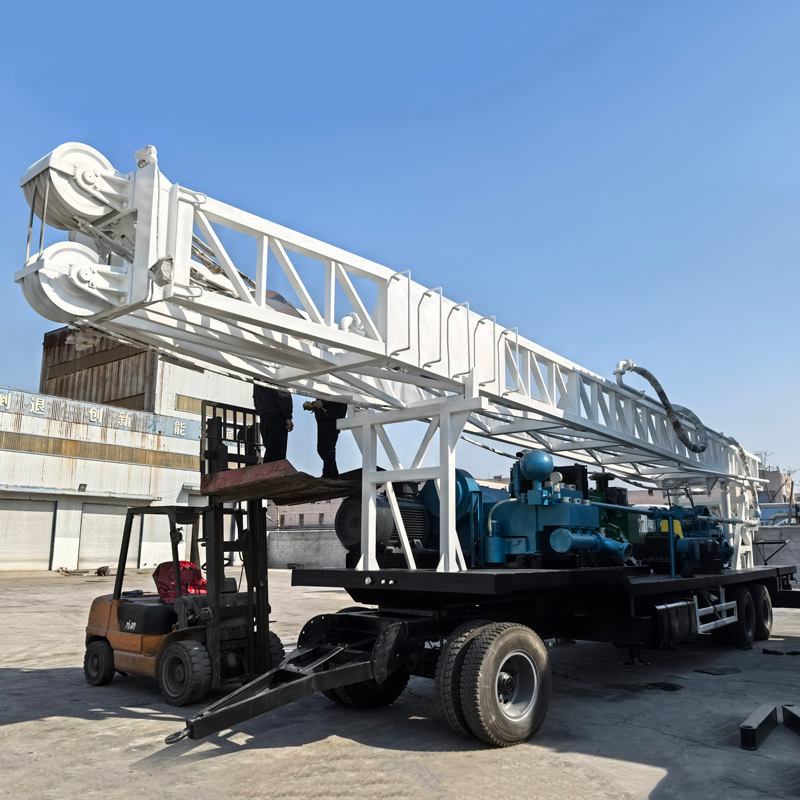
When Sharing a Single Trailer-Mounted Drilling Site, Several Things Must Be Settled First Regarding Site and Relocation
- Towing vehicle and trailer transport permits: The documentation only states that the trailer-mounted structure facilitates transport of the entire drilling rig as a unit and does not cover towing vehicle types or local transport regulations, which must be confirmed according to actual road conditions.
- Site bearing capacity and mast erection space: The working dimensions are approximately 15100 × 2480 × 14170 mm for the short mast and approximately 15100 × 2480 × 17170 mm for the long mast. Before erecting the mast, confirm that there are no overhead lines or obstacles above.
- Mud pit and return mud channels: The mud pump displacement and pressure are given, but the on-site mud pit volume, circulation ditch layout, and waste mud treatment must be arranged separately according to the project's environmental requirements.
- Fuel and generator set heat dissipation: Space must be reserved during site layout for fuel supply and ventilation for continuous operation of the 200 kW generator set.
- Operating hours along village roads and near residential areas: The surrounding environment of village well sites differs from that of geothermal project sites, and noise, road occupation, and access management must be confirmed separately.
Under Which Conditions Is It Worth Including This Equipment in the Comparison, and What Still Needs Verification
If most target well depths for both project types are within 600 m, hole diameters do not exceed 500 mm, locations are scattered and some lack a stable power grid, and at the same time it is desired that the mast, power, and mud system be relocated on the same chassis, the documented characteristics of the WRTR600 correspond to these needs: the integrated generator and mud pump reduce on-site ancillary equipment, the trailer chassis reduces scattered transport, and the short or long mast can be selected according to the project.
Conversely, if a geothermal well involves formation temperatures, circulation media, or cementing requirements beyond the scope of the documentation, or if road conditions at village well sites cannot accommodate the trailer transport profile, conclusions cannot be drawn based solely on equipment drilling depth and integrated layout. The documentation does not provide fuel consumption, actual drilling efficiency, completion results, or specific drilling parameters for different formations; these must be verified item by item at the project level with the manufacturer and on-site technical personnel.
The trade-offs of sharing a single trailer-mounted drilling site ultimately come down to whether the well depths and hole diameters of the two project types fall within the same coverage range, whether sites can accommodate the trailer transport profile, and whether mud and power support can remain consistent during rotation. Laying out these conditions first is more helpful for judgment than looking at any single capability limit alone.