












When discussing circulation methods for deep well projects, it is easy to mistake "can be switched" for "can be switched at any time." In reality, direct mud circulation and air-lift reverse circulation solve different problems: one uses a mud pump to send the medium down through the drill pipe and return it up through the annulus; the other injects gas to reduce the density of the liquid column inside the pipe, allowing cuttings to return rapidly along the inner pipe. To consider these two methods on the same rotary table drill, the first thing to check is whether the supporting conditions can keep up, not just whether the drill itself lists this process.
First, clarify the medium paths of the two processes
The public documentation for the WRTR1000 states that it supports direct mud circulation, air foam, DTH hammer, and optional air-lift reverse circulation. For direct circulation, the medium is provided by a mud pump; the complete machine is equipped with a BW1200/7 mud pump, with a maximum pressure of 7 MPa and a displacement of 1200 L/min. Air-lift reverse circulation is an optional drilling method that requires matching dual-wall drill pipes, an air compressor system, and sampling equipment to be configured together; the documentation also clarifies that it is not a dedicated RC exploration rig.
- Direct circulation: the mud pump delivers slurry, cuttings return through the annulus, and it also provides wall protection and drill bit cooling.
- Air-lift reverse circulation: injected gas changes the liquid column inside the pipe, cuttings return upward through the inner pipe at a fast return rate, making it easier to observe cuttings.
This path difference directly determines the different configuration lists: direct circulation focuses on pumps, mud performance, and the surface circulation system; air-lift reverse circulation focuses on air compressors, gas injection methods, dual-wall drill pipes, and surface sample splitting.
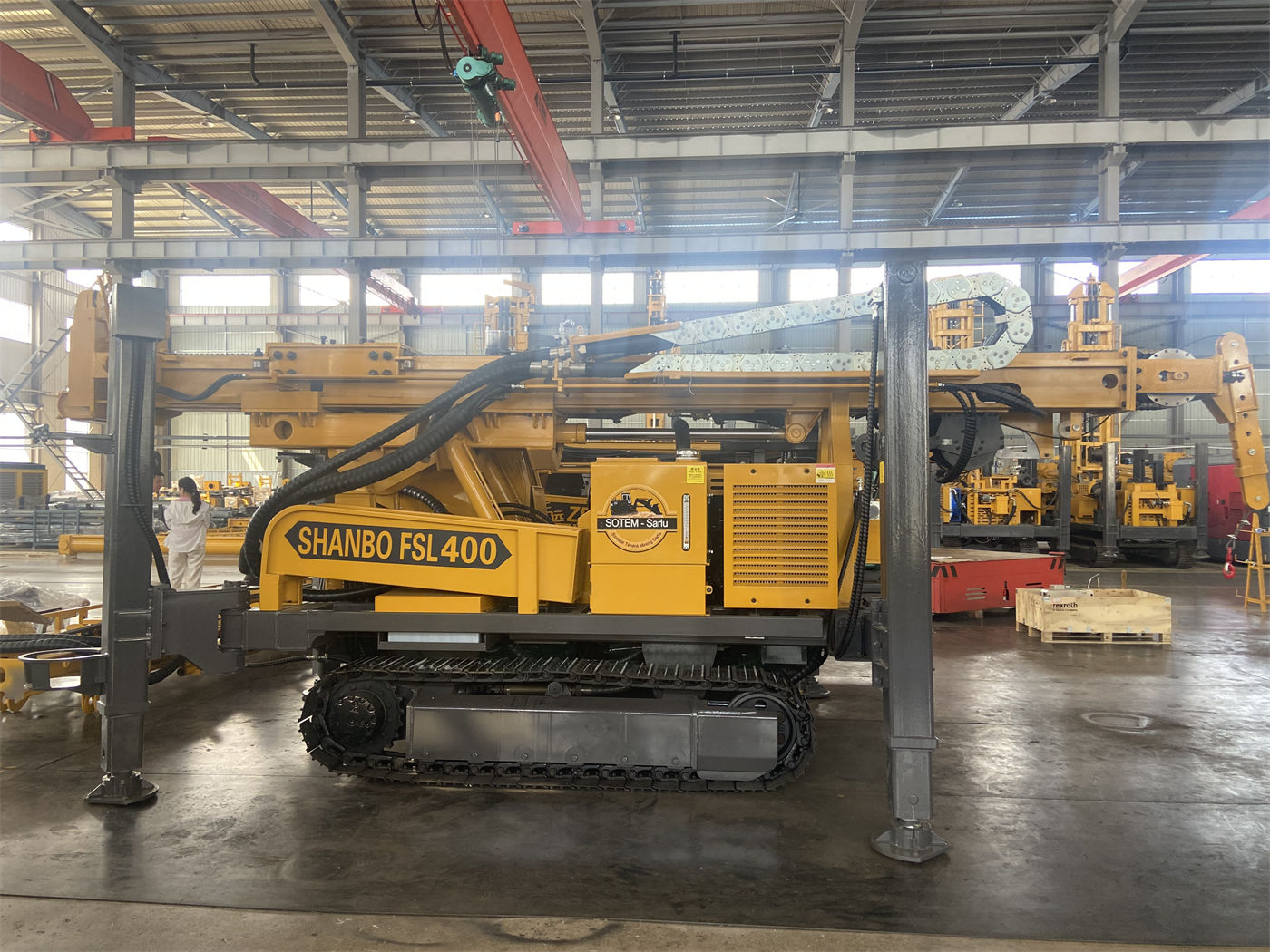
When supporting conditions do not match, switching does not happen automatically
| Configuration item | Common concerns for direct circulation | Additional confirmation required for air-lift reverse circulation |
|---|---|---|
| Power medium | Displacement and pressure of the BW1200/7 mud pump | Air compressor capacity, gas injection pipeline, and gas volume regulation |
| Drilling tools | Conventional drill pipes, kelly, and swivel | Dual-wall drill pipes, inner pipe, and interface compatibility |
| Surface | Mud pits, purification, and return mud observation | Cuttings return pipe, sample splitting, and sample collection |
| Objective | Well completion, wall protection, cuttings transport | Rapid cuttings return and cuttings observation |
The controllable complete-machine items in the documentation include a 25 kN·m rotary table, a 60 T mast and 60 T swivel, and a 90 kN main winch. These are the foundation for deep-hole drill string handling and casing operations, but they do not replace the air compressor system and dual-wall pipes. In other words, the choice of circulation method is not a question of whether the rotary table capacity is sufficient, but whether the surface and drilling tool configurations are complete.
Decide which to use based on formation and project objectives
The WRTR1000 documentation describes formations in specific terms: soft formations such as clay and silt are suitable for direct mud circulation; sand and gravel layers require attention to casing and hole collapse prevention; when entering competent bedrock, an air compressor, DTH hammer, and bit can be configured for DTH drilling; air foam is suitable for some dry, lost-circulation, or hole sections that need improved cuttings carrying capacity.
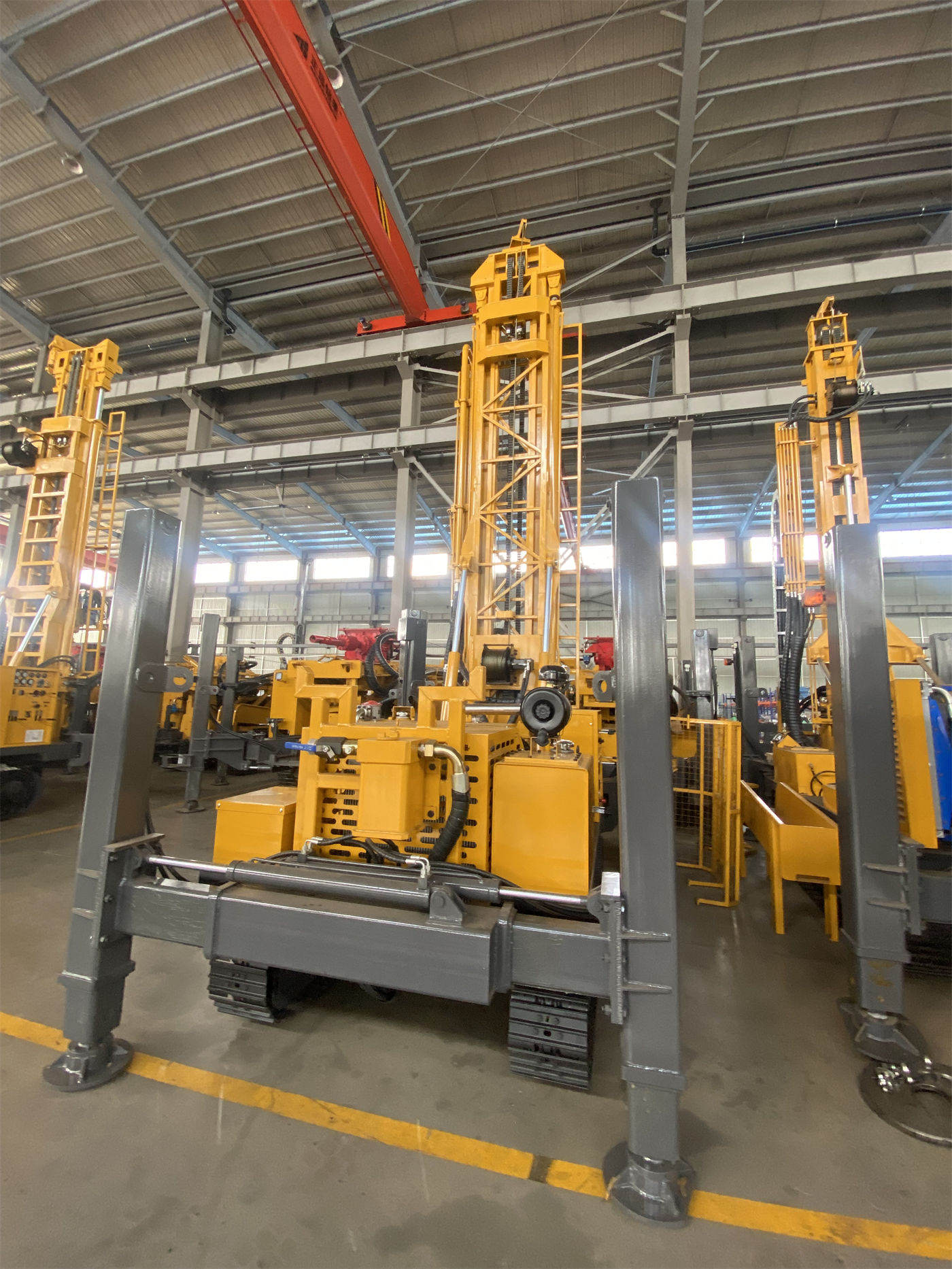
If the main objective of the project is water supply well completion, direct circulation plus casing protection is the more conventional route: use mud to stabilize the hole in the upper overburden, and then consider DTH or air foam in deep hard rock. If the project requires rapid cuttings return, observation of cuttings changes, or cuttings logging as part of hydrogeological drilling, then air-lift reverse circulation has a clearer role. The divergence here is not about hole depth, but about whether the project needs stable borehole walls and well completion structure, or cuttings information.
The rotary table and mast are basic conditions under both processes
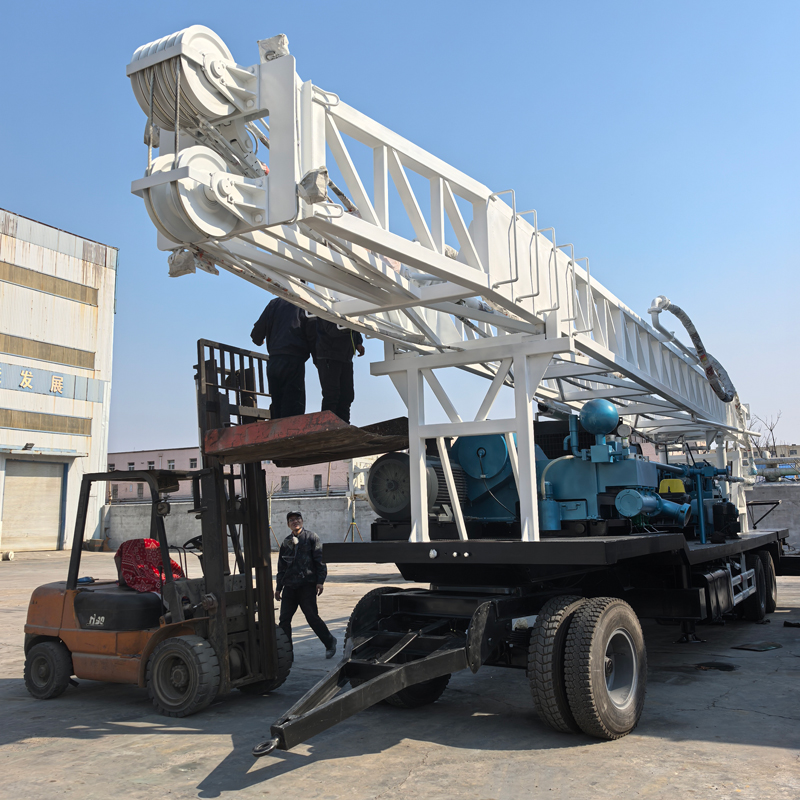
Both circulation methods require reliable tripping of the drill string. The WRTR1000 has a maximum drilling depth of 1000 m, a rotary table through-hole of 660 mm, four speed ranges of 37 / 52 / 84 / 145 r/min, a mast total height of 19.5 m, an effective height of 18.482 m, and a maximum load of 60 T. When air-lift reverse circulation is selected, the outer diameter and joints of the dual-wall drill pipes will occupy the through-hole and drill string space, and the tripping load will also change. Therefore, the rated load of the mast and the wire rope capacity of the winches (both main and auxiliary winches are 160 m) still need to be calculated based on the actual drill string assembly. The documentation does not provide specific specifications for dual-wall drill pipes, so this part can only be treated as an item to be confirmed.
Items to verify with the manufacturer
- Which components are included in the optional air-lift reverse circulation package, and whether the air compressor is supplied with the complete machine or selected separately.
- The compatibility of the dual-wall drill pipe diameter and joint type with the rotary table through-hole and swivel.
- How the mud pump and gas injection system coordinate when switching between air foam and air-lift reverse circulation.
- If the project has clear requirements for sample representativeness and sample splitting quality, who provides the sampling equipment.
Before these conditions are confirmed, "optional air-lift reverse circulation" should not be directly understood as meaning that the machine can operate with reverse circulation sampling in any deep well project. A more prudent approach is to first determine the main process based on well completion objectives and formation sequence, and then evaluate the configuration of the other circulation method as a supplementary means for specific hole sections.
When it is worth including the WRTR1000 in the comparison
When the project is a 1000-meter-class deep water well, geothermal well, mining area water supply, or hydrogeological borehole, with loose overburden in the upper part and bedrock in the lower part, and the site has access roads for towed entry and requires independent diesel power, then this equipment's process combination range and deep-hole drill string handling capacity match the needs. Conversely, if the project aims at continuous high-quality core, the documentation itself also states that a dedicated core drilling rig should be selected, which is unrelated to the choice of circulation method.