












When you get a parameter table for a small water well drilling rig, the common approach is to read it from top to bottom, remember a few numbers like "180 meters," "28 horsepower," and "16 tons," but be unable to explain how they relate to one another. A more effective way to read it is to set an order first: first see what the equipment claims to be and what size hole it can cover, then see what it relies on to complete drilling and tripping, and finally see whether it can get to the job site. Below, using the publicly available information for the WR180E on this site as a sample, we break this order down layer by layer. If you switch to another small crawler water well drilling rig, you can also self-check in the same order.
Step 1: Model and equipment type—first confirm what kind of machine is being described
The WR180E material says "high cost-performance small crawler water well drilling rig." This line looks most like a label, but it determines the premise for interpreting all the parameters that follow: crawler type means the travel system, complete machine weight, and site access conditions will enter the consideration; small means hole diameter, drilling depth, and mast height will be limited to the corresponding range; water well drilling rig means its target hole is for completing a well to extract water, not coring or reverse circulation sampling. If you skip this line and look directly at 180 m, it is easy to compare it with the drilling depth of exploration equipment and reach a meaningless conclusion.
Step 2: Drilling depth and hole diameter must be read as a group
The WR180E parameters are a maximum drilling depth of 180 m and a hole diameter of 90–230 mm. These two numbers are not independent capability indicators, but two boundary descriptions of the same machine's hole-forming dimensions: the smaller the hole diameter, the greater the room to reach a deeper hole depth; when the hole diameter approaches the upper limit, drill string weight, cuttings discharge volume, and rotation load all rise, and the actual depth that can be reached must be judged according to working conditions. The material itself also states that the actual completed well depth should be determined according to the local groundwater level, aquifer position, hole diameter, and construction process. So when reading these two numbers, the question should be "For the well I want to drill, where does the hole diameter fall within 90–230 mm?" rather than "It can definitely drill 180 meters."
Step 3: Power—look at the form first, then the power rating
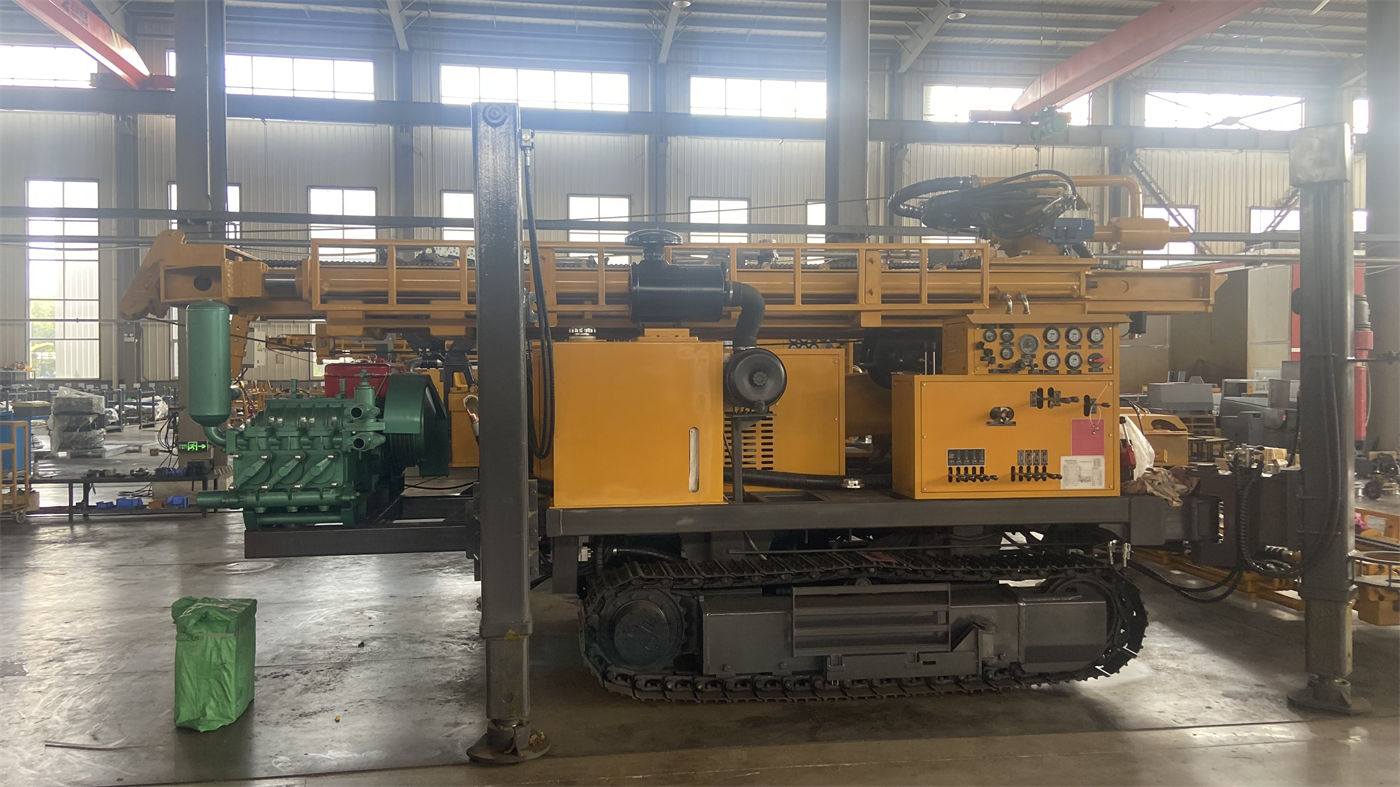
The WR180E is equipped with a 28 HP Changchai diesel engine. The power field should be read for at least three things: fuel form, power rating, and the systems it drives. Diesel power means this equipment does not rely on a fixed power grid and is suitable for remote agricultural and livestock sites; the 28 HP level corresponds to the hydraulic system, rotation, and crawler travel of compact equipment, not the continuous heavy-load working conditions of large deep-well rigs. The material also reminds that during continuous operation, the engine oil, cooling, fuel system, and air filter should be checked according to regulations—such maintenance items are supporting information and are easy to miss when reading a parameter table.
Step 4: Rotation and lifting—these are two different sets of actions
Rotation speed of 40–70 rpm and lifting force of 16 T correspond respectively to drilling rotation and tripping actions, and cannot substitute for each other. Rotation speed determines the turning rhythm of the drill bit at the bottom of the hole. The material explains that it can be adjusted according to the drill pipe, drill bit, and formation conditions; soil layers, weathered layers, and alternating soft and hard formations have different requirements for rotation and feed. Lifting force is used for normal drill pipe tripping, recovery of drilling tools, and handling some in-hole tools; the material's statement of 16 T has clear boundaries—when abnormal tripping resistance, hole wall narrowing, or poor cuttings discharge occurs, the formation and in-hole conditions should be judged first, and it is not recommended to rely solely on maximum lifting force to force handling. When reading this line, the key is not to remember 16 T, but to know that it does not solve in-hole abnormalities.
Step 5: Drill pipe and mast—these determine the construction rhythm
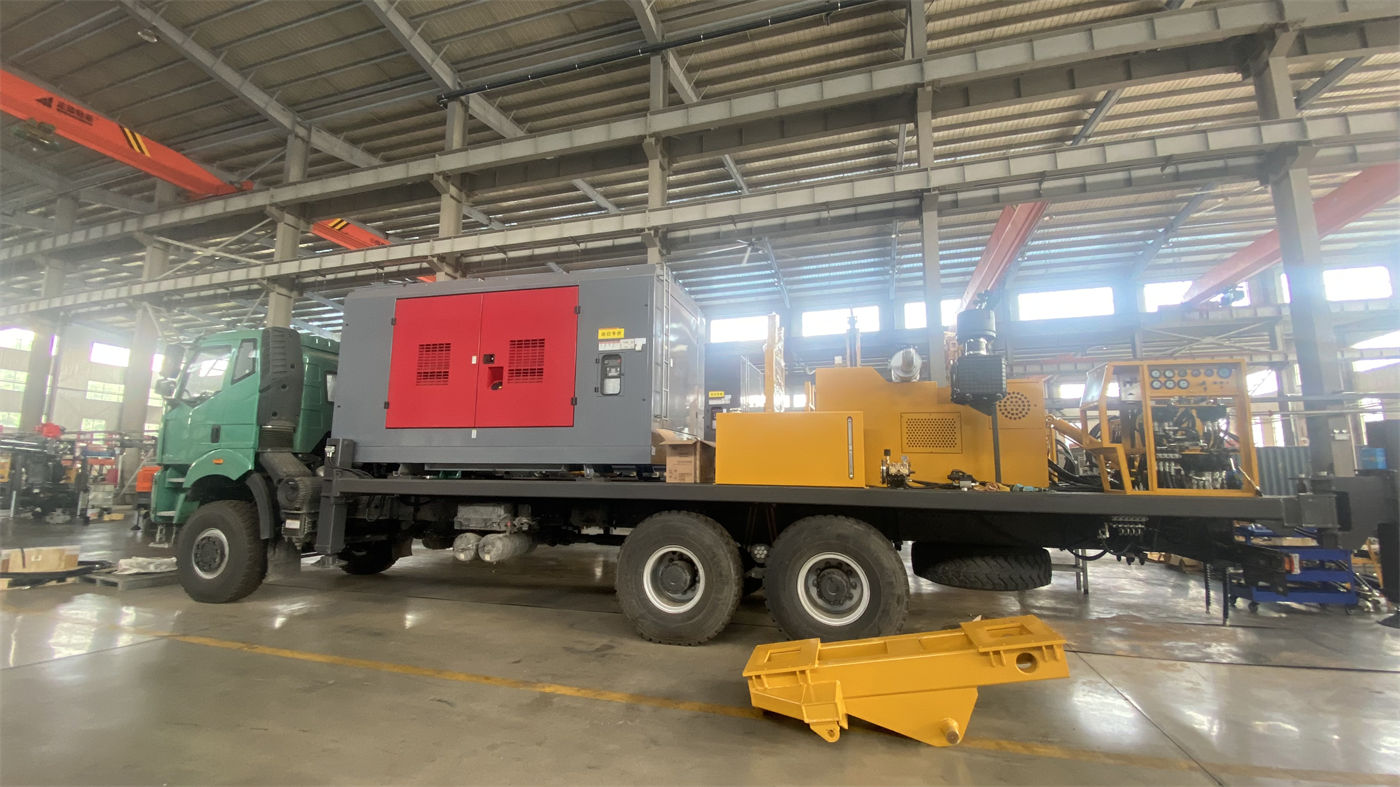
The WR180E can use 50 mm, 60 mm, and 76 mm drill pipes, with drill pipe lengths configured at 1.5 m and 2.0 m; mast height is 1.5 m. Put these three values together, and they point to the same thing: this equipment will have a relatively high frequency of connecting and disconnecting drill pipes each time. The 1.5 m mast keeps the complete machine at a lower working height and smaller transport volume, suitable for courtyards, orchards, small construction sites, and rural roads where space is limited, at the cost of more pipe changes than long-stroke models. The material's statement on this is also direct—this machine leans more toward flexibility and economy, rather than pursuing the continuous drilling efficiency of large equipment. If the project has dense hole locations and relatively deep single holes, the time cost brought by this group of values is worth calculating in advance.
Step 6: Complete machine dimensions and weight—these are about whether it can get to the site
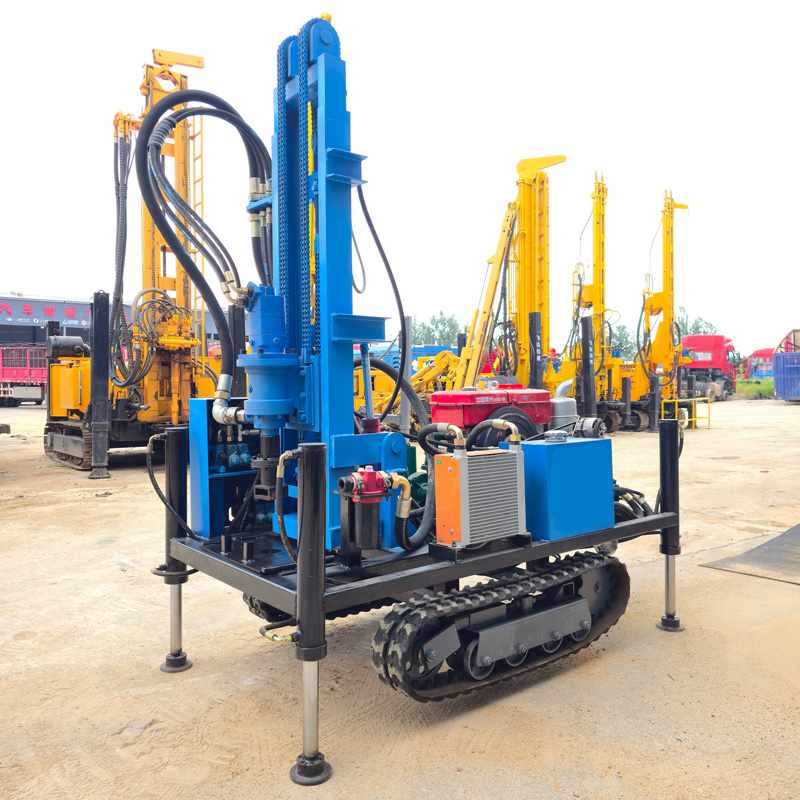
The WR180E has overall dimensions of about 3000 × 1300 × 1700 mm, a complete machine weight of 1.8 T, and a travel speed of 2.5 km/h. This group of numbers answers transport and site questions, not drilling capability questions: a complete machine of 1.8 T is suitable for transfer between sites using small transport vehicles, and the crawler chassis makes it easy to move on field roads and general unpaved sites. The material does not give the climbing angle, minimum turning radius, or ground bearing capacity requirements; such access conditions need separate confirmation.
Stringing the order together: which values must be read together
| Parameter combination | Question they jointly answer |
|---|---|
| Maximum drilling depth 180 m + hole diameter 90–230 mm | What size hole this equipment can cover; meaningful only when both targets hold at the same time |
| 28 HP diesel engine + rotation 40–70 rpm + lifting force 16 T | What completes the two sets of actions, drilling and tripping; configuration leans toward conventional shallow to medium depths |
| Drill pipe diameter and length + 1.5 m mast | Frequency of connecting and disconnecting drill pipes and manual operation intensity |
| Complete machine 1.8 T + dimensions 3000 × 1300 × 1700 mm + travel 2.5 km/h | Whether it can be transferred by small vehicles and whether it can enter narrow sites |
What the material does not state and should be separately confirmed after reading
The publicly available WR180E material does not give a rotation torque value, nor does it list pump volume beyond hydraulic system pressure, mud pump specifications, air compressor matching parameters, or applicable drilling process switching conditions. The definition ranges of values such as working pressure 1.7–3.0 MPa and travel speed 2.5 km/h are also not expanded in the material. In addition, the ground bearing requirements corresponding to the complete machine weight of 1.8 T, crawler climbing capability, and recommended hole diameter ranges for different drill pipe diameters are not reflected in the existing material. These are not omissions in the parameter table, but boundaries that must be clearly identified when reading: items not written should be listed as matters to be confirmed, not inferred on your own.
After reading in this order
After reading a small water well drilling rig parameter table to the end, you should be able to answer four questions: what type of hole this equipment targets, what power and rotation-lifting system it relies on to complete drilling, what the rhythm of connecting and disconnecting drill pipes is roughly like, and whether it can smoothly enter and leave the job site. The positioning of the WR180E in the material corresponds to shallow to medium-depth projects such as rural water supply, household water wells, farmland irrigation, orchards, livestock farms, and general small engineering water wells, and its parameter combination is also developed around this range. Beyond this range, for example when mainly drilling complete high-hardness rock formations or working near the maximum drilling depth for a long time, the material itself states that whether the drilling tools, power, and equipment level match should be reassessed. Before actual selection, you should also combine local geological conditions, in-hole tools, drilling angle, and operation method, and verify with the manufacturer the supporting items not listed in the material.