












In hard rock water well drilling, the same rig may achieve penetration rates that differ by several times or only slightly when switching between a DTH hammer and mud direct circulation. The difference does not come from the equipment itself but from how each method acts at every drilling stage: what force breaks the rock, what medium carries cuttings out of the hole, how much time is spent on rod handling and hole cleaning, and what maintains the hole wall. Breaking the efficiency question into these four stages is the only way to determine where the difference actually lies in a given project.
First, distinguish what each method solves
Mud direct circulation is a circulation method of rotary drilling: the bit cuts and grinds rock under axial pressure and rotary torque, and mud flows down through the drill pipe to the bottom, carrying cuttings up the annulus between the drill pipe and hole wall to the surface. It relies on mechanical rock breaking plus liquid cuttings removal.
A DTH hammer mounts the hammer directly behind the bit. Compressed air drives the piston to impact repeatedly, and the impact energy acts directly on the rock at the bottom. The same air stream blows cuttings out of the annulus. It relies on impact rock breaking plus pneumatic cuttings removal.
The difference between the two methods in hard rock comes from these two points: different rock breaking mechanisms and different cuttings removal media. Differences in other stages are essentially derived from these two.
Rock breaking stage: impact energy versus rotary cutting
Intact hard rock has high compressive strength and strong abrasiveness. A rotary bit mainly breaks rock by shearing and grinding with cutting teeth. Bit wear is fast, torque and axial pressure per unit footage are high, and penetration rate drops noticeably as rock strength increases.
A DTH hammer delivers impact energy directly to the bottom. Rock is more likely to crack and break into blocks under impact loading, while the rotary part mainly turns the bit and dresses the bottom. Therefore, in intact hard rock such as granite, basalt, and limestone, DTH penetration is usually significantly higher than mud direct circulation, and the burden on axial pressure and rotary torque is relatively lower.
But this conclusion has boundaries. The WR600S information on this site states that DTH hammer drilling recommends working air pressure of 1.2–3.5 MPa and air consumption of 16–55 m³/min. If the air compressor output is insufficient, impact energy drops and bottom hole cleaning is inadequate, canceling the DTH speed advantage and possibly making it less stable than mud rotary. The WR500S information also gives 1.2–3.5 MPa and 16–55 m³/min, while the WR500SE gives 1.7–3.5 MPa and 17–42 m³/min. It is clear that equipment in the same series does not have identical air pressure and volume requirements and must be matched individually by model and project.
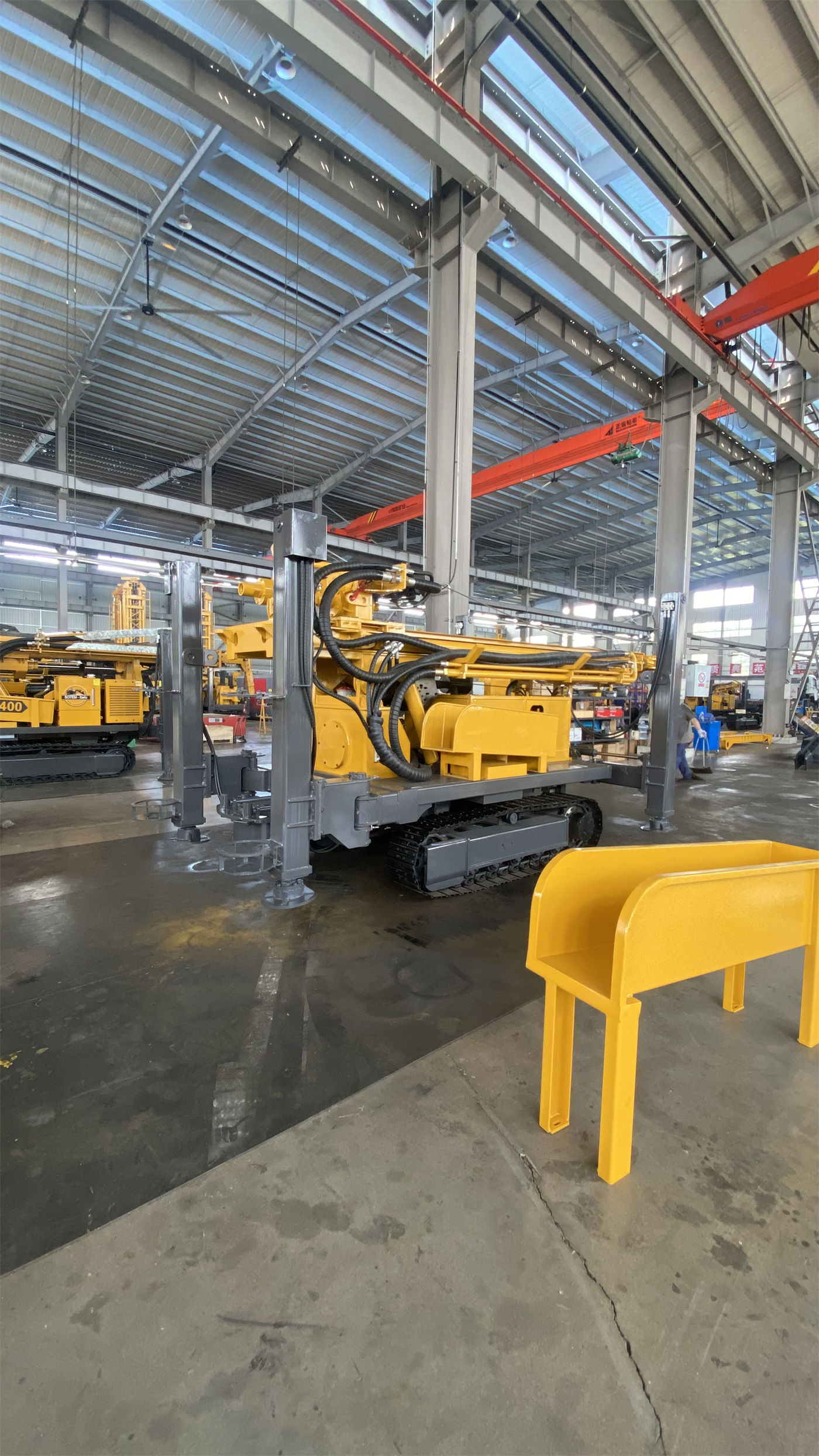
Cuttings removal stage: the most direct difference between pneumatic and hydraulic methods in hard rock
Cuttings from hard rock drilling are coarser and denser. Whether they are removed promptly directly determines whether the bottom hole maintains clean rock breaking conditions. Once cuttings accumulate at the bottom, impact energy is absorbed by the cushion, rotary resistance increases, and the bit regrinds cuttings.
DTH cuttings removal depends on air compressor volume. As hole depth increases, hole diameter enlarges, rock becomes harder, or altitude rises, the annular return velocity drops, and the required air volume must increase accordingly. This is why the information repeatedly stresses that rated pressure alone is not enough. If the hole section has fractures, broken zones, or cavities, compressed air will leak heavily. The correct approach is to locate the leak and consider foam or casing, not simply increase compressor pressure.
Mud direct circulation relies on pump rate and mud properties. Besides carrying cuttings, mud also stabilizes the wall, cools the bit, and balances formation pressure. The information shows that WR500S, WR500SE, and WR600S can be equipped with mud pumps, centrifugal pumps, and foam pumps. In loose overburden and sand-gravel layers, mud simultaneously solves hole stabilization and cuttings removal, which pneumatic removal cannot do.
In hard rock sections, if the upper overburden has already been handled with mud or casing, switching to DTH in the lower intact rock usually better reflects the strengths of each method. Conversely, if mud circulation is maintained for a long time in the hole, mud consumption and lost circulation treatment become an extra burden when a loss zone is encountered.
Auxiliary time stage: rod handling, hole cleaning, and downhole anomaly treatment
Efficiency differences are not only in pure drilling time. The drill pipe length and mast type of a water well drilling rig directly affect the number of rod connections and auxiliary time per hole.
In the information, WR500S and WR600S support 6 m drill pipes, and WR500SE has a single feed length of 6.6 m, allowing direct use with 6 m drill pipes. For 500–600 m holes, there are many rod connections, and longer pipes and longer strokes reduce the frequency of power head return and rod connection. This saving is independent of process selection but its impact on overall efficiency grows with hole depth.
Process-related auxiliary time is mainly in hole cleaning and downhole anomaly treatment. DTH is prone to abnormal cuttings return in air loss, broken zones, and water inflow sections, often requiring stopping to observe drilling parameter changes. Mud direct circulation also requires stopping for hole shrinkage, block falling, and mud loss. Both methods encounter stoppages, but the judgment basis differs: DTH mainly looks at cuttings return volume, air pressure fluctuation, and torque changes, while mud circulation mainly looks at cuttings content in returning mud and pump pressure changes.
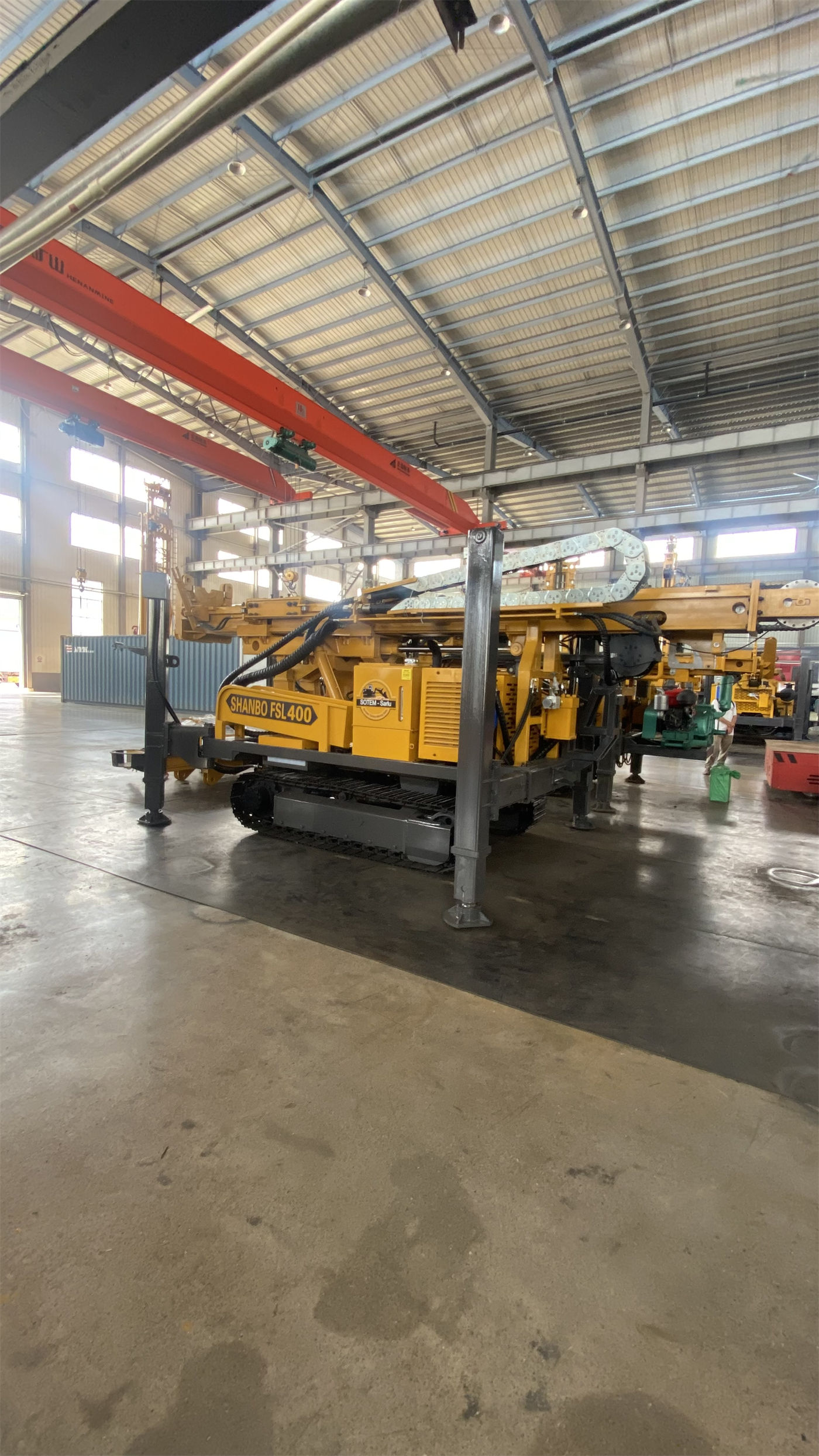
The role of lifting capacity here is to provide normal operating margin, not to solve all downhole accidents. WR500S has a lifting force of 30 T, WR600S 35 T, and WR500SE 26 T. In deep holes, drill pipe weight, wall friction, and casing weight all increase pulling load. The information clearly advises that if pulling resistance is abnormal, clean the hole first and assess the wall condition rather than relying directly on maximum lifting force.
Hole wall treatment stage: hard rock sections and overburden cannot be lumped together
Intact hard rock sections usually have stable walls. DTH dry cuttings removal actually reduces mud invasion into aquifers, benefiting subsequent well completion and development. However, overlying weathered layers, broken zones, and aquifers often require additional treatment.
The information on this site is consistent in its approach to such formations: WR600S, WR500S, and WR500SE all support mud rotary drilling. For upper soil, clay, sand, and sand-gravel layers, priority is given to hole stabilization, cuttings carrying, and wall protection. After entering more stable rock, switch to DTH hammer drilling. For broken zones and air loss formations, consider reducing feed speed, maintaining continuous hole cleaning, and using foam or casing as site conditions require. After entering the main aquifer, record the depth of water-producing zones and adjust air supply, hole cleaning, and casing methods according to water inflow.
Therefore, when discussing which method is more efficient, it is essential to specify which hole section is meant. Simply attributing whole-hole efficiency to one method easily overlooks the extra time from upper overburden and aquifers.
Efficiency differences ultimately depend on supporting conditions
Taking the above stages together, the efficiency difference between DTH and mud direct circulation in hard rock actually depends on whether the following supporting elements are matched:
| Stage | Conditions DTH hammer depends on | Conditions mud direct circulation depends on |
|---|---|---|
| Rock breaking | Hammer specifications, air pressure and volume | Axial pressure, rotary torque, bit type |
| Cuttings removal | Compressor output, annular return velocity, air loss treatment | Mud pump output, mud properties, wall protection effect |
| Auxiliary time | Drill pipe length, mast stroke, hole cleaning judgment | Drill pipe length, mast stroke, mud circulation continuity |
| Hole wall | Treatment methods for broken zones and water inflow | Overburden stabilization, filter pipe and water stop design |
| Power | Compressor and main engine power matching | Mud pump and main engine power matching |
In the information, WR500S dual-condition torque is 11000 / 5500 N·m with maximum rotation speed 75 / 150 r/min; WR600S is 12000 / 6000 N·m with maximum rotation speed 90 / 180 r/min; WR500SE torque is 7500–10000 N·m with rotation speed 45–130 r/min. These values correspond to rotary system capability, mainly serving rotary load and hole diameter changes during drilling, and cannot be directly converted to penetration rate. The reference drilling efficiency in the information is 10–35 m/h, with the clear statement that actual penetration depends on formation hardness, hole diameter, DTH hammer, air compressor output, and operating method.
Items to verify before selection
- Proportion and integrity of hard rock sections: whether DTH is primary, mud rotary is primary, or a combination.
- Whether the actual discharge pressure and volume of the air compressor cover the range given for the selected model, considering the effects of hole depth, hole diameter, and altitude on air volume.
- Whether mud pumps, centrifugal pumps, or foam pumps need to be selected, mainly for upper overburden, broken zones, or air loss layers.
- Drill pipe diameter and length: the information recommends 89 / 102 mm, 6 m drill pipes for WR600S, 89 mm, 6 m for WR500S, and WR500SE supports 102 / 108 / 114 mm with lengths of 1.5 / 2 / 3 / 6 m. Confirm based on hole diameter and depth.
- Whether lifting force and torque have margin for the maximum hole diameter and deepest section, rather than being selected for average conditions.
- Whether transport and site conditions support whole-machine entry and mast deployment: WR600S about 12.5 T, WR500S about 10.6 T, WR500SE about 9.5 T.
- Whether local hydrogeological data and the planned well completion structure (well casing, filter pipe, water stop section) are already defined.
What to confirm with manufacturers when information is insufficient
The public information on this site does not provide comparative penetration data for the two methods in the same formation and hole diameter, nor does it provide specific classification standards for hard rock formations in different regions or a conversion relationship between air compressor and hole depth. Therefore, the efficiency differences discussed here are only stage-level analysis and cannot replace formation judgment and supporting verification for a specific project. Before purchase, it is recommended to organize the target hole depth, hole diameter, formation description, air compressor parameters, and drilling tool combination and submit them to the manufacturer for confirmation of whether the selection and matching are valid.