












Rural water supply and farmland irrigation are both lumped under "drilling a water well," but the questions asked about the two types of wells years later are different: for the former, the question is whether the water volume is enough for a family's long-term use and whether water quality and the well wall can remain stable; for the latter, the question is whether the well can continue to produce water after the water level drops during peak pumping periods. Tracing this difference back to equipment conditions, it becomes a matter of whether borehole diameter, drilling depth margin, drill pipe and casing specifications, continuous operation capability, and relocation arrangements need to be treated differently. The published parameters of the WR200SE on this site are relatively complete (maximum drilling depth 200 m, drilling diameter 140–254 mm, drill pipe 76/89 mm, drill pipe length 1.5/2.0/3.0 m, 13 T lifting force, 3400–4700 N·m rotary torque, Yuchai 58 kW). The following uses it as a reference sample to compare the two types of needs separately. Parts not covered by the data are marked separately.
Several Things to Clarify First About the Two Types of Needs
Rural water supply and farmland irrigation are often conflated simply because both are labeled "rural" and "water well." In fact, the starting points to verify are different.
- Water use rhythm: Domestic water supply involves continuous small-flow, long-duration extraction; farmland irrigation involves seasonal concentration and large extraction volume per unit time.
- Well diameter and well casing: Domestic wells usually have smaller diameters, with well casing and sealing structures configured for household or small community pumps; irrigation wells need to consider larger-diameter pumps and larger flow cross-sections.
- Water-finding margin: Both types of wells are limited by the local aquifer location, but irrigation wells are more sensitive to water level decline during dry seasons, so the significance of well depth margin differs.
- Post-completion maintenance: Once a domestic well has problems, it affects residents' daily life; an irrigation well affects water use for the season. The two types of wells have different emphases on screen pipes, sealing, and hole cleaning.
The above differences arise from project goals, not equipment configuration conclusions. The following applies them to a 200-meter-class crawler rig such as the WR200SE to see which parameters need to be verified separately.
For Irrigation Wells, Prioritize Borehole Diameter and Continuity
Farmland irrigation and water supply for orchards, greenhouses, and nurseries focus on water output per unit time. The WR200SE's drilling diameter range is 140–254 mm. The data states that it can be used for farmland irrigation wells, orchard water wells, greenhouse water supply, and nursery irrigation projects, and 140–254 mm can cover common well casing and pump configurations. However, a larger borehole is not always better: the data also notes that for agricultural wells requiring long-term pumping, well diameter, screen pipes, and pump type should be determined before construction based on expected water output, rather than simply pursuing a larger borehole.
Irrigation wells also need to consider continuous operation capability. The WR200SE is powered by a Yuchai 58 kW diesel engine, with a crawler chassis travel speed of about 2.5 km/h and a reference gradeability of 30°. Diesel power reduces dependence on a fixed on-site power supply, which is encountered more often when working in field plots and orchards than in villages.
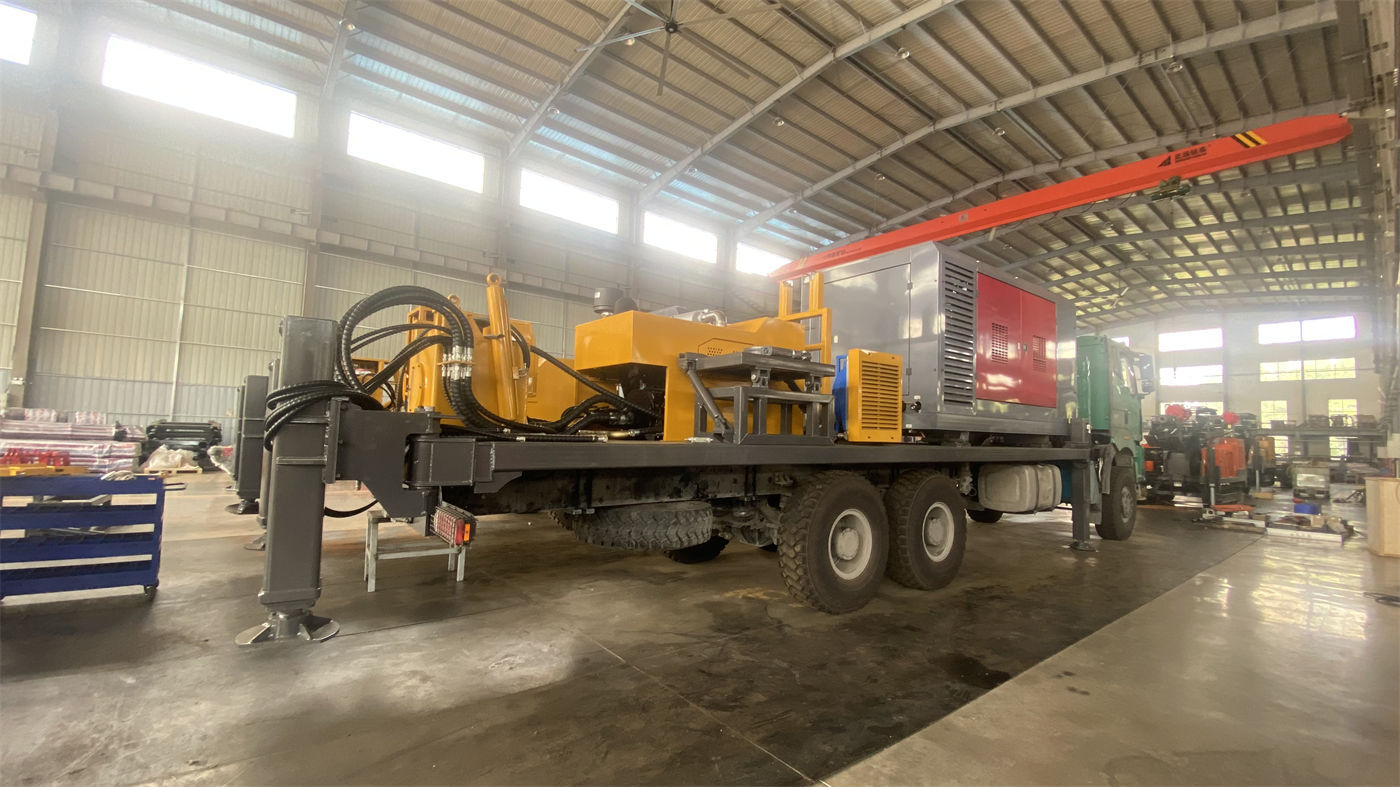
If multiple hole positions need to be arranged in the same irrigation district, relocation frequency will increase. The WR200SE has an overall weight of about 4.7 T and dimensions of about 3950 × 1750 × 2250 mm, placing it in the small-to-medium crawler water well drilling rig range. Compared with large rigs above 500 meters, it is easier to arrange transport vehicles. This point is more meaningful for irrigation projects with scattered hole positions than for single-hole projects with complete permits. The data does not give unit relocation time; specific time needs to be assessed according to actual road and site conditions.
Domestic Water Supply Wells Place More Emphasis on Long-Term Stability and Siting Margin
Rural domestic water supply and small public village water wells usually use less water than irrigation wells, but are more sensitive to "having water year-round." When the WR200SE is used for household wells, village domestic water wells, and small public water wells, its crawler structure is suitable for rural roads and general unpaved sites; its 200 m-class drilling depth provides a greater water-finding depth margin than small shallow-well equipment, especially for rural areas with relatively deep groundwater levels.
One boundary needs to be made clear here: water-finding margin does not mean siting can be arbitrary. The data states that "200 m-class equipment can provide a greater water-finding depth margin than 120-meter-class models," while also clearly stating that "during construction, well locations should be reasonably determined based on local groundwater data, avoiding relying solely on increased drilling depth to compensate for siting errors." Therefore, domestic water supply well siting still needs to be based first on local hydrological data. Drilling depth margin only addresses the situation of "water found but buried deep," not the situation of "there was no water to begin with."
The well diameter of domestic water supply wells usually falls on the smaller side of the 140–254 mm range, with the specific value depending on well casing specifications and matching pumps. The data does not give recommended well diameters by use, so this item needs to be verified with the manufacturer or construction party based on the pump's rated flow and local aquifer thickness.
The Equipment Conditions Shared by Both Types of Wells
Regardless of whether the final use is domestic water supply or irrigation, this set of WR200SE parameters plays the same role.
| Parameter | Value | Common meaning for both types of wells |
|---|---|---|
| Maximum drilling depth | 200 m | Upper limit of equipment capability; actual completed well depth must be determined based on local hydrogeology, aquifer location, borehole diameter, drilling tools, and construction process |
| Drilling diameter | 140–254 mm | Covers common well casing and pump configurations; well diameter is determined by expected water output |
| Drill pipe diameter | 76 / 89 mm | The two specifications correspond to different downhole conditions and need to be matched with borehole diameter and depth |
| Drill pipe length | 1.5 / 2.0 / 3.0 m | Affects the number of rod connections and auxiliary time |
| Lifting force | 13 T | Used for tripping, drill pipe handling, and some casing operations |
| Rotary torque | 3400–4700 N·m | Works with common DTH hammers for drilling in weathered rock and intact rock formations |
| Working air pressure | 1.7–2.5 MPa | Needs to be verified together with air compressor displacement; borehole diameter, rock formation, and altitude all affect demand |
| Air consumption | 17–31 m³/min | Same as above; insufficient air compressor matching directly affects impact frequency, cuttings removal, and drilling efficiency |
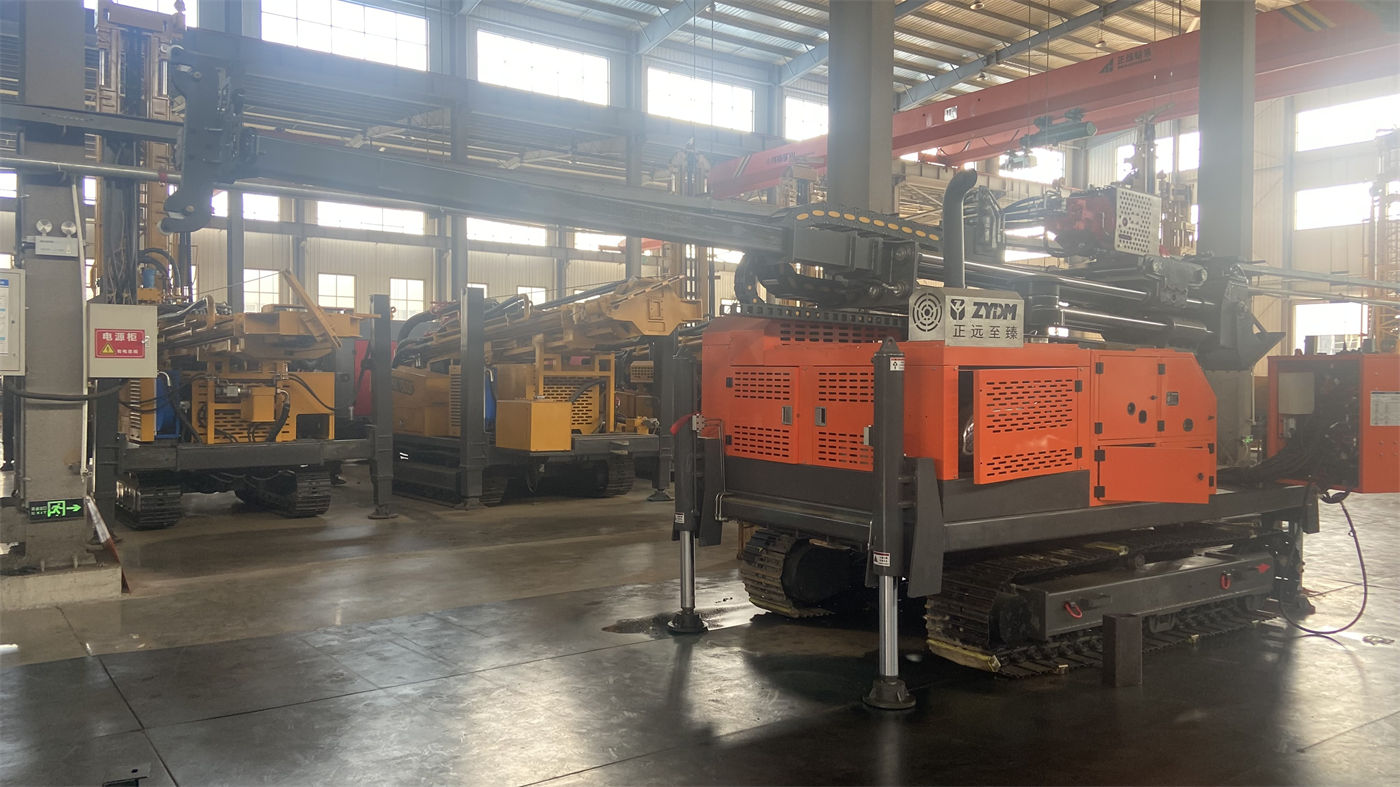
Regarding the mast, the WR200SE uses a telescopic mast with a single feed length of 3.3 m. The telescopic structure is more flexible in transport and site adaptation, while in normal working condition it provides working space for drill pipe handling and continuous drilling. This item has the same effect for both types of wells and is not a distinguishing point.
Formation Conditions Can Override Use Differences
Before discussing configuration differences between the two types of wells, there is another condition with greater influence: formation. The WR200SE data divides downhole conditions into several categories. These categories are unrelated to the well's use and only relate to the formations actually encountered.
- Soil, clay, sand-gravel, and loose overburden: Direct use of a DTH hammer is not necessarily the best solution; hole collapse, buried drilling tools, and borehole enlargement are likely. The upper hole section should first be treated with casing, mud, or other hole-stabilizing methods.
- Weathered rock formations: Penetration is usually faster, but borehole wall stability may be poor. Whether to follow up with casing should be decided based on falling blocks and hole shrinkage.
- Intact hard rock: For limestone, sandstone, granite, etc., suitable DTH hammers and bits can be used for pneumatic drilling, with key control of air volume, rotation, and feed coordination.
- Fracture zones and fissured formations: May cause air leakage, falling blocks, and stuck drilling. Excessive feed should be reduced, and continuous hole cleaning should be maintained; when the fracture zone is thick, follow-up casing or casing methods can be considered.
- Aquifers and strong water inflow conditions: Water inflow changes the cuttings removal state in the hole and the working conditions of the DTH hammer. Air compressor supply and hole cleaning methods should be adjusted according to actual water output, and aquifer depth should be recorded promptly.
In other words, for the same irrigation well, falling in a sand-gravel layer versus intact hard rock may require completely different processes and supporting equipment; if a domestic water supply well has thick upper overburden, the hole stabilization problem must also be addressed first. Use determines the target values of well diameter, well depth, and well completion structure, while formation determines the implementation path. The two cannot replace each other.
Several Items the Data Does Not Directly Answer and Need Separate Confirmation
The following items are not directly given in the WR200SE data on this site as conclusions divided by water supply well and irrigation well. They should be verified with the manufacturer or construction party before purchase:
- Recommended well diameters and well casing specifications for the two uses respectively;
- Screen pipe length and sealing structure methods under specific water output targets;
- Whether the local aquifer burial depth matches the 200 m drilling depth; this depends on actual hydrogeological data;
- Expected water level drawdown of irrigation wells during dry seasons and the corresponding pump type selection;
- Final selection of air compressor specifications. The data only gives the matching range of working air pressure 1.7–2.5 MPa and air consumption 17–31 m³/min. The specific model needs to be selected according to borehole diameter, DTH hammer specifications, target hole depth, altitude, and rock hardness;
- Combination methods for supporting tools (DTH hammer, drill bit, casing tools, air pipe, oil mist lubricator, foam equipment, etc.). The data clearly advises against configuring all items only according to maximum parameters.
Items to Check Before Construction and After Work Completion
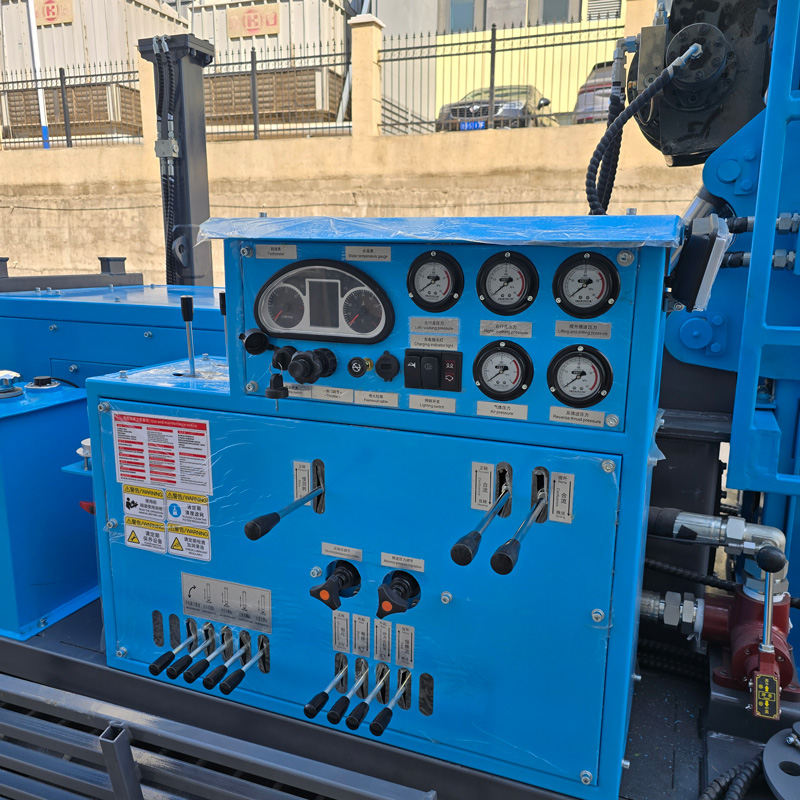
The daily inspection items listed in the WR200SE data are unrelated to the well's use and apply to both types of projects: before starting work each day, check hydraulic lines, rotary head, winch, crawler, mast, and drill pipe connections; check joints and safety devices on the air compressor and high-pressure air pipe; during construction, continuously observe air pressure, cuttings removal, water return, and equipment temperature; after completion, promptly clean mud and dust, and inspect wearing drilling tools.
Regarding the site, the 1.4 m high outrigger stroke can be used to support and level the equipment on uneven ground. Before drilling begins, ensure the chassis and outriggers are stably loaded. Add pads if necessary to avoid tower inclination and hole position deviation caused by sinking on soft ground. When moving on slopes, the equipment should lower its center of gravity, retract the mast, and confirm ground adhesion conditions. Actual safe gradeability should be judged according to site conditions; the 30° in the data is a reference value.
It should be noted that actual geological conditions, downhole tools, drilling angle, and operating methods vary. Final drilling efficiency, drilling depth, and well completion results should be based on on-site working conditions. The reference drilling efficiency of 10–35 m/h given in the data is a range value and cannot be directly used to estimate single-hole construction period.