












When making judgments about equipment class for medium-deep water well projects, two opposite biases are most common: one is to treat 'the equipment can drill 450 m' directly as 'this well should be organized according to 450 m'; the other is to rush to a larger equipment class as soon as the well depth just exceeds 400 m. Both approaches treat the maximum drilling depth as the only basis. In reality, moving from the 400 m class to the 450 m class requires crossing more than just hole depth; it also includes hole diameter, drill pipe length, lifting margin, and the rotation requirements imposed by the formation. Using public information on the WR450SE as a clue, this article explains which conditions truly require a larger equipment class and when continuing with the 400 m class is more reasonable.
First, clarify what 'a larger class' means for the equipment
Water well drilling rigs are usually classified by maximum drilling depth, with separate segments for 300 m, 350 m, 400 m, 450 m, and above 500 m. Moving up a class does not change only the drilling depth figure: mast and feed stroke, drill pipe specifications, lifting force, rotary torque, power configuration, and overall weight are often adjusted at the same time. In other words, choosing a larger equipment class actually means choosing a set of operating conditions that can cover greater hole depth, larger drill string loads, and longer drill pipes, rather than simply buying a larger drilling depth number.
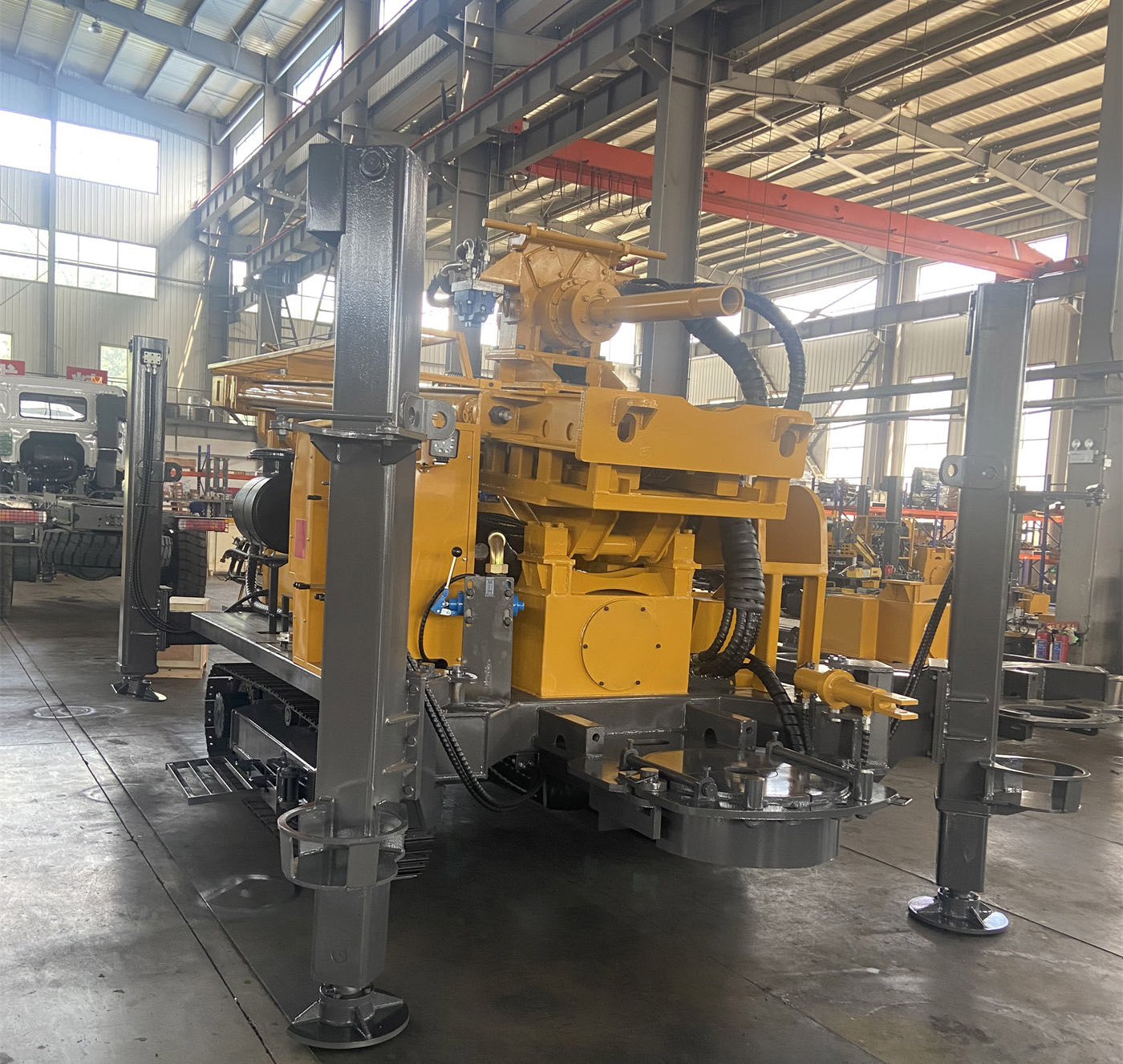
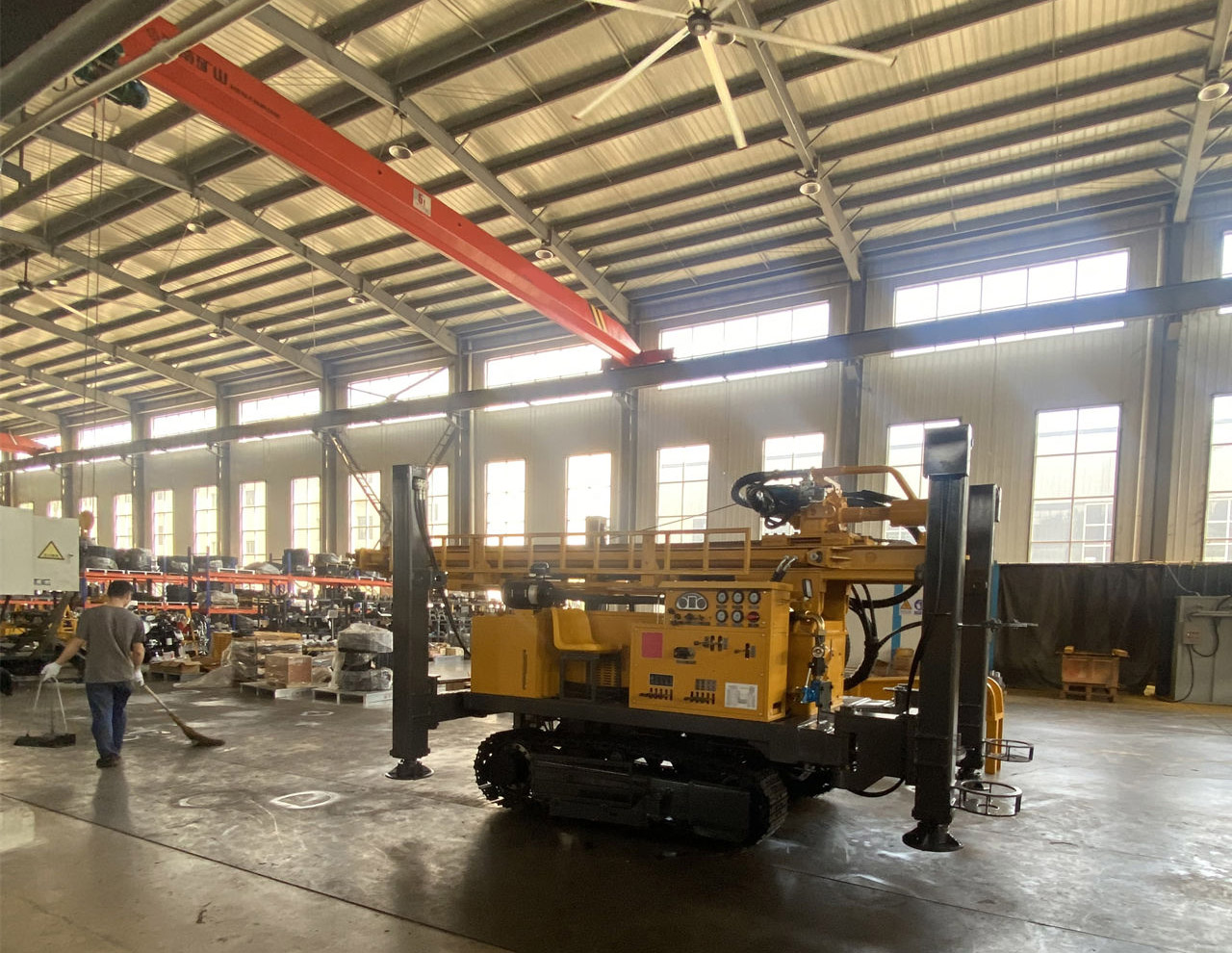
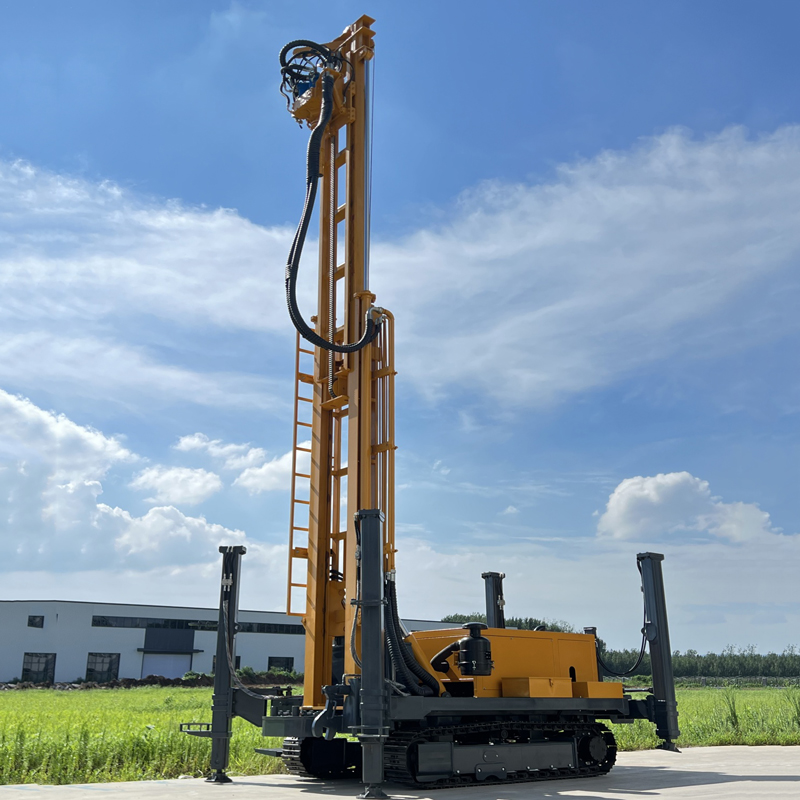
In the materials, the WR450SE is positioned as a 450 m class crawler water well drilling rig, with a maximum drilling depth of 450 m, a drilling diameter of 105–400 mm, 6 m drill pipes, 20 T lifting force, 9000/4500 N·m dual-condition torque, 92 kW power, and an overall weight of approximately 8.5 T. It provides a greater drilling depth range than conventional 300 m, 350 m, and 400 m class models, but does not directly enter the cost and transport level of heavy equipment above 500 m. This positioning itself shows that the difference between the 450 m class and the 400 m class lies in drilling depth margin, drill pipe length, and drill string handling capacity in deep-hole sections, rather than the whole machine fully crossing into another magnitude.
A target well depth close to or slightly above 400 m is the first type of condition for upgrading
If the project design well depth is consistently within 400 m, 400 m class equipment usually already covers the drilling depth. Only when the target well depth is close to or slightly above 400 m, and this is not an occasional overshoot at an individual hole but occurs at multiple holes in this range, does the drilling depth margin of the 450 m class have practical significance. In the materials, the WR450SE has a maximum drilling depth of 450 m, about 50 m more coverage than conventional 400 m class equipment, corresponding to areas with deeper groundwater levels, unstable aquifer distribution, or projects that wish to reserve drilling depth margin.
One boundary must be noted here: the maximum drilling depth is equipment capability, not the project target. Even if the equipment is rated for 450 m, it does not mean every hole must be drilled close to 450 m. Actual well depth should still be determined based on aquifer location, expected water yield, and pump design. If hydrogeological data show that the main aquifer is within 350 m, upgrading to the 450 m class for 50 m of margin may not bring any difference in well completion results.
Consider upgrading only when hole diameter and completion structure exceed the coverage of the 400 m class
Hole diameter is the second condition that must be crossed. The completion structure of a medium-deep water well includes well casing, filter material, and sealing sections, and the hole diameter must be able to accommodate these structures. If the project design hole diameter is large, or large-diameter casing and submersible pumps need to be installed, it is necessary to check whether the hole diameter range of 400 m class equipment covers it. The WR450SE has a drilling diameter of 105–400 mm, and the materials state that this range can accommodate different well casing and submersible pump configurations.
However, hole diameter coverage does not mean that any diameter can be completed efficiently at 450 m depth. When hole diameter increases and rock becomes harder, requirements for rotary torque, lifting force, and air compressor displacement all rise. In the materials, the WR450SE has a maximum rotary torque of 9000/4500 N·m, corresponding to maximum rotary speeds of 90/180 r/min; the lower-speed, high-torque state is more suitable for large-diameter, hard-rock, or high-resistance hole sections. If a project requires both a larger hole diameter and greater depth, hole diameter, torque, and lifting force need to be checked together, rather than only checking whether the hole diameter range includes the design value.
Only when actual loads appear in drill string handling in deep-hole sections does lifting force become a reason to upgrade
As hole depth increases, both the self-weight of the drill pipe and friction against the hole wall rise. When 400 m class equipment approaches its drilling depth limit, the load margin for tripping in and out becomes smaller; if hole narrowing, sediment, or falling blocks occur in the hole, pulling resistance may exceed the equipment's normal handling range. The WR450SE's 20 T lifting force is stated in the materials as being able to meet routine drill pipe tripping, DTH hammer recovery, and some casing operations in the 450 m class. This value corresponds to the actual load of drill string handling in deep-hole sections, not an isolated parameter that can be compared on its own.
It should be noted that lifting force is not a universal means of handling downhole abnormalities. The materials explicitly mention that when abnormal pulling resistance is encountered, the hole wall, cuttings removal, and drilling tool condition should be judged first, and then measures such as hole cleaning, slow lifting, or casing should be taken. Directly attributing blocked pulling to insufficient equipment lifting force, or expecting the lifting force of a larger equipment class to solve all downhole problems, does not conform to the operating boundaries given in the materials.
Drill pipe length and connection frequency affect the rhythm of continuous operation
The 6 m drill pipe is another point where the WR450SE differs from some 400 m class equipment. In the materials, the WR450SE supports 6 m drill pipes, with recommended drill pipe diameters of 89/102 mm. As hole depth increases, the number of drill pipe connections and disconnections significantly affects effective construction time; longer drill pipes can reduce connection frequency, making them particularly suitable for continuous drilling and multi-well medium-deep projects.
This point holds only under specific work organization: if the project is a single well with relatively shallow depth, the number of connections is not large to begin with, and the rhythm difference brought by 6 m drill pipes is limited; if it is continuous construction of multiple medium-deep wells, the number of connections is amplified, and the significance of long drill pipes in reducing auxiliary operation time becomes apparent. The materials also give a fast lifting speed of 30 m/min and a fast advancing speed of 55 m/min for power head return, drill pipe handling, and other auxiliary actions, but these speeds cannot directly represent actual penetration rates in rock formations; the reference drilling efficiency of 10–35 m/h is still affected by formation, drilling tools, air compressor, and operation.
Only when the formation combination requires dual-condition torque transition is there a process basis for upgrading
Medium-deep water wells often encounter alternating soil layers, sand layers, and relatively intact hard rock. In the materials, the WR450SE can use mud rotary drilling to handle soil, clay, sand, and gravel layers, and DTH drilling to enter relatively intact rock formations such as limestone, sandstone, and granite; recommended working pressure for pneumatic DTH drilling is 1.2–3.5 MPa, with air consumption of 16–55 m³/min. Dual-condition torque corresponds to different hole diameters and formation resistance: high torque at low speed is used for large-diameter, hard-rock, or high-resistance hole sections, while higher speed is used for stages with relatively lower resistance.
If the project formation is mainly loose layers that can be completed by mud rotary drilling, the second condition of dual-condition torque is not used frequently, and the necessity of upgrading to the 450 m class should be re-evaluated. Conversely, if the hole depth exceeds 400 m and the middle and lower sections enter hard rock, requiring continuous DTH hammer drilling at a larger hole diameter, torque and air supply requirements will rise at the same time; only then does the dual-condition configuration of 450 m class equipment correspond to actual operations.
When continuing to use the 400 m class is more reasonable
When the following conditions are all met, there is no need to rush to upgrade to the 450 m class: the design well depth is consistently within 400 m, and hydrogeological data do not show aquifers clearly beyond this depth; the completion hole diameter is within the coverage of 400 m class equipment; the formation is mainly loose layers and medium-hard rock, without the need for long periods of large-diameter hard-rock drilling; and the project is mainly a single well or a small number of wells, so connection frequency is not the main issue. Under these conditions, the capability of 400 m class equipment already covers the operating target, and the drilling depth margin and long drill pipe advantages brought by upgrading are not easily converted into actual operational differences.
In addition, overall weight and transport conditions are also reverse constraints. The WR450SE has an overall weight of approximately 8.5 T and dimensions of approximately 5.85 × 1.8 × 2.4 m; the materials state that it is easier to organize transport and loading/unloading than larger equipment above 500 m. But even at this class, ground bearing capacity and slope conditions should still be confirmed before relocation; if project points are scattered and road conditions are limited, the increased weight and profile of a larger equipment class will directly change site access organization.
Items still requiring confirmation before selection
- Whether the target well depth is the design value for a single hole or the common range for multiple holes; whether aquifer depth is supported by hydrogeological data.
- Whether the hole diameter, well casing, and submersible pump configuration required by the completion structure fall within the 105–400 mm range, and what hole depth corresponds to the larger-diameter sections.
- Whether the hole requires handling heavier DTH hammers, casing, or accessories; if so, whether the auxiliary winch needs to be upgraded from the standard 1.1 T to the 2.5 T configuration.
- Whether air compressor displacement and pressure match the DTH hammer, especially when hole diameter increases, rock becomes harder, or altitude rises.
- Whether site bearing capacity, slope, and relocation routes can meet the travel and outrigger stability requirements of an approximately 8.5 T complete machine; use pads on soft ground.
- Whether mud pumps, centrifugal pumps, generators, foam pumps, and other accessories need to be selected according to the main formation combination, avoiding excessive configuration that increases cost.
Before these conditions are verified, only conditional judgments can be made: when the well depth is slightly above 400 m and hole diameter, formation, and continuous operation organization all point to deeper hole sections, 450 m class equipment such as the WR450SE is worth including in the comparison; if the operating target consistently falls within the coverage of the 400 m class, continuing to use the existing class is more practical. The drilling depth, torque, and lifting force in the materials are the basis for judgment, not the upgrade conclusion itself.