












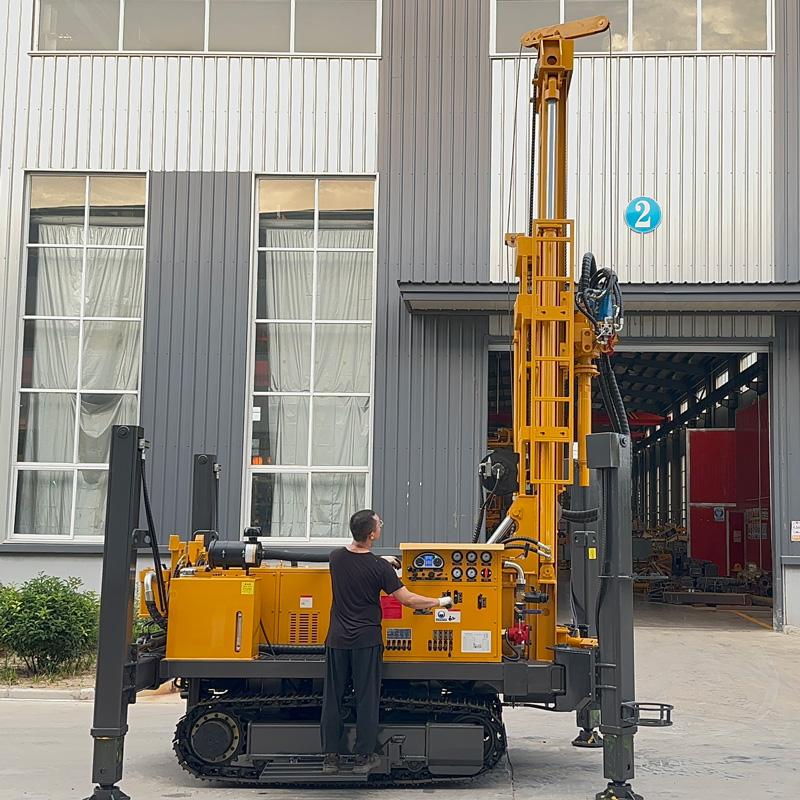
The 300 m in "300-meter-class drill rig" refers to the maximum drilling depth, that is, the upper limit of hole depth this equipment is designed to cover. It answers "where the equipment capability ends," not "how deep a specific project can definitely drill in rock." The WR300SE data on this site gives a maximum drilling depth of 300 m, a hole diameter of 105–325 mm, and applicable formations stated as "loose formations and rock." Only by putting these conditions together can we discuss how deep it can reach in rock.
First distinguish two things: capability limit and project final hole depth
The 300 m of the WR300SE appears in the overall machine specifications; it is a product capability description, not a construction record for a particular hole. The data also states that applicable formations include loose formations and rock, but does not give a value for "how many meters can be stably drilled under a certain rock type." Therefore, what can be determined is the equipment's nominal hole depth upper limit; from this set of data, one cannot infer the final hole depth under a specific rock formation and a specific hole diameter.
The hole depth upper limit and hole diameter are a set of constraints that hold simultaneously. The WR300SE hole diameter range is 105–325 mm; choosing a larger or smaller value within this range will directly change the difficulty for the same machine to advance a deep hole. The data does not give corresponding drilling depths segmented by hole diameter; this is something that needs to be confirmed with the manufacturer.
After entering rock, from which step does the technique begin to change
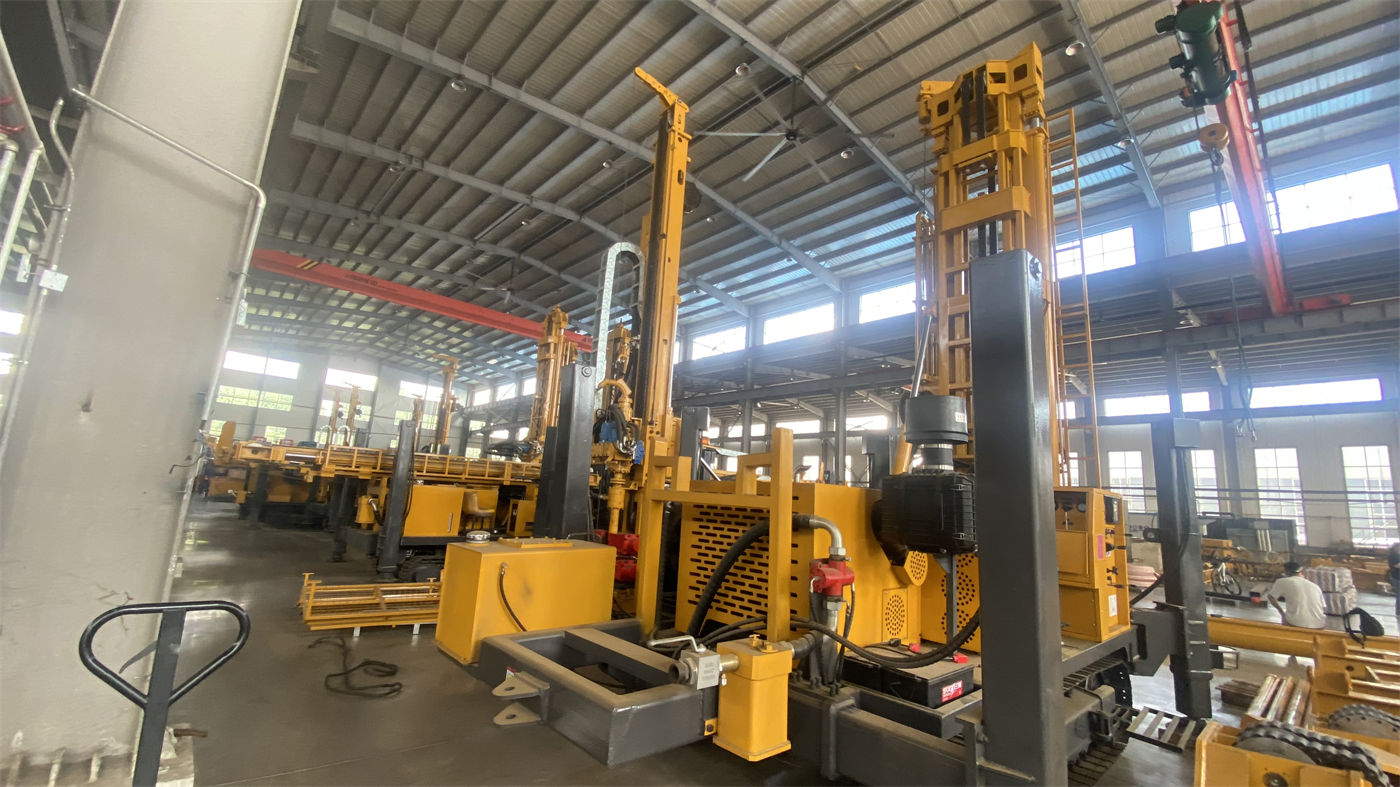
The data describes the handling of the two formation types relatively clearly: for soil, clay, sand, and gravel layers, methods such as mud rotary drilling can be used to maintain borehole wall stability; after entering weathered rock or intact rock, DTH hammer drilling can be switched to according to lithology. In other words, which technique to use for the rock section is judged on site according to the actual lithology, and once the technique changes, the supporting conditions that need to be checked also change.
Two sets of numbers to check first under DTH hammer conditions
- Recommended working air pressure 1.2–3.5 MPa, compatible with medium- and high-pressure series DTH hammers;
- Air consumption 16–55 m³/min; the actual air compressor selection must also consider hole diameter, drill pipe, DTH hammer specifications, rock hardness, and altitude.
The data clearly states the consequence of insufficient displacement: it usually directly affects impact efficiency and bottom-hole cuttings removal. This statement itself shows that whether the rock section can continue to advance depends not only on the drill rig itself but also on whether the air compressor and drilling tools are matched.
Dual-condition values of the rotary system
The WR300SE maximum rotary torque is 7000/3500 N·m, corresponding to maximum rotary speeds of 80/160 r/min. The data explains: the lower-speed, high-torque state is more suitable for larger hole diameters and higher-load conditions, while the higher-speed state can be used for drilling stages with lower resistance; on site, the appropriate working range should be selected according to changes in drilling tools and rock formations. The data does not directly assign a certain gear to a certain type of rock formation, and this should not be inferred on one's own.
The relationship between lifting force, drill pipe, and hole depth
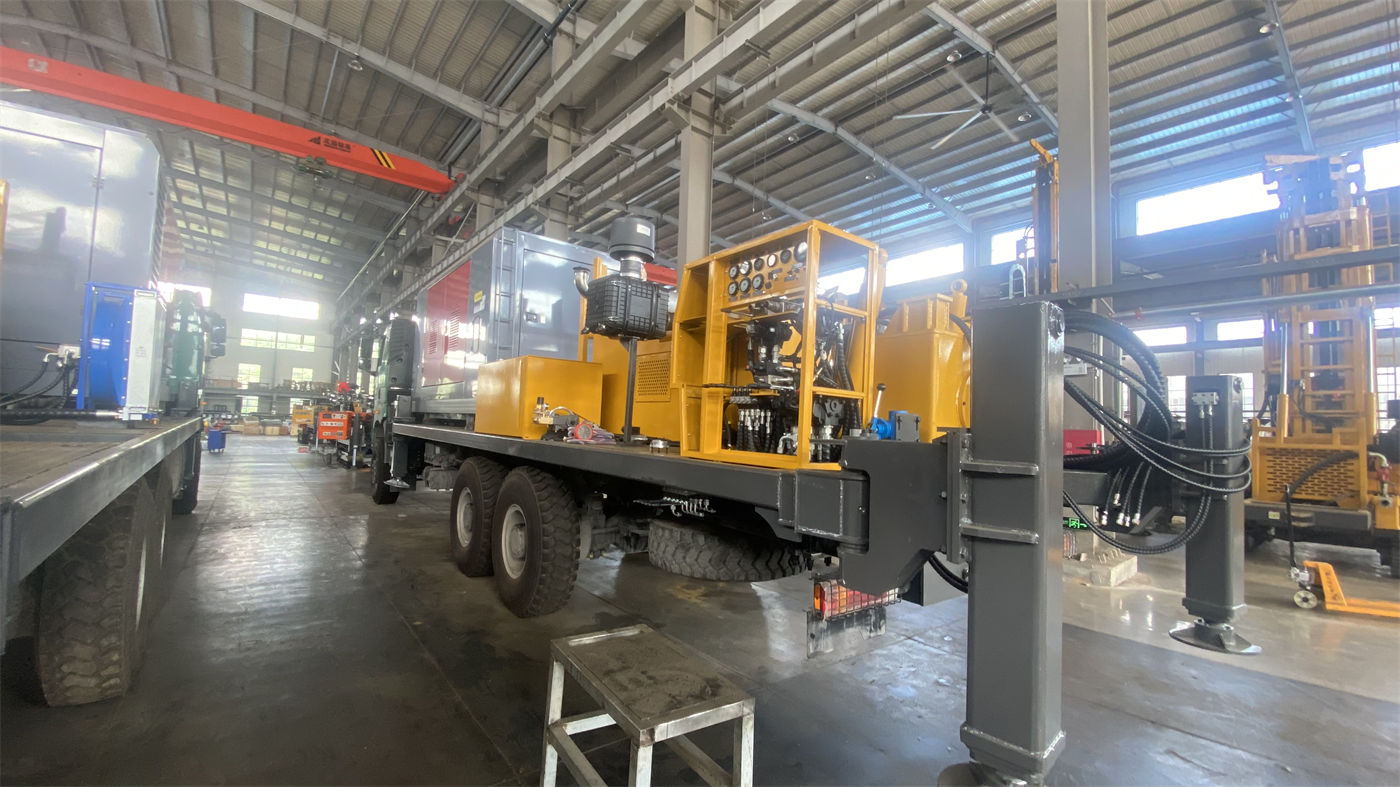
The 15 T lifting force is used for drill pipe tripping, DTH hammer recovery, and some casing operations. The data also notes: as hole depth increases, both the drill pipe's own weight and borehole wall friction increase; during construction, pulling resistance should be continuously observed; if obvious abnormalities occur, priority should be given to checking diameter reduction, falling blocks, sticking, or cuttings removal problems, rather than directly relying on the maximum lifting force to handle them forcefully. This shows that 15 T is not the answer to "how deep it can drill," but a quantity that must be viewed together with downhole conditions on site.
Regarding drill pipe configuration, the WR300SE supports 3 m and 6 m drill pipes, with recommended diameters of 89/102 mm. The 3 m drill pipe is more flexible in transportation, site conditions, and manual operation; the 6 m drill pipe can reduce the number of pipe connections and improve continuous drilling efficiency. The actual choice should be combined with transportation conditions, mast structure, and construction site space. Changing drill pipe length changes the frequency of pipe connections and the work organization method, not the drilling depth upper limit itself.
Beyond rock, there are several types of hole sections that will limit depth first
The fractured zones, fissures, and local cavities mentioned in the data are situations independent of the broad category of "rock": they may cause air leakage, falling blocks, and sticking. When encountering such hole sections, advancement should be reduced, hole cleaning strengthened, and changes in air pressure observed; when necessary, foam, casing, or other auxiliary methods should be used. After entering major aquifers, the state of return water and cuttings removal may change significantly; the aquifer depth should be recorded promptly, and air supply, mud, or hole cleaning methods should be adjusted according to water inflow. The handling of these hole sections will all affect how far drilling can actually advance.
A simple table for checking by condition
| Check item | WR300SE data value | Relationship to drilling depth |
|---|---|---|
| Maximum drilling depth | 300 m | Capability upper limit description, not a project guarantee value |
| Hole diameter | 105–325 mm | Same constraint as hole depth; data does not give drilling depth segmented by hole diameter |
| Applicable formations | Loose formations and rock | Rock sections can switch to DTH hammer drilling |
| Working air pressure / air consumption | 1.2–3.5 MPa / 16–55 m³/min | Affects impact efficiency and bottom-hole cuttings removal |
| Rotary torque / speed | 7000 / 3500 N·m, 80 / 160 r/min | On site, select the working range according to changes in drilling tools and rock formations |
| Lifting force | 15 T | As hole depth increases, pulling resistance must be observed |
| Drill pipe | 3 / 6 m, recommended diameters 89 / 102 mm | Changes the number of pipe connections, not the drilling depth upper limit |
| Reference drilling efficiency | 10–35 m/h | Depends on formation, hole diameter, drilling tools, air compressor, and operation method |
Judgments the data can and cannot support
Judgments it can support: the WR300SE nominal maximum drilling depth is 300 m; it can be used in loose formations and rock; under DTH hammer conditions, the recommended working air pressure is 1.2–3.5 MPa and air consumption is 16–55 m³/min; the rotary system has dual-condition torque of 7000/3500 N·m; lifting force is 15 T; it supports 3 m and 6 m drill pipes, with recommended diameters of 89/102 mm.
Matters not covered by the data and requiring separate confirmation include: the actual final hole depth achievable under specific lithology classifications (for example, between weathered rock and intact rock) and specific hole diameters; how the drilling efficiency ranges corresponding to different rock formations are subdivided; and the specific correction method for air compressor selection under altitude conditions. The data's statement on overall machine applicability is "subject to on-site working conditions," which is also the boundary for answering the title question: 300 m is the capability upper limit stated for this machine, and the actual depth in rock must be checked item by item according to project conditions; it cannot be directly converted from the nominal drilling depth.