












In the specification tables of water well drilling rigs, "single feed length" often appears alongside maximum drilling depth, mast height, and drill pipe length, making it easy to mistake it for a different way of saying the same thing. The WR300SEL documentation states a 6.6 m single feed, while the same machine's drill pipe compatibility range is 1.5 m, 2 m, 3 m, and 6 m, with a maximum drilling depth of 300 m. Placed together, these numbers precisely illustrate what single feed length actually describes.
First, separate single feed length from the other three numbers
Single feed length describes a stroke, not a hole depth. It refers to the distance the power head can continuously move along the mast without releasing the drill pipe clamp or reconnecting or disconnecting drill pipe. In other words: how far it travels in one action before it must stop to handle the drill pipe.
The three adjacent parameters each have their own meaning. Maximum drilling depth is the upper limit of the equipment's expected hole depth capability, expressed in meters; mast length determines the geometric dimensions after the mast is deployed and relates to the transport profile; drill pipe length is the specification of each drill pipe, expressed in meters. The reason the WR300SEL's 6.6 m stroke can pair with 6 m drill pipe is that when the stroke is slightly longer than a single drill pipe length, a single feed has the opportunity to completely cover the distance spanned by one drill pipe.
- Single feed length: a stroke concept, in meters, corresponding to the continuous action range of the feed system
- Maximum drilling depth: upper limit of hole depth capability, given as 300 m in the WR300SEL documentation
- Drill pipe length: options of 1.5 m, 2 m, 3 m, 6 m; diameter options of 76 / 89 / 102 mm
- Drilling diameter: 140–325 mm, which together with drilling depth and drill pipe specifications constitutes the hole body conditions
Why it is directly tied to the "number of pipe connections"
During drilling, each time a stroke is used up, drilling must stop, the pipe must be clamped, and a drill pipe must be added or removed. These actions do not produce footage and count as auxiliary time. The shorter the stroke, the more times the drill pipe must be handled for the same well; when the stroke is sufficient to accommodate a long drill pipe, handling the drill pipe once yields the footage of one drill pipe.
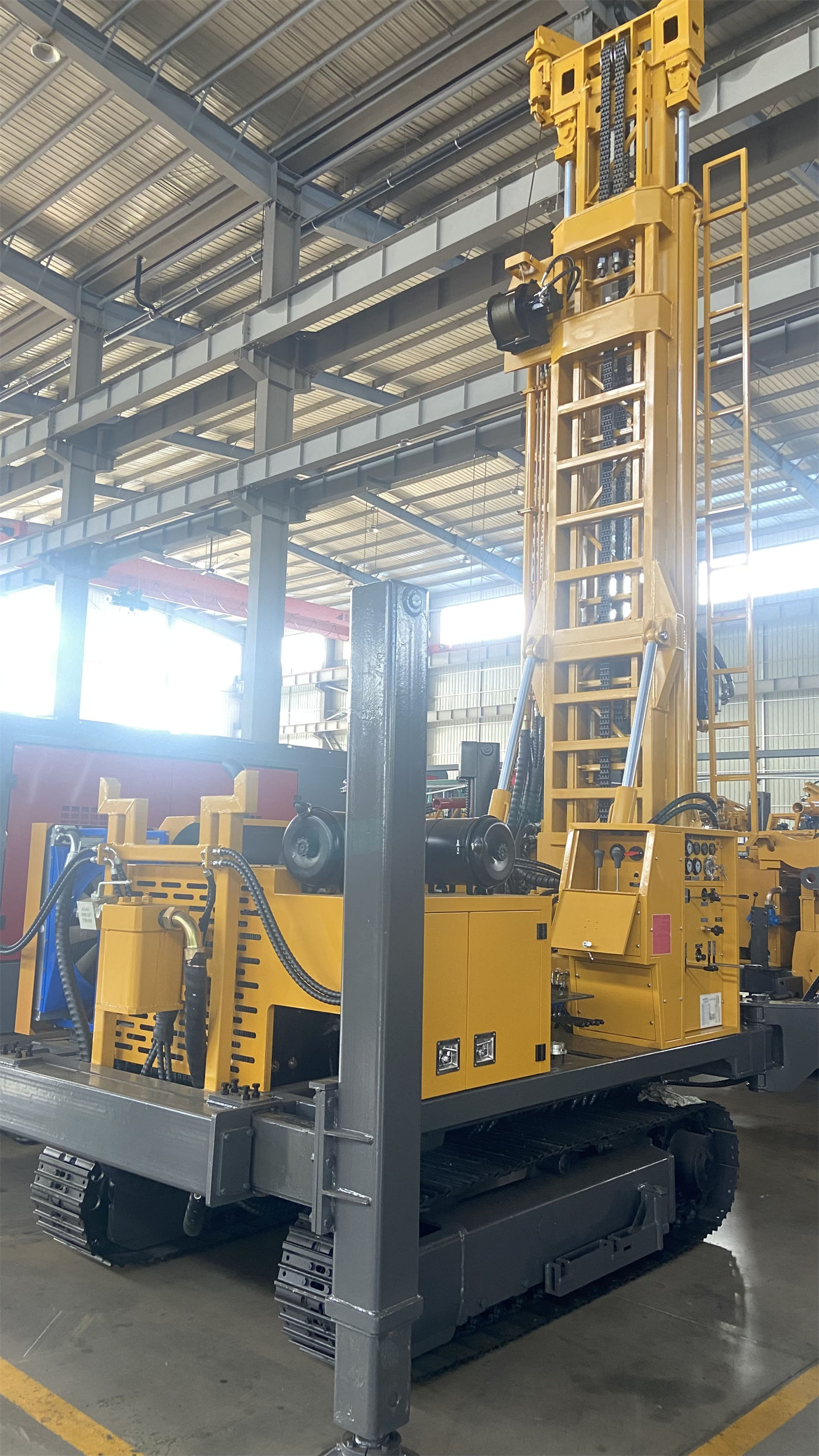
The documentation describes the WR300SEL's positioning plainly: it uses a 6.6 m single feed and can directly use 6 m drill pipe, with its main features summarized as "long stroke, fewer pipe connections, higher continuous drilling efficiency." This statement points to a mechanism of reduced frequency, not increased single-pass penetration rate. The equipment documentation does not provide measured values for the number of pipe connections in specific projects, nor does it provide quantified savings in auxiliary time. Therefore, it is impossible to calculate "how many minutes can be saved" from the available information; one can only confirm that structurally there is a possibility of reducing the number of connections.
The drill pipe compatibility range makes the stroke an option, not a fixed result
On the same machine, the stroke is fixed, but the length of drill pipe used is selectable. The WR300SEL documentation shows that 1.5 m, 2 m, 3 m, and 6 m drill pipes can be used, meaning the construction party can decide how much hole section each drill pipe handling covers based on site and process conditions.
| Drill pipe selected | Relationship to the 6.6 m stroke | Typical trade-off direction |
|---|---|---|
| 6 m | Stroke can accommodate a single pipe, relatively lower connection frequency | Construction organization with ample site space and primarily continuous drilling |
| 3 m | Single feed covers half a pipe with considerable stroke margin | When more frequent adjustment of downhole conditions is needed or drilling tools are shorter |
| 1.5 m / 2 m | Number of pipe connections increases significantly | Transport-restricted, narrow sites, or special hole section handling |
This table illustrates geometric relationships, not an efficiency ranking. Using short pipes does not mean wasting stroke; what it trades for is transport, handling, and adaptability to narrow sites. The documentation mentions that the advantages of 6 m drill pipe can only be realized when the site is spacious and continuous drilling is the main mode, which conversely acknowledges the reason for the existence of short pipes.
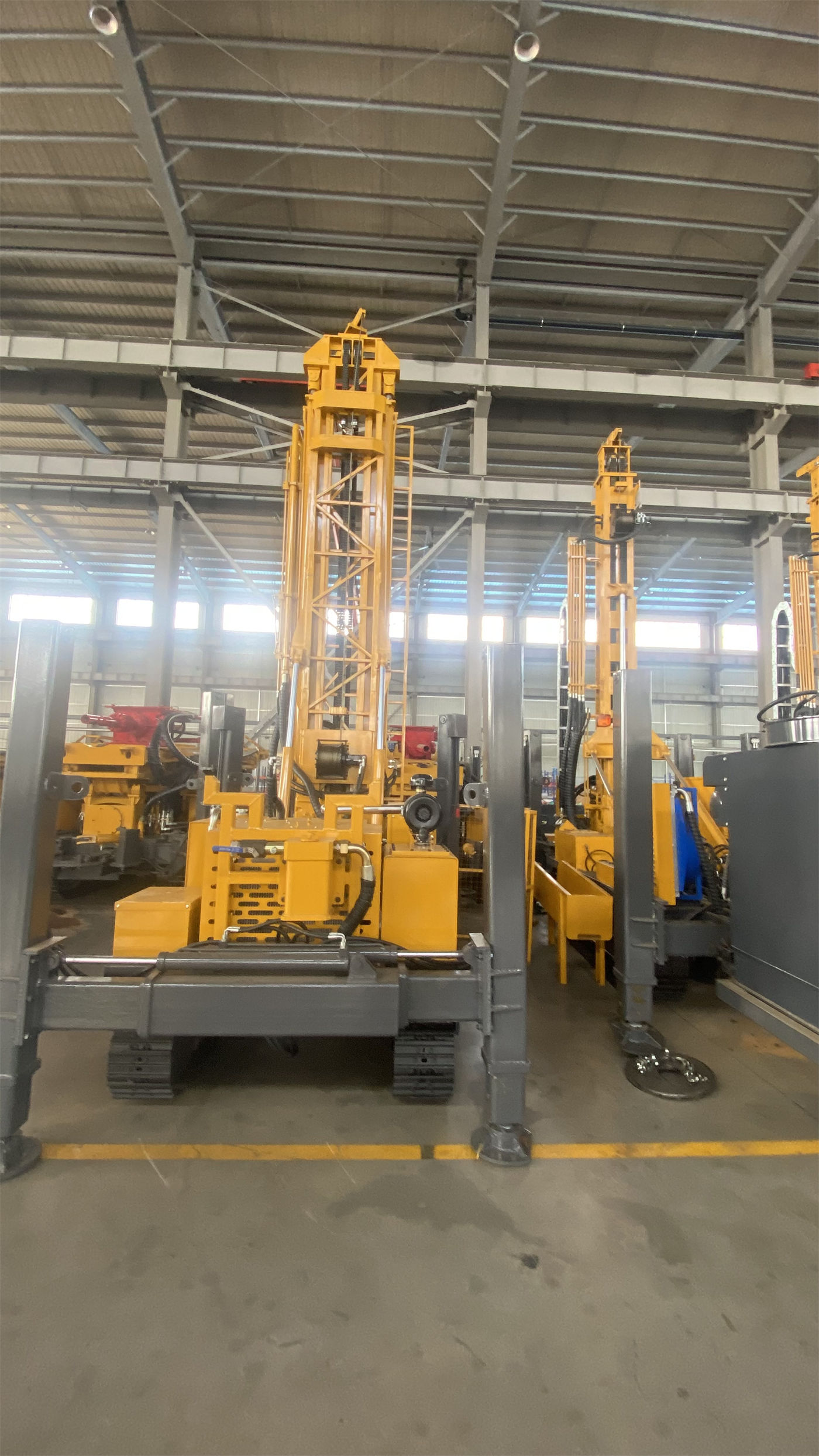
How much a long stroke can achieve depends on the site, not the parameter itself
Single feed length is written in the overall machine parameters as a capability the equipment possesses. Whether it can be translated into continuous drilling in an actual project requires several conditions to be met simultaneously, and these conditions come from the transport and operation requirements listed in the equipment documentation:
- Mast extension space: the long-stroke structure must be deployed during operation; clearance should be confirmed before drilling, and the mast must be in a safe transport position during transport
- Ground bearing capacity and outrigger loading: overall reference weight approximately 8 T, overall dimensions approximately 5900 × 1850 × 2200 mm
- Drill pipe handling and lifting: on-site handling of 6 m drill pipe differs from short pipes; the documentation mentions an auxiliary winch lifting force of 2 T, which can be used to handle DTH hammers, drill pipes, casing tools, and some accessories; loads must be controlled during lifting and personnel must be kept away from suspended areas
- Transport organization: the long-stroke configuration has a longer transport profile; before transport, vehicle length, loading fixation points, and site turning space should be confirmed
The documentation does not provide a universal conversion relationship for the 6.6 m single feed across different models, nor does it state the specific extent of overall machine efficiency decline after shortening the drill pipe. These are matters requiring separate confirmation and should not be directly inferred from the stroke value itself.
What this parameter does not describe
To read single feed length clearly, one must also exclude the meanings it should not carry.
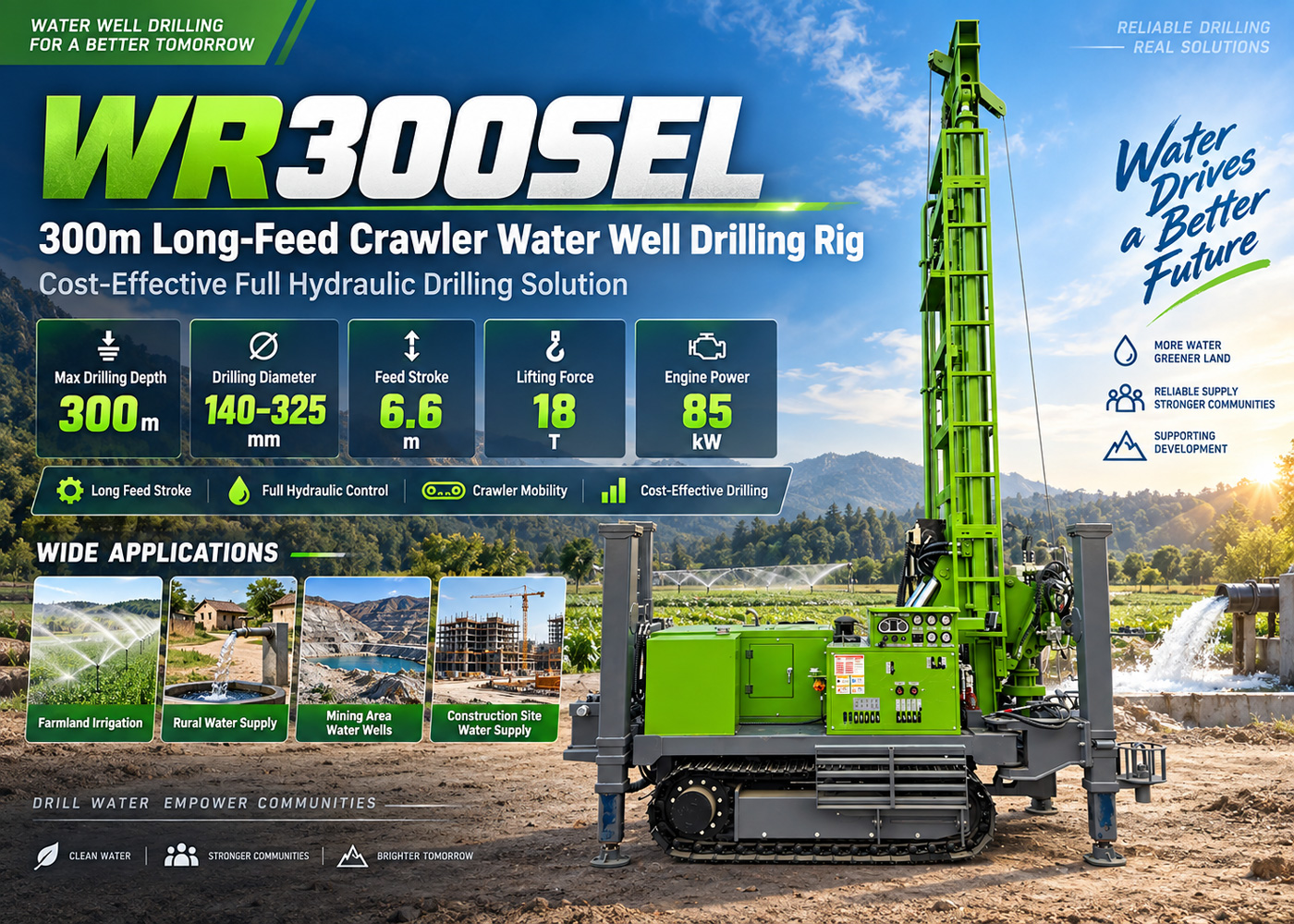
- It does not describe drilling speed. The documentation separately lists fast lifting at 22 m/min and fast feed at 40 m/min, and clearly states that such values mainly serve non-drilling actions; the reference drilling efficiency is 15–35 m/h, affected by formation, bit, DTH hammer, and air compressor, and is not on the same conceptual level as stroke
- It does not describe maximum drilling depth. The 300 m figure comes from the description of the equipment's capability upper limit; whether it can be achieved also depends on hole diameter, formation, and well completion structure
- It does not describe lifting force. The WR300SEL lifting force is 18 T, related to the self-weight of the drill pipe and borehole wall friction as hole depth increases, and is a capability condition independent of stroke
- It does not describe process capability. Process routes such as mud sections and DTH hammer sections are determined by formation and supporting equipment; stroke does not change process selection
Points worth confirming with the manufacturer during selection
Based on public information, what can be confirmed about single feed length is the stroke value, compatible drill pipe specifications, and the structural relationship with the number of pipe connections; parts not covered by the documentation need to be raised separately during inquiry or technical confirmation:
- Basis for estimating the number of pipe connections when using 6 m drill pipe under target hole diameter and depth conditions
- Minimum operating clearance and stability requirements for the long-stroke mast at the project site
- Matching conditions between overall machine dimensions in transport state and transport vehicles and loading/unloading methods
- Supporting requirements for on-site handling, storage, and lifting of 6 m drill pipe
Once single feed length is restored to its definition as "stroke," it is no longer an isolated selling point but a connecting parameter between a set of structural conditions and construction organization conditions: whether the stroke is sufficient to cover the drill pipe depends on the drill pipe selection; whether this advantage can be realized depends on whether the site, handling, and transport are prepared in sync.