

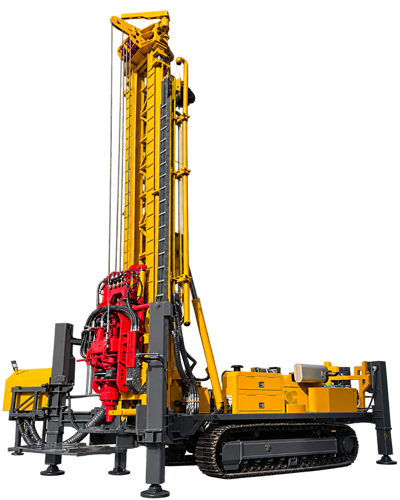
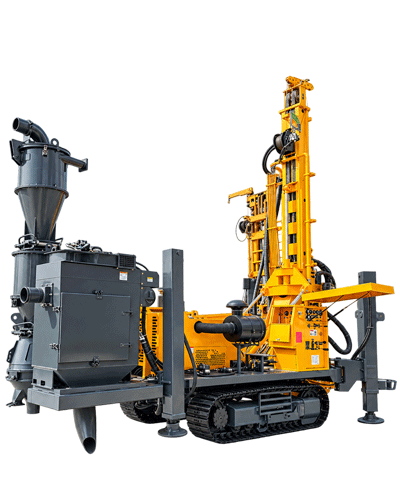
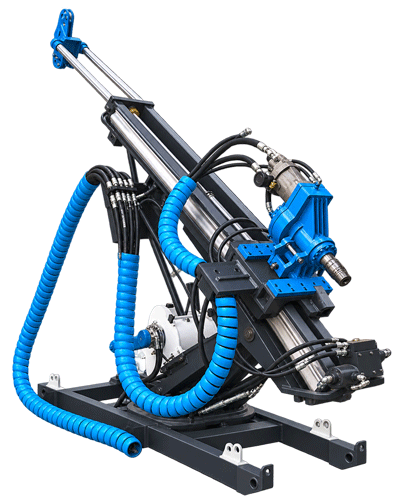
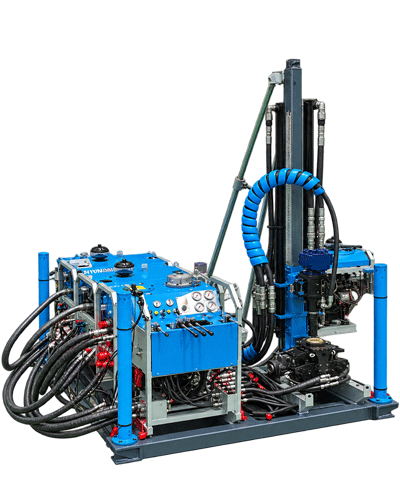
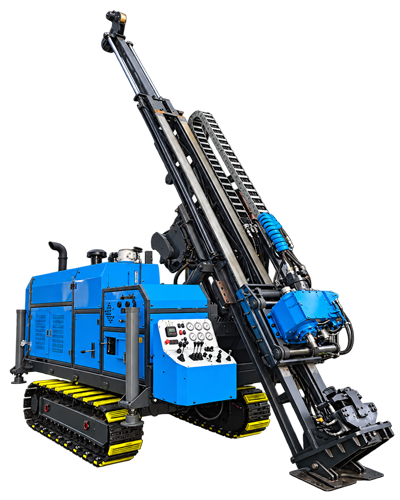
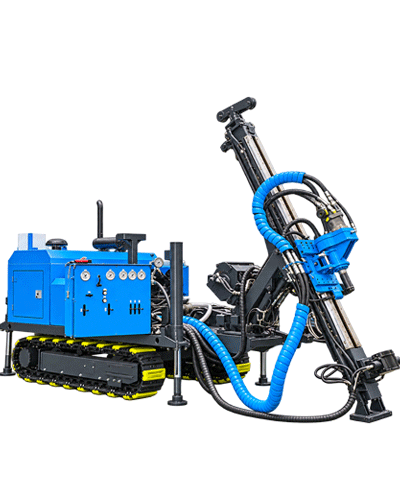
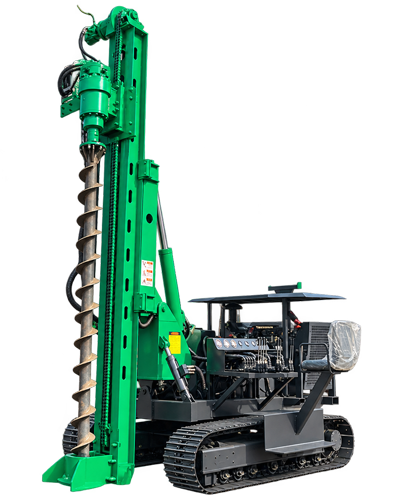
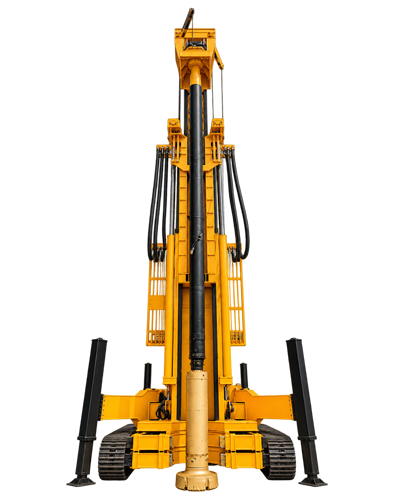
In the product specifications of water well drilling rigs, the rotary system often lists two sets of values in the same dimension: the WR400QS states a maximum torque of 8000/4000 N·m, corresponding to maximum speeds of 75/150 r/min. The habitual reading treats the two sides of the slash as two gears—one slow and powerful, the other fast and time-saving—to be switched on site as conditions arise.
The problem with this reading is not the judgment that there are gears, but that it treats them as a speed selection. Torque and rotational speed are not two functions that can be chosen independently; they are corresponding values of the same rotary system under different output states. Using the public specifications of the WR400QS as a sample, the following explains what this set of numbers describes, what cannot be inferred from it, and what the specifications do not cover and must be confirmed separately during procurement.
What dual-condition torque actually describes
8000 N·m and 75 r/min form one pair; 4000 N·m and 150 r/min form another. The larger the torque value, the lower the corresponding maximum speed; the higher the speed, the smaller the available torque upper limit. This is a set of matching relationships at the rotary output end, not two independent “modes.”
It can be understood as a boundary description of the same rotary system under two output states: in one state, the output end can provide higher rotational capability at the cost of a lower maximum speed; in the other state, the maximum speed is increased, but the transmittable rotational capability is correspondingly reduced. The specifications give upper limit values, which are neither the actual output at every moment nor values necessarily achieved after switching.
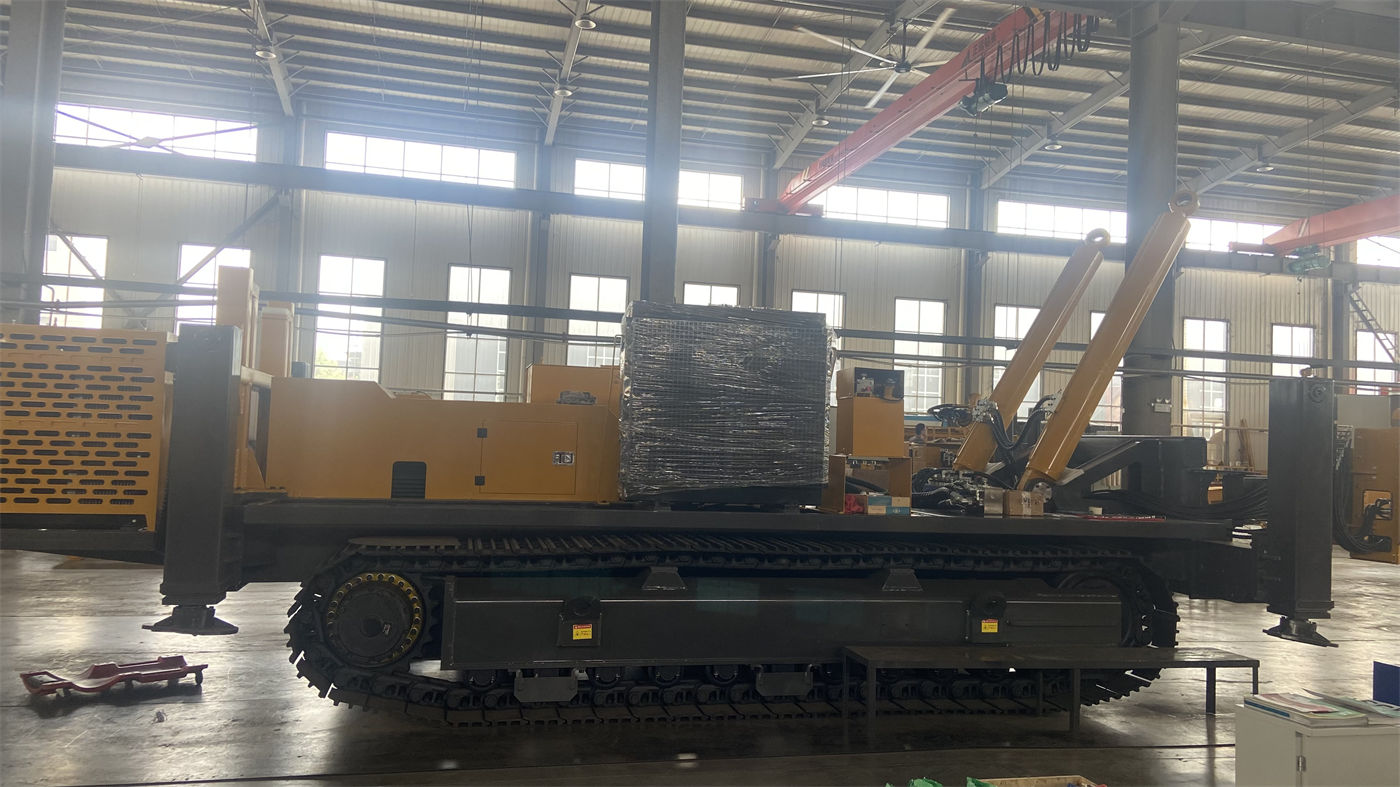
Why the terms “low-torque gear” and “high-torque gear” are misleading
Calling the two sides low-speed gear and high-speed gear easily creates an association that the entire capability of the equipment can be chosen between two fixed gears, with the rest depending only on operator preference. In reality, the factors affecting rotary resistance are not controlled by gears:
- Hole diameter. The WR400QS drilling diameter range is 105–325 mm. A larger hole diameter means an increased annular crushing area, and the resistance between the drill bit and the hole bottom rises.
- Rock formation. The specifications list applicable formations as loose formations and rock formations, and mention weathered rock, limestone, sandstone, granite, etc. These rocks have different effects on rotary resistance.
- Drilling tools. The recommended drill pipe diameter is 89 / 102 mm, and the drill pipe length is 6 m. Different tool combinations transmit different forces to the hole bottom.
When these conditions change, what is needed is not “changing a gear,” but judging whether the current rotary state is within a reasonable range. The specifications do not provide a direct lookup table based on hole diameter and rock formation, nor do they state the specific switching thresholds.
What unspecified links exist between the two values
Dual-condition torque only describes one boundary at the rotary output end. From it, other parameters must be considered together to form a complete judgment:
| Parameter | WR400QS specification value | Relationship with torque |
|---|---|---|
| Maximum torque / corresponding speed | 8000/4000 N·m, 75/150 r/min | Two output boundaries of the same rotary system |
| Axial pressure | 4 T | Force in the feed direction, affecting the drill bit's penetration into the hole bottom |
| Lifting force | 22 T | Tripping and drill string handling capacity, a separate set of indicators from rotary capacity |
| Engine power | 103 kW | Provides power for rotation, feed, travel, and auxiliary systems |
Torque is not a number that can be judged as sufficient or not in isolation from feed, lifting, and power. The specifications do not state how much power the entire machine must divert to other systems simultaneously under maximum torque conditions, nor do they give recommended speed ranges for different hole diameters.
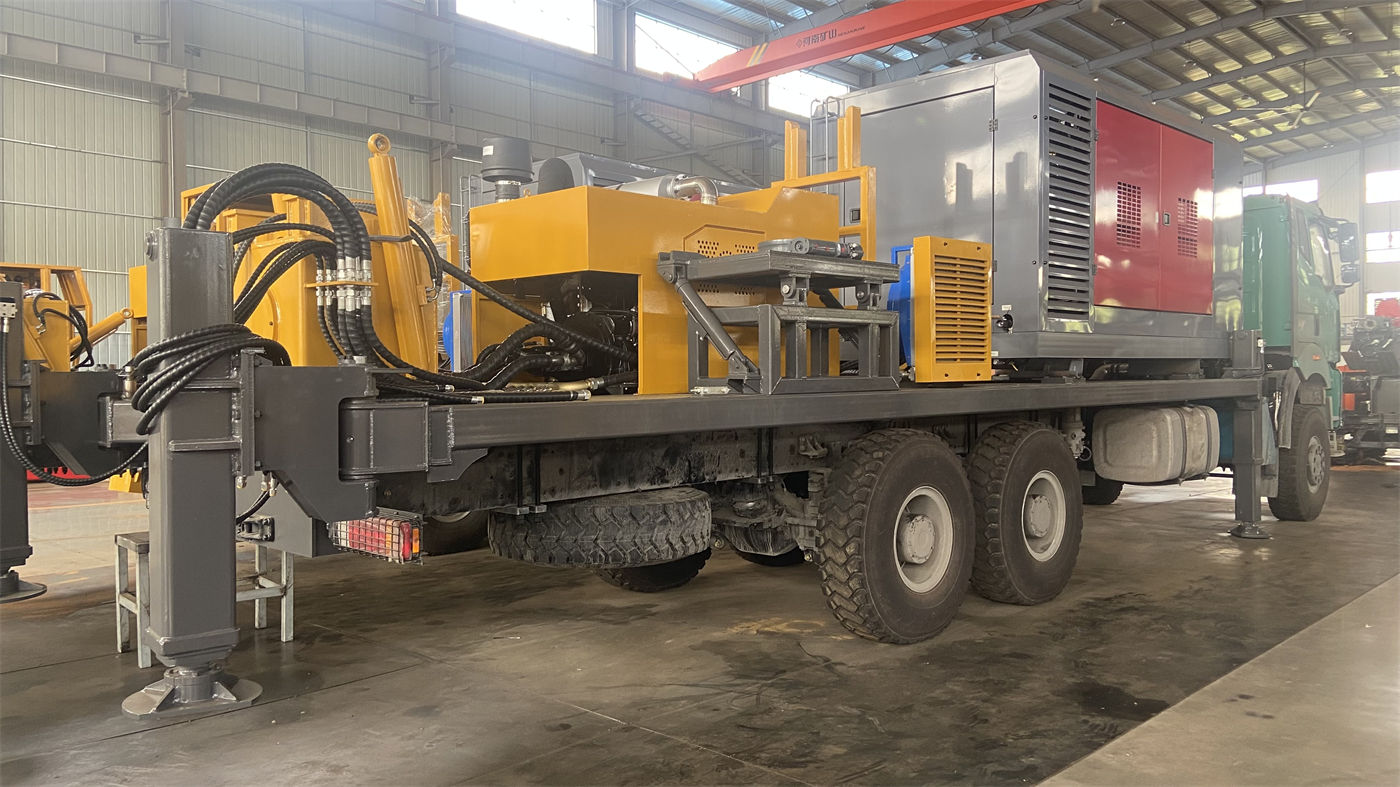
DTH hammer and mud rotary have different speed requirements
The specifications show that the WR400QS can use DTH hammer drilling and also supports mud rotary drilling. The two processes have different requirements for the rotary state. For DTH hammer drilling, the recommended working air pressure is 1.2–3.5 MPa and air consumption is 16–55 m³/min. Rock fragmentation is mainly accomplished by impact, while rotation serves to turn the drill bit and renew the cutting positions. Mud rotary is used for loose formations such as soil, clay, and sand layers, where the circulating medium simultaneously provides wall protection and cuttings transport.
Understanding dual-condition torque as “two gears, fast and slow, switched according to mood” is especially prone to error between these two processes, because the process itself is one of the main bases for switching the rotary state, not the other way around. The specifications do not give recommended speed ranges for each of the two processes.
Judgments supported and not supported by the specifications
Based on the public WR400QS specifications on this site, the following can be clearly stated:
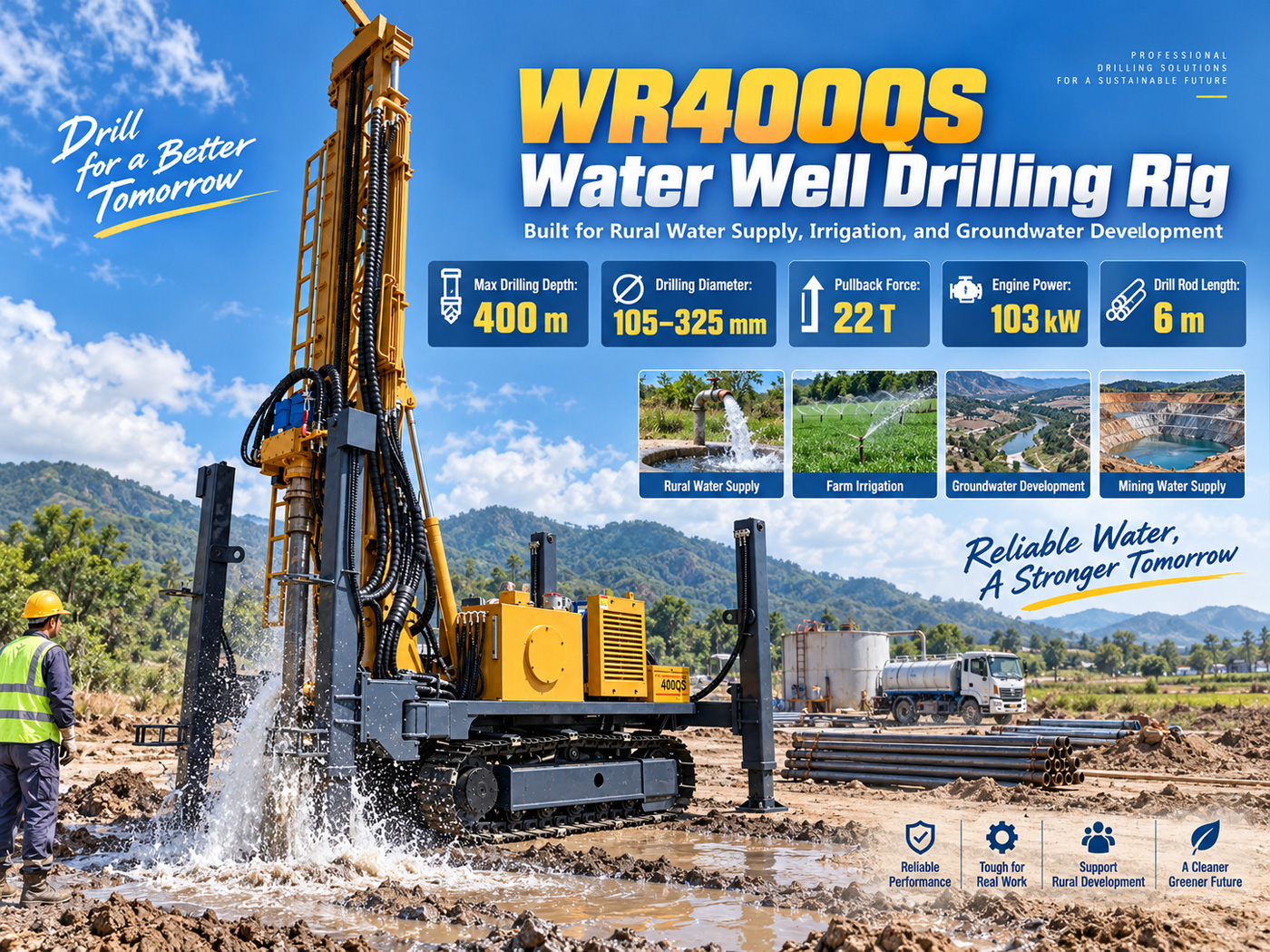
- The rotary system has two maximum torque values, 8000 N·m and 4000 N·m, corresponding to maximum speeds of 75 r/min and 150 r/min, respectively.
- These two values come from the same rotary system, not two independent devices.
- The text description of low speed and high torque points to large hole diameter, hard rock, and high-load conditions; the description of higher speed points to drilling stages with relatively lower resistance.
Judgments not supported by the specifications include: which gear should be used for a specific hole diameter and rock formation; whether there is an intermediate state or automatic adjustment between the two gears; whether continuous operation for long periods is possible under maximum torque conditions; and whether there are additional restrictions on the lifting and feed systems after switching to higher speed. These must be confirmed in writing with the manufacturer during procurement.
Items worth including in the confirmation checklist before purchase
If the project will use the WR400QS on wells with large variations in hole diameter and rock formation, the following items can be put in writing during the technical confirmation stage:
- The recommended rotary output states for different drilling diameter ranges, and the basis for determining the switching position.
- Requirements for hydraulic oil temperature, continuous working time, and heat dissipation when using higher torque output in hard rock or large diameter sections.
- The respective setting principles for rotary parameters in DTH hammer drilling and mud rotary drilling.
- How to verify the relationship between the actual output of the rotary system and the nominal values in the specifications during acceptance.
These contents do not affect the accuracy of the dual-condition torque values themselves, but they determine whether they can be used correctly. Reading the slash as two gears is only the first step; the rest is not fully covered by the specifications.