












"500-meter-class RC drill" describes only two things: a drilling method characterized by sample return through the inner tube of dual-wall drill pipes, and a nominal maximum drilling depth of roughly 500 meters. It says nothing about how cuttings are handled after returning to the collar, how samples are formed, who records them, or whether they can be traced by depth. Comparing configurations or quotations for machines in this class as if they were the same sampling tool often means discovering differences only at the post-collar stage—by which point the equipment has already been ordered.
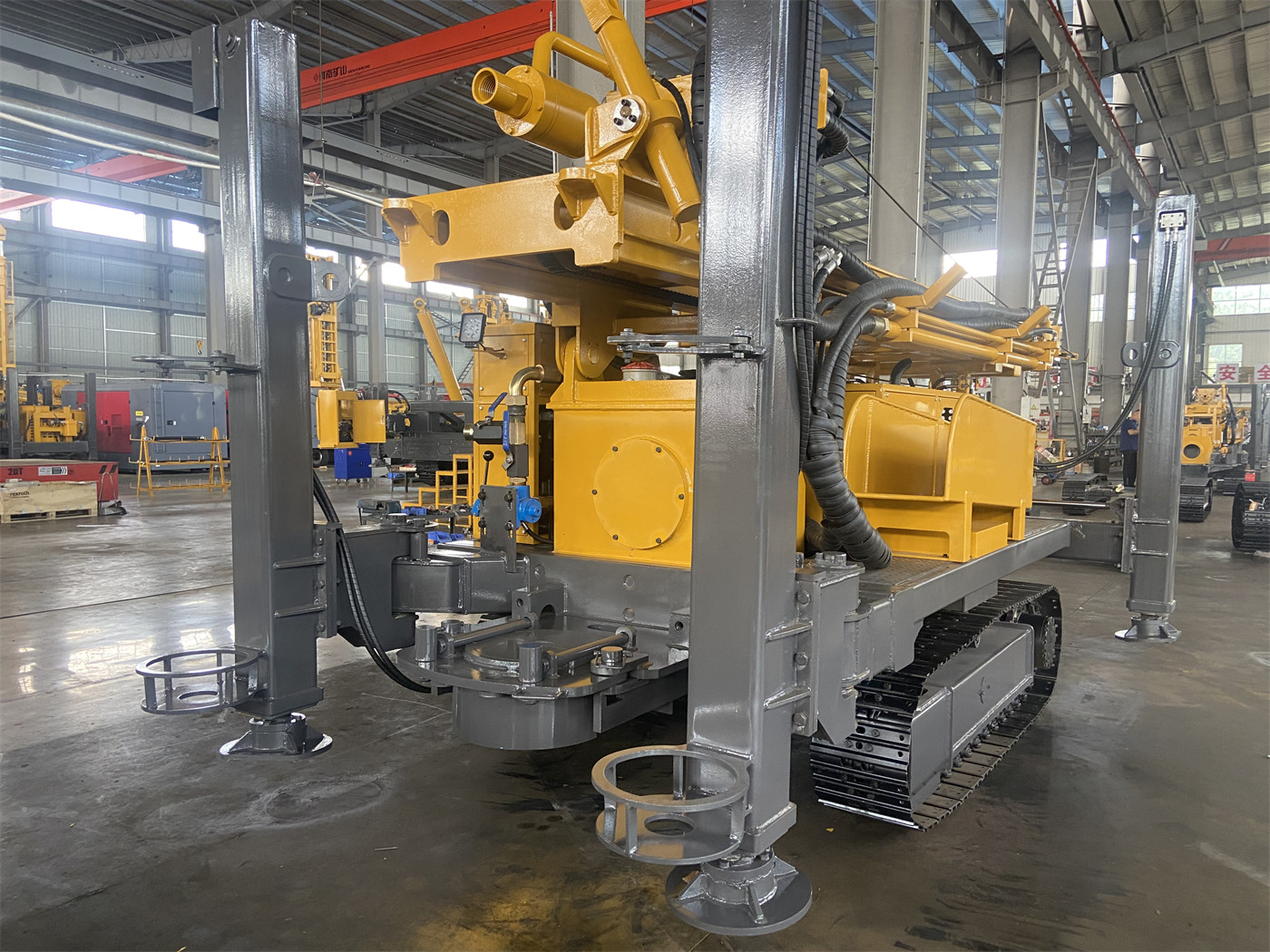
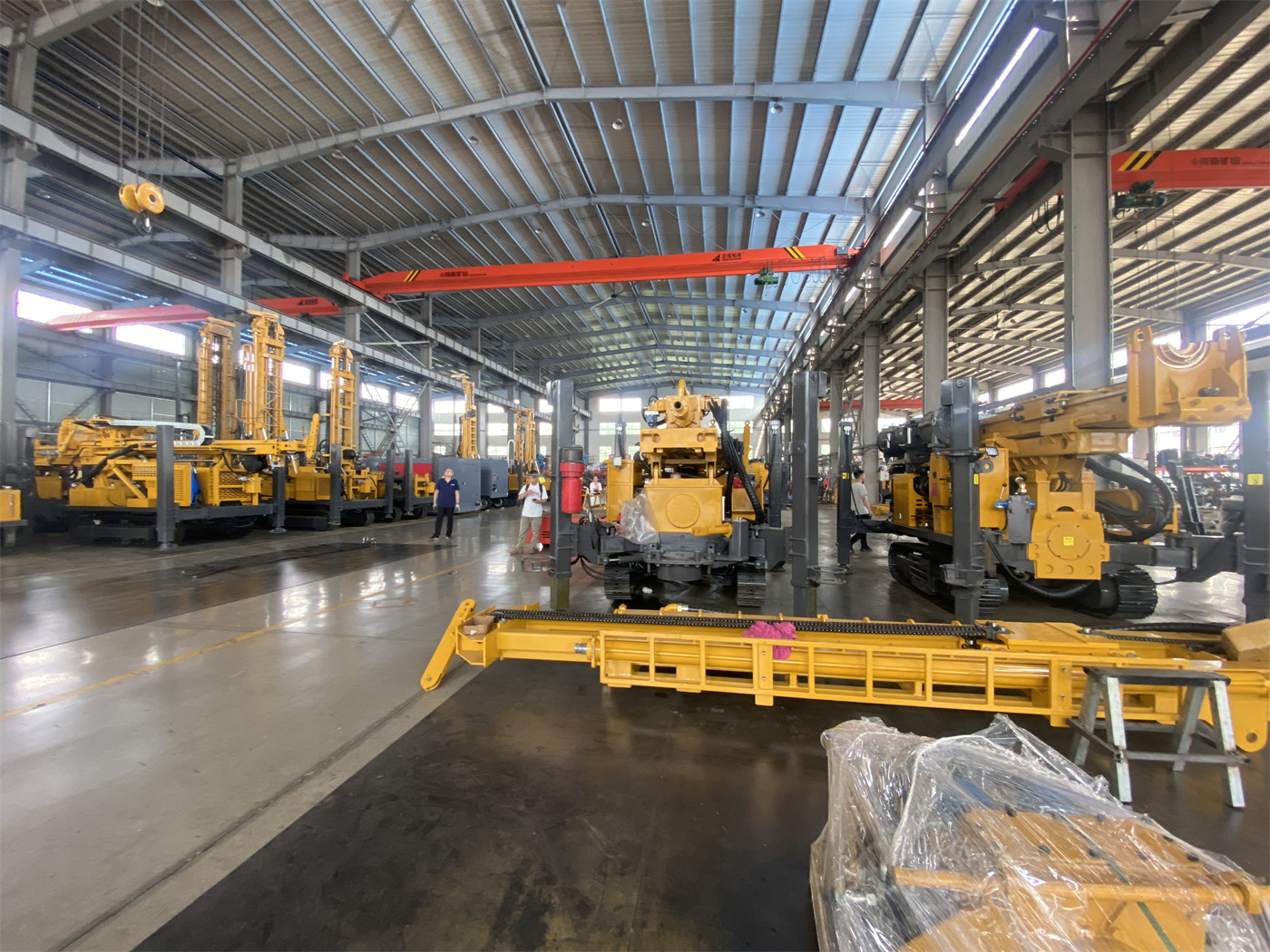
The WR500RC-CS3 in this site's materials is a concrete example for reference. It has a rated maximum drilling depth of 500 m, hole diameter of 105–400 mm, a 132 kW Cummins engine, lifting force of 25 T, feed force of 7 T, rotary torque of 10000/5000 N·m, rotation speed of 75/150 r/min, recommended working air pressure of 1.6–6 MPa, recommended air consumption of 16–55 m³/min, support for 45° and 90° working angles, an overall weight of approximately 12 T, a travel speed of approximately 2.5 km/h, and a maximum climbing angle of approximately 21°. What is directly relevant to sampling is its integrated CS3 three-in-one cyclone sampling system. The following four dimensions explain what the phrase "also a 500-meter-class RC" conceals.
Misunderstanding 1: Treating "reverse circulation" as the entirety of the sampling method
Reverse circulation describes the return path of cuttings. Dual-wall drill pipes establish an independent sample return channel, and cuttings primarily return through the inner tube rather than up the annulus along the outer wall of the drill pipe. According to this site's materials, this shortens the path along which samples contact other formations on the hole wall, helping reduce the probability of cuttings from different depths mixing with one another.
However, the materials also note that final sample representativeness still depends on hole cleaning, pipe connections, sample return stability, and on-site sampling management. In other words, reverse circulation solves a path problem; it cannot replace sampling organization at the collar. Two 500-meter-class machines that both use reverse circulation will produce different sample forms and records if their post-collar handling methods differ.
Misunderstanding 2: Assuming post-collar splitting is necessarily the same step
In a conventional RC process, after cuttings return to the collar, on-site personnel typically carry out collection, splitting, and bagging in sequence. The CS3 three-in-one system integrates cyclone separation, representative splitting, and sample collection into a single unit: cuttings produced during drilling return to the surface through the inner tube of the dual-wall RC drill pipe and enter the cyclone system directly, where high-speed airflow is separated from solid particles, and a splitting mechanism then forms samples suitable for geological logging and assay.
This site's materials position the system as "reducing repetitive operations in sample surface transfer and manual splitting, making it more suitable for continuous exploration holes and large-batch sample collection tasks." The scope of application specified here is worth noting—it refers to reducing repetitive operations and accommodating continuous sampling, but it does not provide splitting precision values or claim to improve the geological representativeness of the samples themselves. Splitting precision and contamination prevention measures are not covered by this site's materials and should be verified separately with the manufacturer at the time of purchase.
Misunderstanding 3: Comparing only drilling depth and torque while ignoring supporting requirements for sample management
Sampling capability ultimately has to translate into data. This site's materials state the sample management requirements for the WR500RC-CS3 very specifically: each sample bag can be labeled with the hole number, start and end depths, date, and sample number; on-site records should correspond one-to-one with sample bags; and for ore samples requiring laboratory analysis, duplicate samples, blank samples, and standard samples should also be set up in accordance with project quality control requirements.
These requirements do not change depending on whether the equipment integrates a three-in-one system. The system can improve splitting efficiency, but the correspondence among hole number, start and end depths, and sample number still depends on the on-site record-keeping system. If buyers compare equipment only by parameters such as drilling depth, torque, and air pressure, they may mistake sample management capability for something that comes with the machine, whereas in actual use it depends on whether the on-site sampling system and the equipment process can be integrated.
Misunderstanding 4: Ignoring that sample return status itself requires continuous monitoring
The on-site practice given in this site's materials is as follows: geologists should continuously observe sample return volume, particle size, color, moisture, and signs of cross-contamination; when resuming drilling after making a connection, cleaning the hole, or stopping drilling, transitional samples should be handled according to the on-site sampling system to avoid mixing residual cuttings from the previous hole section into samples from the next depth.
Such requirements are more pronounced in fractured zones, breccias, and formations with developed fissures. The materials note that wall collapse blocks may remain temporarily in the hole and then return in a concentrated burst, affecting the correspondence between samples and depth; the response is to control the rate of penetration and maintain stable air supply while increasing on-site records in anomalous hole sections and, when necessary, separately noting sample quality conditions. None of this depends on whether the equipment is "500-meter-class" or "reverse circulation"; it is a common constraint of sampling operations.

Several questions to verify separately before purchasing 500-meter-class RC equipment
- Sample return path: whether it uses inner-tube return through dual-wall drill pipes, and to what extent the manufacturer explains control of mixing risk.
- Collar handling: whether cuttings are collected and split manually after return, or processed through an integrated cyclone, splitting, and collection workflow.
- Sample records: whether the equipment process facilitates continuous sampling at fixed footage intervals, and how sample bags correspond to on-site records.
- Working angle and use: the materials show that this model supports 45°/90° working angles and can be used for mineral exploration and deep water well construction; different uses impose different requirements on drilling tools and construction methods—exploration holes focus more on sample return quality and splitting management, while water wells focus more on hole wall stability, completion structure, and producing zones.
- Supporting conditions: recommended working air pressure is 1.6–6 MPa and air consumption is 16–55 m³/min; actual selection should take into account hole diameter, RC hammer specifications, altitude, and rock hardness; the materials do not provide a specific air compressor model and displacement matching table.
- Items not covered by the materials: splitting precision of the CS3 system, methods for verifying sampling representativeness, and contamination prevention management measures are not provided with specific values or procedures in this site's existing materials and need to be confirmed in writing with the manufacturer or project quality control party.
Scope of application and limitations should be viewed separately
This site's materials show that the WR500RC-CS3 can be used for mineral exploration such as gold and copper mines and for deep water well construction, and its 500-meter drilling depth can cover a relatively large vertical range; upper soil layers, clay, sand layers, and gravel layers are not necessarily suitable for direct RC pneumatic drilling, and the materials mention that this model also supports mud rotary drilling, allowing the upper hole section to be stabilized first with mud, casing, or similar methods before switching to reverse circulation or DTH processes after entering rock. Water well projects do not necessarily require activating the complete three-in-one sampling system; the drilling method and supporting equipment should be selected according to the purpose of well completion.
Viewed together, "500-meter-class RC" is more of a shorthand in project communication than a category of equipment that can be compared horizontally. After confirming 500-meter drilling depth and reverse circulation process, buyers still need to verify collar handling methods, sample record requirements, supporting air pressure and air consumption, and the splitting and contamination prevention details not covered in the materials. Whether these items can be implemented often affects the usability of exploration data more than the drilling depth figure itself.