












In slope anchoring, retaining wall support and some foundation pre-drilling projects, the drilling direction is often determined by the design hole direction rather than the vertical direction the equipment is accustomed to. What the construction team really cares about is whether the machine can swing the power head to the design angle on the existing platform, and after swinging, whether the drill pipe, slide frame and crawler will interfere with the slope, enclosure or existing structures. The swing angle range is the first piece of data for answering this question, but it is not the whole story.
This article focuses on the swing angle data of a 30 m class crawler hydraulic DTH drilling rig, explaining which part of DTH drilling the swing angle changes, what conditions must still be met for actual positioning, and what is missing from the data and needs separate confirmation.
Which process the swing angle constrains on a DTH drilling rig
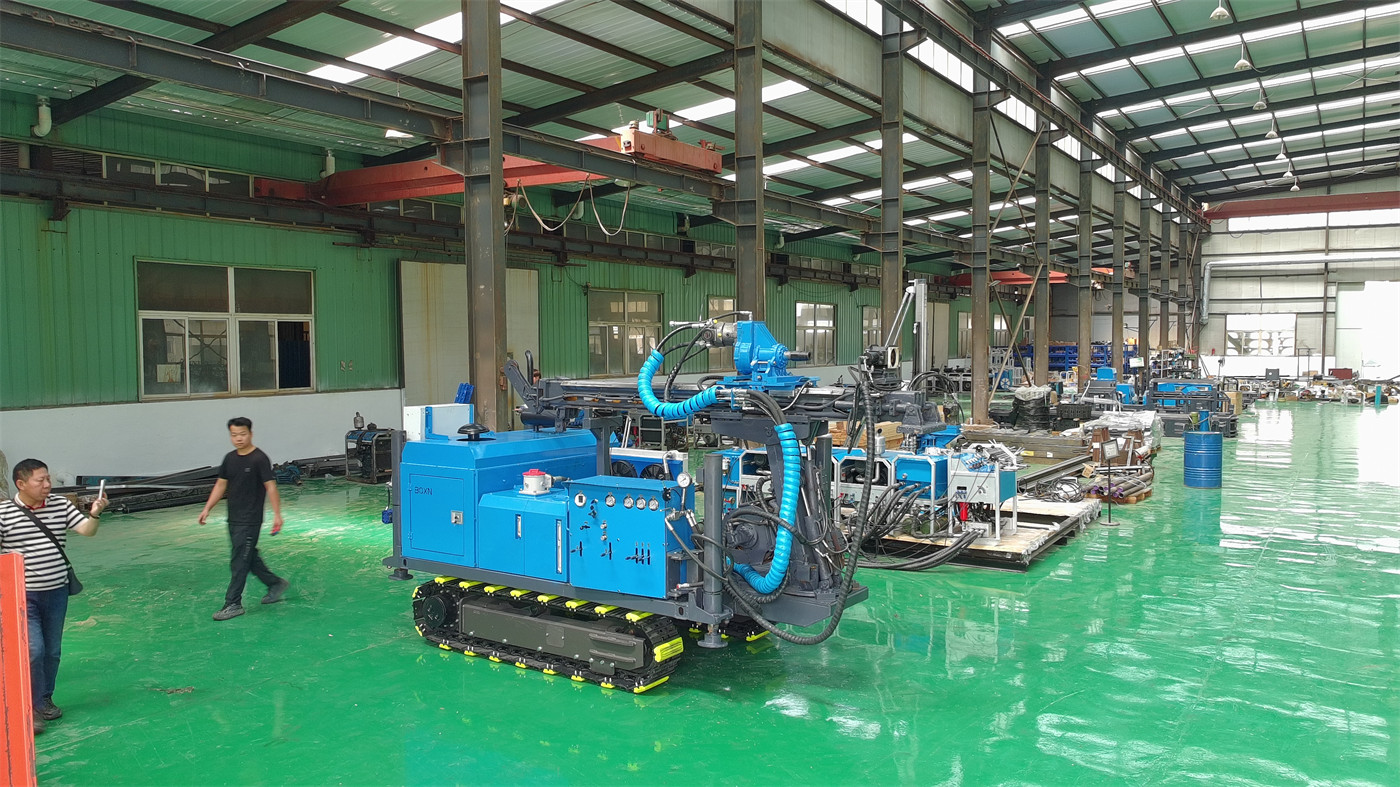
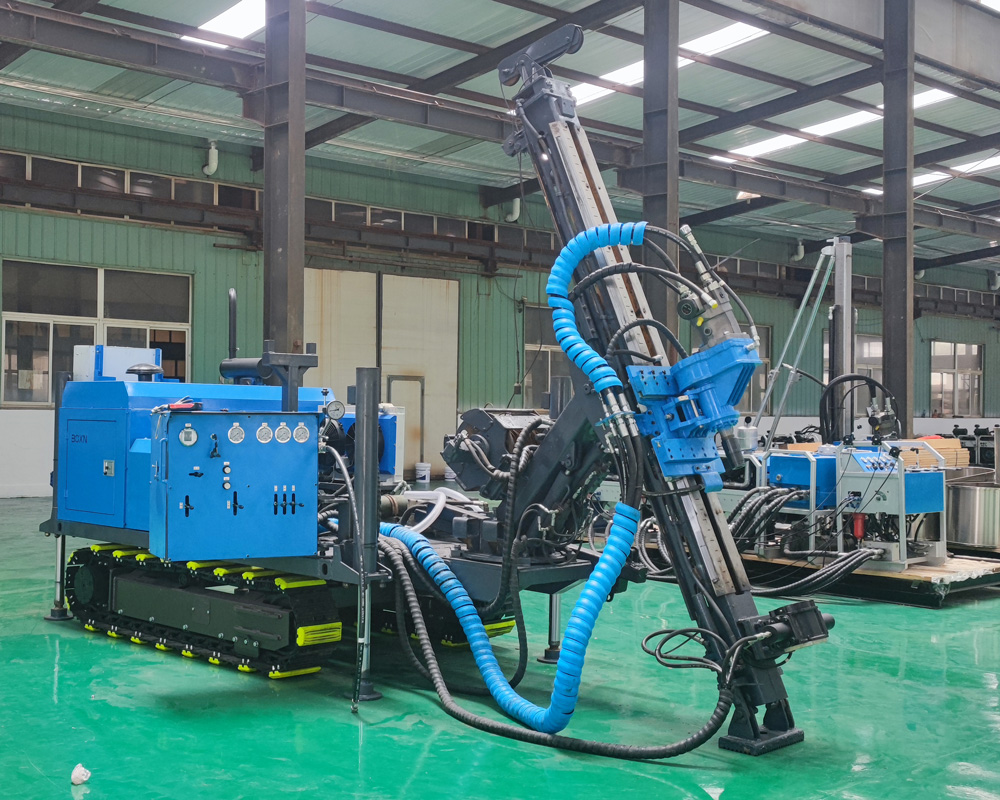
DTH drilling uses compressed air to drive a DTH hammer, with impact and rotation acting on the drill bit simultaneously. To drill inclined holes or lateral holes, the slide frame together with the power head must change attitude as a whole so that the drill pipe axis aligns with the design hole direction. The swing angle describes the angular range that this attitude adjustment can cover.
The data for this machine gives a swing angle range of 18–180°. This range means the equipment has attitude adjustment capability from near horizontal to near reverse, and can be used for vertical holes, inclined holes and some lateral hole construction. It addresses whether the drill pipe can align with the design hole direction, not whether the hole can be drilled or whether the hole position can be chosen arbitrarily.
Other boundaries related to drilling capability
The machine has a maximum drilling depth of 30 m, a hole diameter of 76–280 mm and a maximum rotary torque of 3500 N·m. It is positioned for short and medium-shallow engineering holes, suitable for slope anchor bolt holes, anchor cable holes, drainage holes, foundation pre-drilling holes and short quarry holes. It is not deep water well equipment, and the swing angle capability of a 30 m class engineering DTH drilling rig should not be extended to deep wells or large-diameter well completion scenarios.
What operational needs the 18–180° range covers
- Slope anchoring and support: Anchor bolt holes and anchor cable holes for highways, railways, foundation pits and retaining walls are often arranged at design inclination angles. The swing angle function allows the equipment to adjust drilling attitude on the platform.
- Drainage holes and lateral holes: Slope drainage holes and some lateral engineering holes have angle requirements, and the swing angle range covers this attitude demand.
- Foundation pre-drilling and short pile construction: In equipment foundations, guardrail piles and hard rock foundation pre-drilling, the hole direction may vary with the structural form.
- Quarries and open-air projects: Bench holes and auxiliary engineering holes require adjusting hole position and direction according to site conditions.
It should be noted that the above are typical uses listed in the equipment data. They do not mean that any specific project has used this machine to complete construction, nor do they constitute a commitment to hole-forming results or penetration efficiency.
After the swing angle is opened, what conditions still constrain positioning
The swing angle only addresses the attitude of the slide frame and power head. Whether the equipment can actually stand in place and swing into position also depends on the site and supporting equipment. The following items need to be confirmed one by one before starting work.
Platform stability and slope conditions
The data explicitly warns that before slope construction, platform stability, rockfall risk and support conditions should be checked to avoid direct operation of equipment on unstable slopes. No matter how wide the swing angle range is, it cannot replace the bearing capacity and stability of the working platform. The machine weighs about 2500 kg, and the platform should be evaluated according to this weight and construction dynamic loads.
Machine dimensions and passage interference
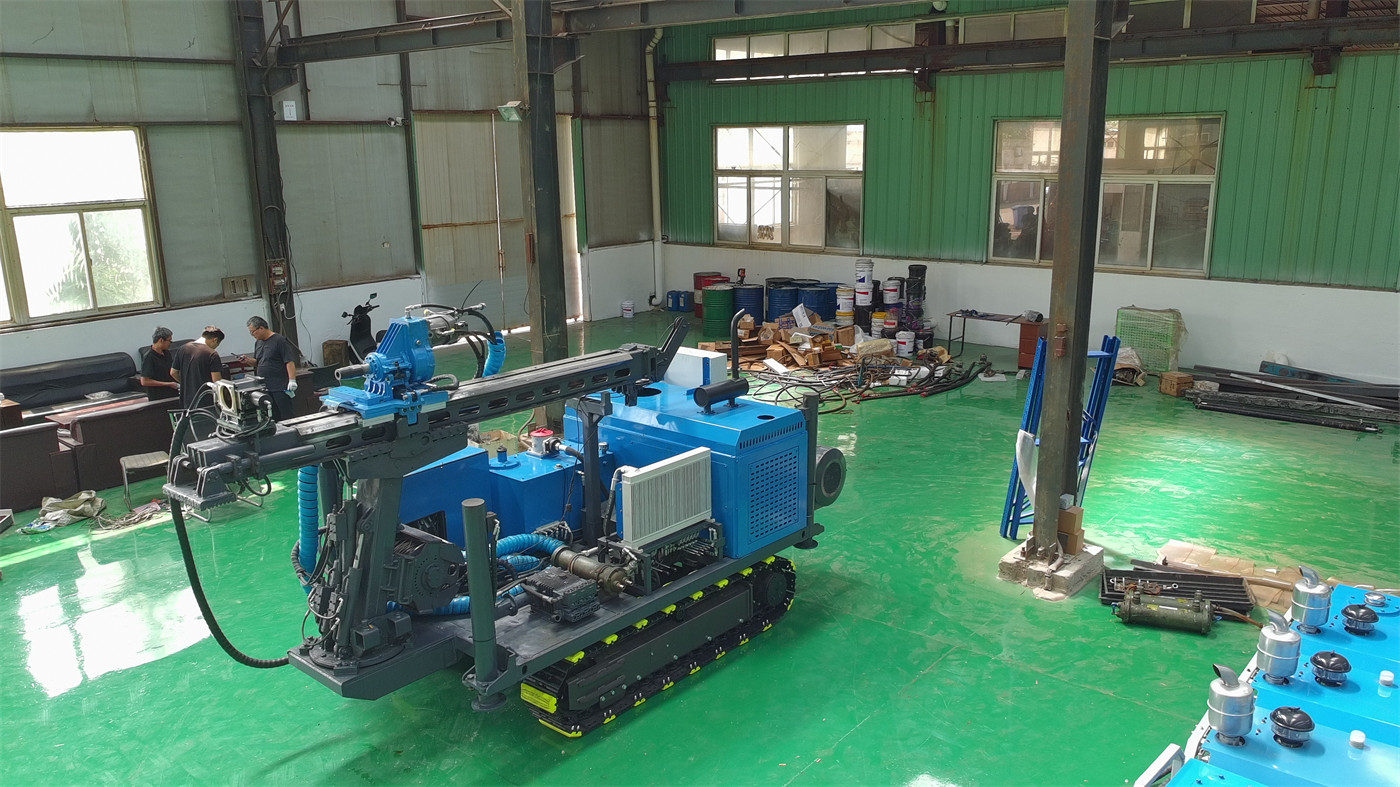
The overall dimensions are about 3200 × 1200 × 1850 mm, with a width of about 1.2 m, suitable for some factory areas, enclosed construction sites and narrow construction passages. Before entering the construction point, turning space, ground bearing capacity, underground pipelines and surrounding buildings should still be confirmed to avoid interference during construction. When swung to a lateral attitude, the slide frame and drill pipe extend beyond the machine outline, and the space margin for this step needs to be checked separately.
Chassis and ground adaptability
The equipment uses an engineering rubber crawler chassis with a travel speed of 5–10 km/h. It is suitable for compacted soil, gravel roads, construction access roads and generally uneven sites. Rubber crawlers have good adhesion on gravel, compacted soil and incompletely hardened roads, and are relatively friendly to paved surfaces, but this does not mean it can operate on any slope or soft foundation.
Data gap in inclination adjustment
The data states that the equipment has an inclination adjustment function but does not give a specific angle range. The 18–180° swing angle describes the overall swing angle, and the specific values of inclination adjustment cannot be inferred from it. For projects involving hole layout at precise design angles, the final production configuration and technical confirmation documents should prevail.
Supporting conditions determine whether continuous drilling is possible after positioning
| Supporting item | Data basis | What to confirm before positioning |
|---|---|---|
| Compressed air | Reference air consumption about 8 m³/min; original table marked as 8 m²/min | Whether the actual displacement and pressure of the air compressor match the selected DTH hammer |
| DTH drilling tools | DTH hammer, drill bit, drill pipe and casing tools | Select according to rock hardness and hole diameter, with interfaces matching the main machine |
| Dust suppression | Can be equipped with a dust collector or water mist dust suppression system | Local construction specification requirements when dry hard rock dust is obvious |
| Hole wall stability | Weathered rock and mixed strata require reduced feed speed, with casing used when necessary | Specific treatment method for the upper loose overburden |
Special attention should be paid to the air consumption item: the original data table marks it as 8 m²/min, which in common engineering expression is more likely 8 m³/min. This article understands it as m³/min, but this item should be confirmed in writing with the supplier before purchase.
Working conditions not suitable for relying on swing angle capability
- Deep water well construction of 200 m, 300 m or more should use dedicated water well drilling rigs; a 30 m class engineering DTH drilling rig cannot be used as deep water well equipment.
- In unstable slopes and areas with rockfall risk, treat the platform and support first rather than relying on attitude adjustment to avoid risk.
- In broken rock formations and fracture zones, the focus is on preventing stuck drills and hole collapse, requiring control of feed speed, maintaining hole cleaning and using casing as appropriate.
- Tasks with hole depth exceeding 30 m or hole diameter outside the 76–280 mm range are outside the positioning of this machine.
Safety boundaries beyond slope attitude
The construction precautions given in the data include: before starting work, check the crawler, mast, hydraulic lines, drill pipe connections and high-pressure air hoses; confirm the safety of underground pipelines, surrounding structures and the working platform; during drilling, personnel must not enter the areas of the rotating drill pipe, high-pressure exhaust and mast movement. Swing angle adjustment is part of mast movement, and personnel positioning must be controlled accordingly.
Items to confirm before purchase
If the project involves inclined holes, lateral holes or slope anchoring, the single data line of 18–180° is not enough to determine a plan. It is recommended to provide the following information during inquiry and require the supplier to reply in writing item by item:
- Drilling purpose: slope anchor bolt holes, anchor cable holes, drainage holes, foundation pre-drilling or other engineering holes.
- Stratum data: rock type, hardness range, weathering degree and fracture zone conditions.
- Target hole depth and diameter, as well as design hole direction and inclination requirements.
- Site entry and transfer conditions: passage width, platform size, ground bearing capacity and transport vehicles.
- Air supply conditions: displacement and pressure of the air compressor to be matched, and specifications of the DTH hammer and drill bit.
- Specific angle range of inclination adjustment, accurate unit and value of air consumption, and power configuration (the 36.8 kW diesel engine in the data is marked as optional).
The swing angle function opens up space for attitude adjustment. Whether drilling can start according to the design hole direction ultimately still depends on the platform, passage, air supply and drilling tools all being in place at the same time.